


Show Notes 3 July 2026
Text highlighted in blue identifies notes I have inserted.
Story 1: IBM Unveils the World’s First Sub-1-Nanometer Chip Technology – The lab milestone stacks transistors in 3D, though production is at least five years away
Source: TechTimes.com Story by Allen Lee
See also IBM’s announcement: https://newsroom.ibm.com/2026-06-25-ibm-debuts-worlds-first-sub-1-nanometer-chip-technology?utm_source=chatgpt.com
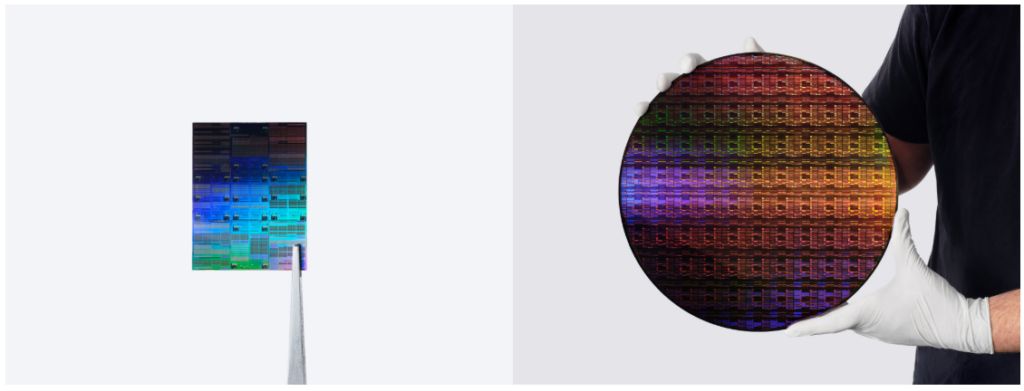
- IBM has announced what it calls the world’s first sub-1 nanometer chip technology, a major step forward in making computer chips smaller, faster, and more efficient. Reminder – A nanometer is a unit of length equal to one billionth of a meter
- The new design uses a 0.7-nanometer transistor architecture, pushing beyond the limits of today’s leading chips.
- Why does this matter? In computing, shrinking transistors means you can fit more of them onto a chip. More transistors usually means more processing power and lower energy use.
- Side note – remember “Moore’s Law” – Gordon Moore, co-founder of Intel, observed in 1965 that transistor counts on chips were increasing exponentially. Initially, he estimated a doubling every year, later revising it in 1975 to every two years as the industry matured.
- IBM says this new chip can pack nearly 100 billion transistors onto a chip about the size of a fingernail — the new sub-1 nanometer chip is almost twice as dense as its 2-nanometer chip introduced in 2021.
- The breakthrough comes from a new 3D structure IBM calls “nanostack.” Instead of arranging transistors mostly side-by-side, nanostack stacks them vertically. Think of it like building upward instead of outward when you run out of land. This makes better use of space and boosts efficiency.
- IBM claims the new design could deliver up to 50% better performance or 70% lower power consumption compared to its earlier 2 nanometer chips. That could be important for power-hungry technologies like AI, cloud computing, and advanced smartphones.
- This is still a research breakthrough, not a product you can buy yet. IBM expects chips based on this technology could reach manufacturing in about five years, likely through partners such as Samsung or Rapidus.
- Side note: Rapidus is a Japanese semiconductor manufacturer focused on producing cutting-edge 2-nanometer (2nm) logic chips by 2027. It was founded in 2022 with major backing from the Japanese government and eight major Japanese corporations.

Story 2: University licenses breakthrough e-waste gold and copper recovery technology
Source: Edinburgh Innovations
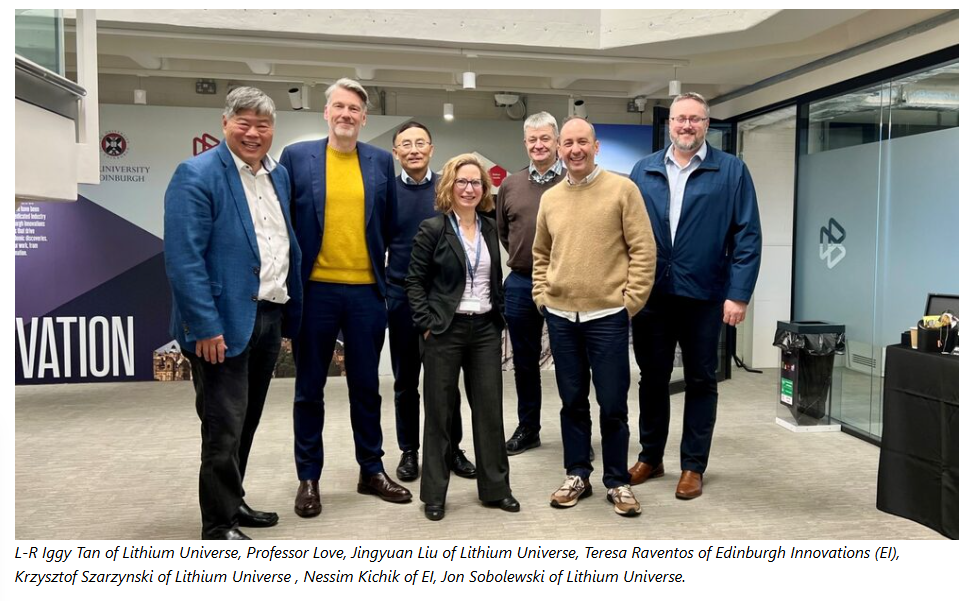
- E-waste is one of the fastest-growing waste problems on Earth. Experts estimate global e-waste could reach 93.5 million tons by 2030, but only about 20% is currently recycled properly. Yet that waste contains enormous value: one ton of typical e-waste can hold over $46,000 worth of gold plus about $2,000 worth of copper
- Researchers at the University of Edinburgh have developed a new method for recovering valuable metals like gold and copper from electronic waste (old phones, laptops, and circuit boards).
- The university has now licensed this technology to the mining and recycling company Lithium Universe to help scale it worldwide.
- The process is called Gold Copper Diamide Extraction (GCDE).
- Instead of using traditional recycling methods—such as super-hot smelting furnaces or harsh toxic chemicals like cyanide and mercury—the new technique works at much lower temperatures and uses specially designed reusable organic molecules to “grab” gold and copper out of the waste.
- Think of it like a molecular filter that selectively pulls out the valuable metals.
- The big advantage of Gold Copper Diamide Extraction is that it could make recycling cleaner, cheaper, and far less polluting.
- Instead of treating old electronics as trash, this approach treats them as “urban ore”—a rich source of reusable materials. If commercialized successfully, it could reduce mining, lower environmental damage, and strengthen the circular economy.
Story 3: World’s first ‘native’ color lidar will let robots and self-driving cars map the world in full color 3D
Source: Newsbreak.com Story by Fiona Jackson
See the company’s website here: https://ouster.com/
Check out this nifty video here: https://www.youtube.com/watch?v=msrvH_nivHI


Street scene with color and 3D!
- A company called Ouster has introduced what it says is the world’s first mass-produced “native color” lidar system, called Rev8. This could be a major step forward for robots and self-driving cars because it allows them to “see” the world in both full color and 3D at the same time.
- Normally, autonomous machines use two separate systems: cameras for color and lidar for measuring distance. These have to be carefully synchronized and calibrated. Rev8 combines both into a single sensor, making the system simpler, faster, and potentially cheaper.
- Lidar works by sending out laser pulses and measuring how long they take to bounce back, creating a 3D map of the surroundings. What makes Rev8 different is that it also captures the ambient light hitting objects, so it can record their actual colors.
- Side note – Key Performance Specifications
- Resolution: Available in up to 128 channels (L4) or a flagship 256 channels (L4 Max), offering double the range and resolution of the previous Rev7 generation.
- Data Throughput: Capable of processing up to 10.4 million points per second, driven by 42.9 GMACs of on-chip processing power and 22.4 Gbps of off-chip bandwidth.
- Family Model Ranges (at 10% reflectivity):
- OS1 Max (Flagship): Long-range reach up to 200 meters (500m max range) with a 45° vertical Field of View (FoV).
- OS1: Versatile mid-range sensor with a 45° vertical FoV.
- OS0: Ultra-wide short-range reach up to 35 meters with a 90° vertical FoV.
- OSDome: Hemispherical tracking up to 20 meters with a full 180° vertical FoV.
- Ruggedness & Safety: Engineered for extreme environments with 100g shock and 10 G-rms vibration tolerances. It meets ASIL-B, SIL-2, and PLd functional safety standards alongside ISO 21434 cybersecurity compliance.
- This means a robot could not only detect an object’s shape and distance but also identify important color-based details—like whether a traffic light is red or green, or what color a warning sign is.
- The sensor can detect objects up to 500 meters away [that’s about 1,640 feet] and process trillions of photons per second, giving it extremely detailed vision.
- Experts say this could improve safety and help create better AI “world models,” allowing machines to understand and navigate complex environments more like humans do.

BLOCKBUSTER NEWS THIS WEEK!
Story 4: Lab-created ‘SpudCell’ marks ‘stunning’ step toward building life from scratch – A synthetic cell can now grow and divide—but it’s still far from alive
Source: Science.org Story by Kai Dupferschmidt
Here is the link to the University’s posting: https://twin-cities.umn.edu/news-events/worlds-first-synthetic-cell-complete-life-cycle-could-revolutionize-biological
Be sure to also check out this link: https://biotic.org/research/spudcell/
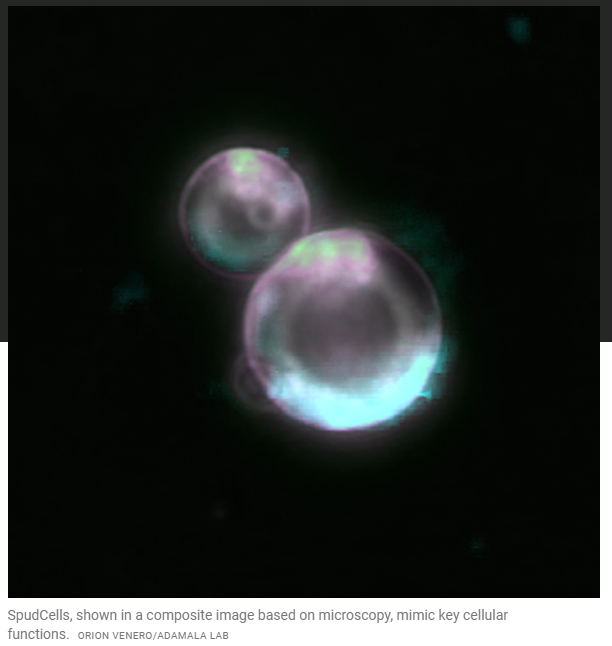
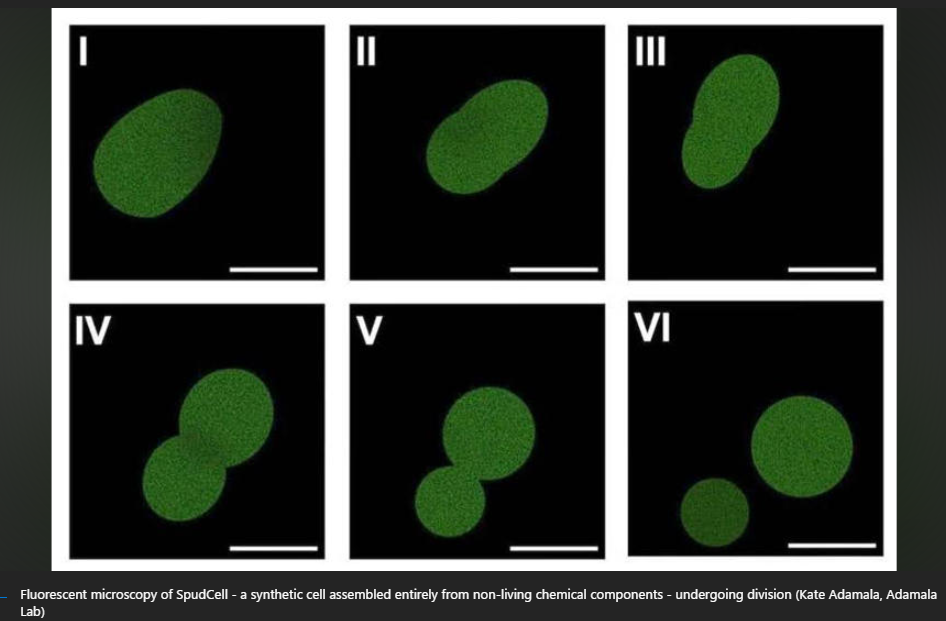
- Scientists at the University of Minnesota have made a major breakthrough in synthetic biology by building a lab-made “cell” called SpudCell—a simplified artificial cell assembled from nonliving chemicals.
- Side note – SpudCell is named after the first artificial satellite, Sputnik-1. The name comes directly from its creator, Dr. Kate Adamala, who explained that the synthetic cell’s potato-like appearance inspired the pun “SpudCell,” and that the name was chosen in playful reference to Sputnik-1, launched in 1957.
- Unlike past synthetic biology projects that modified existing living cells, SpudCell was built almost entirely from scratch, making it one of the closest attempts yet at creating life-like behavior in the lab.
- SpudCell can perform several basic activities that real living cells do: it can take in nutrients (“feed”), grow, copy its DNA, and divide into new cells. That’s important because these are some of the core behaviors scientists use to define life.
- Reality check: However, it’s still not truly “alive.” It cannot fully sustain itself and still depends on outside help—especially lab-supplied ribosomes and enzymes—to keep functioning.
- The cell contains a very small genome—about 90,000 DNA base pairs spread across several DNA molecules. Researchers know the role of every gene inside it, which makes it much easier to study than natural cells, whose systems are far more complex.
- More on the team:
- The SpudCell research was led by Kate Adamala, an associate professor of genetics, cell biology, and development at the University of Minnesota. She is one of the best-known researchers in the growing field of bottom-up synthetic biology—the effort to build living systems from nonliving components.
- The work was a collaboration with Aaron Engelhart and his lab, which helped design the artificial genetic system used inside SpudCell. Together, their teams combined expertise in chemistry, molecular biology, and synthetic genomics to create the cell.
- The project is also tied to a new nonprofit/open-science initiative called Biotic, co-founded by Adamala and Drew Endy, to make synthetic-cell technology openly available to researchers worldwide.
- Why does this matter? SpudCell could help scientists better understand how life first began on Earth and may eventually lead to custom-designed “living factories” that make medicines, fuels, or new materials. It’s an early but powerful step toward engineering life itself.
- Side note – Amazing science, but some concerns sited in the press and science community in the areas of:
- Biocontainment & Environmental Safety
- Evolutionary Stability & Mutation Risk
- Ethical Concerns About Creating “Proto-Life”
- Dual-Use & Misuse Potential
- Uncertainty About Long-Term Behavior
- Public misunderstanding

Honorable Mentions
Story: Scientists Turn Wet Coffee Grounds into Coal-Like Fuel in Just 90 Seconds – A new process skips energy-intensive drying for recycling coffee waste.
Source: ZME Science Story by Tudor Tarita

- Researchers in South Korea have developed a fast way to turn wet, used coffee grounds into a coal-like fuel in just about 90 seconds. The key breakthrough is that they don’t need to dry the grounds first, even though they contain roughly 50–60% water, which normally makes waste-to-fuel processing expensive and slow.
- Instead, the team uses a method called flame plasma pyrolysis, where the wet coffee grounds are exposed to extremely high temperatures in a rapid heating chamber. As the water inside instantly turns into steam, it creates pressure that causes the particles to “pop” and break apart, helping form a highly porous, carbon-rich material.
- The result is a type of biochar that behaves similarly to high-grade coal, with a significantly higher energy density than the original coffee waste. The process also increases the amount of fixed carbon, removes sulfur compounds that would otherwise cause pollution when burned, and produces a cleaner solid fuel overall.
- Compared to traditional methods, which often require long drying times and much more energy, this technique is much faster and potentially more efficient. Researchers suggest it could help reduce coffee waste while creating a usable renewable fuel source. However, it is still at an early stage and would need to be scaled up and tested for real-world industrial use before it could become widely practical.
////////////////////////////////////////////////////////////////////////////////////////////////////////////////////////////////////////////
Story: Paper Battery Startup Aims to Power Everything in Your House – Flint says its battery is sustainable, delivers up to 4.2 volts
Source: IEEE Spectrum Story by Matthew S. Smith
Link: https://spectrum.ieee.org/flint-sustainable-paper-battery
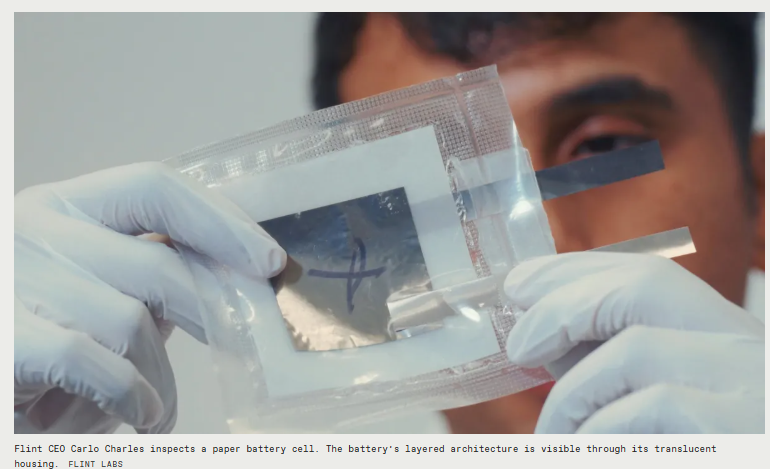
- The article describes Flint, a Singapore-based startup developing a “paper battery” that aims to be safer and more environmentally sustainable than conventional batteries. Despite the name, it is not a fuel cell or a purely biological device. Instead, it is a real electrochemical battery using a familiar zinc anode and manganese dioxide cathode—similar chemistry to common alkaline batteries—but redesigned with sustainability in mind.
- What makes Flint’s approach different is its heavy use of cellulose (plant-based material) throughout the battery structure. Cellulose is integrated into components such as the casing, separator, electrolyte, and even parts of the electrodes. The company says it also removes or avoids problematic substances like cobalt, PFAS chemicals, and certain solvents, which are associated with environmental harm or safety risks.
- The battery is designed to be flexible, lightweight, and potentially compostable at end-of-life. It can be manufactured in thin “paper-like” sheets or standard battery shapes like AA and AAA. Flint claims performance comparable to lithium-ion in some respects, including up to about 4.2 volts, energy density around 226 Wh/kg, and up to 1,000 recharge cycles, though it does not aim to immediately replace high-demand uses like electric vehicles.
- Instead, the company targets lower-power applications such as household electronics, sensors, wearables, and mobile devices. Flint has begun production and is partnering with companies like Logitech for pilot testing, using a roll-to-roll manufacturing process similar to printing.
////////////////////////////////////////////////////////////////////////////////////////////////////////////////////////////////////////////
Story: Robotic suit simulates weightlessness on Earth to improve astronaut motor skills – The exact same method that helps an astronaut steady their hand in zero gravity could support medical care on Earth
Source: Interesting Engineering Story by Mrigakshi Dixit
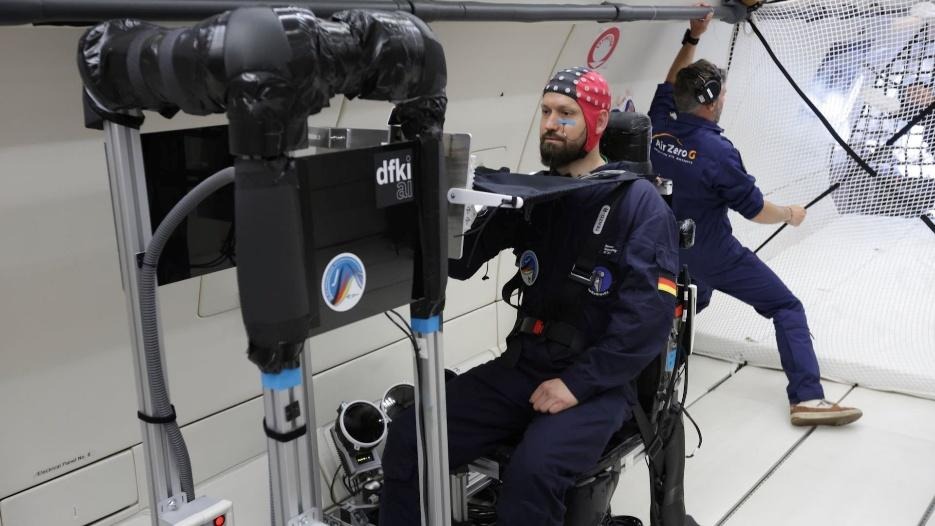
- Researchers are testing a robotic exoskeleton that can make astronauts’ arms feel like they are in weightlessness—right here on Earth—so they can better train fine motor skills needed in space missions.
- The system was developed by scientists at the German Research Center for Artificial Intelligence (DFKI) and the University of Duisburg-Essen. It works by measuring the weight and motion of a person’s arm and then applying precise counter-forces that cancel out gravity’s pull. This “offloading” effect tricks the brain into thinking the arm is floating, similar to conditions in orbit.
- To test the idea, volunteers first trained on Earth while wearing the robotic suit, practicing a simple but demanding task: repeatedly tapping the center of a hidden target using only muscle memory. They later performed the same task during real microgravity conditions aboard a parabolic flight aircraft, which produces about 20 seconds of weightlessness at a time.
- Researchers also used sensors to track movement, muscle activity, and even brain signals to see how training carried over into real weightlessness. Early results suggest that people who trained with the exoskeleton performed more accurately and steadily in space-like conditions than those who did not.
- The goal is to improve astronaut readiness for long missions to the Moon and Mars by training the nervous system to adapt in advance to microgravity’s effects on coordination and precision. Beyond space travel, the same approach could help medical rehabilitation on Earth, such as retraining motor control in stroke patients or people with neurological injuries.
- In short, the technology uses a “fake gravity-off” training mode to prepare humans for real weightlessness—and may also end up helping patients recover lost movement skills on Earth.
////////////////////////////////////////////////////////////////////////////////////////////////////////////////////////////////////////////
Story: Mars astronauts may do laundry by blasting clothes with a plasma beam
Source: NewScientist.com Story by Leah Crane
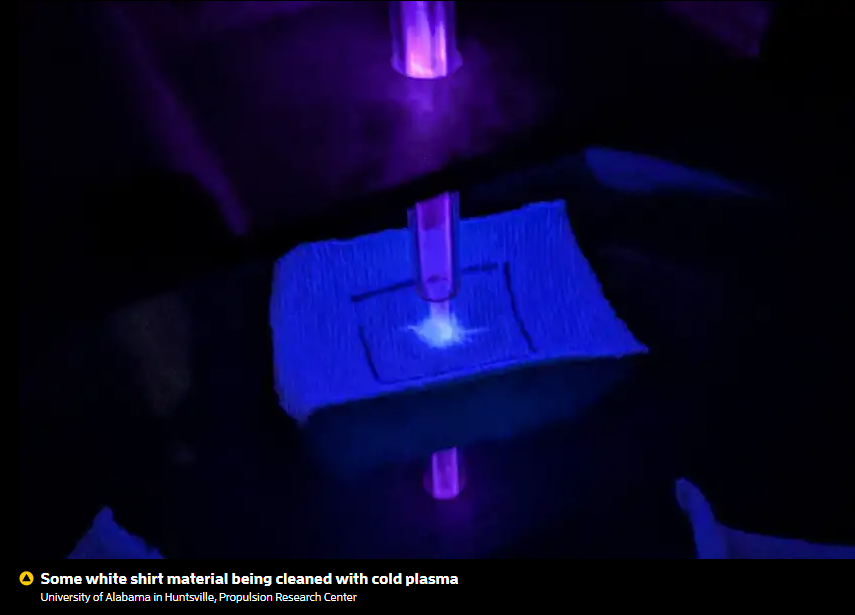
- On Earth and the International Space Station, laundry is difficult or impossible in space because water is heavy and scarce. Astronauts currently wear clothes for days or weeks and then discard them, which is wasteful and impractical for long journeys to Mars. To solve this, researchers are developing a water-free cleaning method using cold plasma—a gas that has been electrically energized so it contains charged particles and reactive chemicals.
- The proposed device works by shooting a jet of plasma at clothing. This plasma is made from gases like helium, air, and a bit of water vapor, then energized with electricity. The reactive particles created in the plasma can break apart and destroy bacteria and odor-causing microbes embedded in fabric fibers. The goal is not just to make clothes look clean, but to disinfect them and reduce smells so they can be reused safely.
- Early lab tests show that plasma can significantly reduce harmful bacteria on fabric without damaging the material itself. Scientists are now working on making the technology small and practical enough to become a handheld “plasma laundry gun” or even a future space washing system for astronauts on long-duration missions.