

Show Notes 14 November 2025
Story 1: This Wireless-Charging Road Is More Powerful Than Most Tesla Superchargers – Fast-charging an EV without stopping seems unrealistic. This public highway in France proves it’s possible.
Source: InsideEVs.com Story by Iulian Dnistran
Link: https://insideevs.com/news/777157/wireless-charging-highway-power/
See company website here: https://electreon.com/
See also: https://www.zmescience.com/research/inventions/first-highway-charges-cars-as-they-drive/
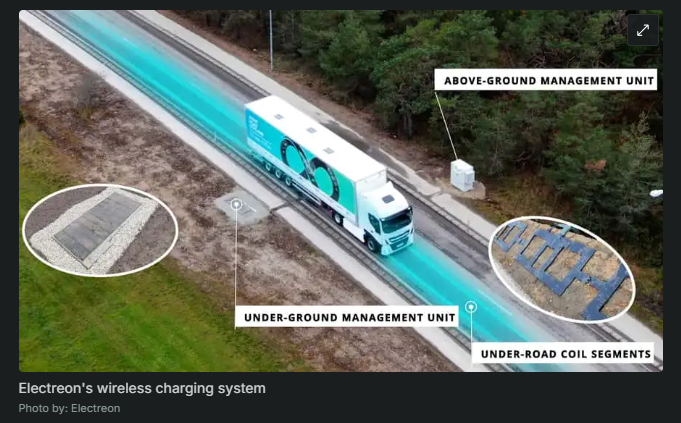
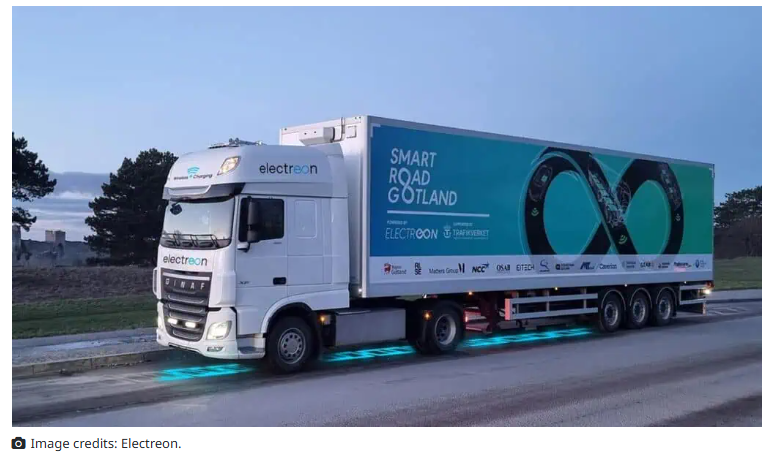
- The world’s first dynamic induction charging system implemented on a highway with real traffic is now live in France, and it’s pushing the boundaries of what’s possible with in-road wireless charging.
- Side note – Induction charging, also known as wireless charging, is a method of transferring electrical energy without physical connectors by using electromagnetic fields. My iPhone charges this way.
- While still in its infancy [for this application], the technology implemented by a company called Electreon on a nearly one mile (1.5 kilometers) stretch of the A10 highway southwest of Paris shows that induction charging while on the move could be a feasible alternative to charging stops, especially for heavy trucks that usually need huge batteries.
- How it works:
- Copper coils embedded beneath the asphalt wirelessly transmit electricity to EVs equipped with compatible receivers.
- Power Output: Delivers 200 kilowatts continuously and over 300 kilowatts peak power—more than many Tesla Superchargers.
- Vehicles Supported: Heavy-duty trucks, passenger cars, vans, and buses—all tested successfully in real traffic conditions
- Four vehicles are now equipped with the proper hardware to be fast charged while driving on the A10 highway, including a heavy-duty truck, a utility vehicle, a passenger car and a bus.
- Reality check: this is still a small-scale project, but its potential is quite high, especially for the heavy truck segment.
- As far as durability is concerned, the Electreon team behind the wirelessly charged piece of the A10 highway in France are adamant that the pavement housing the charging coils can withstand decades of wear and tear.

Story 2: Meet FireAnt: US firm unveils mini ‘tank-killer’ robot built to hunt heavy armor
Source: Interesting Engineering on MSN Story by Kapil Kajal
See company website here: https://www.swarmbotics.ai/
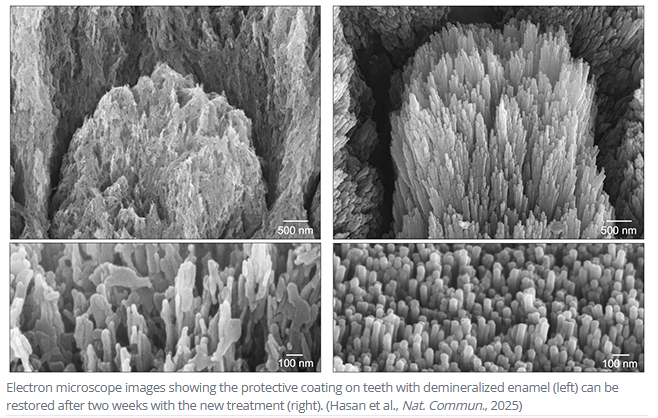
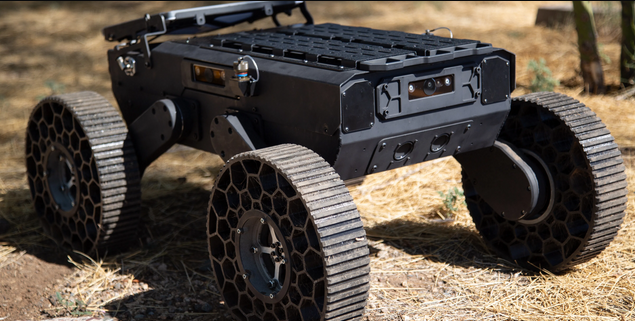
- Arizona-based, US robotics firm Swarmbotics AI has unveiled a new generation of ground-based autonomous systems designed to operate in coordinated swarms and deliver anti-tank effects, marking another evolution in the fast-growing field of robotic warfare.
- My comment – “swarm” robotics for military use has been a hot trend in combat tech for several years. There are many other examples, including aerial, ground, and maritime systems that operate in coordinated groups to overwhelm, confuse, or outmaneuver adversaries. Notable examples include the U.S. Perdix drones, DARPA’s OFFSET program, and China’s swarming loitering munitions. And well beyond military applications, for example, NASA is looking into the use of swarm robotics for building a base on the moon.
- Swarmbotics AI says its new unmanned ground vehicle (UGV), named FireAnt, is a lightweight, expendable or replaceable combat platform designed to detect, track, and engage heavy armor targets, such as tanks, while operating in groups under a single human operator.
- The firm describes FireAnt as part of a modular family of small, low-cost unmanned vehicles built for multiple missions, including reconnaissance, mapping, data relay, and anti-armor operations.
- Key Features:
- Swarm Coordination:
- Operates in packs under a single human operator.
- Each swarm can function semi-independently, sharing targeting data and adapting to changing battlefield conditions in real-time.
- Modular Payloads: Allows quick swapping of anti-tank weapons mid-battle.
- Expendable Design: Built to be lightweight and cost-effective for high-risk missions

Story 3: Skydweller Aero and Nokia Federal Solutions Secure US Navy Contract to Develop Airborne Beyond 5G Tactical Network
Source: SpaceDaily.com Story by Simon Mansfield
See company link here: www.skydwelleraero.com

- Oklahoma-based Skydweller Aero and Nokia Federal Solutions Inc. have received a US Navy Small Business Innovation Research contract to demonstrate a [perpetual] airborne 5G communication hub designed for secure, resilient networks in contested environments.
- Side note, the headline says “beyond 5G” – here’s what that means:
“Beyond 5G” refers to the next generation of wireless communication technologies that will succeed 5G, often called 6G in early discussions. Beyond 5G networks are expected to offer data speeds up to 100 times faster than 5G and latency as low as 0.1 milliseconds.
- Skydweller Aero’s airborne solution aims to provide a deployable 5G Network-in-a-Box delivering robust, low-latency connectivity where infrastructure is limited or unavailable.
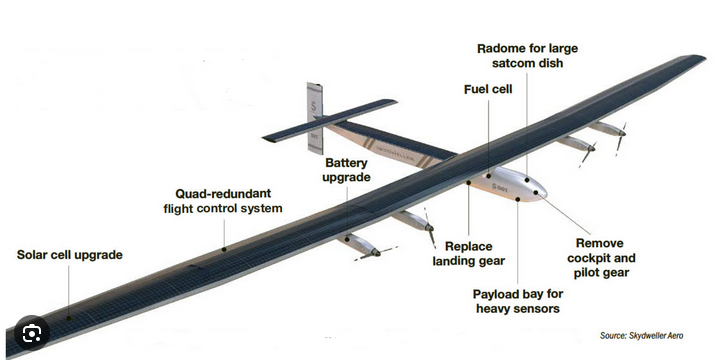
- The project, titled Intelligent Radio Access Network for Beyond 5G Resilient Tactical Networks, will use Skydweller’s Perpetual Flight solar-powered autonomous aircraft to support a reconfigurable communication system.
- Side note – Key features of this aircraft:
- Fully solar-electric propulsion enables perpetual flight without the need for fuel or emissions.
- Solar panels span the entire wingspan, harvesting energy during the day and storing it in onboard batteries for night operations.
- Wingspan is comparable to a Boeing 747 (about 70 meters – about 230 feet), yet the aircraft weighs only around 2,500 kg [2,500 kilograms is approximately 5,511.55 pounds].
- Constructed from carbon fiber composites for strength and minimal weight.
- Operates without a pilot, using advanced autonomous navigation and flight control systems.
- It can be remotely piloted when needed but is designed for fully autonomous missions.
- Carries up to 800 pounds of payload, including sensors, cameras, and communication equipment.
- Robert Miller, CEO of Skydweller Aero, said, “Increasingly, the remote locations where the US must project force will lack the infrastructure to support modern communications. This program demonstrates how Skydweller’s autonomous, perpetual aircraft can deliver ‘instantaneous infrastructure’ – giving our customers faster, more flexible connectivity while reducing cost and complexity compared with traditional solutions.”

Story 4: Breakthrough: Scientists Create ‘Universal’ Kidney to Match Any Blood Type
Source: ScienceAlert.com Story by David Nield
Link: https://www.sciencealert.com/breakthrough-scientists-create-universal-kidney-to-match-any-blood-type
See research paper here: https://www.nature.com/articles/s41551-025-01513-6
- As it stands today, people with type O blood who need a kidney usually must wait for a type O kidney to become available from a donor. That accounts for more than half the people on waitlists, but because type O kidneys can function in people with other blood types, they’re in short supply.
- While it is currently possible to transplant kidneys of different blood types, by training the recipient’s body not to reject the organ, the existing process is far from perfect and not particularly practical.
- It’s time-consuming, expensive, and risky, and it also requires living donors to work, as the recipient needs time to be prepped.
- Here’s the big news – After a decade of work, researchers are closer than ever to a key breakthrough in kidney organ transplants: being able to transfer kidneys from donors with different blood types than the recipients, which could significantly speed up waiting times and save lives.
- A team from institutions in Canada [University of British Columbia and supported by Vancouver Coastal Health Research Institute] and China [West China Hospital in Chengdu] has managed to create a ‘universal’ kidney, which can, in theory, be accepted by any patient.
- Their test organ survived and functioned for several days in the body of a brain-dead recipient, whose family consented to the research.
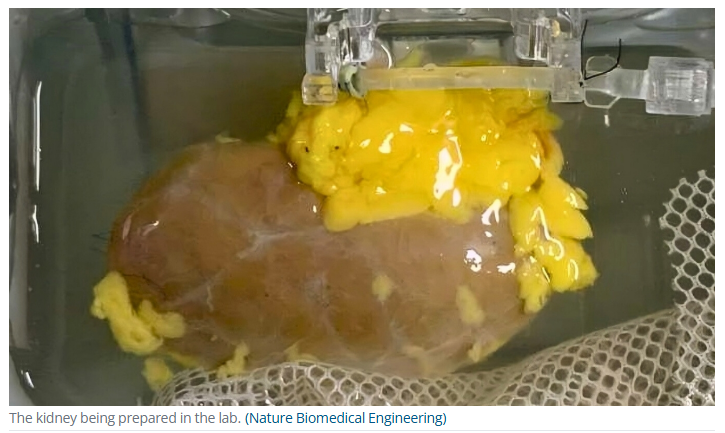
- Here, the researchers effectively converted a type A kidney into a type O kidney, using special, previously identified enzymes that strip away the sugar molecules (antigens) acting as markers of type A blood.

Honorable Mentions
Story: Dentists Could Soon ‘Regrow’ Your Tooth Enamel with a Simple Gel
Source: ScienceAlert.com Story by David Nield
Link: https://www.sciencealert.com/dentists-could-soon-regrow-your-tooth-enamel-with-a-simple-gel
See research paper here: https://www.nature.com/articles/s41467-025-64982-y
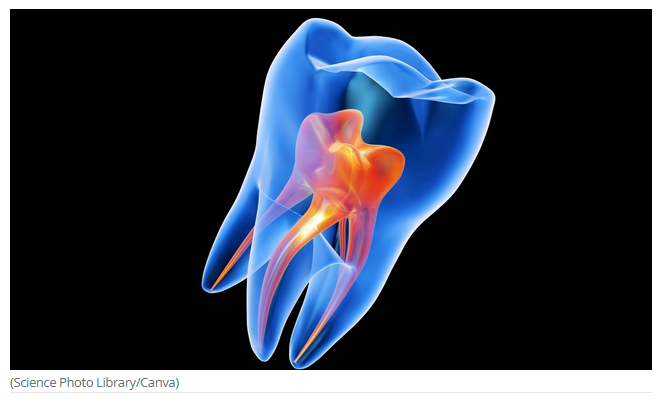
- Developed by an international team led by the University of Nottingham, the researchers have launched a start-up to advance a gel that can regrow tooth enamel by mimicking natural enamel formation, potentially revolutionizing dental care.
- Here’s a detailed breakdown of the innovation:
- Repairs and replaces damaged enamel by promoting the growth of new enamel crystals.
- It can be applied to cracked teeth or exposed dentine, restoring the tooth’s protective layer.
- How It Works
- Inspired by amelogenin, the natural protein scaffold used in enamel formation.
- Researchers used elastin-like recombinamers (ELRs) to replicate this scaffold.
- Once applied, the gel triggers epitaxial mineralization, aligning new enamel crystals with existing ones.
- The crystals form from calcium and phosphate, either in saliva or a lab solution.
- Strength and Durability
- Tests show that the regenerated enamel is mechanically similar to healthy enamel, withstanding brushing, chewing, and acidic foods.
////////////////////////////////////////////////////////////////////////////////////////////////////////////////////////////////////////////
Story: Startup unveils incredible tech that could slash household energy use: ‘Transforms every building’ – Integer Technologies, based in Eindhoven, Netherlands, has secured €1 million (about $1.1 million) to accelerate its rollout of an AI-powered platform that optimizes heating, ventilation, and air conditioning systems.
Source: The Cool Down via MSN Story by Christine Dulion
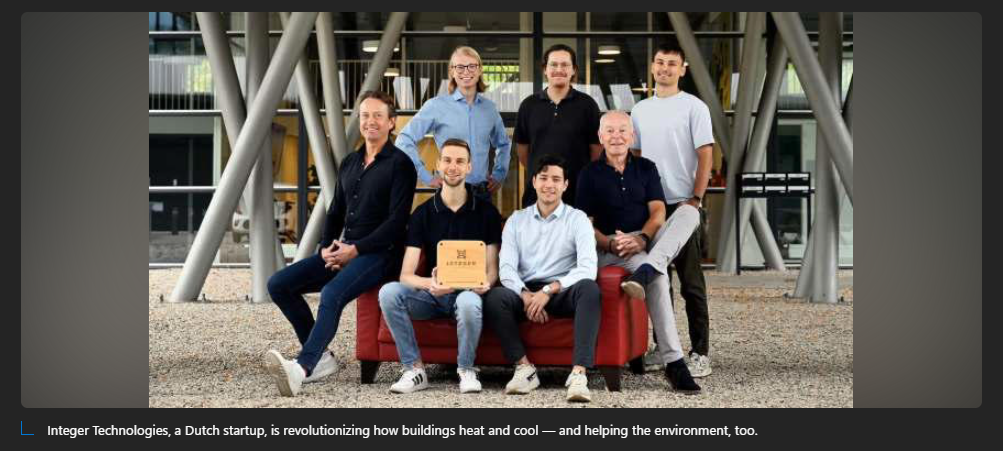
- A European startup is aiming to revolutionize how homes and businesses heat and cool their spaces while saving energy in the process.
- According to Innovation Origins, the technology connects all HVAC components into a network that can cut energy use by up to 40%, reduce strain on the power grid, and help buildings automatically comply with European climate regulations.
- The company’s story began as a student project at the Eindhoven University of Technology, where the founders developed the CASA 1.0, a sustainable apartment complex designed to operate independently from the grid.
- That early work evolved into Integer Technologies, which now aims to make advanced building optimization accessible to installers without specialized programming or management expertise.
- “In a sector where skilled technical personnel are increasingly scarce, we’re giving installers a tool they can deploy in days, instead of months,” said co-founder and CEO Antoine Post, per Innovation Origins.
- “With our AI and physics-driven models, we’re making world-class building optimization accessible for everyone.”
- The system’s biggest advantage is that it helps buildings adapt intelligently. By automating the setup and fine-tuning of systems like heat pumps and ventilation, Integer’s AI can run HVAC systems using less energy, ultimately cutting operating costs for property owners as well as planet-heating pollution for the rest of us.
////////////////////////////////////////////////////////////////////////////////////////////////////////////////////////////////////////////
Story: Printing Solar Cells Like Newspaper
Source: Electronicsforu.com Story by Janarthana Krishna Venkatesan
Link: https://www.electronicsforu.com/news/printing-solar-cells-like-newspaper
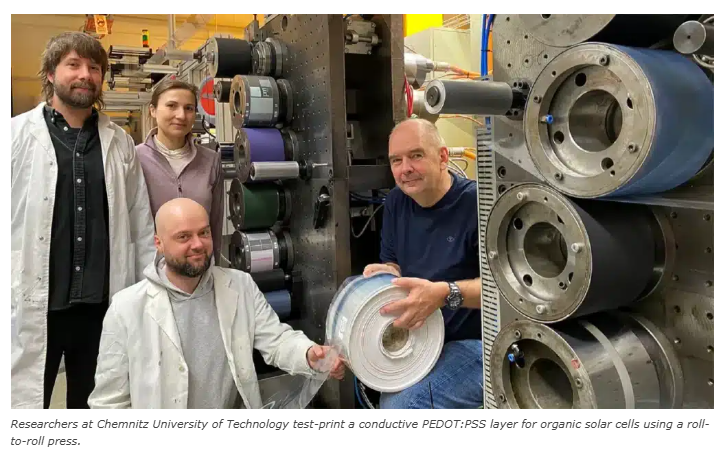
- Scientists at Chemnitz University of Technology have pioneered a technique to print solar cells on paper or plastic using a roll-to-roll press, dramatically reducing production costs and energy consumption.
- This method mimics the way newspapers are printed, enabling continuous production of solar panels on flexible substrates.
- The team first printed solar cells on paper in 2011, achieving only 1.7% efficiency.
- After over a decade of refinement, the latest version reaches 9% efficiency with over 88% production success rate, making it viable for mass production.
- The solar cells use a polymer blend called PM6:Y12, which converts sunlight into electricity.
- They’re built from multiple thin layers, each printed with functional inks that serve specific electrical roles—not for color, but for charge transport.
- The process runs at low temperatures, unlike traditional silicon-based panels that require high heat and complex equipment.
- This innovation is part of the POPULAR project, funded by the German Research Foundation, which aims to test the durability of printed solar cells under real-world conditions.
- The goal is to develop affordable, flexible solar panels for widespread renewable energy use.
Let me know if you’d like a visual breakdown of the printing process or a comparison with traditional silicon solar panels.
////////////////////////////////////////////////////////////////////////////////////////////////////////////////////////////////////////////
Story: This First-Year Student Invented a Fire-Fighting Robot
Source: Cockrell School of Engineering, University of Texas at Austin
Link: https://cockrell.utexas.edu/news/this-first-year-student-invented-a-fire-fighting-robot/
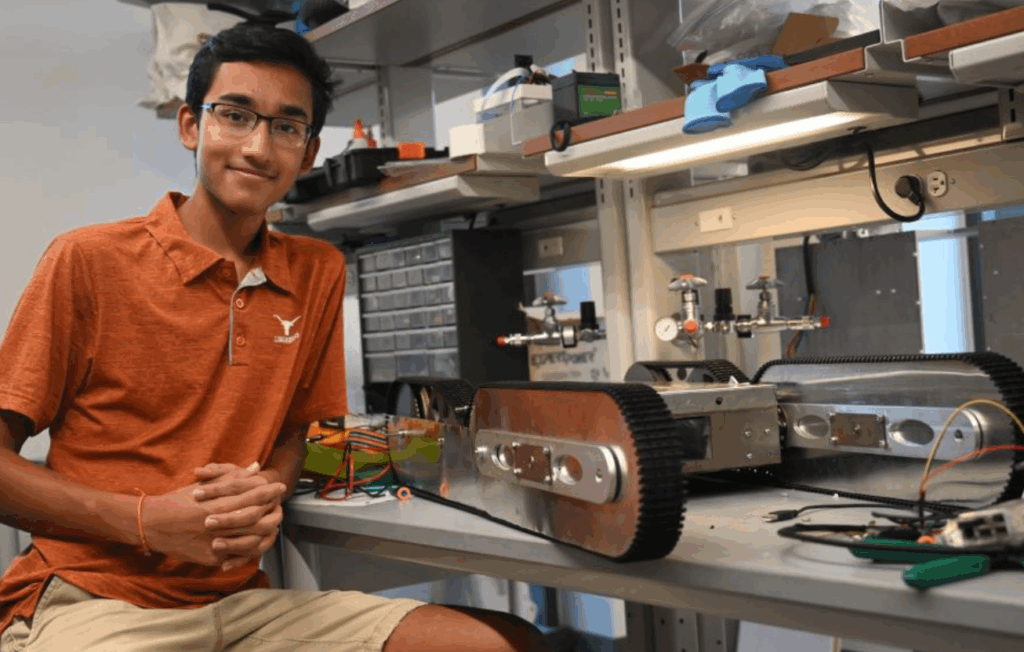
- Every once in a while, a young person already so accomplished comes along and makes you wonder aloud “what am I doing with my life?” Siddharth Thakur is one of those young people.
- Even in the sea of brilliant future engineers at the Cockrell School, the 17-year-old stands out. Originally from Wisconsin, Thakur just arrived on campus for his first year as an electrical and computer engineering major at The University of Texas at Austin, and he brings an impressive resume of entrepreneurship.
- As a high schooler in the Houston area, he started down a path to inventing a robot that can enter burning buildings to search for human life via remote control. He sprang into action after learning about the lack of technological tools available to firefighters to keep themselves safe while saving people.
- This incredible innovation known as FireBot has understandably created a lot of buzz, and it landed Thakur a spot as one of six undergraduate finalists in the prestigious Collegiate Inventors Competition.
- Thakur presented FireBot virtually to a panel of judges including inductees of the Inventors Hall of Fame and United States Patent and Trademark Office officials and ultimately earned the Arrow Electronics People’s Choice Award.
- FireBot can climb obstacles, and it is outfitted with live video, thermal imagery capabilities and sensors. Firefighters can use a two-way speaker to lead conscious victims out of a burning building or activate a siren and GPS map to help them quickly find and rescue unconscious victims.