


Show Notes 28 November 2025
Story 1: 3D Solar towers boost electricity production by around 50%
Source: New Atlas Story by Michael Franco
Link: https://newatlas.com/energy/solar-towers-electricity/
Check out the company’s press release: https://www.globenewswire.com/news-release/2025/10/21/3170286/0/en/Janta-Power-Closes-5-5-Million-Seed-Round-to-Power-the-Future-of-Clean-Energy.html

- Texas-based Janta Power company is developing three-dimensional solar towers that generate roughly 50 percent more energy than standard flat-panel systems [my insert – due to the vertical design, and relative to surface space needed, etc.].
- Currently, most solar farms consist of flat panels laid out across the ground or on rooftops. But in much the same way that this is an inefficient way to house people, it’s also not a great way to harvest the Sun’s energy. Tall skyscrapers can hold significantly more people on a small footprint, so why not apply that thinking to solar panels as well?
- Janta’s towers consist of solar panels arrayed vertically instead of horizontally. This means a lot more panels can get packed into a much smaller footprint.
- The towers are also responsive, automatically tracking the Sun’s movement throughout the day and pivoting to maximize the amount of light they can capture.
- Plus, because of the slanted upright design, the towers can position themselves to take in the sharp angles of early morning and late day sunlight, which is an ability that flat panels lack.
- This ability to grab the Sun’s rays throughout more of the day means the towers produce a longer, more even flow of electricity than other panels that spike production when the Sun is overhead.
- These innovations mean that the towers can produce about 50% more energy than flat-panel systems using just one-third of the land area.
- The towers are also able to reach a capacity factor of about 32%, which bests that of flat panels, which come in around 22%. [My insert – again, not saying that the individual panels achieve 32%, but the vertical design and other features that maximize light capture result in an overall performance gain].

Story 2: European Space Agency to Trial Growing Protein Powder in Space Using Astronaut Urine – It’s probably not the tastiest, but powdered protein you can grow in transit could help astronauts stay healthy on long-haul voyages.
Source: ExtremeTech.com Story by Jon Martindale
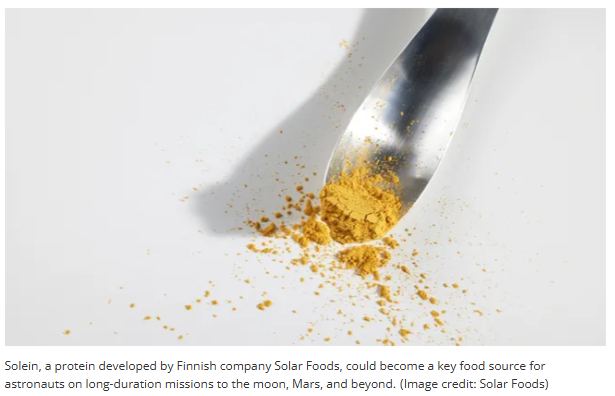
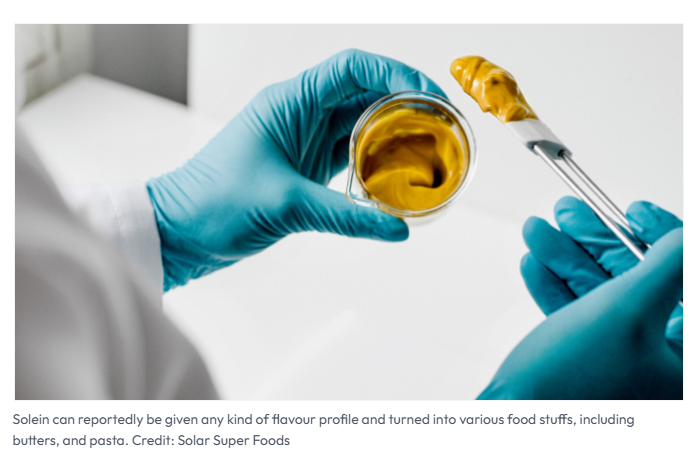
- The European Space Agency is exploring a few different concepts to improve nutrition for astronauts taking part in long-distance space missions. After beginning to investigate insect-based dietary supplements, the ESA has also launched a new HOBI-WAN project (“Hydrogen Oxidizing Bacteria in Weightlessness As a source of Nutrition”), which will explore the development of a powdered protein created with urine-derived microbes.
- The protein is known as “Solein” and was developed by a Finnish company called Solar Super Foods.
- Solein provides around 78% useful proteins (including all nine essential amino acids), 10% dietary fiber, and 6% fat.
- The rest consists of carbohydrates and minerals, providing an excellent nutrient profile that could make up a significant portion of astronaut diets if perfected.
- The company has proven itself capable of creating the protein powder on Earth using ammonia as a source for protein synthesis. Now, it needs to demonstrate that the unique gas fermentation process can be repeated in orbit. There, it won’t be using ammonia, but urea, found in human urine.
- To make this experiment possible, Solar Super Foods is developing a technology to test Solein production in space. If that test proves successful, it will graduate to testing the same technology and production pipeline on the International Space Station.

Story 3: This Sunflower-Based Protein Could Be the Future of Vegan Meat Alternatives
Source: SciTechDaily.com Story by Thais Szego
- Researchers from the Institute of Food Technology and the University of Campinas, both located in São Paulo, Brazil, worked with scientists from the Fraunhofer IVV Institute in Germany to create a new meat substitute made from sunflower flour.
- The process begins by extracting oil from sunflower seeds. Before the resulting flour can be used in foods, the husks and phenolic compounds must be removed, as these naturally occurring substances give the flour a darker color and make it harder to digest. Once refined, the flour becomes a versatile ingredient suitable for human consumption.
- Side note – Phenolic compounds are a large group of organic molecules characterized by one or more hydroxyl groups (-OH) directly attached to an aromatic ring. They are widely found in plants and play key roles in health, industry, and ecology.
- The research team developed two versions of meat substitutes.
- One used flour from roasted sunflower grains, while the other incorporated textured sunflower protein.
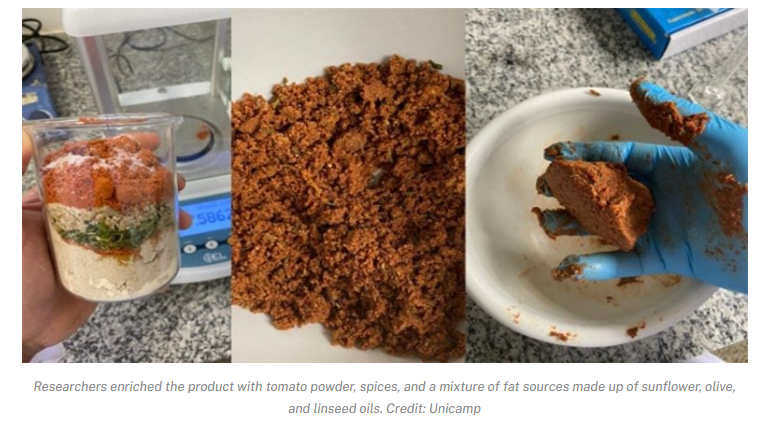
- To enhance both taste and nutrition, the mixtures were enriched with tomato powder, spices, and a blend of sunflower, olive, and linseed oils.
- The mixtures were shaped into small burger patties and baked. Each version was then tested for texture, taste, and nutritional quality.
- The textured sunflower protein variety proved superior, showing better firmness and higher levels of protein and beneficial fats, particularly monounsaturated fatty acids.
- It was also found to be rich in minerals, providing 49% of the recommended daily intake for iron, 68% for zinc, 95% for magnesium, and 89% for manganese.

Story 4: Discovery of key to joint regeneration could help regrow lost limbs
Source: MedicalXpress.com Story by Courtney Price, Texas A&M University
Link: https://medicalxpress.com/news/2025-11-discovery-key-joint-regeneration-regrow.html
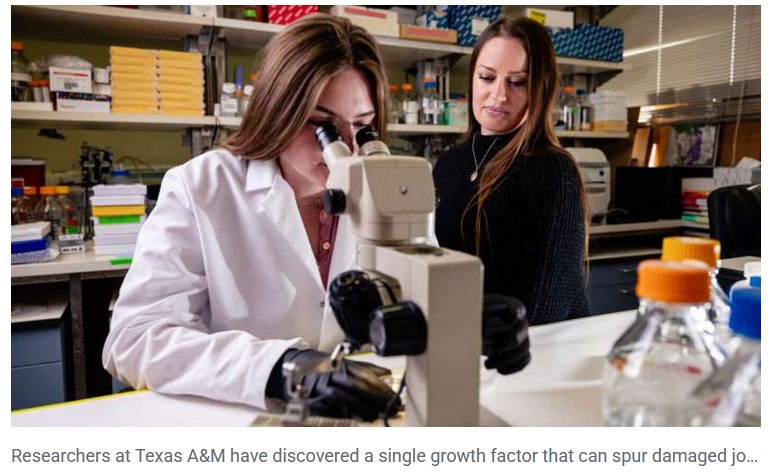
- Researchers at Texas A&M University wanted to help the 2.1 million people in the United States living with limb loss, a population expected to more than triple by the year 2060 because of the increase in vascular diseases such as diabetes.
- To this end, the team has uncovered a key element of joint cartilage regrowth, which brings them one step closer to regrowing human limbs.
- Unlike some popular animals like the axolotl, a type of salamander that can regrow lost limbs, humans can only regrow the very tips of their fingers—and only under certain circumstances.
- But now, researchers at Texas A&M’s College of Veterinary Medicine and Biomedical Sciences have discovered a fibroblast growth factor (FGF)—a type of protein—capable of regenerating an entire finger joint, including articular cartilage, tendons and ligaments.
- Side note – Fibroblast growth factors (FGFs) are a large family of proteins that regulate cell growth, development, tissue repair, and metabolism by binding to specific cell-surface receptors. They are essential in processes like wound healing, angiogenesis (formation of new blood vessels), and embryonic development
- One of the Texas A&M University lead researchers noted, “We know that bone regeneration requires many different factors, one of which is fibroblast growth factors. We were able to implant different fibroblast growth factors into tissues that normally do not regenerate and we found one—FGF8—that can regenerate a complete joint and the beginnings of a fingertip.”
- While FGF8 can’t regenerate some recognizable elements like a fingernail, its discovery is an important step toward full-limb regeneration.
- The lead researcher further noted, “This study is a proof of concept. These cells would normally undergo scar formation, but FGF8 tells them to do something else and they end up making five tissues. We were amazed at how much this one [fibroblast growth factor] can do.”

Honorable Mentions
Story: US scientists make alloys tough enough to withstand nuclear fusion’s Sun-like heat
Source: Interesting Engineering Story by Sujita Sinha
Link: https://interestingengineering.com/energy/new-alloys-for-fusion-reactors
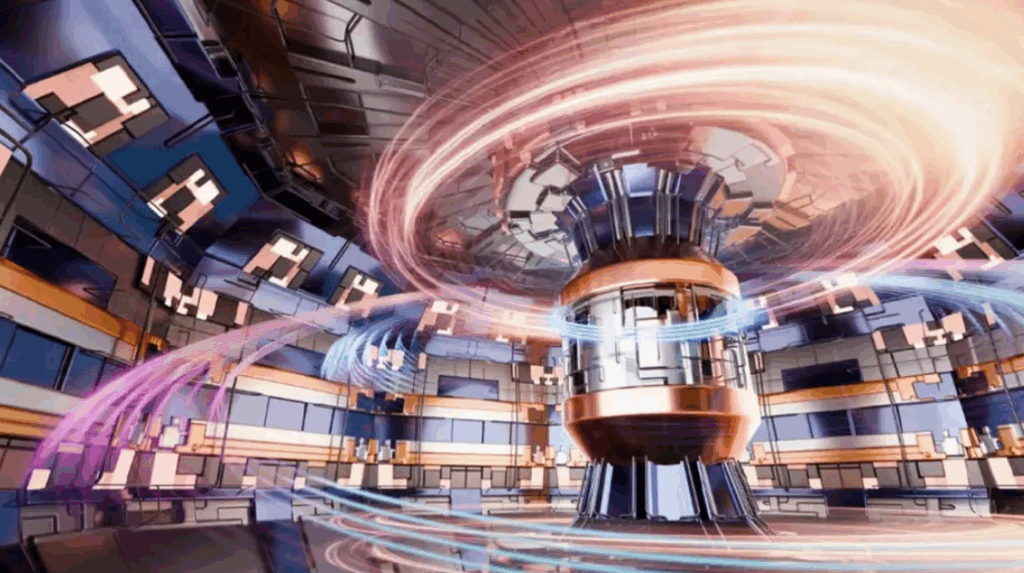
- Scientists at the University of Miami are developing new high-entropy alloys that could withstand the extreme heat and radiation inside nuclear fusion reactors—bringing us closer to clean, limitless energy.
- Giacomo Po, a mechanical engineer at the University of Miami, is leading research into high-entropy alloys (HEAs)—metal blends made from five or more elements in nearly equal amounts.
- These alloys are being tested for their strength, heat resistance, and durability under radiation, which are critical for surviving the tens of millions of degrees inside fusion reactors.
- How They’re Testing the Alloys
- Po’s team uses focused ion beams and scanning electron microscopes to sculpt and stress-test nanoscale samples.
- They combine real-time deformation experiments with advanced computer modeling to understand how these materials behave under extreme conditions, including irradiation creep—a key concern for long-term reactor use.
- The research is part of a broader international push involving the U.S., China, Japan, India, South Korea, and the EU, with over $10 billion in private investment in fusion startups.
- The Promise of Fusion Energy
- Unlike fission, fusion merges atomic nuclei, producing clean energy without long-lived radioactive waste.
- Po envisions a future with stable, low-cost electricity, affordable desalination, and minimal EV charging costs, all powered by fusion.
- “Fusion power is the holy grail—a dream that scientists have been chasing for decades,” said Po.
////////////////////////////////////////////////////////////////////////////////////////////////////////////////////////////////////////////
Story: Scientists Are Literally Growing Metal
Source: Popular Mechanics via MSN Story by Darren Orf
Link: https://www.msn.com/en-us/news/technology/scientists-are-literally-growing-metal/ar-AA1OsLeo
See research paper here: https://advanced.onlinelibrary.wiley.com/doi/10.1002/adma.202504951
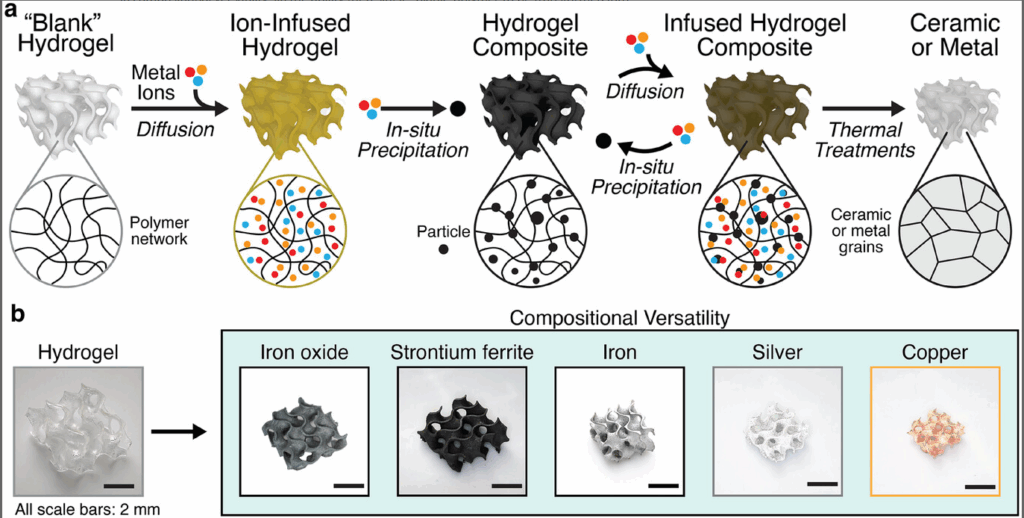
- Researchers have figured out how to “grow” metal using hydrogels and light-based printing, producing structures vastly stronger than conventional 3D-printed metals. It’s a major step in additive manufacturing technology.
- Scientists at the Swiss Federal Institute of Technology in Lausanne have developed a method to create metal structures 20 times stronger than those made with traditional techniques.
- Vat photopolymerization adapted for metals – This process, usually used with photo-sensitive resins, has been reimagined to work with metals.
- Hydrogel lattice as a scaffold – A hydrogel is used to form a “blank” lattice. Metal is then grown onto this structure, and the hydrogel is removed afterward, leaving behind a durable metal framework.
- Part of additive manufacturing (AM) – This innovation joins other advanced AM techniques like powder bed fusion, sheet lamination, and direct energy deposition, expanding the possibilities of modern manufacturing.
- Contrast with common 3D printing – Most hobbyists use fuse deposition modeling (FDM) with plastics. This new approach represents a leap forward in complexity and strength compared to those home setups.
////////////////////////////////////////////////////////////////////////////////////////////////////////////////////////////////////////////
Story: Floating device turns raindrops into electricity
Source: ScienceDaily.com Story from Science China Press
Link: https://www.sciencedaily.com/releases/2025/11/251114041228.htm
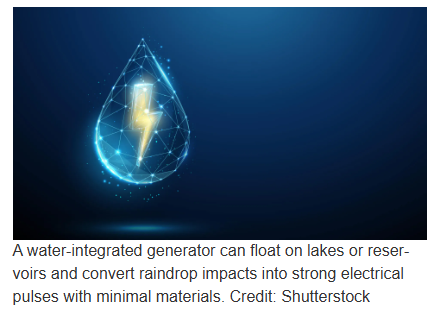
- A new floating droplet electricity generator is redefining how rain can be harvested as a clean power source by using water itself as both structural support and an electrode.
- This nature-integrated design dramatically reduces weight and cost compared to traditional solid-based generators while still producing high-voltage outputs from each falling drop.
- It remains stable in harsh natural conditions, scales to large functional devices, and has the potential to power sensors, off-grid electronics, and distributed energy systems on lakes and coastal waters.
////////////////////////////////////////////////////////////////////////////////////////////////////////////////////////////////////////////
Story: 12 Times the Speed of Sound? A Look at The World’s 1st Hypersonic Jet Powered By Hydrogen Fuel
Source: SimplyFlying.com Story by Victoria Agronsky
Link: https://simpleflying.com/worlds-1st-hypersonic-jet-hydrogen-fuel/
See the company’s website here: https://www.hypersonix.com/

- Imagine an aircraft streaking across the sky at over Mach 12, which is twelve times the speed of sound! Moreover, it is powered not by conventional jet fuel but by hydrogen fuel, meaning that it produces 0% CO₂ emissions.
- Sounds like science fiction, but it may become a reality soon. That’s precisely the bold ambition of Hypersonix Launch Systems (HLS), the Brisbane-based company charting a new frontier in high-speed flight.
- In our article, we pull back the curtain on that vision: the promise of hydrogen-fueled hypersonic vehicles, the engineering hurdles, the history behind them, and where things stand today.
- Pure research, defense projects, and a limited number of experimental flights have long dominated the race for hypersonic flight. However, we now see a company targeting hydrogen-powered scramjets for operational platforms. Why hydrogen? Why hypersonic? And what happens when you combine the two?
- We’ll explore how Hypersonix is attempting to create the world’s first hydrogen-powered hypersonic jet, what we know so far, and how these fit into the broader sweep of aviation and aerospace history.