


Show Notes 9 January 2026
Story 1: The perfect polymer? Plant-based plastic is fully saltwater degradable and leaves behind zero microplastics
Source: Phys.org Story by Robert Egan
Link: https://phys.org/news/2025-12-polymer-based-plastic-fully-saltwater.html
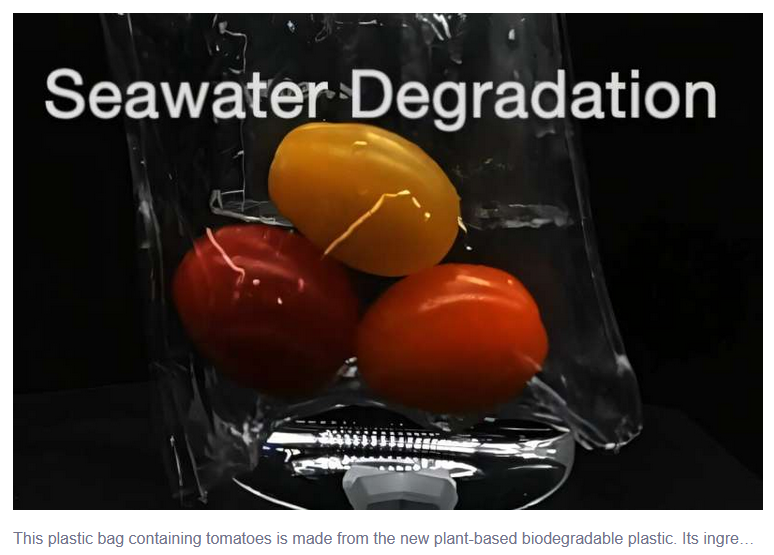
- Researchers at Japan’s RIKEN Center for Emergent Matter Science have developed a plant-based plastic that fully degrades in saltwater within two hours, leaving behind zero microplastics.
- Made from cellulose and FDA-approved additives, the material is strong, flexible, and practical for real-world use, marking a major step toward reducing ocean plastic pollution.
- The plastic is derived from carboxymethyl cellulose (CMC), a biodegradable wood-pulp derivative, combined with positively charged guanidinium ions to form a strong cross-linked network.
- Side note – A guanidinium ion is the protonated (positively charged) form of guanidine, a small nitrogen‑rich molecule. When guanidine accepts a proton (H⁺), it becomes guanidinium, a stable, planar, resonance‑stabilized cation
- In saltwater, the bonds break down quickly, allowing the plastic to fully degrade without producing microplastics.
- Initially brittle, the material’s properties were fine-tuned using choline chloride, an FDA-approved food additive. This allows the plastic to range from glass-like hardness to elastic stretchability (up to 130% of its length).
- The plastic can be made into clear films as thin as 0.07 mm, suitable for packaging and other applications.
- Unlike earlier prototypes, this version uses common, inexpensive, FDA-approved ingredients, making it viable for large-scale production.
- With cellulose being the most abundant organic compound on Earth (produced at ~1 trillion tons annually), this innovation could significantly reduce plastic pollution in oceans.

Story 2: First highway segment in U.S. wirelessly charges electric heavy-duty truck while driving
Source: Purdue University Story by Kayla Albert
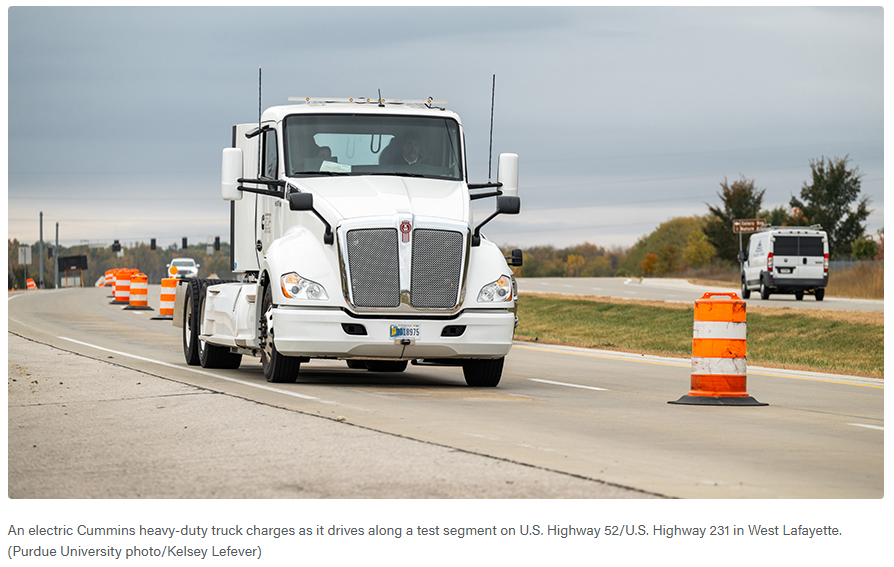
- Reminder – On our November 14 show late last year we covered news about the world’s first dynamic induction charging system implemented on a short segment of highway with real traffic is now live in France. Now we have news about a US experiment.
- Purdue University and the Indiana Department of Transportation have successfully demonstrated the first U.S. highway segment that can wirelessly charge an electric heavy-duty truck while driving at highway speeds.
- This quarter-mile test stretch in West Lafayette, Indiana, showcases a breakthrough in inductive charging technology that could reduce battery costs and enable electrified highways for both freight and passenger vehicles.
- Reminder – Inductive charging means charging a device without plugging it in, by using a magnetic field to move energy from a charging pad into the device. If you’ve ever set a phone on a wireless charging pad and it started charging—that’s inductive charging.
- A heavy-duty electric truck equipped with receiver coils was charged wirelessly while moving at highway speeds on a specially designed quarter-mile stretch of U.S. Highway 52/231.
- The system uses patent-pending inductive charging technology embedded beneath concrete pavement, transmitting power through coils to the truck’s underside.
-
Potential impact on EV adoption
- Could reduce the need for massive, expensive batteries in long-haul trucks.
- May lower infrastructure costs compared to building charging stations.
- Opens the door for scalable electrified highways that benefit passenger EVs as well.

Story 3: An iron-on electronic circuit to create wearable tech
Source: American Chemical Society press release
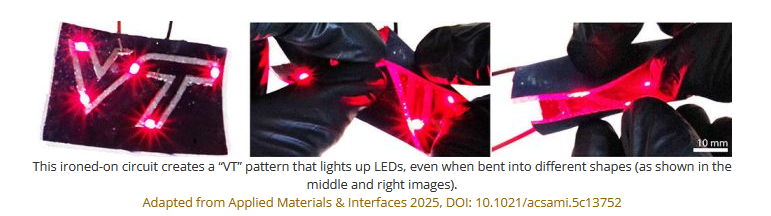
- Researchers at Virginia Tech have developed a new iron-on electronic circuit patch made from liquid metal and heat-activated adhesive. This innovation allows wearable electronics to be easily bonded to fabrics using a household iron, enabling flexible, durable, and stretchable smart clothing applications.
- The patch combines microscopic droplets of a gallium–indium alloy with polyurethane, forming a soft, conductive elastic sheet.
- How it is applied: Small rectangular pieces of the sheet are ironed onto fabrics (polyester, cotton, spandex, mesh), where the polymer bonds strongly to fibers.
- How it was demonstrated:
- A university logo with five LEDs stayed lit even when folded, twisted, or stretched.
- An iron-on microphone embedded in a shirt recorded sound across the full human hearing range, performing comparably to traditional microphones but with less bulk.
- Potential Uses: Beyond LEDs and microphones, the technology could be integrated into soft robots, health monitoring devices, and human–machine interfaces.
- This breakthrough addresses a major challenge in wearable tech: integrating electronics into flexible fabrics without sacrificing durability or comfort. By making circuits as easy to apply as an iron-on patch, it opens the door to mainstream adoption of smart clothing for healthcare, environmental monitoring, and interactive robotics.

Story 4: CES News – headset tech for the blind uses cameras + AI to understand the world, then guide the user safely by vibrating on the forehead — like a guide dog made of technology.
Source: A company called .lumen
Link: https://www.dotlumen.com/glasses
See video here: https://www.youtube.com/watch?v=C0H6D01duRc

- How the headset works – it sees the world using cameras and sensors
- The glasses [within the headset] have:
- 6 cameras
- Infrared projectors
- Motion sensors
- GPS
- These let the glasses [headset] understand the environment — obstacles, open paths, curbs, puddles, walls, and more — 100 times per second.
- Instead of pulling your hand like a guide dog… they gently “pull” your head
- Inside the glasses is a special haptic band that touches your forehead.
- If you should turn left, you feel a gentle vibration on the left.
- If you should turn right, you feel it on the right.
- If you need to slow down or avoid something, the pattern changes.
- This is the core idea: They guide you by touch, not by sound or vision.
- They don’t just warn you about obstacles — they guide you around them
- Most devices for the blind beep or vibrate when something is in the way.
- These glasses go further:
- They find a safe path
- They steer you through it
- They keep you away from hazards above or below you
- They help you stay on sidewalks and avoid roads or mud
- They can also navigate to destinations – (Coming in a software update)
- You’ll be able to say something like “Take me to the bakery,” and the glasses will guide you step-by-step using the same haptic cues.
- They can describe or find objects using audio – The glasses can:
- Tell you what objects are nearby
- Identify objects you ask for
- Speak menu options through built-in speakers
- No price set yet, but taking reservations.

Honorable Mentions
Story : New Algorithm Dramatically Speeds Up Stroke Detection Scans
Source: NYU Tandon School of Engineering
Link: https://engineering.nyu.edu/news/new-algorithm-dramatically-speeds-stroke-detection-scans

- Researchers at NYU Tandon School of Engineering have developed a novel algorithm that significantly accelerates 3D imaging scans used in stroke detection.
- In most cases stroke victims must be diagnosed using large CT scanners – CT scanners are advanced medical imaging machines that use X-rays and computers to create detailed cross-sectional (slice-like) images of the inside of the body. They provide far more detail than standard X-rays, allowing doctors to examine bones, organs, blood vessels, and soft tissues with precision.
- The new algorithm speeds up stroke 3D imaging detection scans by reconstructing brain images 10–30 times faster.
- And this new technology also makes it possible to create portable, real-time diagnosis in ambulances and rural clinics.
- It trims processing from nearly an hour to under 40 seconds, making stroke care more accessible and timely.
- Why this development matters:
- Every minute of delay in stroke diagnosis can mean the loss of millions of neurons. Faster imaging directly improves survival and recovery chances.
- Rural and underserved areas often lack large CT scanners. Portable microwave devices powered by this algorithm could democratize access to advanced stroke care.
- Shorter scan times reduce bottlenecks in hospitals, freeing up equipment and staff for more patients.
- How the Algorithm Works
- Microwave Imaging Reconstruction: Instead of relying on large CT scanners, the algorithm uses microwave-based imaging, which is safe (no radiation) and can be built into lightweight, helmet-sized devices
- Mathematical Innovation: Researchers rethought the math behind image reconstruction, streamlining computations to drastically cut processing time.
- Expanded Applications: Beyond stroke, the same technology could be adapted for breast cancer screening and ICU monitoring, where rapid imaging is critical.
////////////////////////////////////////////////////////////////////////////////////////////////////////////////////////////////////////////
Story: New materials yank ‘forever chemicals’ from water
Source: ScienceNewsExplores.org Story by Carolyn Wilke
Link: https://www.snexplores.org/article/mof-filter-pfas-forever-chemicals-water
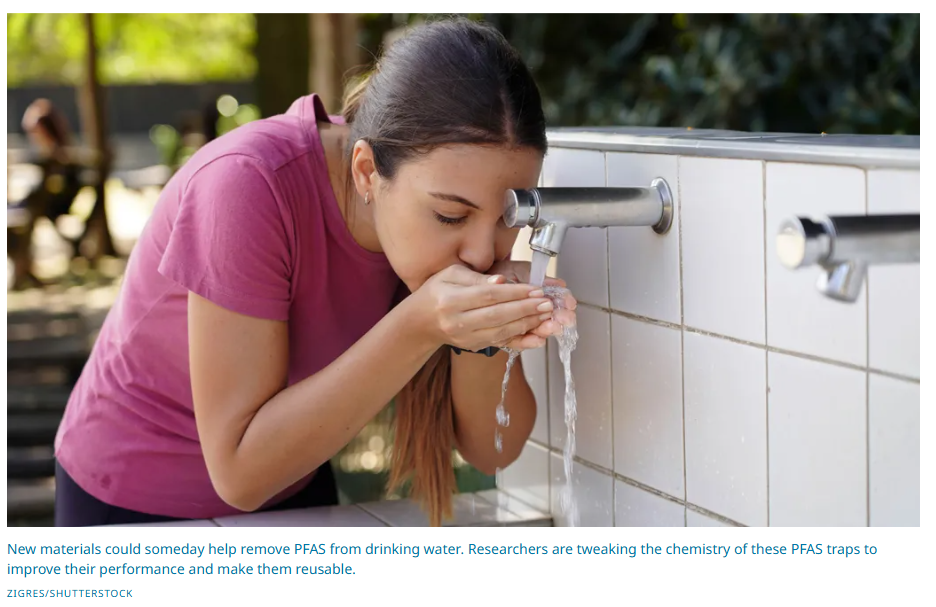
- PFAS Problem: Per- and polyfluoroalkyl substances (PFAS), often called “forever chemicals”, are highly persistent pollutants found in water supplies worldwide. They resist breakdown and pose health risks.
- New Breakthrough: Scientists have developed a fast-acting material that can remove PFAS from water within seconds, a major improvement over existing methods that are slow or incomplete.
- Efficiency: The material works by quickly binding and extracting PFAS molecules, offering a practical solution for large-scale water purification.
- Impact: This innovation could significantly improve public health and environmental safety by addressing one of the most stubborn classes of contaminants.
- Future Potential: Researchers are optimistic about scaling this technology for widespread use in municipal water systems and industrial cleanup efforts.
////////////////////////////////////////////////////////////////////////////////////////////////////////////////////////////////////////////
Story: World’s smallest AI supercomputer can fit in your pocket, run without server or GPUs
Source: Interesting Engineering Story by Atharva Gosavi
Link: https://interestingengineering.com/ai-robotics/us-world-smallest-ai-supercomputer
See the company’s website here: https://tiiny.ai/
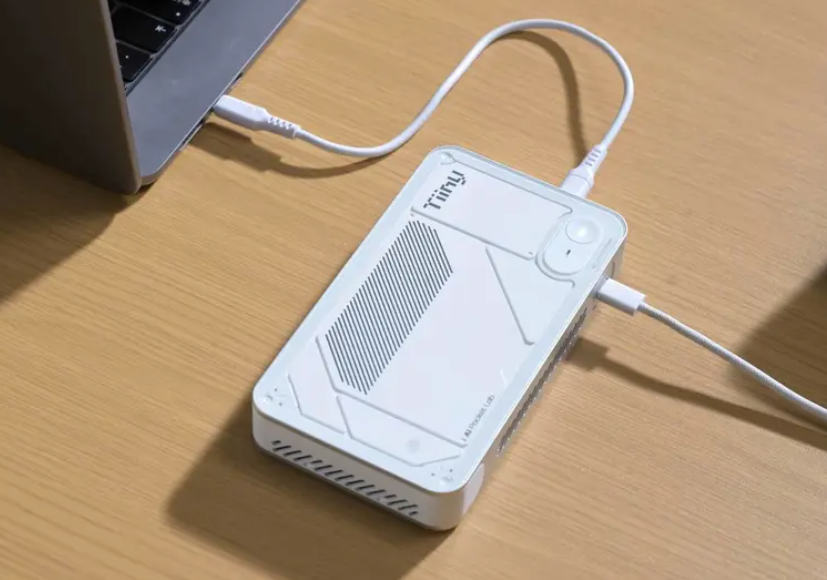

- Note: Only one of the article’s claims has been independently verified: The claim that the Tiiny AI Pocket Lab is the “world’s smallest personal AI supercomputer” has been independently verified by Guinness World Records.
- All other technical claims in the article (e.g., running 120B‑parameter models locally, performance equivalence to GPUs, energy efficiency, privacy guarantees, etc.) have not been independently verified by any neutral third party based on currently available information.
- US deep-tech startup Tiiny AI revealed the Tiiny AI Pocket Lab, which has been officially verified by Guinness World Records as the world’s smallest personal AI supercomputer.
- Resembling a power bank with a pocket-sized design, the supercomputer can run 120 billion-parameter LLMs locally without relying on cloud connectivity, servers, or high-end GPUs.
- What the company claims in terms of specs and performance:
- 12-core ARM v9.2 CPU
- Discrete Neural Processing Unit rated at 190 trillion operations per second (TOPS)
- Note, a high-end GPU, such as Nvidia H100, can do about 1,000 trillion operations per second – but requires massive cooling and power.
- Reality Check: Yes — a discrete Neural Processing Unit (NPU) rated at 190 TOPS (trillion operations per second) is technically possible, though it would be at the very high end of current AI hardware performance. Most NPUs today in consumer devices range from 30–50 TOPS, while specialized accelerators and AI supercomputers can exceed 100 TOPS. A 190 TOPS NPU would likely be aimed at advanced edge AI or datacenter-class workloads, requiring significant power and cooling considerations.
- 80 GB LPDDR5X memory
- Runs models up to 120 billion parameters locally
- Through this device, Tiiny AI aims to reduce the dependency of supercomputers on cloud and GPUs, while making data-center-level power accessible to common users. The AI Pocket Lab, launched on December 10, also stands as a viable alternative solution to combat sustainability concerns, rising energy costs, and privacy risks due to cloud-based AI infrastructure.
- The AI Pocket Lab is designed to serve every possible personal AI use case, serving a variety of professionals, including creators, developers, researchers, and students.
- It allows users to enable multi-step reasoning, deep context understanding, agent workflows, content generation, and secure processing of sensitive information without relying on the internet.
- The device stores user data, preferences, and documents locally using bank-level encryption, giving it long-term memory and stronger privacy than cloud-based AI systems.
- Cost: The Tiiny AI “Tech” page does not list a product price. Instead, it invites visitors to sign up for early pre-order updates, exclusive offers, and tester opportunities. That means the cost has not yet been publicly disclosed.
////////////////////////////////////////////////////////////////////////////////////////////////////////////////////////////////////////////
Story: Strengthening asphalt roads with a unique green ingredient: Algae
Source: EurekAlert!.org Story from American Chemical Society
Link: https://www.eurekalert.org/news-releases/1109918
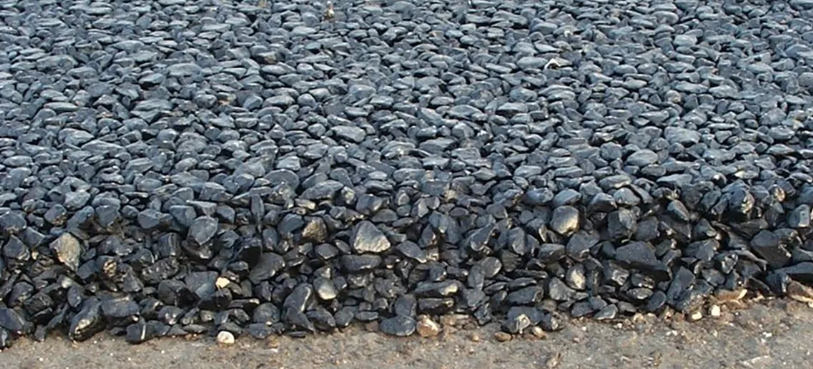
- Researchers at Arizona State University have developed an algae-based asphalt binder that makes roads more durable in freezing temperatures, reduces cracking, and could significantly cut carbon emissions compared to petroleum-based asphalt.
- Problem: Traditional asphalt uses bitumen (from crude oil) as a binder. In freezing conditions, bitumen becomes brittle, leading to cracks, potholes, and costly repairs.
- Solution: The team led by Elham Fini created a rubbery binder from algae oil that improves flexibility, moisture resistance, and self-healing properties.
- Testing:
- Oils from four algae species were modeled; Haematococcus pluvialis showed the best performance.
- Lab simulations demonstrated up to 70% improvement in deformation recovery compared to petroleum-based asphalt.
- Environmental Impact:
- Replacing just 1% of petroleum binder with algae binder could cut asphalt’s net carbon emissions by 4.5%.
- At 22% substitution, asphalt could potentially become carbon neutral.
- Funding: Supported by the U.S. Department of Energy.
////////////////////////////////////////////////////////////////////////////////////////////////////////////////////////////////////////////
Story: Scientists discover ‘magical’ material that’s stronger than steel and lighter than aluminum — and its potential is dizzying
Source: The Cool Down on MSN Story by Rick Kazmer
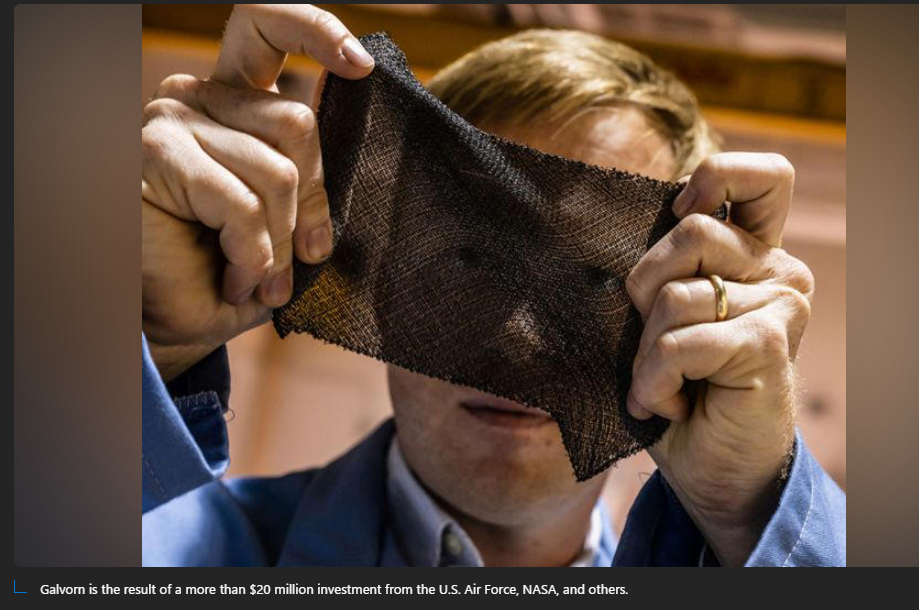
- Scientists have developed a new material called Galvorn.
- Galvorn is a revolutionary new material made from carbon nanotubes that is stronger than steel, lighter than aluminum, and more conductive than copper. It was developed by DexMat, a Houston-based company, with support from NASA, the U.S. Air Force, and other partners.
- What Makes Galvorn Special
- Strength & Weight: Galvorn is stronger than steel yet lighter than aluminum, making it ideal for aerospace, automotive, and construction applications.
- Conductivity: It has the electrical conductivity of copper, which means it can replace copper in wiring, batteries, and power transmission.
- Carbon Nanotube Structure: Built from carbon nanotubes (CNTs) — tiny cylinders of carbon molecules 100,000 times thinner than a human hair — giving it extraordinary mechanical and electrical properties.
- Environmental Impact: Designed to reduce carbon dioxide emissions by replacing heavier, dirtier materials like steel, aluminum, and copper in key industries.
- Potential Applications
- Energy & Transmission: Lightweight, efficient wiring for power grids and electric vehicles.
- Aerospace & Defense: Strong, light components for aircraft and spacecraft.
- Automotive: Could replace copper in EV batteries and steel in car frames, reducing weight and improving efficiency.
- Electronics: EMI shielding, flexible thermoelectric generators, and lightweight signal cables.
- Textiles: E-textiles and wearable electronics due to its flexibility.