


Show Notes 13 February 2026
Key trend to watch – “Agentic AI”
Agentic AI refers to artificial intelligence systems that don’t just respond to prompts — they can pursue goals, make decisions, take actions, and adapt with minimal human supervision. Think of it as the shift from “smart tools” to “autonomous digital workers.”
Story 1: AI model from Google’s DeepMind reads recipe for life in DNA
Source: BBC Story by James Gallagher
Link: https://www.bbc.com/news/articles/c39428dv18yo

- Google DeepMind has developed AlphaGenome, an AI system designed to interpret DNA at an unprecedented scale.
- Side note – AlphaGenome is Google DeepMind’s large‑scale AI model designed to decode how DNA works, especially the regulatory “non‑coding” regions that control when and how genes are expressed. It’s essentially a unifying model for predicting many different molecular behaviors directly from raw DNA sequence.
- It represents a major leap in computational genomics because it can analyze very long stretches of DNA (up to 1 million base pairs) and predict a wide range of biological outcomes with high resolution.
- Researchers believe AlphaGenome could transform our understanding of how DNA works, especially the parts that influence disease.
- Why It Matters:
- Subtle variations in DNA can increase risks for conditions like high blood pressure, dementia, and obesity.
- AlphaGenome may help scientists pinpoint why these variations matter and how they contribute to disease.
- Unlocking the “Dark Genome”
- Only 2% of human DNA codes for proteins.
- The remaining 98%, often called the dark genome, regulates how genes are used but is poorly understood.
- Many disease-linked mutations are found in this region.
- AlphaGenome can analyze one million DNA letters at a time, helping researchers decode this vast, complex area.
-
Side note – DNA uses four chemical bases—often called its letters—to encode genetic information:
- Adenine (A)
- Thymine (T)
- Cytosine (C)
- Guanine (G)
- These bases form the “rungs” of the DNA double helix. They pair in a very specific way:
- A pairs with T
- C pairs with G
- Together, long sequences of these letters make up genes and ultimately guide how living organisms are built and maintained.
- Scientists describe the model as:
- “An incredible feat”
- “A major milestone”
- DeepMind acknowledges the model isn’t perfect but sees it as a powerful tool for advancing genetic research.
-
Potential Impact
- Could accelerate genetic disease research, including cancer.
- May speed up drug discovery by revealing how genetic variations affect biological processes.

Story 2: Carbon Robotics Launches the World’s First-Ever Large Plant Model
Source: BusinessWire.com
See video here: https://www.youtube.com/watch?v=6IwJYlgJOf0&t=6s

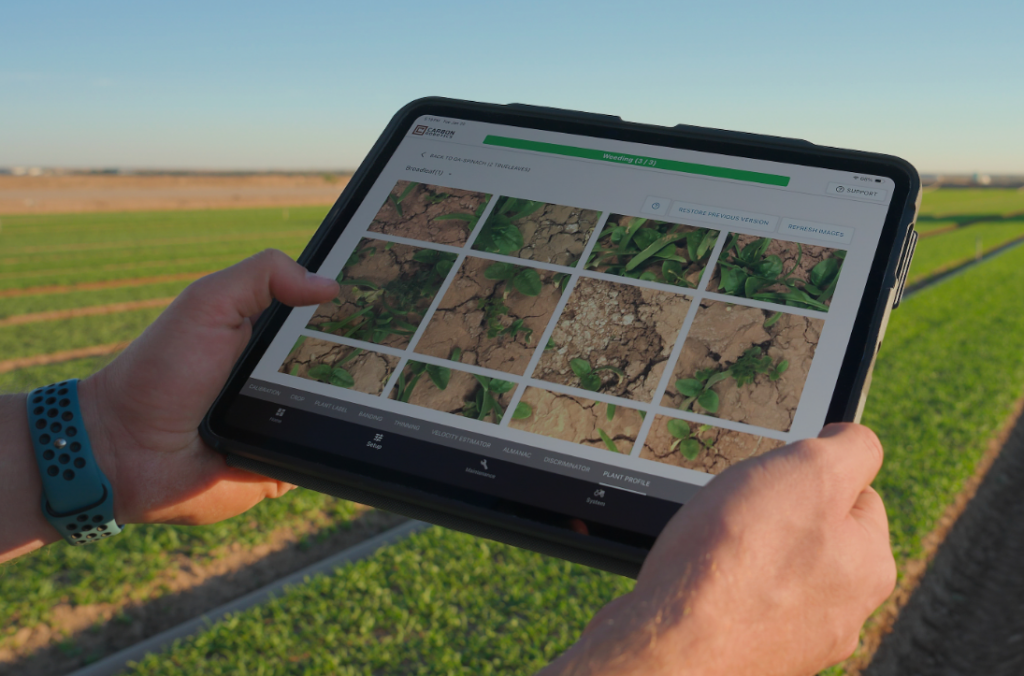
- Carbon Robotics has unveiled what it claims is the world’s first Large Plant Model (LPM), a groundbreaking AI system trained on an unprecedented dataset of 150 million labeled plants.
- This new Large Plant Model AI system promises a step-change in how farmers manage crops, enabling laser weeding in any field or crop in minutes.
- The Large Plant Model continuously learns from real-world data gathered by Carbon Robotics’ global fleet of LaserWeeder™ machines, creating a rapidly improving system for plant detection and identification.
- Side note – Carbon Robotics’ LaserWeeder machines are innovative, tractor-towed agricultural robots that use AI, high-resolution cameras, and 30+ CO2 lasers to kill weeds instantly with sub-millimeter precision. These chemical-free, sustainable tools are designed for specialty row crops, clearing over 200,000 weeds per hour and operating day or night.
- Key Features and Benefits
- Precision Technology: Utilizes AI computer vision to identify crops and weeds in real-time.
- Efficiency: Capable of clearing 2+ acres per hour.
- Environmental Impact: Provides a chemical-free, no-till alternative for organic and conventional farming.
- Operating Conditions: Works in various weather conditions, day or night.
- The machines are primarily used in large vegetable-growing regions and are designed to integrate into existing farming infrastructure
- This technology arrives at a crucial time, offering farmers a path to reduce reliance on labor and herbicides while boosting yields.

Story 3: Your future home might be framed with printed plastic
Source: MIT News Story by Jennifer Chu
Link: https://news.mit.edu/2026/your-future-home-might-be-framed-with-printed-plastic-0203
See research paper here: https://utw10945.utweb.utexas.edu/sites/default/files/2025/4%20Design%2C%20Manufacture%20and%20Testing%20of%20Structural%20Tr.pdf
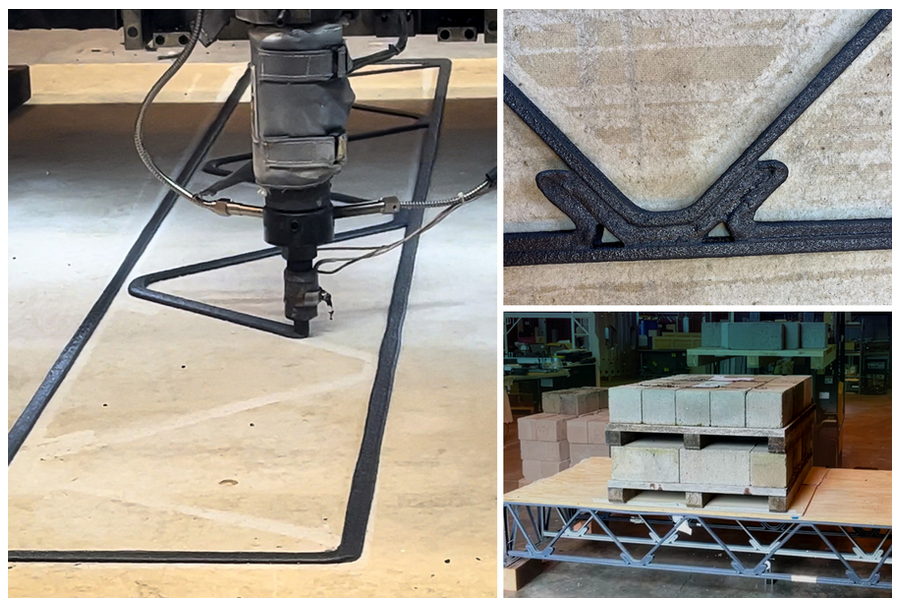
- The plastic bottle you just tossed in the recycling bin could provide structural support for your future house.
- MIT engineers are using recycled plastic to 3D print construction-grade beams, trusses, and other structural elements that could one day offer lighter, modular, and more sustainable alternatives to traditional wood-based framing.
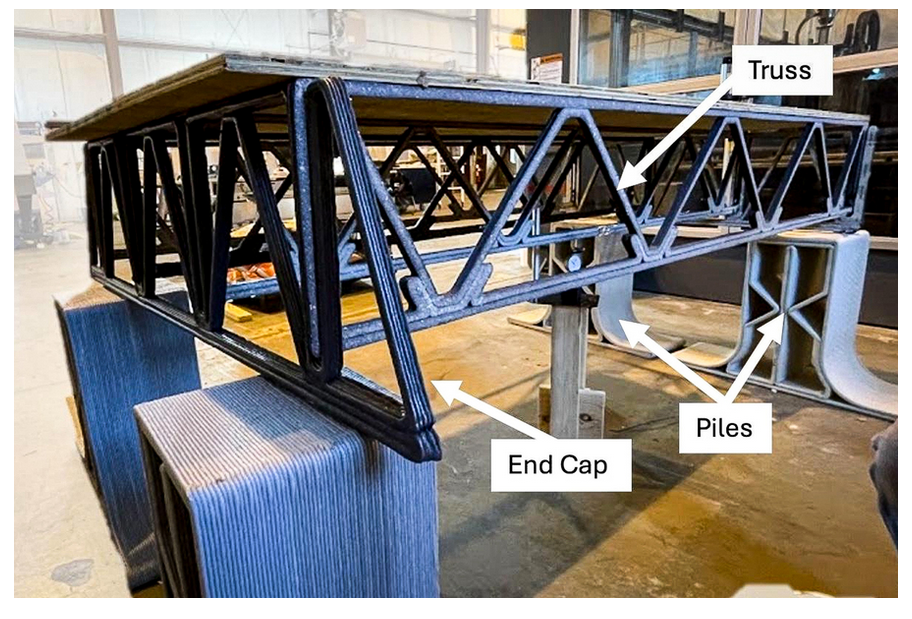
- In a paper published in the Solid FreeForm Fabrication Symposium Proceedings, the MIT team presents the design for a 3D-printed floor truss system made from recycled plastic.
- A traditional floor truss is made from wood beams that connect via metal plates in a pattern resembling a ladder with diagonal rungs. Set on its edge and combined with other parallel trusses, the resulting structure provides support for flooring material such as plywood that lies over the trusses.
- The MIT team printed four long trusses out of recycled plastic and configured them into a conventional plywood-topped floor frame, then tested the structure’s load-bearing capacity.
- The printed flooring held over 4,000 pounds; exceeding key building standards set by the U.S. Department of Housing and Urban Development.
- The plastic-printed trusses weigh about 13 pounds each, which is lighter than a comparable wood-based truss, and they can be printed on a large-scale industrial printer in under 13 minutes.
- In addition to floor trusses, the group is working on printing other elements and combining them into a full frame for a modest-sized home.
- Reality check – my son-in-law, who is a construction manager for Google, really liked this article but added this comment back to me: “That’s super cool! Now code just needs to evolve to allow these innovations.”

Story 4: A new scan lets scientists see inside the human body in 3D color
Source: ScienceDaily.com
Link: https://www.sciencedaily.com/releases/2026/02/260204121550.htm
See research paper here: https://doi.org/10.1038/s41551-025-01603-5
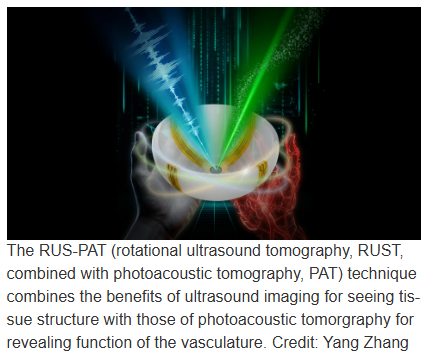
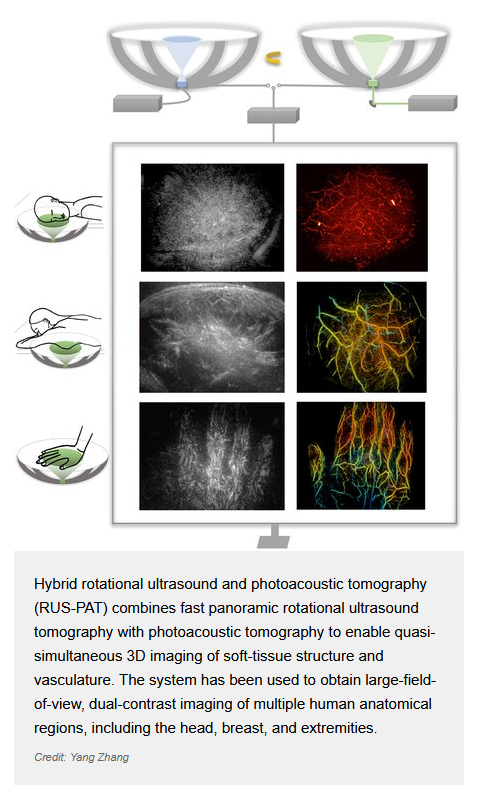
- Researchers at Caltech and USC have developed a new imaging technique called RUS-PAT (Rotational Ultrasound Tomography combined with Photoacoustic Tomography). This system generates vivid 3D color images that reveal both the physical structure of soft tissue and the functional activity of blood vessels.
- How It Works The device solves the limitations of existing tools by merging two technologies:
- Ultrasound: Provides structural images of tissue.
- Photoacoustic Tomography: Uses laser light to cause molecules to vibrate and create sound waves, allowing scientists to see blood vessels in color and observe blood flow.
- Instead of complex arrays, the team used a small number of arc-shaped detectors that rotate around the subject, mimicking a full hemispheric detector. This makes the system simpler, cheaper, and more practical.
- Key Benefits
- Safety: Unlike CT scans or X-rays, it uses no ionizing radiation.
- Side note – Ionizing radiation carries enough energy to remove electrons from atoms, which can damage biological tissues and DNA. This damage can lead to both acute injuries and long-term health effects if exposure is not properly controlled.
- Convenience: It requires no contrast dyes and completes a scan in less than one minute.
- Clarity: It offers detailed 3D views that CT scans or X-rays could achieve alone.
- Potential Applications The technology has already been tested on human volunteers and shows promise for:
- Breast Cancer: Pinpointing tumor locations while revealing biological activity.
- Diabetes: Monitoring nerve damage (neuropathy) and oxygen supply simultaneously.
- Brain Research: Studying brain anatomy and blood flow dynamics together.

Honorable Mentions
Story: 3D-printed passive cooling system cools data centers without fans or pumps – A European project shows how passive cooling system can cut data center energy use and reuse excess heat.
Source: Interesting Engineering Story by Neetika Walter
Link: https://interestingengineering.com/ai-robotics/3d-printed-passive-cooling-data-centers
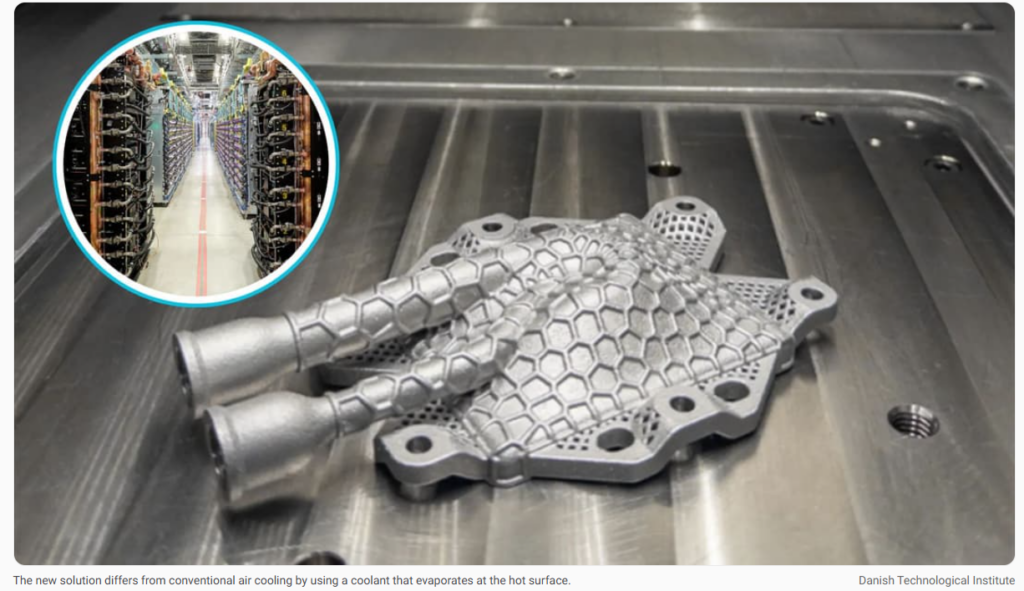
- A European research project has now demonstrated a new cooling approach [for data centers] that could significantly cut energy consumption while extending the lifespan of computer chips.
- The research team includes the Danish Technological Institute and Heatflow [a Danish company specializing in cooling solutions], along with partners from Belgium and Germany
- The solution also opens the door to reusing waste heat for district heating and industrial processes.
- Side note – District heating in that sentence refers to a centralized system that distributes heat—usually in the form of hot water or steam—from one large source to many buildings through insulated underground pipes. It’s essentially a shared heating network for neighborhoods, campuses, or even entire cities.
- The team designed and tested a 3D-printed cooling component aimed at data centers and high-performance computing systems.
- Side note – The component would be installed inside the server chassis, mounted directly on top of the CPUs, GPUs, or other high‑power chips designed for servers and high-performance computing systems.
- Replaces traditional cold plates or heat sinks.
- Unlike conventional air cooling, the new system uses passive two-phase cooling based on the thermosiphon principle.
- Side Note – What is the thermosiphon principle?
- The thermosiphon principle is a passive heat‑transfer process where a fluid circulates naturally because warm fluid becomes less dense and rises, while cooler, denser fluid sinks. This creates a continuous loop of motion without any pump or mechanical assistance.
- How It Works
- Heating a fluid lowers its density → it rises.
- Cooling a fluid increases its density → it sinks.
- This density difference drives a natural convection loop, moving heat from one place to another.
- Works in open-loop (like solar water heaters) or closed-loop systems (like some cooling devices).
- Where It’s Used
- Solar water heaters
- Boilers and furnaces
- Heat pumps
- Electronics cooling systems
- Chimneys and solar chimneys
////////////////////////////////////////////////////////////////////////////////////////////////////////////////////////////////////////////
Story: How we’re helping preserve the genetic information of endangered species with AI
Source: Google’s The Keyword Blog Story by Lizzie Dorfman and Andrew Carrol
Link: https://blog.google/innovation-and-ai/technology/ai/ai-to-preserve-endangered-species/

- Google has launched a partnership with the Vertebrate Genomes Project (VGP) and the Earth BioGenome Project to preserve the genetic codes of endangered animals. The project aims to create a comprehensive digital catalog of life, often described as a “biological instruction manual,” which is critical for future conservation efforts.
- How It Works:
- Traditionally, mapping a species’ genome is expensive and time-consuming.
- Google is deploying its advanced AI tools—specifically DeepPolisher, DeepVariant, and DeepConsensus—to automate and accelerate this process. These tools allow scientists to sequence DNA faster, more accurately, and at a significantly lower cost.
- Key Achievements & Goals
- Current Progress: The project has successfully sequenced the genomes of 13 endangered species, including the hog deer, elongated tortoise, and Eld’s deer.
- Expansion: Google has provided additional funding to Rockefeller University to sequence 150 more species.
- Open Access: All gathered genetic data is being made publicly available to the global scientific community to aid in research and conservation strategies.
////////////////////////////////////////////////////////////////////////////////////////////////////////////////////////////////////////////
Story: The Navy’s Batwing Fighter Jet Promises Mach 4 Speed… But It’s Still Just a Concept
Source: YD Design Story by Sarang Sheth

- David versus Goliath stories captivate us, especially when David brings a slingshot that looks like alien technology. Enter Stavatti Aerospace, a 25-person firm from Niagara Falls taking on Boeing and Northrop Grumman for one of the most lucrative defense contracts in naval aviation.
- Their weapon of choice? The SM-39 Razor, a fighter design so visually striking it demands a double-take. The triple-fuselage “Batwing” configuration breaks from a century of conventional aircraft architecture, presenting a form that’s more science fiction than traditional aerospace engineering.
- The radical design supposedly delivers Mach 4 speed, Mach 2.5 supercruise, and performance metrics that eclipse what defense industry titans are proposing. Stavatti built these ambitions on titanium foam construction and aerodynamic principles that challenge orthodox thinking about fighter design.
- The catch? Stavatti has never manufactured an actual aircraft. Since opening in 1994, the company has produced concepts, proposals, and computer-generated imagery. Nothing has left the ground. The SM-39 represents either visionary thinking waiting for its moment or the latest chapter in a long catalog of paper airplanes.
////////////////////////////////////////////////////////////////////////////////////////////////////////////////////////////////////////////
Story: New study of chemical reactions in space ‘could impact the [theories of the] origin of life in ways we hadn’t thought of’
Source: LiveScience.com Story by Victoria Atkinson
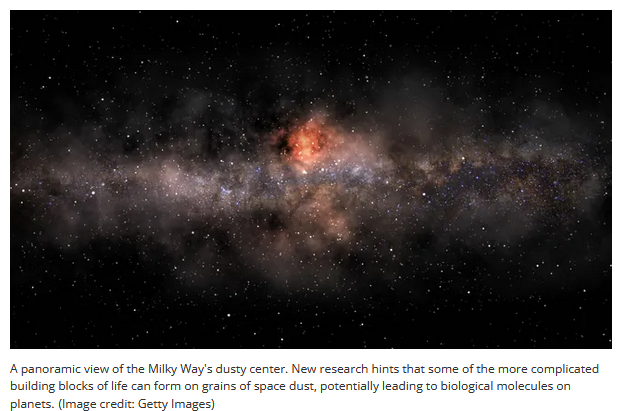
- This article from Live Science (based on research published in the Monthly Notices of the Royal Astronomical Society) explores how the fundamental building blocks of life, specifically amino acids, can survive the harsh conditions of space by hitching a ride on cosmic dust.
- Key Findings of the Study:
- Amino Acid Survival: Researchers from the Diamond Light Source and other institutions tested whether amino acids like glycine, alanine, aspartic acid, and glutamic acid could survive the intense heat and vacuum of space.
- The Role of Dust: They discovered that when these molecules bind to microscopic grains of amorphous magnesium silicate (a common component of space dust), they become much more resilient.
- “Astromineralogical Selection”: The study suggests a natural “filtering” process. While several amino acids were tested, only glycine and alanine remained strongly attached to the silicate particles under extreme conditions. Alanine, in particular, remained stable at temperatures far exceeding its usual melting point.
- Surface Chemistry: The team found that the specific chemical makeup of the dust surface—such as the presence or absence of hydrogen atoms—significantly influences how well these molecules stick and how they react to heat.
- Significance for the Origins of Life:
- Delivery Mechanism: Scientists have long debated whether life’s ingredients formed on Earth or arrived from space. This research supports the “delivery” theory, suggesting that space dust could act as a protective transport vehicle, shielding organic molecules as they travel through the solar system.
- Dominant Source: While comets and asteroids also carry organic material, the sheer volume of “micrometeorites” (space dust) falling to early Earth may have made it the primary source of organic carbon needed to jumpstart life.
- Universal Potential: Because cosmic dust is found throughout the galaxy, these findings imply that the chemical precursors for life are likely widespread, increasing the chances that similar processes could occur on other planets.
- How the Research Was Done:
- The researchers used a specialized laboratory setup to create “cosmic dust analogues” and used high-energy X-ray beams (at the Diamond Light Source synchrotron) to observe the interaction between the minerals and the amino acids at a molecular level.