


Show Notes 17 April 2026
All Medical Special
Text highlighted in blue identifies notes I have inserted.
Story 1: Researchers Develop 3D Printed Lab-Grown Ear Cartilage
Source: 3DPrinting.com
Link: https://3dprinting.com/news/researchers-develop-3d-printed-lab-grown-ear-cartilage/
See video here: https://www.youtube.com/watch?v=01U6KC35dKw&t=1s
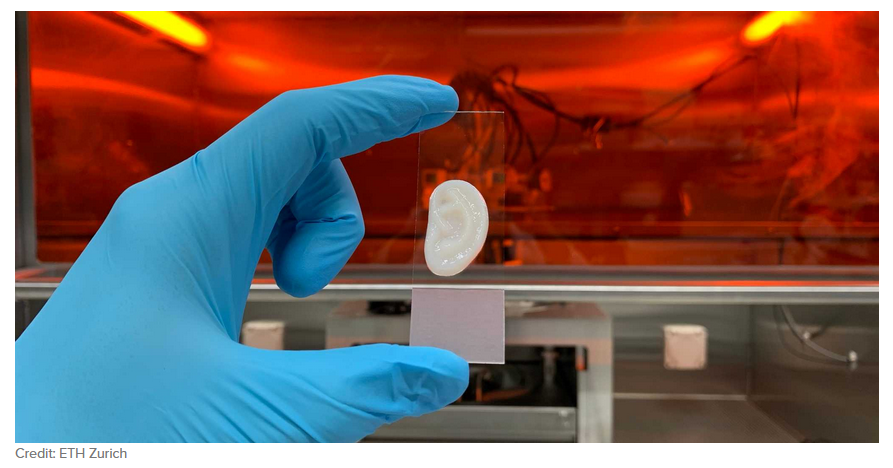
- Researchers from ETH Zurich, the Friedrich Miescher Institute, and the Cantonal Hospital of Lucerne [all based in Switzerland] have successfully 3D‑printed lab‑grown human ear cartilage that stays stable and elastic in animal models for at least six weeks.
- The breakthrough brings medicine closer to creating custom, patient‑specific ear replacements—but one key challenge remains: maturing elastin, the protein responsible for the natural ear’s flexibility.
- What the Researchers Achieved:
- Produced elastic ear cartilage using human cartilage cells expanded in the lab.
- 3D‑printed the cells in a bioink to form ear‑shaped structures.
- After several weeks of maturation, the tissue developed:
- Type II collagen (a major component of natural cartilage)
- Mechanical properties similar to a real ear
- When implanted in animal models, the cartilage kept its shape and elasticity for six weeks.
- Why This Matters:
- Addresses a major need for patients with microtia, a congenital ear malformation affecting ~4 in 10,000 children.
- Current treatment requires harvesting rib cartilage, which is painful, leaves scars and produces [replacement] ears that are often too stiff.

- Lab-grown cartilage could offer customized, less invasive, more natural‑feeling ear reconstruction.
- How They Did It -Researchers optimized four critical factors:
- Cell proliferation – growing millions of cartilage cells from tiny biopsies.
- Material properties – tuning the bioink for structure and support.
- Cell density – ensuring enough cells to form robust cartilage.
- Maturation environment – controlling incubator conditions to promote collagen formation.
- The Remaining Challenge:
- The engineered cartilage still lacks fully matured elastin, the protein that gives natural ears their springiness and flexibility.
- Scientists haven’t yet identified how to reliably form stable elastin networks in lab-grown tissue.
- The team expects to solve this within five years, after which they can move toward clinical trials and regulatory approval.

Story 2: Novel prosthetic design combines AI and 3D printing to improve fit
Source: MedicalXpress.com Story by Robert Egan
Link: https://medicalxpress.com/news/2026-03-prosthetic-combines-ai-3d.html
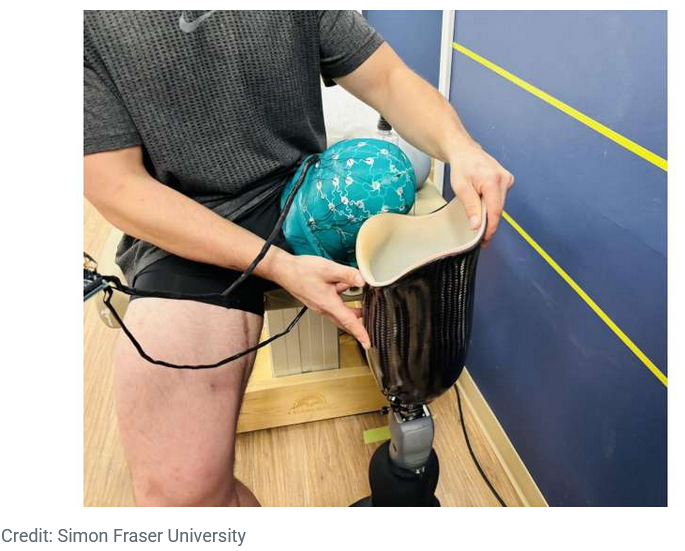
- A new study from Simon Fraser University [located in Greater Vancouver, British Columbia, Canada] shows that AI‑guided pressure mapping combined with 3D‑printed lattice structures can dramatically improve prosthetic socket comfort, absorbing over 1,600% more energy than traditional solid designs.
- By capturing each wearer’s unique pressure distribution, the system produces lighter, breathable, personalized sockets that may reduce ulcers, pain, and long‑term joint complications.
- What This Research Introduces:
- A fully customizable 3D‑printed prosthetic socket that adapts to each user’s pressure and force patterns.
- AI software that converts real‑time pressure data into a personalized lattice‑infill socket design.
- A silicone liner with embedded origami‑based pressure sensors to map forces during standing, walking, ramp descent, and leaning.
- How the System Works:
- User wears a pressure‑mapping liner inside a temporary socket.
- Sensors capture pressure/force data during everyday movements.
- AI analyzes the data to identify high‑pressure zones and optimal support regions.
- A 3D printer fabricates a custom lattice socket tailored to the user’s biomechanics.
- Key Findings – Massive Energy Absorption Improvements
- Standing 1,600% more
- Walking 1,290% more
- These gains come from a Gyroid lattice infill, a repeating 3D structure inspired by natural patterns like honeycomb and bone.

Story 3: AI blood test finds silent liver disease years before symptoms
Source: ScienceDaily.com Story from Johns Hopkins Medicine
Link: https://www.sciencedaily.com/releases/2026/03/260305223204.htm
See the research paper here: https://www.science.org/doi/10.1126/scitranslmed.adw2603

- Researchers at Johns Hopkins have developed an AI-powered blood test that can detect early liver fibrosis and cirrhosis years before symptoms appear, by analyzing genome-wide DNA fragmentation patterns in the blood.
- This “fragmentome” approach doesn’t look for mutations; instead, it reads subtle patterns in how DNA breaks apart—revealing early disease signals that current blood tests often miss.
- What the Study Found:
- AI + liquid biopsy: The test uses machine learning to analyze cell-free DNA (cfDNA) fragments circulating in the bloodstream.
- Detects early liver disease: It identified early fibrosis, advanced fibrosis, and cirrhosis with high sensitivity—well before symptoms typically appear.
- Genome-wide approach: Instead of scanning for mutations, it examines:
- Fragment size
- Fragment distribution across the genome
- Repetitive DNA regions (rarely studied in other tests)
- Massive dataset: Each sample included ~40 million DNA fragments, enabling highly detailed pattern recognition.
- Why This Matters:
- Early fibrosis is reversible, but current blood tests often miss it.
- Cirrhosis is detected only ~50% of the time with standard markers.
- 100 million people in the U.S. have liver conditions that raise their risk of cirrhosis and liver cancer.
- Earlier detection could allow treatment before permanent damage occurs.
- Beyond Liver Disease:
- Researchers also found DNA fragmentation patterns associated with:
- Cardiovascular disease
- Inflammatory disorders
- Neurodegenerative conditions
- There weren’t enough cases to build full classifiers yet, but the signals suggest broad potential for detecting many chronic diseases using the same platform.

Story 4: The Future of Mobility: How Advanced Robotic Prosthetics are Restoring Touch and Motion
Source: Los Angeles Times Story by Kevin Famuyiro

- The article describes a major leap in bionic prosthetics: new surgical techniques and implanted sensors now allow amputees to control robotic limbs with far greater precision, while also restoring realistic sensations of touch.
- Researchers are effectively reconnecting the nervous system to advanced prosthetic hardware, creating limbs that feel and behave much more like biological ones.
- Key Points from the Article:
- Rewiring the Nervous System for Better Control
- Surgeons are now using advanced procedures such as targeted muscle reinnervation (TMR) and regenerative peripheral nerve interfaces (RPNIs).
- These techniques reroute or regrow nerves so they can send clearer signals to robotic limbs.
- Result: faster, more intuitive, more natural control of prosthetic arms and hands.
- 2. Restoring the Sense of Touch
- Implanted sensors in the prosthetic hand can stimulate nerves in the arm.
- Users report feeling pressure, texture, and even the direction of movement.
- This sensory feedback dramatically improves dexterity and reduces the mental effort required to use the limb.
- 3. Smarter, More Capable Robotic Limbs
- Modern bionic limbs include:
- AI-assisted movement prediction
- High-resolution force sensors
- Multi-articulating fingers
- Adaptive grip control
- These systems can interpret nerve signals in real time and adjust movement accordingly.
- Clinical Trials Show Transformative Results:
- Patients in trials can perform tasks previously impossible with older prosthetics—tying shoes, picking up fragile objects, or manipulating small items.
- Many describe the experience as feeling like they “have their hand back.”
- The Remaining Challenges
- These systems are still expensive and not widely available.
- Long-term durability of implanted sensors remains under study.
- Insurance coverage is inconsistent, slowing adoption.

Honorable Mentions
Story: Inside world’s first hydrogen-powered cruise scheduled to set sail this year
Source: Daily Mail via MSN Story by Erin Deborah Waks

- Viking Libra, the world’s first hydrogen-powered cruise ship capable of operating with zero emissions, is set to launch this year.
- Scheduled for November 2026, the Viking Libra will sail itineraries in the Mediterranean and Northern Europe for its first season.
- Classified as a small ship, the Viking Libra has 499 staterooms that can host up to 998 guests.
- The Viking Libra will have a propulsion system based partially on liquefied hydrogen and fuel cells.
- This hybrid system will make the ship capable of navigating and operating with zero emissions.
- As such, the Viking Libra will be able to access even the most environmentally sensitive areas.
- The ship’s state-of-the-art propulsion system will also be capable of producing up to six megawatts of power.
////////////////////////////////////////////////////////////////////////////////////////////////////////////////////////////////////////////
Story: Life May Have Started as Sticky Goo, Long Before Cells Even Existed
Source: ScienceAlert.com Story by Jess Cockerill
Link: https://www.sciencealert.com/life-may-have-started-as-sticky-goo-long-before-cells-even-existed

- Scientists have many theories about how Earth’s raw materials turned into living cells, but a new proposal is particularly slimy.
- In a recent paper, an international team argues that life may have first emerged within a blob of sticky goo clinging to a rock, long before true cells existed.
- Similar to the bacterial biofilms we see today on rocks, pond surfaces, and even your unbrushed teeth, a semi-solid gel matrix would provide the perfect place for life to set up shop, the authors propose, both on Earth and, potentially, on other planets.
- This jelly-life notion is a bit niche: Most origin-of-life theories set the scene for the first organic chemistry in water, not goo.
- But those theories also struggle to explain how simple molecules of the kind that were probably floating around in Earth’s waters could have transformed into something as complex as RNA (ribonucleic acid) or DNA (deoxyribonucleic acid) without some extra support.
////////////////////////////////////////////////////////////////////////////////////////////////////////////////////////////////////////////
Story: Bioengineered neuronal ‘circuit board’ mimics conditions of the human brain
Source: Biotech-today.com
Link: https://biotech-today.com/bioengineered-neuronal-circuit-board-mimics-conditions-of-the-human-brain/
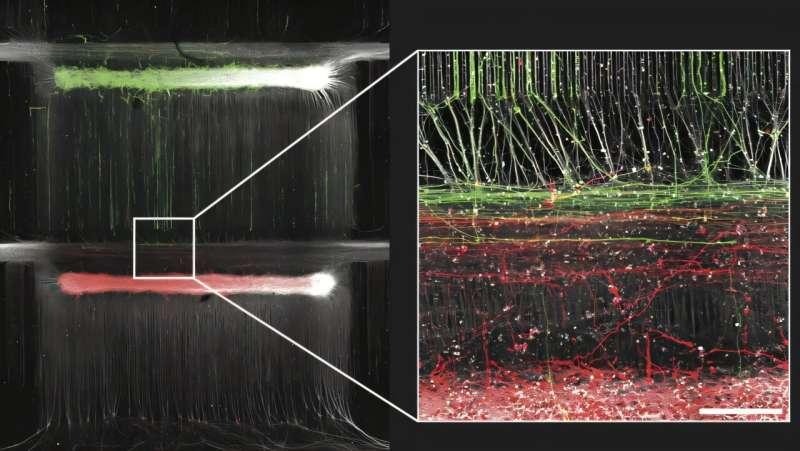
- A new bioengineered neuronal circuit board “BioConNet” allows scientists to artificially engineer human brain-like wiring at scale and can be used to engineer any possible circuit. The fully programmable, open-source system allows generation of large-scale circuits, while maintaining the ability to focus on single connections between neurons.
- This is a key advance in engineering human-like neural circuits as it allows for a new level of wiring complexity compared to previous systems. BioConNet allows scientists increased control over wiring in the culture compared to existing methods such as organoids and commercially available systems. The research is published in the journal Advanced Healthcare Materials.
- “By combining engineering and neurobiology with the most recent stem cell culture techniques, we can now create human-specific, functional, large-scale complex neural circuits in the lab,” said senior author, Dr. Andrea Serio, Reader in Neural Tissue Engineering, Group Leader at the UK Dementia Research Institute (UK DRI) at King’s and Senior Group Leader at the Crick.
- “We can tailor these circuits for individual experiments and to understand specific diseases. This will let us understand both the mechanisms behind cell death in neurodegenerative diseases and test new potential therapies,” added Dr. Serio.
////////////////////////////////////////////////////////////////////////////////////////////////////////////////////////////////////////////
Story: Chinese Scientists Create ‘Organic’ Electric Car Batteries Using Plastic in Breakthrough Research – This alternative battery comes as a breakthrough in battery technology. Not only is it more sustainable, but it is also energy efficient.
Source: GreenMatters.com Story by Neha Bhatia

- Chinese researchers have developed a new “organic” lithium‑ion battery made from a plastic‑based polymer (PBFDO) that is safer, more flexible, and far more temperature‑resilient than today’s metal‑based EV batteries. It delivers high energy density (250 Wh/kg), survives puncture tests without fire, and operates from –94°F to 176°F, positioning it as a potentially transformative technology for future electric vehicles.
- A New Class of “Organic” EV Batteries
- Developed by Tianjin University and South China University of Technology, led by Prof. Xu Yunhua.
- Uses an organic, plastic‑like polymer called PBFDO as the cathode instead of heavy metals like cobalt, nickel, or manganese.
- Represents the first successful design of a practical organic alternative after years of global attempts.
- Why This Battery Matters
- Energy density: Reaches 250 Wh/kg, comparable to many commercial lithium‑ion cells.
- Safety breakthrough:
- Passed puncture tests without smoke, fire, or deformation.
- Avoids thermal runaway, a major EV safety concern.
- Extreme temperature performance:
- Works from –94°F (–70°C) to 176°F (80°C).
- Traditional Li‑ion cells fail or become dangerous in these ranges.
- Sustainability & Supply Chain Advantages
- Reduces reliance on heavy‑metal mining and the geopolitically constrained Lithium Triangle supply chain.
- Made from organic, polymer‑based materials, sometimes called the “green battery star.”
- Lighter, more flexible, and easier to shape inside a vehicle frame.
- Structural Flexibility
- PBFDO’s polymer nature allows the battery to bend, stretch, and compress without damage.
- Enables new EV design possibilities beyond rigid battery packs.
- Big Picture: What This Could Mean for EVs
- Safer EVs with dramatically reduced fire risk.
- Better cold‑weather performance—a major issue for drivers in northern climates.
- More sustainable battery production with fewer toxic materials.
- Potential for new vehicle architectures thanks to flexible pouch‑cell construction.