


Show Notes 24 April 2026
Text highlighted in blue identifies notes I have inserted.
Story 1: XM30 Lynx: The US Army’s New 50mm Cannon‑Powered Robot War Machine
Source: GadgetReview.com Story by Alex Barrientos
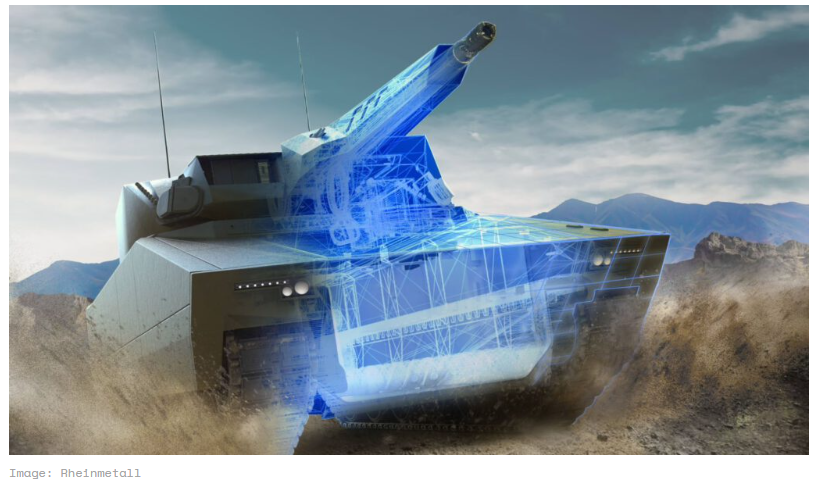

- The XM30 Lynx is the U.S. Army’s new cutting-edge successor to the aging M2 Bradley Fighting Vehicle.
US Army Fighting Vehicle Timeline:
M2 Bradley Fighting Vehicle, introduced in 1981, replaced the M113 armored personnel carrier, first deployed 1961:


M2 on the left, M113 APC on the right
- AI enhanced – Efficiency for the XM30 Lynx is driven by a two-person crew, down from the Bradley’s three. This is made possible by an unmanned turret and a “virtual third crew member” powered by Artificial Intelligence.
- This AI assists with target acquisition, scanning for threats, and reducing the cognitive load on operators.
- Survivability is a priority, featuring a hybrid-electric engine for “silent watch” missions and active protection systems to intercept incoming missiles.
- Built on a modular, open-system architecture, the XM30 can be rapidly updated with new software or hardware as threats evolve.
- Ultimately, the Lynx is more than just a vehicle; it is a networked hub designed to control robotic wingmen and maintain technical overmatch against near-peer adversaries for decades to come.
- Weapon upgrade – At its core is the XM913 50mm Bushmaster chain gun. This massive upgrade more than doubles the range of the Bradley’s 25mm cannon, allowing soldiers to engage targets from over four kilometers away.
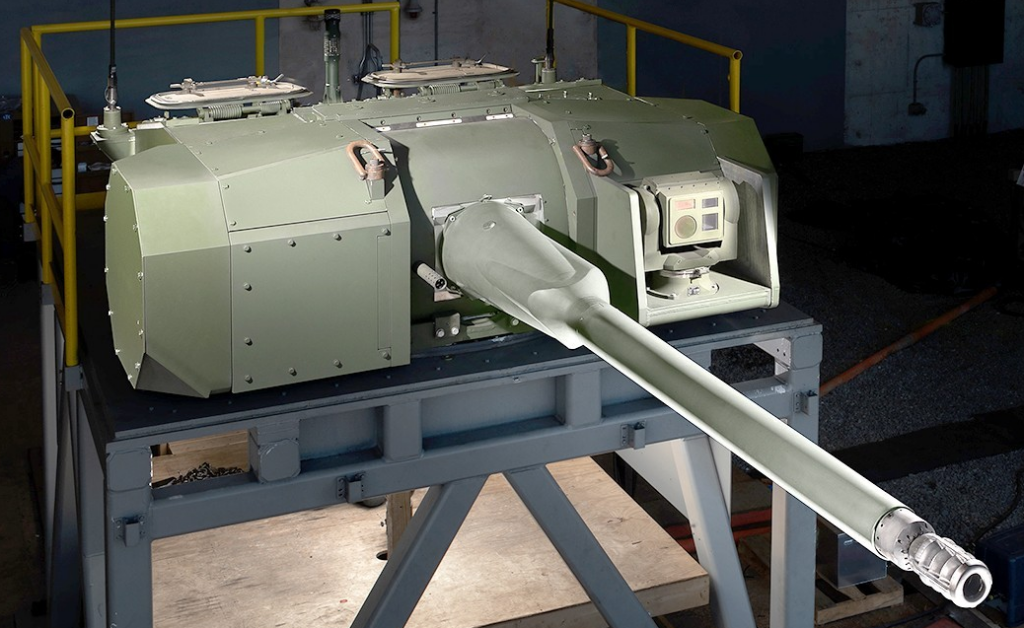
Bushmaster chain gun
- The cannon utilizes advanced “linkless” ammunition, including programmable airburst rounds that can detonate above enemies hiding behind cover or neutralize swarms of aerial drones.
- Side note – “Linkless” ammunition means the rounds are not held together by metal links or belts. Each cartridge is handled individually inside a mechanical feed system rather than being part of a traditional linked belt.
- Personal note: It’s light years beyond the M113 armored personnel carrier I drove in the 70s during my time with the Army National Guard!

Story 2: New software could cut cooling energy use by 25% in data centers
Source: PennState website Story by Ty Tkacik
Link: https://www.psu.edu/news/research/story/new-software-could-cut-cooling-energy-use-25-data-centers
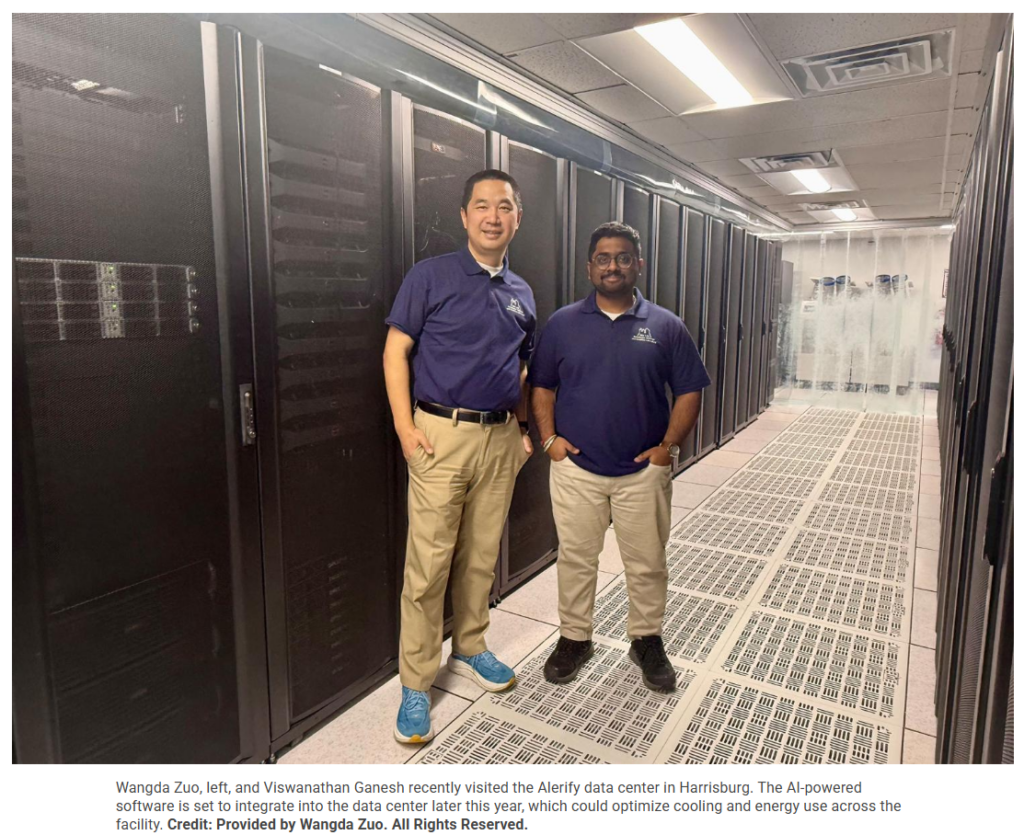
- Side note to set the stage: On average, cooling typically accounts for 30% to 40% of a data center’s total energy consumption. Since electricity is the largest operational expense (often 40% to 60% of the total budget), cooling remains one of the most significant line items in maintaining a facility.
Energy & Cost Breakdown
In a standard data center, the electricity usage is generally split into three main categories:
- IT Equipment (Servers, Storage, Networking): ~40% to 50%
- Cooling Systems (Chillers, CRAH units, Fans): ~30% to 40%
- Power Infrastructure & Lighting (UPS, Transformers): ~10% to 20%
- Researchers at Penn State University have developed a physics-based AI software that could reduce data center cooling energy consumption by approximately 25%.
- Currently, cooling systems account for nearly 40% of a data center’s total electricity use, as they typically rely on “static” cooling targets that remain constant regardless of external conditions.
- Side note – A “static” target means the cooling system is programmed to maintain a specific, unwavering environment. For example, keeping the “cold aisle” at exactly 70°F (21°C) at all times. The system is set to this target by engineers and remains there 24/7. A cold aisle in a data center is the aisle where the fronts of servers face each other so they can draw in cooled supply air without mixing with hot exhaust air.
- The new software utilizes a “digital twin” [a virtual simulation of the facility] to train an AI agent. This agent learns to navigate complex variables, such as shifting outdoor temperatures, humidity, and fluctuating electricity prices.
- By using “physics-informed reinforcement learning,” the AI understands the specific operational limits and safety requirements of the hardware. This allows it to dynamically adjust cooling levels in real-time without risking equipment failure.
- The team is currently working to integrate this software into the Alerify data center in Harrisburg, Pennsylvania.

- While specifically designed for the high-intensity environment of data centers, the researchers believe the underlying technology could eventually be adapted to improve energy efficiency in other large-scale commercial buildings, such as airports and power plants, providing a more sustainable path for the growing digital infrastructure.

Story 3: Chemists make hydrogen from breadcrumbs in groundbreaking reaction that could replace some fossil fuels
Source: LiveScience.com Story by Victoria Atkinson
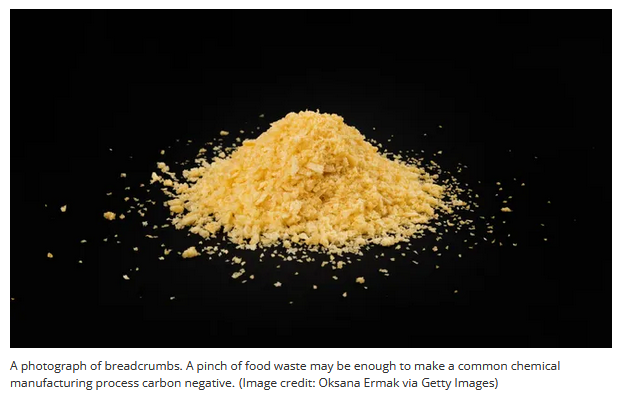
- Researchers at the University of Edinburgh have developed a groundbreaking “one-pot” method to produce hydrogen from food waste—specifically breadcrumbs—that could significantly reduce the chemical industry’s reliance on fossil fuels.
- Side note – In the context of chemistry and industrial manufacturing, “one-pot” refers to a process where multiple chemical reactions occur within a single reactor or vessel. Instead of having to move the substances from one container to another for different stages of the process, all the necessary ingredients are added at the beginning, or added sequentially into the same container.
- Currently, the process of hydrogenation (adding hydrogen to molecules) is vital for making everything from margarines and pharmaceuticals to plastics and fuels. However, 95% of industrial hydrogen is produced from natural gas through energy-intensive methods requiring extreme heat and pressure, releasing massive amounts of CO2.
- The Solution: Microbial Power – The team utilized a common strain of E. coli bacteria. In an oxygen-free environment, these bacteria naturally produce hydrogen gas as they “digest” the sugars extracted from waste breadcrumbs.
- Side note – Some bacteria need oxygen, some don’t, and some can take it or leave it. Bacteria are incredibly diverse, and their relationship with oxygen is one of the biggest ways they differ.
- The researchers combined this biological process with a chemical catalyst (palladium) in a single sealed flask [this is the one pot method]. As the bacteria release hydrogen, the metal catalyst—attached to the bacterial cell membrane—immediately captures the gas to power a hydrogenation reaction.
- Key Benefits
- Carbon-Negative: Because the process uses food waste that would otherwise rot in landfills (releasing methane) and avoids fossil-fuel hydrogen, it removes more greenhouse gases than it produces.
- Mild Conditions: Unlike industrial reactions that require “deep-ocean” levels of pressure, this occurs at near-room temperature and normal pressure.
- Scalability: The team is now working on replacing expensive metal catalysts with biological ones to make the process even more sustainable for large-scale manufacturing.
Story 4: Graphene ‘scaffold’ recruits bone cells and helps the body regenerate fractures [actually, it should say repair fractures]
Source: Phys.org Story by Robert Egan
Link: https://phys.org/news/2026-04-graphene-scaffold-bone-cells-body.html
See research paper here: https://www.nature.com/articles/s41598-025-29606-x
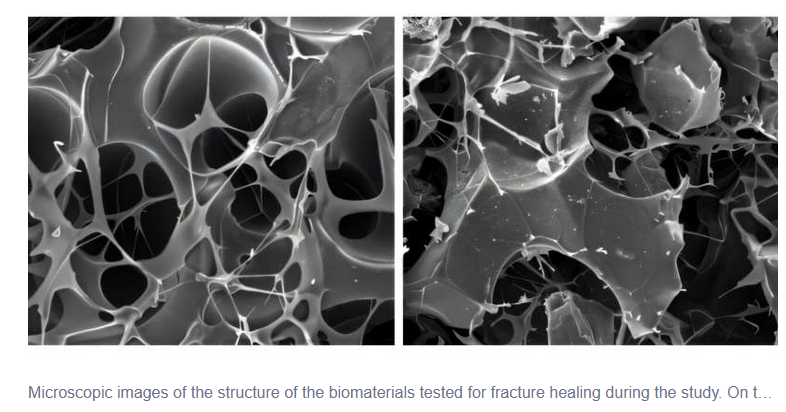
- A team of researchers in Brazil [including the University of São Paulo] have developed a revolutionary “bioactive scaffold” using graphene that significantly accelerates bone healing.
- Unlike traditional metal implants that stay in the body forever or simple biodegradable materials that just dissolve, this new structure actively “recruits” the body’s own cells to rebuild bone.
- How It Works
- The scaffold is a 3D structure made from a combination of chitosan (a moldable material derived from crustacean shells) and graphene (a carbon layer just one atom thick). This combination creates a perfect environment for [bone] regeneration:
- Chitosan provides a flexible, biocompatible base that the body accepts easily.
- Graphene acts as a catalyst, encouraging bone cells to stick to the site, promoting the growth of new blood vessels (vascularization), and signaling cells to transform into specialized bone tissue.
- Key Results and Future Impact – In laboratory tests on rats, this graphene-based matrix achieved nearly 90% repair of bone damage within just one month—performing significantly better than other tested materials.
- The research team is now moving toward clinical trials. They eventually plan to combine these scaffolds with stem cells to treat complex fractures, congenital malformations, and significant bone loss in human patients.

Honorable Mentions
Story: Eco-Friendly Laser Method Turns Leather into Flexible Wearable Tech
Source: Tomorrow’s World Today
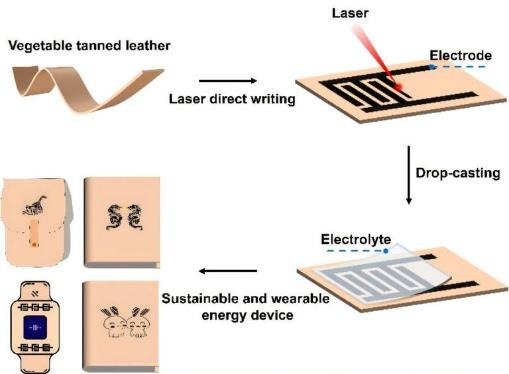
- A major university in China has developed a sustainable way to transform leather scraps into high-tech wearable electronics.
- This innovative method uses a CO2 laser to “write” conductive patterns directly onto vegetable-tanned leather.
- The laser’s heat converts the leather’s surface into carbon, creating microsupercapacitors—tiny devices capable of storing energy and regulating electrical signals.
- Unlike traditional wearable technology, which often relies on synthetic plastics and chemical-heavy manufacturing, this process is a simple, one-step method that avoids harsh chemicals and cleanroom requirements.
- Because leather is naturally flexible and skin-friendly potential applications could include smartwatch bands that store power or smart clothing with embedded sensors.
- While the researchers are still perfecting the technology’s durability this breakthrough offers a greener, more comfortable alternative for the future of flexible, wearable gadgets.
////////////////////////////////////////////////////////////////////////////////////////////////////////////////////////////////////////////
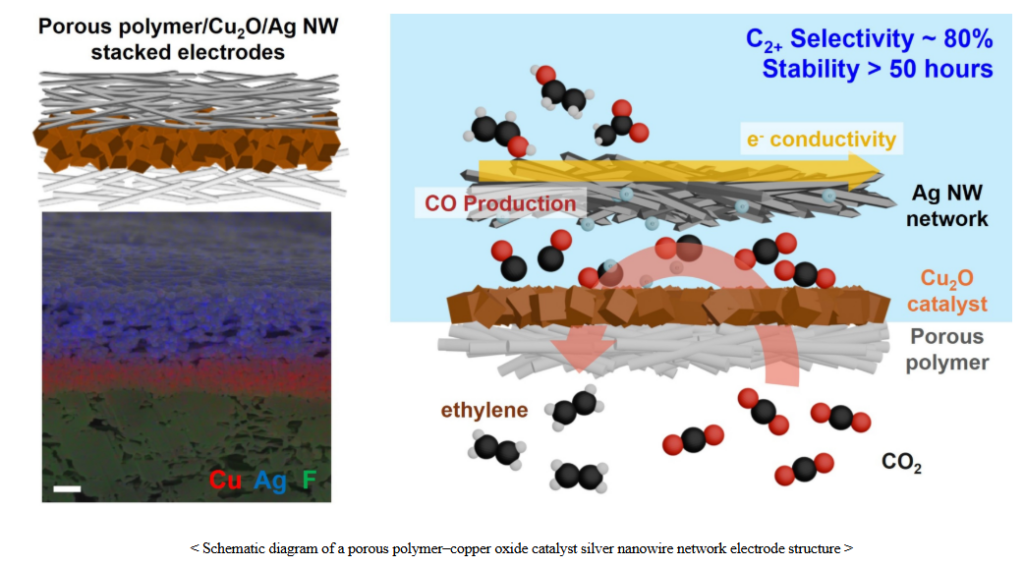
Story: KAIST [Korea Advanced Institute of Science and Technology] Develops Electrode Technology Achieving 86% Efficiency for Converting CO₂ into Plastic Precursors
Source: Korea Advanced Institute of Science and Technology website
Link: https://www.kaist.ac.kr/newsen/html/news/?mode=V&mng_no=60350
- Researchers at KAIST [Korea Advanced Institute of Science and Technology], led by Professor Kwang-Hyun Cho, have developed a groundbreaking “cancer reversion” technology that turns cancer cells back into normal-like cells instead of killing them. This approach offers a potential alternative to traditional treatments like chemotherapy, which often damage healthy tissue and cause severe side effects.
- The team utilized systems biology, a field that combines biology with mathematical modeling, to study how cells transition from a healthy state to a malignant one. They discovered that cancer development involves a “critical transition” point—a moment of extreme instability where cells are caught between being normal and being cancerous.
- By analyzing single-cell RNA sequencing data, the researchers identified a molecular switch that controls this transition. They found that by manipulating specific genes at the right moment, they could trigger a “reverse gear,” forcing the unstable cancer cells to regain the characteristics of healthy cells.
- The technology was successfully tested on colon cancer cells. The team’s computer models were able to simulate the genetic network of the cells and predict exactly which molecules to target to achieve reversion. This method is particularly promising because it targets the “fate” of the cell rather than simply trying to destroy it.
- Professor Cho noted that this discovery marks a major shift toward “reversion therapy,” which could lead to safer, more effective treatments for various types of cancer in the future.
////////////////////////////////////////////////////////////////////////////////////////////////////////////////////////////////////////////
Story: Scientists gene hacked a plant so it grows five types of psychoactive drugs at once
Source: Futurism.com Story by Victor Tangermann
Link: https://futurism.com/health-medicine/gene-hacked-plant-grows-five-types-psychedelic-drugs

- In a recent breakthrough researchers at the Weizmann Institute of Science have genetically “hacked” a tobacco relative (*Nicotiana benthamiana*) to produce five different psychedelic compounds simultaneously.
- By splicing in genes from magic mushrooms, desert toads, and various plants, the scientists enabled the tobacco plant to synthesize psilocybin, psilocin, DMT, 5-MeO-DMT, and bufotenin.
- The primary goal of this “trippy tobacco” is not recreational, but rather to create a sustainable “green factory” for medical research.
- Many of these substances show immense potential for treating depression and PTSD, but sourcing them from nature often leads to over-harvesting and habitat destruction.
- While the current yields are lower than those of the original organisms, the study serves as a successful proof of concept.
- To ensure safety and prevent unregulated spread, the researchers engineered the plants so these genetic traits are not passed on to their seeds.
////////////////////////////////////////////////////////////////////////////////////////////////////////////////////////////////////////////
Story: Scientists Just Discovered There’s Actually Something Faster than the Speed of Light
Source: Popular Mechanics Story by Darren Orf
Link: https://www.popularmechanics.com/science/a70885429/darkness-faster-than-light/

- Einstein’s theory of relativity famously established that nothing can travel faster than light. However, recent research highlighted by Popular Mechanics confirms a 50-year-old prediction: “darkness” can actually outrun light waves.
- The Science of “Dark Points” – Researchers at the Technion-Israel Institute of Technology used advanced electron microscopy to observe optical phase singularities, also known as vortices. These are essentially tiny “holes” or “whirlpools” within a light wave where the amplitude drops to zero. Because these dark points are the absence of light rather than physical matter, they can move at “superluminal” speeds—speeds exceeding 300,000 kilometers per second.
- Why It Doesn’t Break Physics – You might wonder how this is possible without breaking the laws of the universe. The key lies in what is being moved:
- Mass and Information: Einstein’s limit applies to objects with mass and signals that carry information.
- Geometric Motion: These dark vortices carry neither mass nor information. Their movement is a result of the changing geometry of the wave pattern, similar to how a shadow or a laser spot can appear to move faster than light across a distant surface.
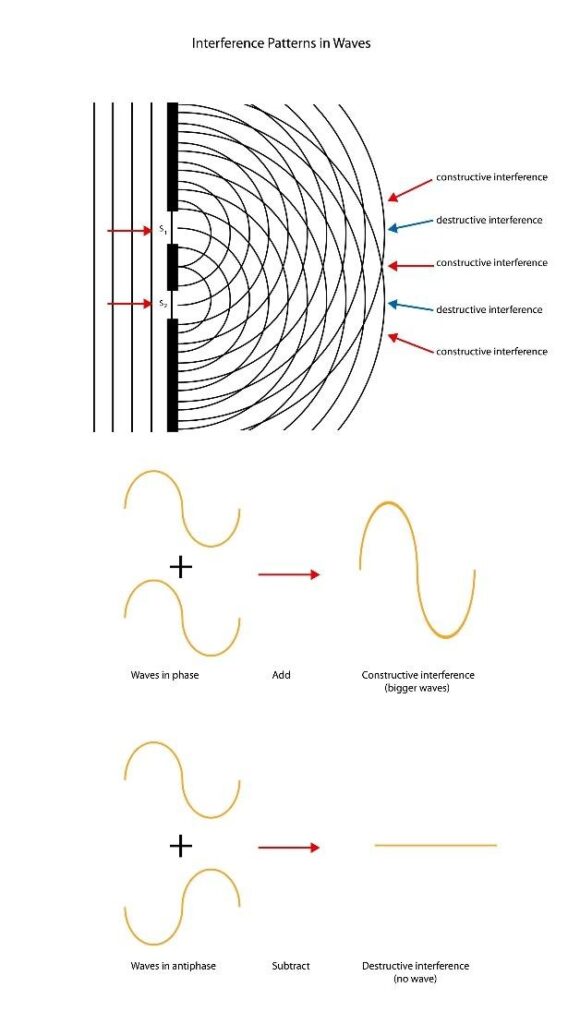
- How They Proved It – To capture this, scientists used a material called hexagonal boron nitride (hBN). In this material, light slows down significantly, allowing researchers to use a specialized microscope to track the “dance” of these vortices. They observed that when these dark points approach each other to annihilate, their speed accelerates dramatically, briefly exceeding the speed of light in a vacuum.
- This breakthrough isn’t just a fun fact; it provides a new “technological tool” to map nanoscale phenomena, potentially impacting fields from quantum computing to superconductivity.