


Show Notes 22 May 2026
All medical tech special
Text highlighted in blue identifies notes I have inserted.
Story 1: 3D-printed brain sensors may unlock personalized neural monitoring
Source: Penn State website Story by Ty Tkacik
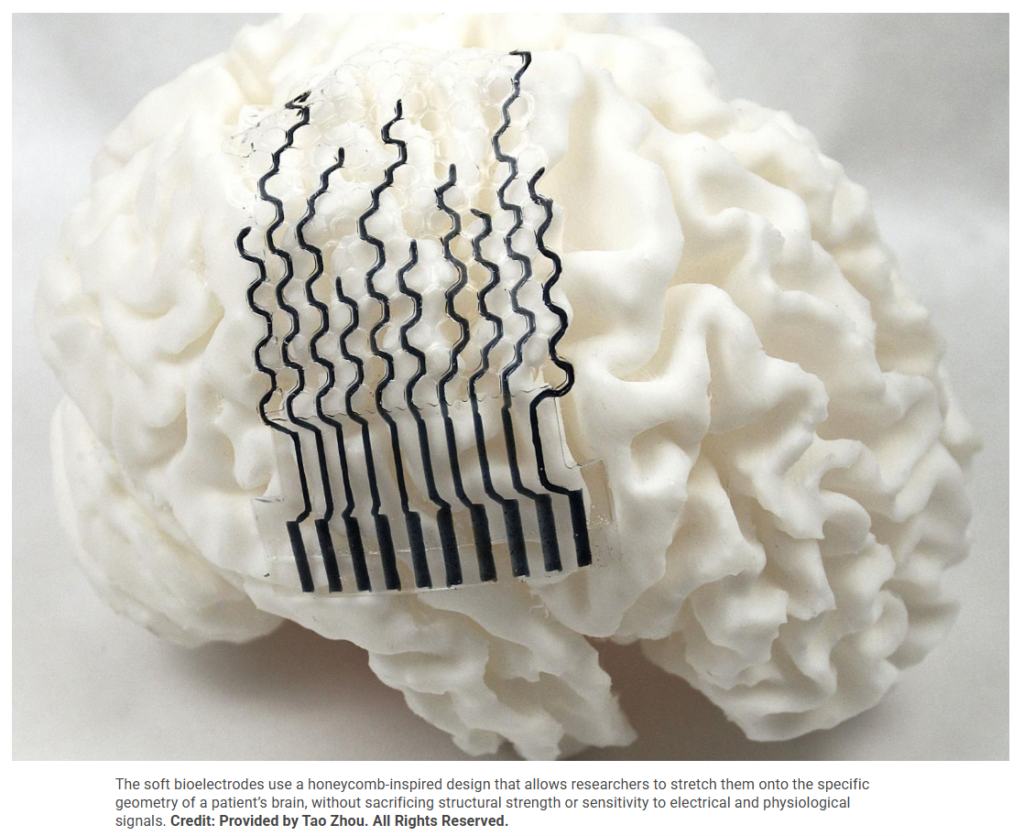
- Researchers at Penn State have developed a new type of soft, 3D-printed brain sensor designed to match the unique shape of each individual’s brain.
- Side note – the new sensors are for diagnosis and treatment of neurological diseases
- Key trend – personalized medical devices and treatments.
- Traditional brain sensors, called bioelectrodes, are typically rigid and made in standard shapes, which makes it difficult for them to fit the brain’s complex folds and curves. This mismatch can reduce signal quality and even damage delicate brain tissue.
- To solve this problem, the Penn State research team created flexible sensors made from a soft, water-based material called hydrogel.
- They use MRI [Magnetic Resonance Imaging] scans of a patient’s brain to build a detailed digital model [example of a digital twin – hot trend in medical tech and research], then design and 3D-print electrodes that precisely match that person’s brain structure. This allows the sensors to conform closely to the brain’s ridges and grooves, improving contact and accuracy.
- The sensors also feature a honeycomb-inspired design, which makes them both strong and stretchable while using less material. Compared to traditional manufacturing methods, this 3D-printing approach developed by Penn State is faster, cheaper, and easier to customize.
- In tests on models and in animal studies, the personalized electrodes showed better performance, maintaining stable signals without causing immune reactions or damaging tissue. Because they fit the brain more naturally, they can capture clearer and more reliable neural data.
- Overall, this technology could improve how scientists monitor brain activity and may lead to better diagnosis and treatment of neurological diseases. In the future, personalized brain sensors could play a key role in advanced medical care and brain-computer interfaces tailored to individual patients.

Story 2: Researchers use ultrasound to create light inside the body – A new technique using ultrasound waves to activate light-emitting nanoparticles could be used to manipulate cell signals or facilitate light-based medical treatments in the future.
Source: Stanford University Report
Link: https://news.stanford.edu/stories/2026/04/researchers-use-ultrasound-to-create-light-inside-the-body
- Stanford University researchers have developed a non-invasive method to generate light deep inside living tissue using ultrasound waves and specially engineered nanoparticles, offering a potential breakthrough for light-based medical treatments.
- Here’s how it works:
- The team created mechanoluminescent nanotransducers — tiny ceramic nanoparticles coated to be biocompatible and circulate in the bloodstream.
- These particles remain dark until exposed to focused ultrasound, which creates mechanical stress. This stress triggers the particles to emit light, effectively turning ultrasound into a steerable internal light source.
- Key advantages
- Non-invasive: No surgical implants or tissue removal needed.
- Deep penetration: Ultrasound passes through tissue with minimal scattering, unlike visible light, which scatters and attenuates quickly.
- Side note – Attenuates means “reduces, weakens, or makes thinner/less intense.” This can refer to weakening force, reducing severity, lowering intensity, or making something physically thinner.
- Programmable targeting: By scanning the ultrasound focus, researchers can direct light to multiple locations in a single session.
- Versatile applications: Potential for optogenetics (controlling neurons with light), gene editing, photodynamic cancer therapy, and UV-based treatments.
- Experimental results
- In mouse studies, the system successfully:
- Generated light in the brain, gut, spinal cord, and muscle.
- Activated genetically modified neurons in the brain, producing controllable behavioral responses (e.g., turning left or right depending on the brain region stimulated)
- Future potential – The approach could simplify and expand light-based therapies, reducing risks from implants and enabling precise, on-demand illumination for such things as:
- Neuroscience research and optogenetic control.
- Cancer treatment using targeted photodynamic therapy.
- Gene editing with light-activated tools.
- Other optically driven medical procedures.
- The lead Stanford University researcher notes that while the technology is promising, ongoing studies are needed to ensure safety and efficacy for human use.

Story 3: Neuralink builds surgical robot to speed up brain implant procedures for patients – specialized surgical robot is designed to automate the implantation of its brain-computer interfaces
Source: Interesting Engineering Story by Mrigakshi Dixit
Link: https://interestingengineering.com/science/neuralink-unveils-surgical-robot-to-automate-bci
See a great video here: https://www.youtube.com/watch?v=KO53gwuqZUQ
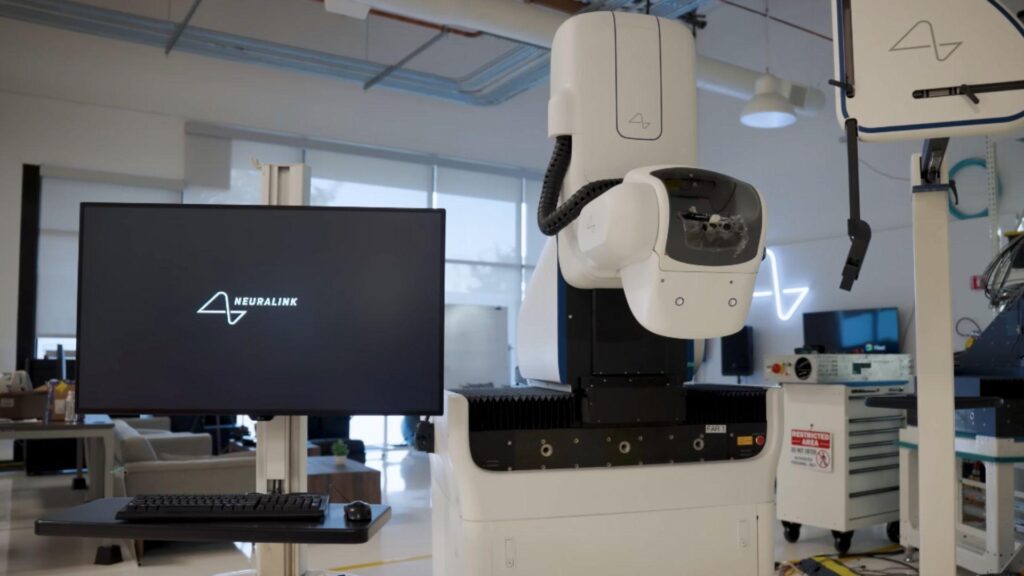
- Neuralink has introduced a new surgical robot designed to automate the implantation of brain-computer interface devices. These devices allow the brain to communicate directly with computers by reading neural signals and turning them into digital commands.
- Side note – Neuralink is Elon Musk’s neurotechnology company developing high-bandwidth brain–computer interfaces (BCIs) designed to let the brain communicate directly with computers. The company’s work has accelerated rapidly from 2023–2026, moving from early human trials to real-world use by people with paralysis.
- The robot is a key part of Neuralink’s system because implanting the device requires extreme precision. The process involves inserting extremely thin, flexible threads into the brain.
- These threads are much thinner than a human hair and must avoid blood vessels to prevent damage. A human surgeon alone cannot reliably achieve this level of accuracy, so the robot is designed to handle the most delicate parts of the procedure.
- The system works somewhat like a sewing machine, carefully placing electrodes into specific areas of the brain. It can insert multiple threads quickly and consistently, improving both speed and safety compared to manual surgery.
- Neuralink’s long-term goal is to make the entire surgery fully automated—from opening the skull to placing the implant and closing the incision. This could make the procedure faster, cheaper, and more widely available.
- The technology is mainly being developed to help people with neurological conditions such as paralysis. By translating brain activity into commands, patients may be able to control computers or other devices using only their thoughts.
- Overall, the robot represents an important step toward scaling up brain implant technology, though safety, ethics, and long-term effectiveness remain important concerns.

Story 4: MIT Laser Breakthrough Lets Scientists Watch Drugs Enter the Brain in Real Time
Source: SciTechDaily.com Story by Adam Zewe
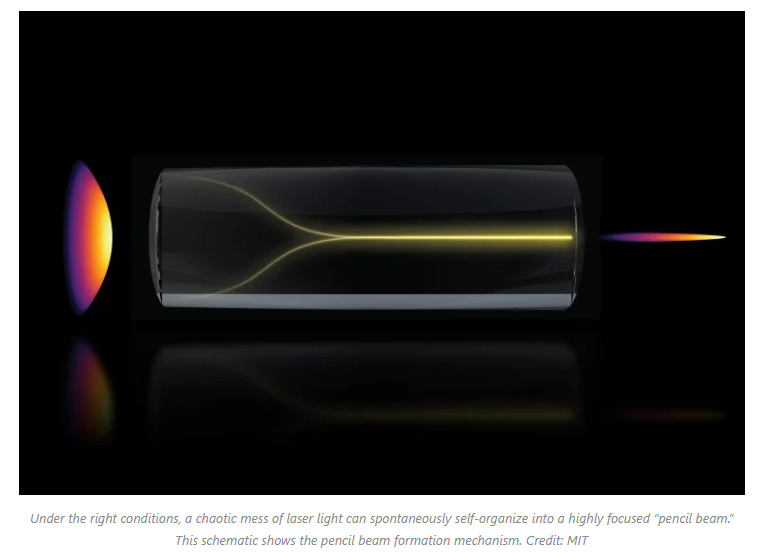
- Scientists at MIT have discovered a new way to use laser light to study how drugs enter the brain in real time.
- Normally, when laser light travels through certain optical fibers, it becomes messy and scattered. But the researchers found that under very specific conditions, this chaotic light can reorganize itself into a narrow, highly focused “pencil beam.”
- This focused beam can be used for advanced imaging of the blood-brain barrier, a protective layer that controls what enters the brain. Understanding this barrier is important because it often blocks medicines from reaching brain tissue.
- Using their new laser technique, the team created detailed 3D images of this barrier about 25 times faster than existing methods, while maintaining similar quality. Unlike older techniques that build images slice by slice, this method captures more information at once.
- A major advantage is that scientists can now watch individual cells absorb drugs in real time, without needing special dyes or labels. This allows researchers to measure how quickly and effectively drugs enter the brain and interact with different cell types.
- This breakthrough could help speed up the development of treatments for neurological diseases like Alzheimer’s and ALS, since researchers can directly see whether drugs reach their targets.
- Overall, this discovery challenges previous assumptions about laser behavior and introduces a faster, simpler, and more powerful tool for studying the brain and improving drug design.

Honorable Mentions
Story: Helium-3 mining on the lunar surface
Source: The European Space Agency

- The article explains the idea of mining Helium-3 from the Moon as a potential future energy source.
- Helium-3 is a rare form of helium that could be used in nuclear fusion, a type of energy that may be cleaner and safer than current nuclear power because it produces little to no radioactive waste.
- The Moon is considered a good place to find it because, unlike Earth, it has no strong magnetic field, so it has been exposed to the solar wind for billions of years, allowing Helium-3 to build up in its surface soil.
- Scientists and engineers have long been interested in this idea. Some researchers have even built experimental fusion reactors, but so far none have been able to produce more energy than they consume. This means Helium-3 fusion is still not practical today.
- Despite these challenges, the possibility of mining Helium-3 continues to attract attention. Countries like India and organizations involved in space exploration have shown interest, and some private companies are also exploring ways to use resources from the Moon.
- However, not everyone agrees that Helium-3 is a realistic solution. Some experts argue that the idea is overly optimistic and may not work as hoped.
- In addition to energy production, the Moon could serve as a base for further space exploration, making resource extraction more useful overall.
- The bottom line: while Helium-3 mining is an exciting concept, it remains uncertain and will require more time, research, and technological advances before it becomes viable.
////////////////////////////////////////////////////////////////////////////////////////////////////////////////////////////////////////////
Story: No batteries, just body heat: Demonstrating the potential of battery-free sensing
Source: TechXplore.com Story by Lisa Lock
Link: https://techxplore.com/news/2026-04-batteries-body-potential-battery-free.html
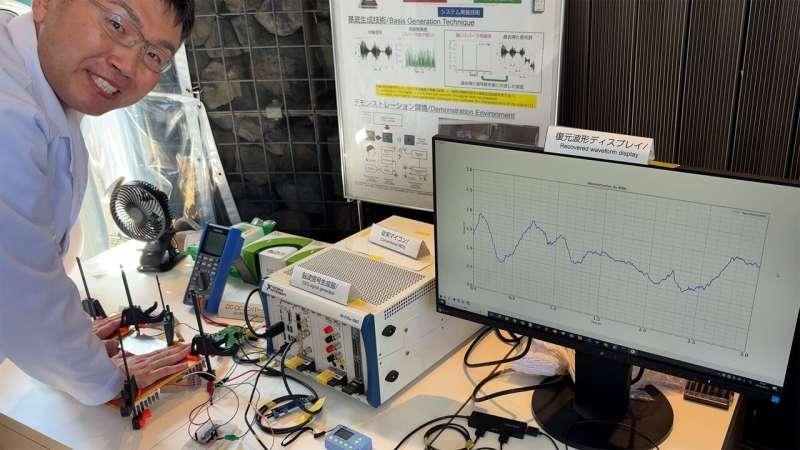
- Researchers at the University of Osaka have demonstrated a new type of wireless sensing system that works without batteries by using energy from body heat. As electronic devices become smaller and more complex, powering them efficiently has become a major challenge. This new approach shows that tiny amounts of energy naturally available in the environment—like heat from the human body—can be enough to run certain devices.
- The team developed a wireless brain-monitoring system (EEG) that transmits signals using only the temperature difference between the human body and the surrounding air. Normally, such systems require continuous power and frequent maintenance, but this design eliminates the need for external power sources.
- To make this possible, the researchers reduced how much data the device needs to send. Instead of transmitting full signals, the system collects less data and uses an algorithm on the receiving end to reconstruct the original information accurately. This greatly lowers energy use while still maintaining reliable performance.
- The system was successfully tested outdoors in hot conditions (over 32°C), showing it can work even when the temperature difference—and therefore available energy—is small.
- This technology could lead to maintenance-free sensors that run indefinitely without batteries. Beyond health monitoring, it may also be used in areas like environmental monitoring, infrastructure systems, and smart cities. Overall, the research highlights the potential for sustainable, battery-free devices powered by everyday energy sources like body heat.
////////////////////////////////////////////////////////////////////////////////////////////////////////////////////////////////////////////
Story: Scientists think a hidden source of clean energy could power Earth for 170,000 years — and they’ve figured out the ‘recipe’ to find it. Researchers have compiled a list of “ingredients” that could help resource exploration companies locate huge reservoirs of clean hydrogen, a critical element in the transition away from fossil fuels.
Source: LiveScience.com Story by Sascha Pare

- Scientists believe a huge, largely untapped source of clean energy—natural hydrogen gas—may be hidden deep within Earth’s crust. According to recent research, enough hydrogen has been produced underground over the past billion years to potentially meet humanity’s current energy needs for about 170,000 years.
- Hydrogen is already an important industrial gas and could help replace fossil fuels because it can power vehicles and generate electricity without producing carbon emissions. However, most hydrogen used today is made from fossil fuels, which creates pollution. Naturally occurring hydrogen would be much cleaner, but the challenge has been figuring out where to find it and how it forms.
- To solve this, scientists created a kind of “recipe” for locating underground hydrogen deposits. They identified three main ingredients needed: a source of hydrogen (created by chemical reactions in rocks), porous rocks that can store the gas, and a seal that traps it underground.
- The research also explains how hydrogen moves through Earth’s crust. Heat and tectonic activity can release it from rocks and push it closer to the surface, where it may collect in usable reservoirs. Certain geological environments—like ancient volcanic rocks or sections of crust that were once under the ocean—are especially promising places to search.
- While the potential is enormous, it’s still unclear how much of this hydrogen can be economically extracted. Still, the study gives energy companies a clearer strategy for finding it, which could play a major role in future clean energy systems.
////////////////////////////////////////////////////////////////////////////////////////////////////////////////////////////////////////////
Story: Evolution Favored Genes Linked to Red Hair – And Vitamin D May Be Why
Source: ScienceAlert.com Story by David Nield
Link: https://www.sciencealert.com/evolution-favored-genes-linked-to-red-hair-and-vitamin-d-may-be-why

- Red-hair–linked genes show strong signs of recent natural selection
- A large Harvard-led genetic study finds that variants associated with red hair, pale skin, and related pigmentation traits were actively favored by natural selection in human populations.
- Vitamin D appears to be the key evolutionary driver
- Researchers suggest these traits were selected because lighter skin improves vitamin D synthesis in low-sunlight regions, giving individuals a survival advantage.
- Human evolution has continued more recently than previously believed
- Earlier scientific consensus held that genetic evolution slowed dramatically after the shift from hunting to farming. This new analysis shows far more genomic regions shaped by selection in the last ~10,000 years than the previously identified 21.
- Study used a massive dataset of ancient and modern DNA
- The team compared ancient DNA samples with modern genomes across many regions, revealing a much richer pattern of ongoing evolutionary change.
- Broader implication: human evolution is still happening
- The findings challenge the idea that modern humans are genetically “finished,” showing that our species continues to adapt to environmental pressures.