


Show Notes 24 July 2026
Text highlighted in blue identifies notes I have inserted.
Story 1: NASA Program Explores Hybrid-Electric ‘Double Bubble’ [fuselage] Airliner Concept
Source: Flyingmag.com Story by Jack Daleo
Link: https://www.flyingmag.com/nasa-electra-hybrid-commercial-airliner-concept/
See the company’s website here: https://electra.aero/
See the press release here: https://electra.aero/news/electra-unveils-turbo-electric-aircraft-concept-for-next-generation-airliner-as-part-of-nasa-aaces-2050-program
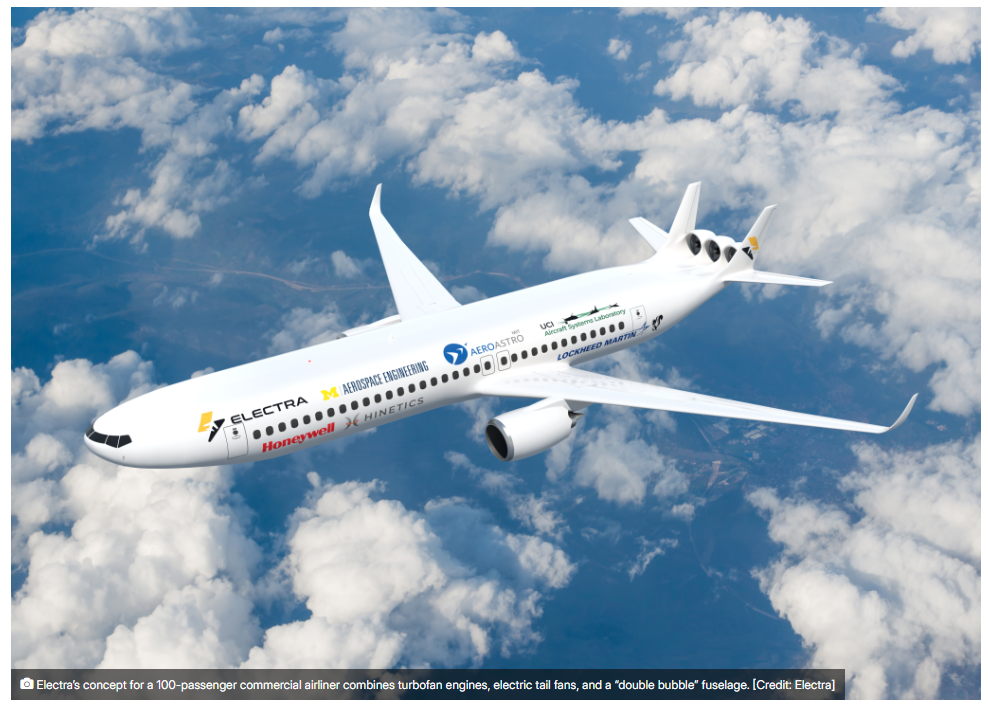
- NASA is supporting a futuristic airplane concept from aerospace company Electra that could make commercial flying cleaner and more efficient.
- The design is part of NASA’s Advanced Aircraft Concepts for Environmental Sustainability (AACES) program, which explores greener aircraft for the 2040s and beyond.
- Side note – check out NASA’s program here: https://www.nasa.gov/reference/advanced-aircraft-concepts-for-environmental-sustainability-2050/
- The proposed aircraft is a hybrid-electric airliner built for about 100 passengers.
- Instead of relying only on jet engines, it combines traditional turbofan engines with electric-powered fans mounted at the tail.
- The electric tail fans use a method called boundary layer ingestion. As an airplane flies, a layer of slower-moving, turbulent air—called the boundary layer—forms over the rear of the fuselage. Normally, this disturbed air simply creates drag.
- Electra’s concept places electric fans at the rear to:
- Suck in this slower-moving air
- Re-energize it by accelerating it rearward
- Produce useful thrust while reducing drag
- Side note – Boundary layer ingestion (BLI) is an aircraft propulsion approach where the engine intentionally pulls in the slower air that clings to the aircraft’s surface as it moves forward. This low-speed “boundary layer” normally increases drag, but a BLI engine re-energizes that air by accelerating it, reducing the aircraft’s wake and improving overall efficiency. Because the engine doesn’t have to speed up fast free-stream air, it can use less power and burn less fuel. The idea promises meaningful fuel savings, though it requires advanced engine designs to handle the uneven airflow.
- One of the most unusual features is its “double-bubble” fuselage.
- Rather than a standard tube shape, the body is wider and shaped to create lift on its own, almost like part of the wing.
- This design improves aerodynamics and creates more interior space while keeping the aircraft about the size of today’s narrow-body jets.
- Together, these technologies could improve fuel efficiency by about 17% beyond what experts already expect by 2050.
- While still only a concept, the design shows how future airlines might cut emissions without completely reinventing airports or flight operations.

Story 2: “Cold spray” 3D printing technique proves effective for on-site bridge repair – Working with the Massachusetts Department of Transportation, researchers show bridge corrosion can be repaired on-site using additive manufacturing
Source: MIT News Story by Anne Wilson
Link: https://news.mit.edu/2025/cold-spray-3d-printing-technique-effective-bridge-repair-0620
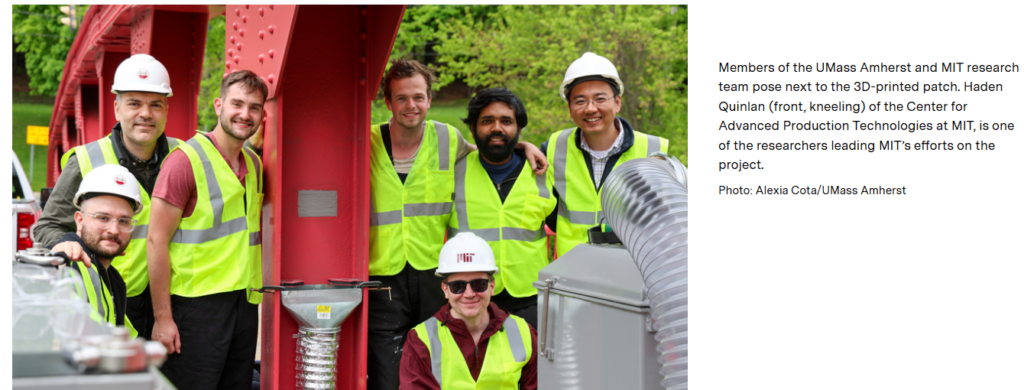
- Nearly half of the more than 623,000 bridges in the U.S. are showing signs of wear and fixing them all could cost over $190 billion. Traditional bridge repair [processes] can be slow, expensive, and disruptive, often requiring lane closures or major reconstruction.
- Researchers at Massachusetts Institute of Technology and University of Massachusetts Amherst have demonstrated a new way to repair aging steel bridges using a type of 3D printing called cold spray.
- Instead of cutting out damaged metal or replacing large sections of a bridge, the process sprays tiny steel particles at very high speed onto corroded areas, where they stick and build up layer by layer. This restores lost thickness and strengthens the structure.
- To test the method, the research team repaired a corroded section of a bridge in Great Barrington [in southwestern Massachusetts]. This marked the first known real-world use of cold spray 3D printing for bridge repair.
- Because the equipment can be brought directly to the bridge, repairs can happen on-site with much less traffic disruption.
- The researchers say this approach could make bridge maintenance faster, cheaper, and less invasive. While more testing is needed to measure long-term durability, this successful trial is a major step toward extending the life of aging infrastructure without full replacement.

Story 3: Plastic bottles could find new life in batteries as graphite
Source: Penn State announcement
Link: https://www.psu.edu/news/research/story/plastic-bottles-could-find-new-life-batteries-graphite
See research paper here: https://www.sciencedirect.com/science/article/abs/pii/S0925963526002700?via%3Dihub
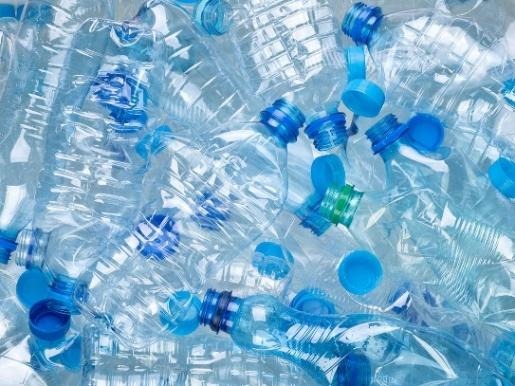
- Penn State researchers have developed a new way to turn discarded plastic bottles into a valuable battery material. The team focused on PET plastic, the common material used in water and soda bottles.
- Side note – PET stands for polyethylene terephthalate — the full chemical name of the plastic used in most clear beverage and food containers.
- Instead of sending this plastic to landfills, they found a method to convert it into synthetic graphite, a key ingredient used in lithium-ion batteries for electric vehicles, smartphones, and renewable energy storage systems.
- Side note – Graphite is the host material for lithium in a lithium-ion battery’s negative electrode (the anode). Its layered carbon structure allows lithium ions to move in and out reversibly, which is the fundamental mechanism that makes rechargeable batteries work.
- The process begins by shredding waste PET plastic and mixing it with a small amount of graphene oxide. The material is then heated in a carefully controlled, oxygen-free environment. This treatment rearranges the carbon atoms in the plastic, creating highly ordered graphite crystals.
- Researchers say the resulting synthetic graphite performed as well as, and in some tests better than, natural graphite mined from the earth. Because battery demand is growing rapidly, finding new sources of graphite is becoming increasingly important.
-
Side note – Global natural graphite production is roughly 700,000–750,000 tonnes per year, and the battery sector consumes about 450,000–500,000 tonnes annually for spherical graphite used in EV anodes. That means about two-thirds of all natural graphite mined today goes into EV batteries.
- One tonne = 2,204.62 pounds
- The breakthrough could provide two major benefits.
- First, it gives plastic waste a higher-value second life instead of simply delaying disposal through traditional recycling.
- Second, it could reduce dependence on mined graphite, which has environmental and supply-chain challenges.
- The researchers believe this technology could eventually help create a more circular economy in which used plastic bottles become raw material for the next generation of clean-energy batteries. In short, yesterday’s beverage bottle could one day help power tomorrow’s electric car.

Story 4: Surgeons Use Teleoperated Humanoid Robots to Perform Live Surgery – a World First
Source: University of California, San Diego Story by Ioana Patringenaru
See video here: https://www.youtube.com/watch?v=Qp0eiQL6vB8
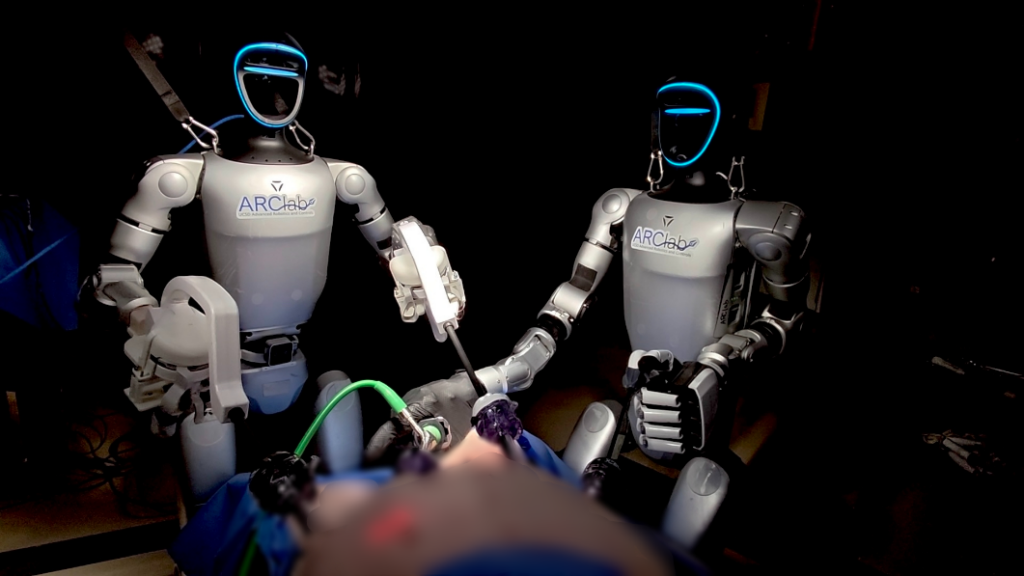
- Researchers at the University of California San Diego have achieved a world first: humanoid robots have been used to perform live surgical procedures under the remote control of human surgeons. This demonstrates a possible future where human doctors can operate robotic surgeons from a distance.
- The team modified humanoid robots, called Surgie, so they could use standard surgical instruments and perform minimally invasive procedures. In testing, the robots successfully completed gallbladder removal surgeries on large animals.
- Side note – Unlike the large, purpose-built surgical robots found in many hospitals today (such as the da Vinci system), Surgie is based on a commercially available Unitree G1 humanoid robot that was modified to use standard laparoscopic surgical instruments. The researchers designed custom adapters that allow the robot to grasp and manipulate the same tools surgeons already use.
- Some key specifications include:
- About 5 feet (1.5 m) tall
- Weighs roughly 60 pounds (27 kg)
- Costs under $20,000 before the specialized surgical modifications
- Uses two arms with human-like joints and hands
- Operates while standing beside the operating table like a human assistant
- In one operation, a humanoid robot worked together with a human surgeon, while in another, two robots worked together as a robotic surgical team.
- Unlike today’s specialized surgical robots, which are large, expensive, and designed for specific tasks, humanoid robots could be more flexible and easier to deploy.
- Because they have a human-like shape, they may be able to operate in existing hospitals without requiring major changes to operating rooms.
- Researchers believe this could eventually allow expert surgeons to provide care remotely to patients in rural areas, military settings, disaster zones, or regions with limited medical resources.
- However, the technology is still in its early stages. The robots were not operating independently; human surgeons controlled their movements remotely.
- Challenges remain, including improving precision, reducing delays, increasing reliability, and proving that the systems are safe for human patients.
- This achievement represents an important step toward combining artificial intelligence, robotics, and human medical expertise.

Honorable Mentions
Story: A Seaweed-based ingredient can help turn dirt into 3D-printed walls
Source: University of Colorado Boulder Story by Yvaine Ye
See research paper here: https://www.nature.com/articles/s41467-026-71885-z?utm_source=chatgpt.com

- Researchers at the University of Colorado Boulder have found that a common seaweed-based food ingredient could make it much easier to build with dirt using 3D printers.
- The ingredient is sodium alginate, a natural substance often used in ice cream to improve texture. When mixed into clay and sand, it changes how the particles interact, making the material smoother to print while also helping it hold its shape better.
- The team was inspired by how animals like termites and wasps build strong natural structures using earth. Instead of relying on cement—which creates large amounts of carbon pollution—they explored whether excavated soil from construction sites could be reused as a building material.
- Their experiments showed that adding just 0.12% sodium alginate made the earthen mixture much more effective. It printed 33% faster, handled 25% more pressure, and could form steep, angled walls without collapsing
- This could be a big step toward greener construction. Since clay and sand are abundant worldwide, builders might someday use local dirt and a tiny amount of seaweed extract to create affordable, low-carbon homes and structures.
////////////////////////////////////////////////////////////////////////////////////////////////////////////////////////////////////////////
Story: New 3D printer tech uses elliptical laser beams to stir molten metal and create ‘alloys-on-demand’ — existing machinery can implement technique in software meaning for more convenient, stronger alloy printing
Source: Tom’s Hardware Story by Luke James
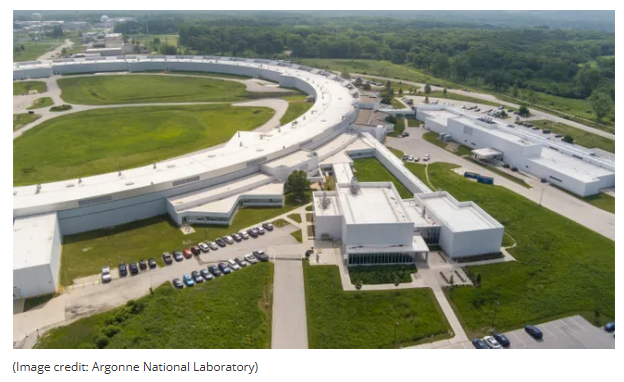
- Researchers at the National Institute of Standards and Technology (NIST) have developed a new metal 3D-printing method that could make it much easier to create stronger and more customized metal parts. Normally, metal 3D printers use lasers that move in straight lines, melting layers of metal powder one at a time. But mixing different metals evenly—especially advanced alloys—has been a major challenge.
- NIST’s breakthrough changes the laser’s path. Instead of straight lines, the laser moves in tiny looping, elliptical patterns. This creates a stirring effect in the molten metal, almost like whisking ingredients together in a bowl. That extra motion helps different metals blend more thoroughly while the object is being printed.
- The team tested the process by mixing a dense, heat-resistant high-entropy alloy called RHEA-19 with a lightweight titanium alloy. Using powerful X-rays at Argonne National Laboratory’s Advanced Photon Source, they watched the metals combine in real time—within less than a second. The results confirmed that the mixing worked.
- This technique could allow manufacturers to create “alloys on demand” instead of needing a separate powder for every alloy. It may also enable parts with changing material properties in different sections, such as jet turbine blades or nuclear reactor components. Best of all, current metal printers could adopt this through software updates alone, without new hardware.
////////////////////////////////////////////////////////////////////////////////////////////////////////////////////////////////////////////
Story: Clean hydrogen created from plastic waste using battery acid from old cars and solar power – Researchers turned hard-to-recycle plastic into hydrogen using battery acid. This circular upcycling system tackles multiple problematic waste streams at once, the scientists claim.
Source: LiveScience.com Story by Victoria Atkinson
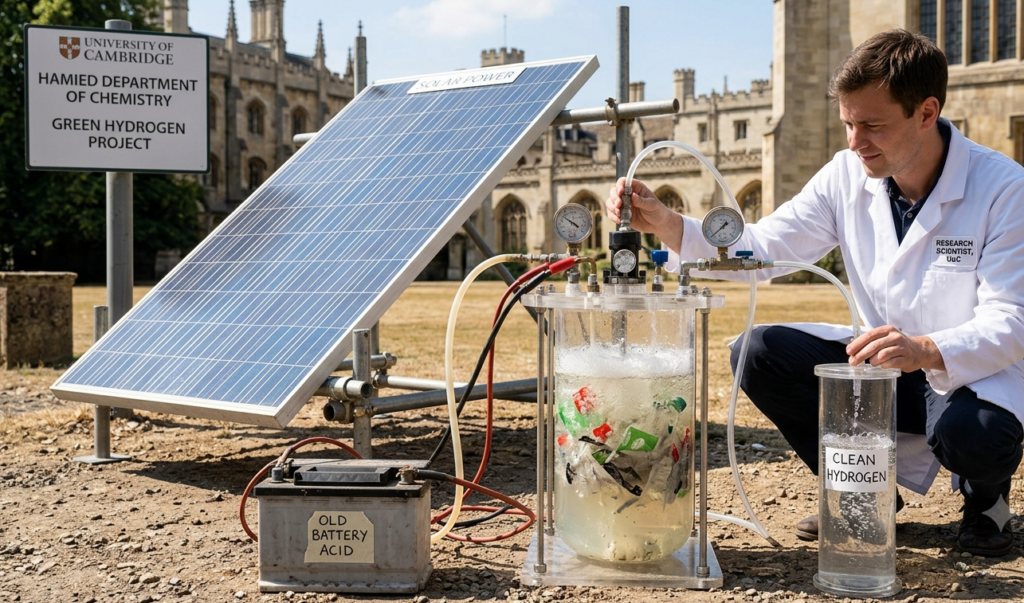
Conceptual image created by AI
- Scientists at the University of Cambridge, specifically in the Yusuf Hamied Department of Chemistry. have developed a new method to produce clean hydrogen fuel using plastic waste, battery acid from old cars, and solar power. The process aims to solve two problems at once: reducing plastic pollution and creating low-carbon hydrogen.
- The technique works by mixing shredded plastic with sulfuric acid taken from discarded car batteries. When this mixture is exposed to sunlight, a special catalyst helps break down the plastic. As the plastic degrades, it releases hydrogen gas. Because the energy comes from the sun and the materials are waste products, the hydrogen produced is considered cleaner and cheaper than hydrogen made with traditional methods that rely on fossil fuels.
- Researchers say this approach could help recycle large amounts of plastic that normally end up in landfills or oceans. It also avoids the high temperatures and energy costs usually required to turn plastic into fuel. The leftover liquid from the process can be reused, making the system more sustainable.
- Although the method is still being tested, scientists believe it could eventually support large-scale hydrogen production. If successful, it may offer a practical way to reduce plastic waste while supplying clean energy for vehicles, industry, and power generation.
////////////////////////////////////////////////////////////////////////////////////////////////////////////////////////////////////////////
Story: A new light-based sensor could help make ultrasensitive disease testing more portable
Source: Phys.org Story by Lisa Lock
Link: https://phys.org/news/2026-05-based-sensor-ultrasensitive-disease-portable.html
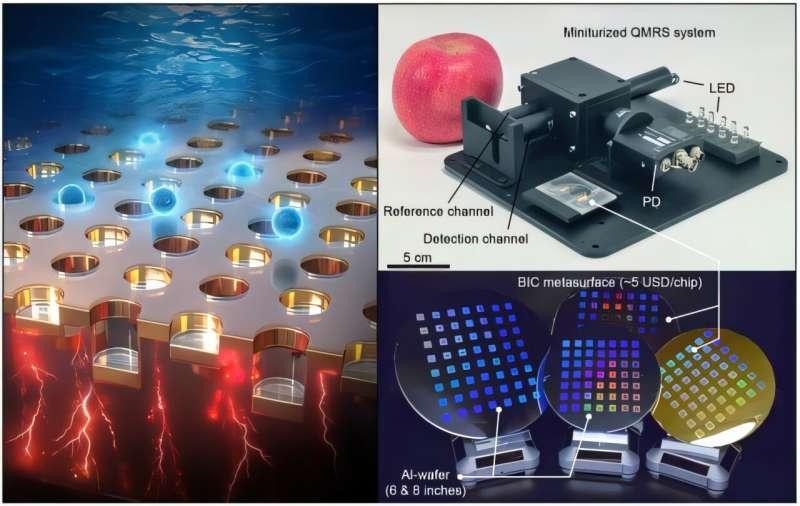
- A new study describes a compact, light-based biosensor designed to make extremely sensitive medical testing possible outside large laboratories. Traditional optical biosensing detects tiny changes in how light behaves when biomolecules bind to a sensor surface, but this usually requires bulky spectrometers, stable lasers, and carefully aligned equipment. These constraints make advanced tests difficult to use in clinics, remote areas, or point-of-care settings.
- The researchers developed a different readout method called Q-modulated refractometric sensing. Instead of measuring small wavelength shifts, the system amplifies tiny refractive-index changes by altering how strongly light leaks from a specially engineered optical structure. This produces a much larger and easier-to-measure change in light intensity. The sensor uses a three-dimensional bound-state-in-the-continuum (BIC) metasurface that tightly confines light but can be tuned to leak in controlled ways. Its 3D design also makes it more tolerant of manufacturing variations.
- To support scalability, the metasurfaces were fabricated on 8-inch wafers using aluminum-based lithography. The detection system itself is compact, relying only on an LED, a photodetector, and the metasurface—no spectrometer required. Despite its simplicity, it achieved a detection limit of 10⁻⁶ refractive-index units.
- The platform successfully detected lung-cancer-related small extracellular vesicles at extremely low concentrations (24 aM) within 15 minutes, showing about a 10,000-fold sensitivity improvement over standard immunoassays. Tests on 171 human serum samples demonstrated strong diagnostic performance, suggesting the technology could eventually enable portable, low-cost, ultrasensitive disease testing in clinics or even at home.