

Show Notes 4 September 2026
Text highlighted in blue identifies notes I have inserted.
Story 1: Mimic Robotics introduces ‘frontier video-action models’ to the factory floor at Audi
Source: Robotics & Automation News Story by David Edwards
See extensive interview video here [go to 4 minutes 20 seconds to see the robot in action]: https://www.youtube.com/watch?v=Q3eHU8EIqsc
See company website with video here: https://www.mimicrobotics.com/
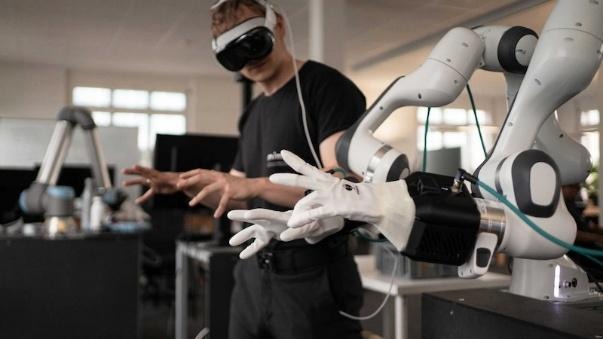
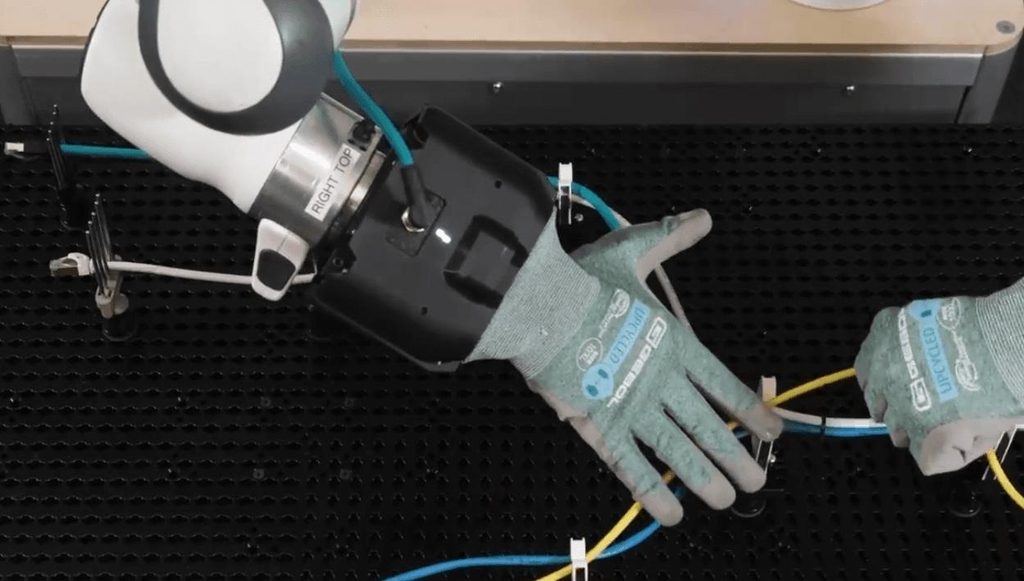
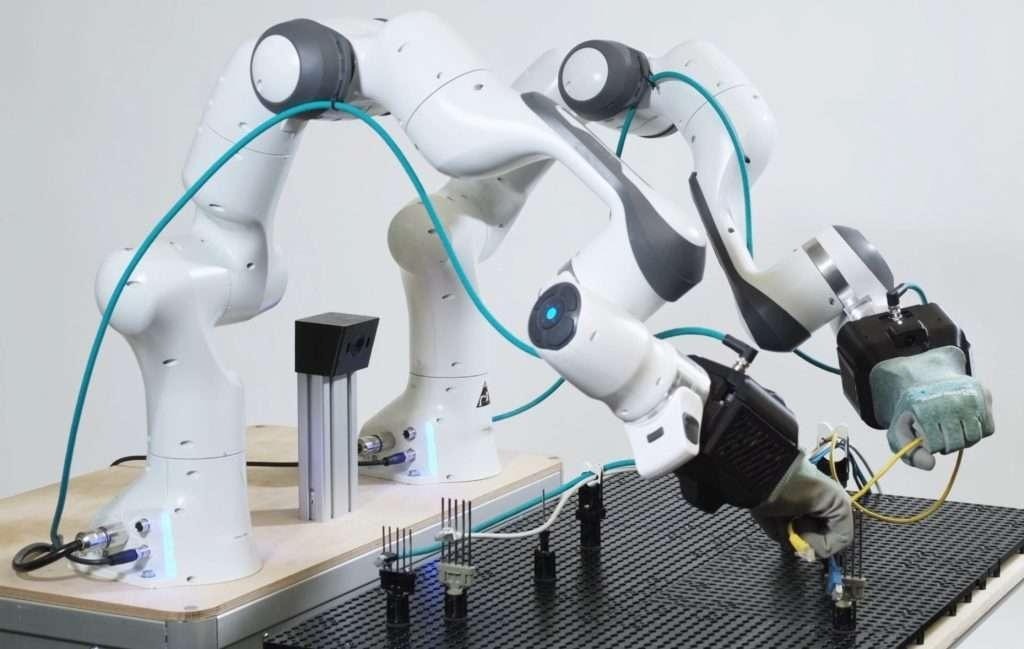
- Mimic Robotics [based in Zurich, Switzerland] has introduced a new generation of artificial intelligence technology called FLUX-mimic, a Video-Action Model designed to help robots learn complex physical tasks by watching and understanding videos.
- The system is being tested on the factory floor with automotive manufacturer Audi, where it aims to improve the flexibility and capability of industrial robots.
- Unlike traditional industrial robots that require extensive programming for each task, FLUX-mimic combines video understanding with robotic control. The AI model learns from large amounts of video data showing how humans interact with objects and environments, then converts that knowledge into actions a robot can perform.
- Mimic argues that this approach reduces the amount of specialized robot training data required compared with conventional Vision-Language-Action systems.
- Side note: Vision-Language-Action (VLA) systems are multimodal AI models that take visual input (images/video) and natural-language instructions and directly output executable actions for a robot or embodied agent.
- The technology was developed in collaboration with Black Forest Labs and builds on advanced video-generation models. Instead of only learning from robot demonstrations, the system can use broader video-based knowledge about motion, physics, and object behavior.
- At Audi, the technology is being explored for difficult manufacturing operations involving dexterous handling of objects, including tasks that are challenging for conventional automation. The goal is to create robots that can adapt more like human workers rather than performing only fixed, repetitive movements.
- The team at Mimic believes Video-Action Models could represent a major step toward general-purpose industrial robots capable of quickly learning new jobs, making factories more flexible, and enabling automation in areas previously considered too complicated for machines.

Story 2: The Ocean is Teeming with Critical Minerals: Here’s How We Could Get Them – Pacific Northwest National Laboratory researchers are studying ways to use seawater and seawater-generated chemicals to acquire magnesium, lithium, and other critical materials
Source: Pacific Northwest National Laboratory Story by JoAnna Wendel
Link: https://www.pnnl.gov/news-media/ocean-teeming-critical-minerals-heres-how-we-could-get-them
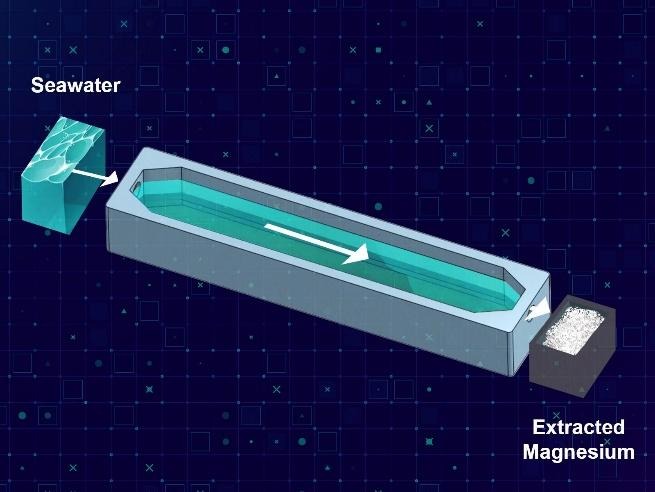
- Note, over the past few years we’ve talked about efforts to extract valuable chemicals, etc. from seawater. It’s a trend that is growing, and this story is a good example.
- The world depends on critical minerals such as lithium, magnesium, nickel, cobalt, and rare earth elements to build electric vehicles, batteries, smartphones, wind turbines, and other advanced technologies. Today, many of these materials come from a limited number of countries, creating concerns about supply shortages.
- Researchers at the Pacific Northwest National Laboratory [based in Richland, Washington] are exploring whether the ocean could become a new source of these valuable materials.
- Although seawater contains huge amounts of minerals, they are usually present in extremely tiny concentrations. The challenge is finding affordable and environmentally responsible ways to collect them.
- Pacific Northwest National Laboratory scientists are developing methods that use seawater itself and chemicals produced from seawater to separate useful minerals.
- One approach can extract magnesium oxide from seawater by combining seawater with sodium hydroxide, causing the magnesium to form a solid material that can be collected.
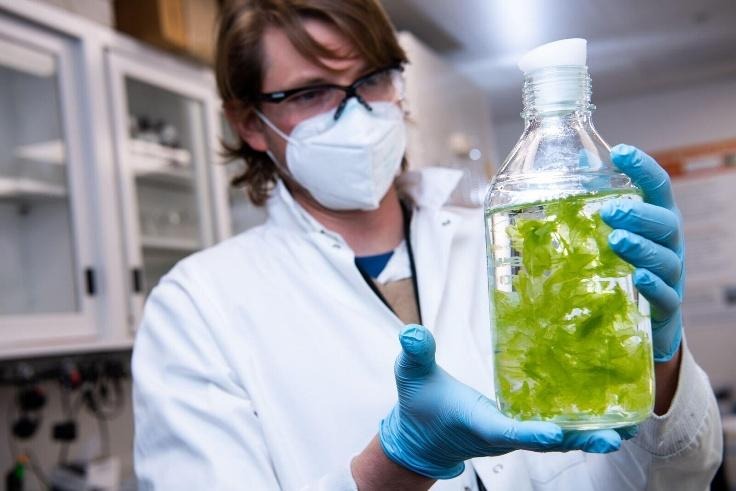
- Researchers are also studying seaweed as a natural mineral collector. Some types of seaweed can absorb and concentrate rare earth elements and other valuable materials from seawater.
- Scientists are investigating ways to grow seaweed, recover the minerals stored inside it, and use the remaining plant material to create products such as fuels, chemicals, or fertilizers.
- Before these methods can become commercial, scientists must improve extraction efficiency, reduce costs, and carefully evaluate environmental impacts.
- If successful, ocean-based mineral recovery could provide a new domestic source of materials needed for future energy and technology systems.
Story 3: Acceleration without fuel: Revolutionary superconducting device harnesses Earth’s magnetic field to move a spacecraft
Source: Space.com Story by Tereza Pultarova
See the company featured website here: https://www.zennoastronautics.com/
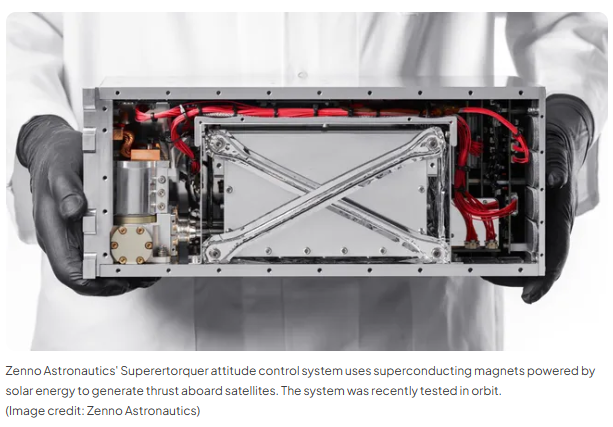
- A new spacecraft technology has completed its first orbital test, demonstrating a way to control a satellite using superconducting magnets instead of traditional rocket fuel.
- The system, called Supertorquer, was developed by New Zealand company Zenno Astronautics and tested [two years ago] aboard the Mira satellite after its launch on a SpaceX mission. Note, this article, published last month, provides an overview and update on this research.
- Traditional spacecrafts use small rocket thrusters or spinning reaction wheels to change direction and maintain their orientation. These systems eventually run out of fuel or can wear out.
- The Supertorquer uses powerful superconducting magnets cooled to extremely low temperatures.
- When powered by electricity from solar panels, the magnets create controlled magnetic fields that interact with Earth’s magnetic field, allowing the satellite to rotate and adjust its position without using propellant.
- The breakthrough comes from making superconducting magnetic technology small and practical enough for use in space.
- Keeping the magnets cold is a major engineering challenge, because superconductors must operate at very low temperatures. To address this Zenno developed insulation and a cooling system designed to work in the vacuum of space.
- The technology could eventually help spacecraft perform long-duration missions [to the Moon and Mars] with far less dependence on fuel.
- Here’s the update on where the research stands two years after the test noted at the beginning of the article: …the current system is mainly focused on satellite control and stabilization, not replacing rockets for major space travel. Larger and more powerful versions would be needed before true fuel-free propulsion becomes practical.
Story 4: Endless Supply of Cancer-Fighting Immune Cells Unlocked by USC Scientists
Source: SciTechDaily.com Story by Cristy Lytal
Link: https://scitechdaily.com/endless-supply-of-cancer-fighting-immune-cells-unlocked-by-usc-scientists/
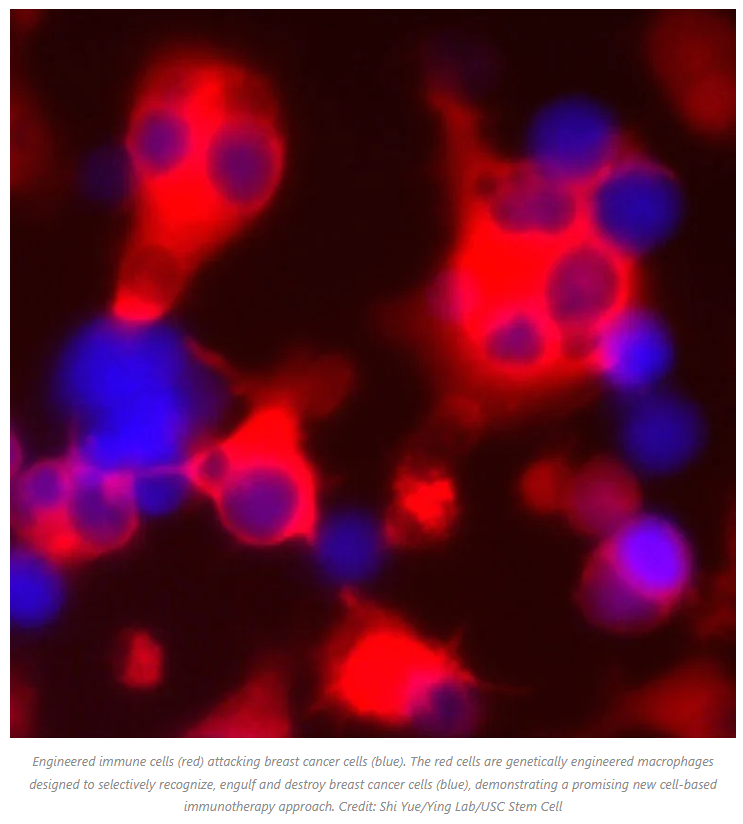
- Scientists at the University of Southern California have developed a new method that could provide a nearly unlimited supply of cancer-fighting immune cells for future treatments.
- The breakthrough focuses on macrophages, a type of immune cell that acts like the body’s cleanup crew. Macrophages can enter tumors, swallow harmful cells, and help activate other parts of the immune system.
- However, using them as a cancer therapy has been difficult because mature macrophages are hard to grow in large quantities and difficult to genetically modify.
- The USC researchers found a way to start with an earlier stage of immune development called granulocyte-monocyte progenitors. These “starter” cells normally produce macrophages and related immune cells.
- Side note – Granulocyte–monocyte progenitors (GMPs) are bone-marrow myeloid progenitor cells that give rise specifically to granulocytes (especially neutrophils) and monocytes. They sit downstream of the common myeloid progenitor (CMP) and represent a lineage-restricted stage of hematopoiesis.
- The team discovered that, under carefully controlled laboratory conditions, granulocyte-monocyte progenitors could continue multiplying for long periods while still keeping their ability to develop into powerful immune cells.
- The scientists were also able to genetically engineer these progenitor cells so the macrophages they produce can recognize and attack cancer cells. This approach could make it possible to create large supplies of customized immune cells that are ready for use, similar to an “off-the-shelf” cancer treatment.
- Although the discovery is promising, more research and clinical testing are needed before these engineered immune cells can become available to patients.

Honorable Mentions
Story: This glaze-inspired ceramic coating repairs its own cracks inside superheated jet engines
Source: Interesting Engineering via MSN.com Story by Munis Raza

- Jet engines run hotter than 1,470°F (800°C), which causes metal components to soften and crack over time. Engineers normally fight oxide buildup because it signals corrosion — but this research flips that idea on its head.
- Key innovation: A self-healing ceramic coating
- Researchers at Concordia University, led by Andre Mayer under Pantcho Stoyanov, developed a ceramic coating that:
- Forms a protective oxide “glaze” layer similar to what naturally appears on certain cobalt-based superalloys.
- Acts as a lubricant under extreme heat and friction, preventing metal surfaces from grinding directly against each other.
- Heals its own cracks: During cooling cycles, cracks created by thermal expansion seal themselves, maintaining structural integrity.
- This glaze-inspired coating is about as thick as a human hair, yet significantly changes how the underlying metal behaves under load.
- Why oxides can be helpful
- In space (e.g., NASA’s Galileo mission), components failed partly because no oxide layer could form, causing parts to seize.
- Inside jet engines, the opposite is true: the right oxide chemistry can protect and lubricate components.
- How the coating works
- Built from cobalt and chromium oxides to mimic natural glaze chemistry.
- Applied directly to engine parts so protection appears even where natural glaze layers wouldn’t form.
- Tested under simulated jet engine conditions, showing repeated self-healing through heating/cooling cycles.
- Bottom line – This ceramic coating could extend engine life, reduce maintenance, and improve reliability by letting components repair themselves during normal operation.
////////////////////////////////////////////////////////////////////////////////////////////////////////////////////////////////////////////
Story: Goodbye, cavities? New gel could regrow tooth enamel
Source: ScienceDaily.com Story from University of Nottingham
Link: https://www.sciencedaily.com/releases/2026/07/260717033046.htm
See also: https://www.mintech.bio/
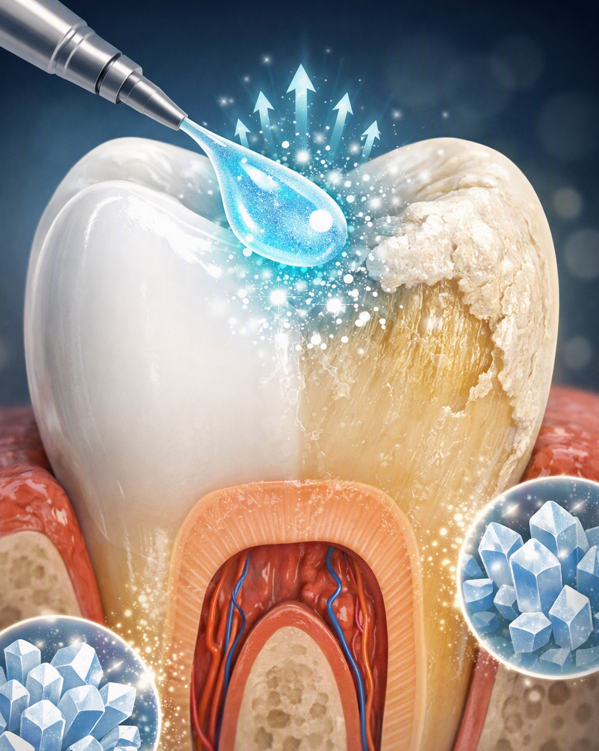
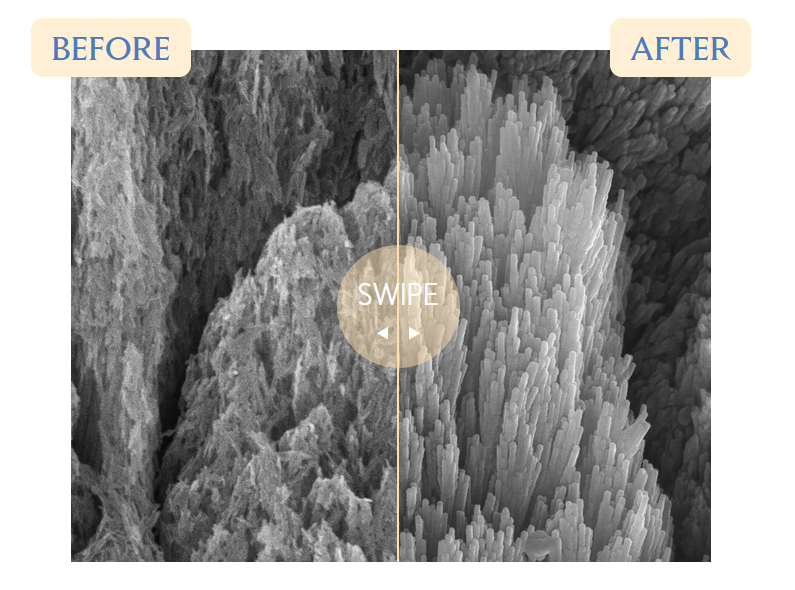
- Scientists at the University of Nottingham have developed a new dental gel that may one day help repair damaged tooth enamel — the hard outer layer that protects our teeth.
- Unlike bones and many other body tissues, enamel cannot naturally grow back once it is lost because it contains no living cells. This makes cavities, erosion, and worn enamel difficult to reverse.
- The new fluoride-free gel was designed by copying the way the body creates enamel during early childhood. It contains specially designed proteins that form a framework on the tooth surface.
- Once applied, the gel attracts minerals such as calcium and phosphate from saliva and guides them into organized crystals that grow together with the existing enamel structure.
- Laboratory tests showed that the regenerated enamel-like material could restore the microscopic structure and strength of damaged teeth.
- Researchers tested it under conditions that mimic everyday challenges, including brushing, chewing, and exposure to acidic foods. The repaired surface behaved similarly to healthy natural enamel, suggesting it could eventually become a practical dental treatment.
- The technology may also help people with sensitive teeth. When enamel wears away or gums recede, dentine underneath becomes exposed, allowing hot, cold, or sweet foods to trigger pain. The gel may create a protective mineral layer over exposed dentine, reducing sensitivity and improving tooth strength.
- Researchers are now working toward commercial applications through a startup company called Mintech-Bio.
- Future products could include treatments for enamel erosion, tooth sensitivity, and improved dental restorations.
- While more testing is needed before widespread use, the discovery represents a potential shift from simply protecting teeth to actually rebuilding damaged enamel.
////////////////////////////////////////////////////////////////////////////////////////////////////////////////////////////////////////////
Story: Strange ‘magnetoelastic’ tent generates electricity from wind, body movement and sound to power small devices – A magnetoelastic tent concept could one day turn wind, movement and fabric flexing into usable electricity
Source: LiveScience.com Story by Alan Bradley

- A new experimental “magnetoelastic tent” can generate electricity from everyday movements and environmental vibrations. Developed by researchers at the University of California, Los Angeles, the flexible structure uses magnetoelastic material, which produces an electrical signal when stretched or bent.
- In tests, the tent generated power from wind, human motion, and even sound vibrations. The material is lightweight, inexpensive, and doesn’t require rare metals or complex manufacturing.
- Researchers demonstrated that the tent could power small devices such as sensors and LEDs, suggesting it could serve as a portable, renewable energy source for outdoor activities or emergency situations.
- Because it responds to very small motions, the technology could also be integrated into clothing or soft robotics.
- While still in early development, the magnetoelastic tent shows promise as a simple way to harvest energy from the environment without batteries or traditional generators.
////////////////////////////////////////////////////////////////////////////////////////////////////////////////////////////////////////////
Story: 3 teens win global prize for tamarind-seed powder that pulls microplastics from water – The team won The Earth Prize global award, becoming the first team from India to do so.
Source: The Cool Down on MSN.com Story by Morgan Taylor

Breakthrough invention
- Three 16-year-olds from India — Vivaan Chhawchharia, Ariana Agarwal, and Avyana Mehta — created a biodegradable powder called Plas-Stick, made from discarded tamarind seeds.
- When added to water, the powder binds to microplastics, forming visible clumps.
- These clumps can be removed using a handheld magnet, eliminating the need for electricity or complex filtration systems.
Award recognition
- The team won The Earth Prize global award, becoming the first team from India to do so.
- Their project was inspired by visiting a rural community where drinking water was stored in shared plastic containers.
- They first won the Asia regional category, earning $12,500, then advanced to win the global prize.
- The Earth Prize distributes $100,000 in shared funding to youth environmental innovators.
Why it matters
- Microplastics are tiny fragments that form as larger plastics break down; they’re often too small to see and difficult to remove.
- Plas-Stick offers a low-cost, simple solution for communities lacking advanced water-treatment technology.
- It targets microplastic removal only — not bacteria, viruses, or other contaminants — so it must be used alongside broader water treatment.
- WHO and UNICEF reported in 2025 that 2.1 billion people still lack safely managed drinking water, highlighting the scale of global water challenges.