


Show Notes 9 October 2026
Text highlighted in blue identifies notes I have inserted.
Story 1: Making rocket fuel out of Mars’ thin air: New breakthrough could make it happen – A form of electrolysis could convert the carbon dioxide in Mars’ atmosphere into methane for rocket fuel
Source: Space.com Story by Keith Cooper
See research paper here: https://pubs.acs.org/accacs/article/16/9/8081/5115630/Sub-Nanometer-Nanoclusters-of-Copper-Atop-Single
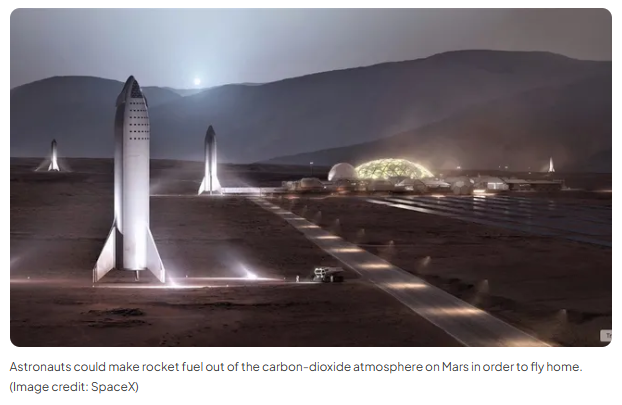
- A new study suggests that future astronauts could potentially make rocket fuel directly from Mars’ thin atmosphere, reducing the enormous amount of fuel that would otherwise have to be transported from Earth.
- Mars’ atmosphere is about 96% carbon dioxide (CO₂), providing a plentiful raw material.
- Researchers from the University of Mississippi and Texas A&M developed a special nitrogen-doped copper catalyst that can convert CO₂ into nearly pure methane. Methane is an important rocket fuel and is already used by some modern launch vehicles.
- The process uses an electrochemical reactor to break down and transform carbon dioxide. A major advantage is that the catalyst produces methane directly, rather than creating a mixture of chemicals that would require additional equipment to separate. That could be particularly valuable on Mars, where transporting large, complex industrial equipment from Earth would be difficult.
- The researchers say the technology could eventually help make Mars missions more self-sufficient, although substantial engineering work remains before it could produce fuel on the scale required for a crewed return mission.

Story 2: New Speaker Could Send Music to Listener Without Disturbing Others
Source: Knowridge.com
Link: https://knowridge.com/2026/09/new-speaker-could-send-music-to-listener-without-disturbing-others
See research paper here: https://www.nature.com/articles/s41467-026-73604-0
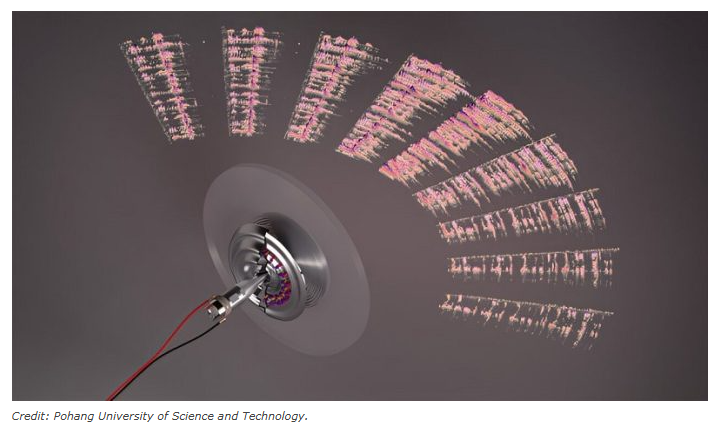
- Researchers at Pohang University of Science and Technology in South Korea have created MiPAL (metamaterials-integrated parametric array loudspeaker), a directional speaker system that beams audio directly to a single listener without requiring headphones or disturbing people nearby.
- Side note, key to this tech is you could listen to music, etc. without wearing headphones and without distrubing others around you.
- However, it does not mean headphones become obsolete:
- You generally need to remain within the sound beam. Move your head or leave the listening zone and the effect may weaken.
- Other people could potentially hear some sound if they enter the beam.
- How It Works: Traditional speakers scatter sound in all directions. MiPAL uses a single ultrasonic transducer to produce high-frequency waves. As these ultrasonic waves move through the air, nonlinear acoustic interactions convert them into audible sound frequencies (500Hz to 10kHz).
- Advanced Metamaterials: The system uses two types of metamaterials to shape the audio. A front acoustic metasurface works like a lens to straighten and focus the sound beam, while rear elastic meta-units suppress unwanted vibrations so sound does not bleed to the sides.
- Side note: Metamaterials are engineered materials whose unusual properties come primarily from their internal structure, rather than from the chemical composition of the material itself. Think of them as materials designed at very small scales, where the shape, pattern, and arrangement of tiny structures give them capabilities not normally found in nature.
- Simplified Hardware: Unlike older directional speakers that rely on dozens or hundreds of emitters, MiPAL relies on just one transducer, making the setup much simpler.
- Practical Uses: Potential applications include airplane seats, museum displays, and office desks, where individuals can listen to personal audio without affecting neighbors.
- Current Limitation: The prototype cannot yet match the volume of standard speakers, meaning it is not ready to fully replace everyday headphones.
Story 3: Scientists develop next-gen zinc-iodine batteries with 60,000+ cycles that charge in 3 minutes — and they won’t catch fire either
Source: TechRadar.com Story by David Nield
- Researchers at Flinders University in Australia have made a major breakthrough in aqueous [water-based] zinc-iodine batteries, positioning them as a potential replacement for traditional lithium-ion technology.
- Key Advancements
- Extreme Durability: Prototype components endured over 60,000 recharge and discharge cycles in lab settings.
- Ultra-Fast Charging: The experimental battery cell can charge in as little as three minutes.
- Enhanced Safety: Because the system is water-based, it poses virtually no risk of catching fire or exploding compared to lithium-ion alternatives.
- Easier Sourcing: Zinc-iodine materials are generally easier to resource and manufacture, alleviating supply pressure on lithium.
- How It Works & Future Outlook – Historically, zinc-iodine batteries faced rapid degradation due to chemical reactions that allowed iodine to escape. To solve this, researchers engineered a specialized molecular cage that holds the iodine in place without restricting the necessary chemical reactions, dramatically increasing stability and lifespan.
- While promising, full-scale commercial prototypes have not yet been produced.
- Given their present state of development, these batteries will initially be best suited for large-scale grid energy storage (such as storing power at solar plants) rather than immediate use in consumer electronics like smartphones.
- The research team is currently partnering with industry partners to build a full prototyping platform.

Story 4: Ambient light activates wearable patch for wound treatment
Source: Woundcareweekly.com
Link: https://woundcareweekly.com/2026/09/06/ambient-light-activates-wearable-patch-for-wound-treatment/
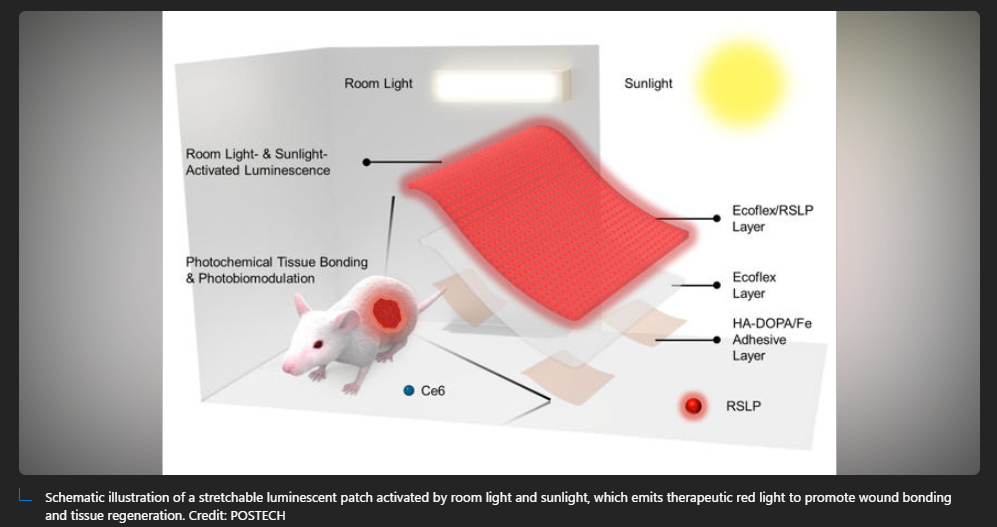
- Researchers at Pohang University of Science and Technology and Konkuk University [both in South Korea] have developed a flexible, wearable patch that uses everyday ambient light—such as indoor lighting and sunlight—to close wounds and promote tissue regeneration without relying on batteries or external electronics.
- Traditional light-based therapies (phototherapy) help heal wounds and reduce scarring, but they typically require bulky, tethered hospital equipment that limits patient mobility.
- To address this challenge, the engineering team developed luminescent particles embedded within an adhesive hydrogel patch. These specialized particles capture ambient light and convert it into a therapeutic red light emitting at a wavelength of approximately 640 nanometers. They even feature an “afterglow” effect, continuing to output red light briefly when ambient light is interrupted.
- The patch accelerates healing through two key mechanisms:
- Photochemical Tissue Bonding: The emitted red light activates a photosensitizer that triggers collagen crosslinking, sealing incisional skin wounds without requiring traditional sutures or adhesives.
- Photobiomodulation: The light stimulates fibroblast growth, encouraging cell movement, lowering inflammation, and promoting faster skin regeneration.
- In preclinical animal trials, 12 hours of patch application significantly sped up wound closure and tissue recovery.
- Preliminary human testing on facial skin also showed improved skin elasticity and reduced redness after 9 hours of wear.
- This battery-free, wearable technology paves the way for convenient, continuous at-home wound care and skin healing.

Honorable Mentions
Story: Deep learning refines how bionic eyes communicate with the brain
Source: UC Santa Barbara [The Current] Story by Debra Herrick
Link: https://news.ucsb.edu/2026/022739/deep-learning-refines-how-bionic-eyes-communicate-brain
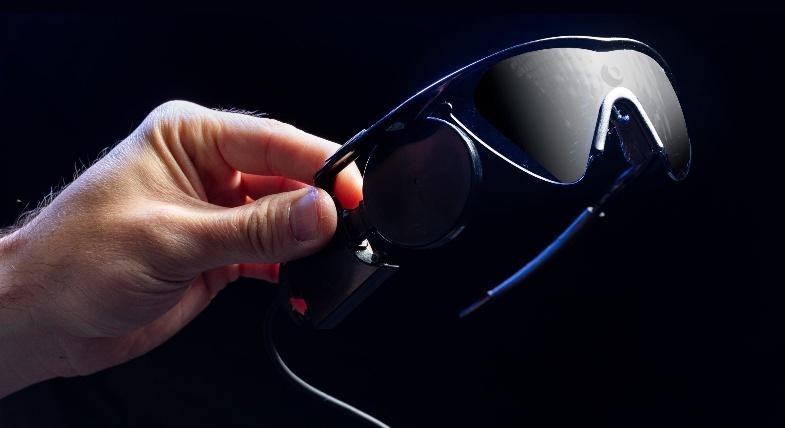
- Researchers are using artificial intelligence to improve bionic eyes, devices designed to help blind people experience some form of vision by stimulating the brain directly.
- A new study involving the University of California, Santa Barbara, ETH Zurich, and Miguel Hernández University in Spain suggests that deep learning could make these devices more precise and personalized.
- The research team tested their approach on a 27-year-old man who lost his sight after a traumatic brain injury. He had a temporary implant containing 96 electrodes placed in the visual cortex, the part of the brain responsible for processing visual information.
- When stimulated, the electrodes produced flashes or spots of light called phosphenes.
- Scientists trained an AI system to predict how different electrical stimulation patterns would affect the participant’s brain. The system also considered the brain’s natural resting activity before each test.
- This allowed the AI to adjust stimulation patterns based on the individual’s current brain activity.
- When tested, the AI-generated patterns produced more accurate brain responses while using less electrical current than conventional methods. Importantly, recordings of the brain’s actual activity predicted what the participant perceived better than simply knowing which electrodes were activated.
- The researchers say this is important because the brain does not respond like a computer screen where each electrode acts as a simple pixel. Neural responses can change, and the same stimulation may produce different experiences over time.
- The study is an early proof of concept, but it could eventually lead to bionic eyes that adapt to each user’s brain and provide more reliable artificial vision.
////////////////////////////////////////////////////////////////////////////////////////////////////////////////////////////////////////////
Story: This battery is powered by algae
Source: Fast Company Story by María José Gutiérrez Chávez
Link: https://www.fastcompany.com/91589823/this-battery-is-powered-by-algae
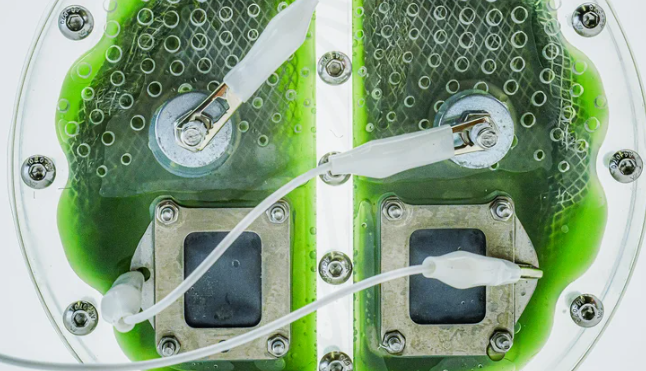
- Researchers and designers are developing a new type of battery that uses living algae to produce electricity. The project was inspired by bio-designer Lucia Giron, who became fascinated by glowing microorganisms she observed in seawater during a family vacation.
- The battery contains aquatic cyanobacteria, sometimes called blue-green algae, inside a transparent chamber. When exposed to light, the algae carry out photosynthesis. During this natural process, they release electrons, which the battery captures to generate electricity.
- Unlike traditional alkaline batteries, which contain chemicals and eventually become waste, this biological battery could potentially operate for years and recharge itself continuously. The algae remain alive because the system only collects a small portion of the energy they produce.
- The current prototype is small enough to fit in a person’s hand and can power devices such as a digital clock and temperature sensor. One earlier prototype has reportedly operated for more than five years.
- However, the technology still faces challenges. Researchers must improve its electrical output and power density before it can operate larger electronic devices. They also need to maintain the delicate living environment of the algae, since too much direct sunlight can actually damage or kill them.
- The researchers believe algae-powered batteries could eventually replace millions of disposable batteries, creating a cleaner and more sustainable source of small-scale electricity.
////////////////////////////////////////////////////////////////////////////////////////////////////////////////////////////////////////////
Story: Robot valet parking at Gatwick Airport promises safer, easier long‑stay car storage
Source: Euro News

- London Gatwick Airport in the United Kingdom has introduced a new robotic parking service designed to make long-term airport parking easier and more secure. Developed by the French company Stanley Robotics, the system uses autonomous robots to move and park passengers’ cars.
- Instead of searching for a parking space, travelers drive into a special garage, leave their vehicle, and scan a code before heading to the airport terminal. The robots then lift the car from underneath its wheels and transport it to a secure parking area. Customers keep their car keys throughout their trip.
- The robots use sensors and cameras to move precisely and avoid obstacles. Gatwick says the automated system allows cars to be parked closer together, increasing parking capacity by approximately 20 percent compared with traditional parking.
- Security is another advantage. The parking area is fenced, floodlit, monitored by automatic number-plate recognition, and protected by 24-hour patrols.
- However, not every vehicle is compatible. Cars must meet specific weight, height, wheelbase, and wheel-size requirements, with approximately 5 percent of vehicles excluded.
- The service initially required stays of at least five days and weekday drop-offs between 9 a.m. and 5 p.m., although Gatwick plans to relax these restrictions. The airport hopes robotic parking will reduce stress for travelers while improving parking efficiency.
////////////////////////////////////////////////////////////////////////////////////////////////////////////////////////////////////////////
Story: MIT spinout turns plastic waste into resilient building materials – Atlas Building Composites is commercializing MIT research to turn plastic waste into parts for buildings and other infrastructure
Source: MIT News Story by Zach Winn
Link: https://news.mit.edu/2026/mit-spinout-turns-plastic-waste-into-resilient-building-materials-0914

- MIT spinout Atlas Building Composites has developed a new way to turn discarded plastic into strong, durable building materials. The company uses an AI-powered robotic system to shred single-use plastics, melt them, and combine them with fiberglass. The resulting material is stronger than wood and can be formed into building components using large-scale 3D printers.
- Atlas plans to use these recycled materials for home foundations, decks, walls, floors, roofs, and bridges. The company recently supplied recycled composite trusses for a 40-foot bridge built by the U.S. Army Corps of Engineers in a Massachusetts wetland.
- Unlike traditional recycling methods, Atlas’s process does not require water, making it easier to establish recycling facilities in areas with limited water supplies. The company also believes local factories could reduce transportation costs and pollution while creating jobs.
- Atlas hopes to eventually deploy its technology worldwide, addressing both the growing problem of plastic pollution and the need for more affordable housing and infrastructure.