


Show Notes 27 March 2026
Text highlighted in blue identifies notes I have inserted.
Story 1: AI search robot uses 3D maps and internet knowledge to find lost items
Source: TechXplore.com Story by Andreas Schmitz, Technical University Munich
Link: https://techxplore.com/news/2026-03-ai-robot-3d-internet-knowledge.html
See research paper here: https://ieeexplore.ieee.org/document/11359697
See video here: https://www.youtube.com/watch?v=nUouwHUZPWQ


- Researchers at the Technical University of Munich have created a robot that can locate lost items on command. It combines knowledge from the internet with a spatial map of its surroundings to efficiently find the objects being sought.
- The new robot from the University’s Learning Systems and Robotics Lab looks like a broomstick on wheels with a camera mounted at the top. It is one of the first robots that not only integrates image understanding but also applies it to a clearly defined task.
- Here’s how it works:
- To find, for example, a pair of glasses misplaced in the kitchen, the robot first looks around and build a three-dimensional image of the room. [See video for a demonstration]
- The camera initially provides two-dimensional images, but these pixels also contain depth information.
- This creates a spatial map of the environment that is accurate to the centimeter and is constantly updated.
- A laptop also provides the robot with information about which objects are visible in the image and what significance they have for humans.
- As the lead researcher noted, “We have taught the robot to understand its surroundings. Humanoid robots working in factories or robots in care settings in private homes require this newly developed basic understanding, which is important for all robots that move in spaces that are constantly changing.”
- Another special capability of the robot is that it remembers previous images and is able to compare them with new images of its surroundings. If a new object suddenly appears in the kitchen, it recognizes the change with a high degree of certainty (95%) and marks these areas as “highly probable” search locations.
- The research team says the next development step is to [teach] the robot [augmented with robotic arms and hands] to search for objects that are in a drawer or behind a door. To do this, however, the robot will not merely have to draw on knowledge from the internet but will also have to interact with its surroundings.

Story 2: Tofu brine could power safer batteries that last decades, researchers say – A new neutral-electrolyte battery survives more than 120,000 cycles without fire risk
Source: Techspot.com Story by Skye Jacobs
Link: https://www.techspot.com/news/111434-tofu-brine-could-power-safer-batteries-last-decades.html
See research paper here: https://www.nature.com/articles/s41467-026-69384-2
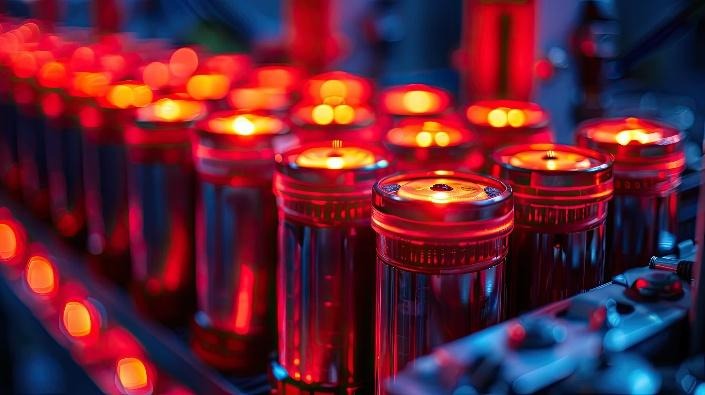
- A mixture most people associate with tofu production could soon help make safer, longer-lasting [aqueous] batteries. I’ll explain aqueous batteries a bit later.
- Researchers from the City University of Hong Kong and Southern University of Science and Technology have built a water-based [aqueous] power cell that runs on tofu brine – the mineral-rich solution left behind after pressing soy curds.
- The design replaces the complex, flammable chemistry of lithium-ion batteries with an electrolyte that’s as safe as saltwater.
- Side note – An electrolyte is any substance that produces charged particles (ions) when it dissolves in water, allowing the solution to conduct electricity. It can refer to both chemical electrolytes (like salts, acids, and bases) and the essential charged minerals your body uses to function.
- In lab tests, the prototype [battery] endured more than 120,000 charge cycles, an endurance record that far exceeds today’s commercial standards. Typical electric-vehicle batteries degrade after just a few thousand cycles – even long-duration grid systems seldom survive beyond ten thousand.
- At the core of the project lies a concept the City University of Hong Kong and Southern University of Science and Technology team calls “organic electrodes,” which interact with a neutral, non-toxic liquid medium. By maintaining a stable pH, this electrolyte avoids the electrochemical breakdown that limits most aqueous batteries.
- Side note – An aqueous battery is a type of rechargeable battery that uses a water‑based electrolyte instead of the flammable organic solvents found in most lithium‑ion batteries. This makes them significantly safer, more environmentally friendly, and often cheaper, though they typically have lower energy density.
- Side note – pH is a numerical scale that tells you how acidic or basic a water‑based solution is, based on the concentration of hydrogen ions (H⁺). Lower pH means more acidic; higher pH means more basic.
- The result is a cell that is neither flammable nor caustic – a stark contrast to lithium-ion counterparts known for fire hazards when damaged or overheated.
- Because the tofu-brine system uses benign ingredients, it could simplify end-of-life handling and lessen environmental damage from discarded batteries.

Story 3: New 4D vision chip can help robots, drones track distance and speed of moving objects – Researchers have developed a new 4D imaging sensor on a single silicon chip that overcomes the limitations of standard, bulky 3D sensor
Source: InterestingEngineering.com Story by Mrigakshi Dixit
Link: https://interestingengineering.com/innovation/4d-vision-chip-helps-robots-track-distance-speed
See research paper here: https://www.nature.com/articles/s41586-026-10183-6
- Researchers at Pointcloud [a Zürich‑based technology company specializing in advanced 3D and 4D imaging sensors] have created a 4D imaging sensor that fits on a single silicon chip.
- Side note – What “4D” means in this technology. 4D = 3D space + time (motion)
- In this article, 4D imaging refers to a system that captures:
- The 3D shape and position of objects in space
- The instantaneous speed or velocity of those objects
- This tech was previously too large and expensive for everyday devices.
- What the chip actually does:
- It maps the 3D physical environment and measures the instantaneous speed of every object it sees.
- This is made possible by Frequency-Modulated Continuous Wave LiDAR combined with a Focal Plane Array of 61,952 stationary pixels.
- Side note – Frequency‑Modulated Continuous Wave LiDAR is a type of LiDAR that uses a continuously emitting, frequency‑swept (“chirped”) laser to measure both distance and relative velocity of objects with extremely high precision. Unlike traditional pulsed time‑of‑flight LiDAR, FMCW mixes the returned light with a local reference beam to extract range and Doppler velocity simultaneously
- Side note – A Focal Plane Array (FPA) is a two‑dimensional grid of light‑sensing pixels placed at the focal plane of an optical system (lens, telescope, infrared optics). It captures incoming electromagnetic radiation and converts it into electrical signals, forming an image.
- How Frequency-Modulated Continuous Wave LiDAR differs from today’s LiDAR – Most drones use pulsed LiDAR, which:
- Sends bursts of light and waits for them to return.
- The units tend to be bulky.
- And they are velocity-blind — it can’t directly measure speed; it must compare frames.
- The new chip uses a continuous laser beam, enabling:
- Real-time speed detection.
- More compact hardware.
- Lower cost and higher performance.
- Why it matters – This could power:
- Autonomous drones
- Robots
- Future smartphones
- It brings high-speed, low-cost, compact 4D imaging much closer to mainstream use.

Story 4: Blood test ‘clock’ can predict Alzheimer’s symptoms before they emerge
Source: ScienceAlert.com Story by David Nield
Link: https://www.sciencealert.com/blood-test-clock-can-predict-alzheimers-symptoms-before-they-emerge
See research paper here: https://www.nature.com/articles/s41591-026-04206-y

- Researchers at Washington University in St. Louis have developed a predictive model—a kind of biological clock—that estimates when Alzheimer’s symptoms will begin.
- It uses established blood biomarkers, making it far more accessible than brain scans or spinal fluid tests.
- Side note: A blood biomarker is any measurable substance in your blood that signals what’s happening inside your body — whether normal, stressed, or related to a disease. These markers can reflect risk, early disease, active disease, or response to treatment, and they’re widely used in modern medicine.
- Levels of the [blood biomarker] protein p-tau217 in the blood strongly correlate with Alzheimer’s progression.
- Side note – p-tau217 is a chemically modified form of the normal tau protein—specifically tau that has been phosphorylated at the amino acid threonine-217—and its presence in blood strongly reflects Alzheimer’s-type changes in the brain. It rises when amyloid plaques and tau tangles begin forming, often years before symptoms appear.
- Tracking this marker helps narrow the predicted onset of cognitive symptoms to a 3–4-year window.
- Why this matters
- Alzheimer’s biological changes can begin 10–30 years before symptoms appear.
- Understanding this timeline helps researchers study the disease more effectively and may eventually guide personalized care plans.
- In the near term, the tool is expected to improve research and clinical trials by identifying people likely to develop symptoms sooner.
- Long-term goal: give individual patients a clearer sense of when symptoms may emerge, enabling earlier planning and potential interventions.

Honorable Mentions
Story: Scientists mixed dead leaves with magnesium—and created a super metal
Source: Popular Mechanics via MSN.com Story by Darren Orf
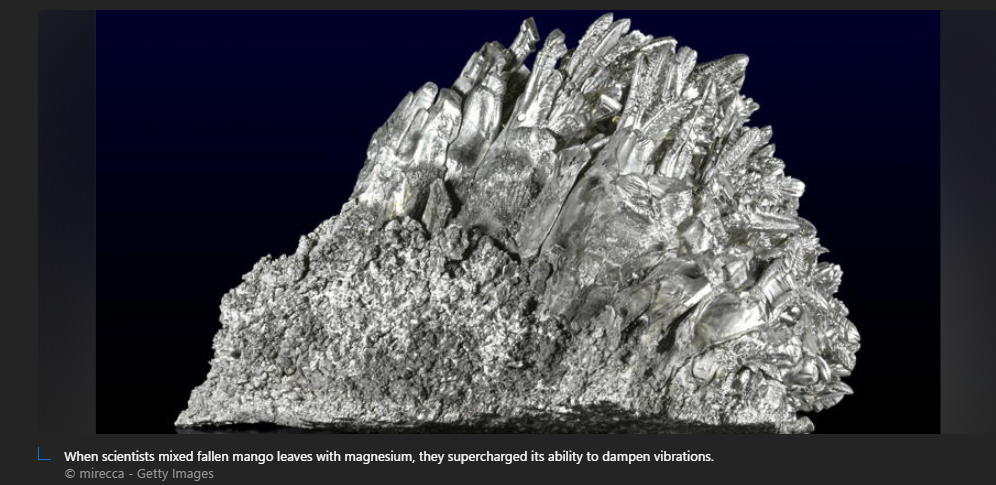
- Scientists developed a new lightweight “supermetal” by mixing magnesium with powder made from dead (fallen) mango leaves—an agricultural waste product.
- Magnesium is already valued for being very light and useful in industries like aerospace and automotive manufacturing.
- Researchers added just 5% leaf powder to magnesium and processed it using heat and pressure techniques.
- During manufacturing, the plant material burned away, leaving tiny pores inside the metal.
- These microscopic pores significantly improved the metal’s ability to absorb vibrations and shocks—boosting damping performance by about 54%.
- Why it matters:
- The material is both strong and lightweight, with improved performance.
- It uses biomass waste, making it more sustainable and eco-friendly.
- It could lead to better materials for vehicles, aircraft, and other engineering uses.
- Bottom line – By combining metal with plant waste, scientists created a more efficient, shock-absorbing material, showing a promising new direction for green, high-performance alloys.
////////////////////////////////////////////////////////////////////////////////////////////////////////////////////////////////////////////
Story: Turning sawdust into fire-resistant materials – What is usually burned to generate energy today could protect houses tomorrow. Researchers at ETH Zurich and Empa have found a way to press sawdust with a mineral binder to create a robust, flame-retardant material. It’s even recyclable.
Source: ETHzurich Story by Samuel Schlaefli

- Researchers at ETH Zurich and Empa have developed a new fire-resistant building material made from sawdust and a mineral binder (struvite). Instead of burning sawdust waste—which releases CO₂—the process turns it into a recyclable, sustainable composite.
- How it works:
- Sawdust is combined with struvite, a fire-retardant mineral.
- An enzyme (from watermelon seeds) controls how the mineral crystallizes, binding the particles into a solid panel.
- Key properties:
- Highly fire-resistant: ignites much more slowly than wood and forms a protective layer when burned.
- Self-protecting behavior: releases water vapor and ammonia under heat, cooling the material and slowing flames.
- Comparable fire rating to conventional cement-bonded boards, but lighter and with lower carbon impact.
- Sustainability advantages:
- Fully recyclable: components can be separated and reused.
- Keeps wood in circulation longer, supporting a circular economy.
- The mineral component can even be reused as fertilizer.
- Challenges & outlook:
- The main barrier is cost, especially the price of struvite.
- Researchers hope to source struvite from wastewater treatment plants to make the material cheaper and scalable.
- Bottom line: The research shows a promising way to turn low-value wood waste into a fire-safe, recyclable construction material, potentially replacing heavier, more carbon-intensive alternatives in building interiors.
////////////////////////////////////////////////////////////////////////////////////////////////////////////////////////////////////////////
Story: The world’s first self-balancing electric motorcycle is now entering production
Source: Electrek.com Story by Micha Toll
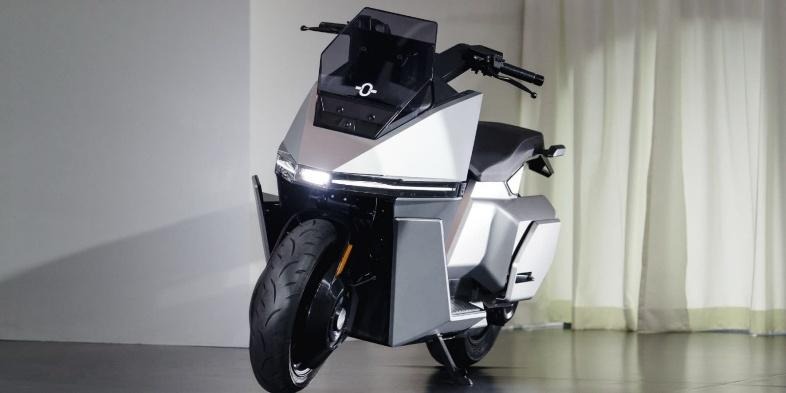
- A new electric motorcycle startup claims it has solved one of the oldest challenges in two-wheeled transportation: staying upright. Technology company OMOWAY has officially unveiled its new OMO X electric motorcycle and announced that the bike has now entered mass production, describing it as the world’s first mass-produced self-balancing electric motorcycle.
- At the heart of the new model is what OMOWAY calls its “OMO-ROBOT” architecture, a full-stack system combining sensors, software, and hardware designed to transform the motorcycle into what the company describes as a “two-wheeled robot.” The system integrates vision-based perception, high-speed computing, and physical stabilization technology to keep the bike balanced without relying entirely on the rider.
- The key hardware component enabling that capability is a Control Moment Gyroscope (CMG), a high-precision stabilization device more commonly found in aerospace applications such as satellites and spacecraft. By rapidly adjusting angular momentum, the gyroscope can actively stabilize the motorcycle and help keep it upright even at very low speeds or when stopped.
- In practical terms, that could address one of the biggest challenges for many new or smaller riders: balancing a heavy motorcycle. OMOWAY says the system can maintain upright stability autonomously, potentially making motorcycles easier and safer to ride for beginners while also improving safety in tricky conditions.
////////////////////////////////////////////////////////////////////////////////////////////////////////////////////////////////////////////
Story: Cutting-edge solar panels can even generate electricity at night — here’s how they work
Source: The Cool Down on MSN.com Story by Ben Stern
- Researchers at Stanford University have developed a new type of solar panel that can produce electricity at night by exploiting temperature differences between the panel and the surrounding air.
-
The technology relies on radiative cooling
- At night, solar panels naturally radiate heat into the cold sky.
- This creates a temperature drop.
- That temperature difference can be harnessed to generate small amounts of electricity.
-
It’s not a replacement for daytime solar — but it fills a gap
- Nighttime output is far lower than daytime solar production.
- Still, it can provide continuous trickle power when the sun isn’t available.
-
Research shows promising early results
- Experiments demonstrate that nighttime power generation is feasible.
- The technology could support low-power devices or help stabilize off-grid systems.
-
Potential future applications
- Remote sensors
- Off-grid lighting
- Improving overall solar system efficiency by smoothing the day–night energy curve