


Show Notes 16 October 2026
Text highlighted in blue identifies notes I have inserted.
Story 1: [Google] DeepMind’s new genome ‘atlas’ charts effects of all nine billion human gene mutations – AI model AlphaGenome forecasts the consequences of altering every single DNA letter in the human genome
Source: Nature.com Story by Ewen Callaway
Link: https://www.nature.com/articles/d41586-026-02835-4
- As this is very geeky science news, let’s first establish why all this matters: DeepMind’s new genome ‘atlas’ charts can offer predictions that may help researchers identify mutations that are important in disease and better understand how genes are regulated. The technology could eventually assist drug development, genetic research, and personalized medicine.
- Scientists at Google DeepMind have developed an artificial intelligence system called AlphaGenome that attempts to predict how changes in DNA affect human biology.
- The tool is designed to analyze mutations throughout the human genome, including regions that do not directly produce proteins but help control when and where genes are switched on.
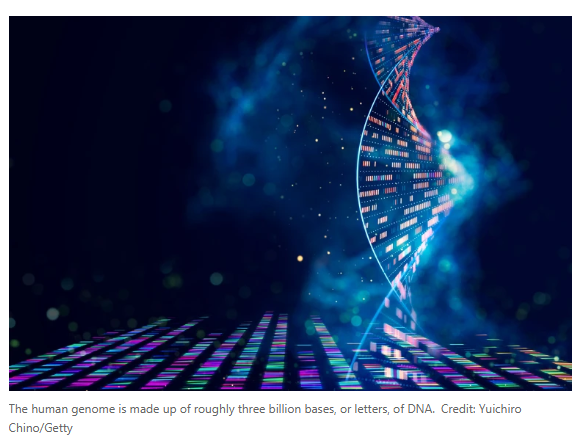
- The human genome contains approximately three billion DNA letters. Even a single-letter change can sometimes contribute to diseases such as cancer or inherited disorders.
- However, scientists have struggled to understand the effects of many mutations because the vast majority occur in noncoding regions of DNA.
- Side note: Noncoding regions of DNA are stretches of DNA that do not contain instructions for making proteins. While protein-coding genes make up only about 1 to 2% of human DNA, the remaining noncoding DNA serves many important functions.
- Examples of noncoding DNA include:
- Regulatory sequences: Control when, where, and how much a gene is expressed (such as promoters and enhancers).
- Introns: Segments within genes that are copied into RNA but removed before a protein is made.
- Genes for noncoding RNAs: Produce functional RNAs (such as tRNA, rRNA, and microRNA) that help regulate cellular processes.
- Repetitive DNA: Repeated sequences that may play roles in chromosome structure and stability.
- Telomeres and centromeres: Specialized noncoding regions important for chromosome protection and cell division.
- AlphaGenome uses deep learning to study DNA sequences and predict how genetic changes might influence gene activity.
- Researchers say the system can examine the effects of all possible single-letter mutations across the genome, potentially creating a massive “atlas” of genetic changes.
-
Side note – In genetics, a single-letter mutation usually means a change in one DNA base (one nucleotide) in the genetic code.
- DNA is written using four “letters”:
- A = Adenine
- T = Thymine
- C = Cytosine
- G = Guanine
- A single-letter mutation occurs when one of these letters is altered.
-
Side note – In genetics, a single-letter mutation usually means a change in one DNA base (one nucleotide) in the genetic code.
- The AI was trained using large amounts of biological data and can analyze DNA sequences spanning hundreds of thousands of letters at a time.
- AlphaGenome is still a research tool. Its predictions need to be tested experimentally, and accurately understanding the relationship between DNA changes and human disease remains a major scientific challenge.
- Overall, the work demonstrates how artificial intelligence may help scientists explore the enormous complexity of the human genome more quickly than traditional laboratory methods alone.
Story 2: AI can now control fusion plasma faster than humans can react – A new Princeton AI system can control fusion plasma in milliseconds and even predict dangerous instabilities before they happen
Source: ScienceDaily.com Story from Princeton University
Link: https://sciencedaily.com/releases/2026/09/260903064215.htm
- Side note – remember almost all reactors in operation today are fission reactors, not fusion reactors.
- Nuclear fission splits heavy atoms such as uranium or plutonium into smaller atoms, releasing energy.
- Nuclear fusion combines light atoms, usually forms of hydrogen, releasing even more energy. Fusion is what powers the Sun.
- Scientists at Princeton University and the U.S. Department of Energy’s Princeton Plasma Physics Laboratory have developed an artificial intelligence system that can control the extremely hot plasma inside a nuclear fusion reactor faster than humans can respond.
- The system, called PACMAN (Prediction and Control using Machine learning), was tested on the DIII-D tokamak fusion facility in San Diego. A tokamak uses powerful magnetic fields to contain plasma heated to temperatures hotter than the center of the Sun.
- Keeping this plasma stable is one of the biggest challenges in developing practical fusion energy. Small disturbances can grow within milliseconds and potentially disrupt the reaction. Human operators are too slow to react to these rapid changes.
- PACMAN continuously monitors measurements such as plasma temperature, density, and magnetic signals. Its AI models predict what the plasma is likely to do next and automatically adjust heating systems and other controls. The system operates in about 20 milliseconds [20 thousandths of a second]
- In one experiment, PACMAN predicted a dangerous plasma instability called a tearing mode approximately 200 milliseconds before it occurred.
- It then adjusted the plasma to prevent the instability from developing.
- Researchers emphasize that humans remain in charge. The AI operates within strict hardware safety limits, while scientists set the objectives and review each experiment.
- The flexible system could eventually help researchers operate future fusion reactors more reliably and efficiently, bringing practical fusion energy one step closer.
Story 3: The secret to protecting next-gen spacecraft might be eggshells – 3D-printed aluminum eggshell arrays filled with water proved more effective at impact resistance.
Source: ArsTechnica.com Story by Jennifer Ouellette
Link: https://arstechnica.com/science/2026/09/how-eggshells-can-protect-spacecraft-from-space-debris/
See research paper here: https://pubs.aip.org/aip/jap/article-abstract/140/10/105102/3403590/Dynamics-analysis-on-the-water-filled-aluminum?redirectedFrom=fulltext
- Scientists in China [Yuxin Wang of Dalian University of Technology in China] have developed a new spacecraft protection material inspired by the structure of eggshells. The research could lead to better ways of protecting satellites and spacecraft from dangerous space debris.
- Space debris travels at extremely high speeds, so even tiny pieces can cause serious damage. Current spacecraft commonly use Whipple shields, which have thin outer layers designed to break up incoming debris before it reaches the spacecraft’s main wall.
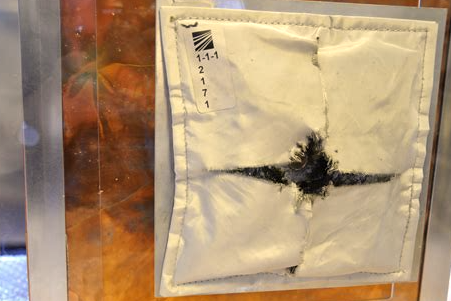
Whipple shield
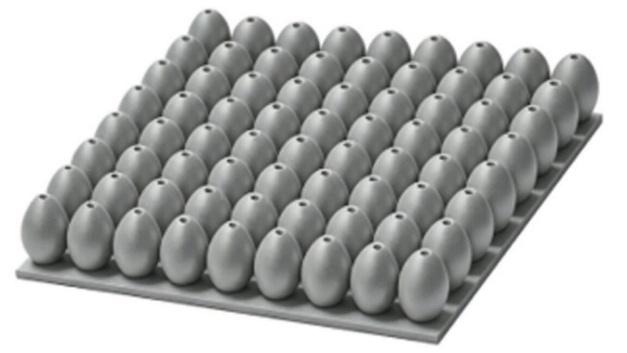
- The researchers wanted to improve this technology by copying some of the strength and flexibility found in eggshells. They used 3D printing to create several aluminum designs, including flat plates, water-filled spheres, and arrays of small eggshell-shaped structures filled with water.
- Computer simulations and experiments using high-speed projectiles showed that the water-filled eggshell arrays performed best. They reduced the speed of incoming projectiles by nearly 65%, compared with about 51% for ordinary aluminum plates.
- The researchers believe the egg-shaped structures work by spreading impact forces across multiple units rather than allowing all the energy to concentrate in one location. The water inside also helps absorb and dissipate energy.
- More testing is needed before the design can be used in actual spacecraft, but the early results suggest that a simple structure inspired by nature could provide improved protection against the growing problem of orbital debris.

Story 4: New ‘nanobone’ could help body regrow bone – Researchers create potential alternative to invasive bone graft procedures in children
Source: University of Sydney Story by Associate Professor Chun Xu
Link: https://www.sydney.edu.au/news-opinion/news/2026/09/04/new-nanobone-could-help-body-regrow-bone.html
See research paper here: https://pubs.acs.org/ancac3/article-abstract/doi/10.1021/acsnano.6c05126/5411126/Multifunctional-Mesoporous-Calcium-Aluminosilicate?redirectedFrom=fulltext
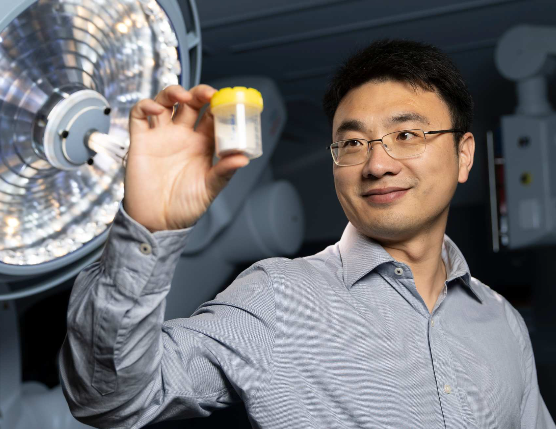
- Researchers at the University of Sydney and the University of Queensland have developed a new biodegradable material that may eventually help people regrow damaged or missing bone.
- The material, called a “nanobone,” is made from extremely small particles of calcium and aluminosilicate. It is designed to encourage the body to repair itself instead of relying on traditional bone graft surgery.
- The researchers are particularly interested in helping children born with cleft lip and palate. These children can have gaps in their jawbone and often must wait until they are 10 to 12 years old before undergoing surgery to remove bone from another part of their body and transplant it into the jaw.
- In laboratory and preclinical testing, the new material produced about 80 percent more new bone than a conventional comparison material after eight weeks. It also activated a natural growth factor involved in bone repair at approximately 10 times the level achieved using traditional methods.
- The nanobone works by activating dormant healing signals already present in the body. These signals attract stem cells that can develop into bone-producing cells.
- The material also helps blood clot quickly, which can stabilize an injury during the early stages of healing.
- The technology is still in the preclinical research stage and has not yet been tested in humans.
- Future applications could include treating traumatic injuries, tooth loss, and other difficult bone defects. Researchers are also exploring personalized 3D-printed scaffolds shaped specifically for individual patients.

Honorable Mentions
Story: Weighing 13.2 pounds, scientists build world’s smallest CT scanner that runs on 200 watts
Source: Interesting Engineering via MSN Story by Munis Raza
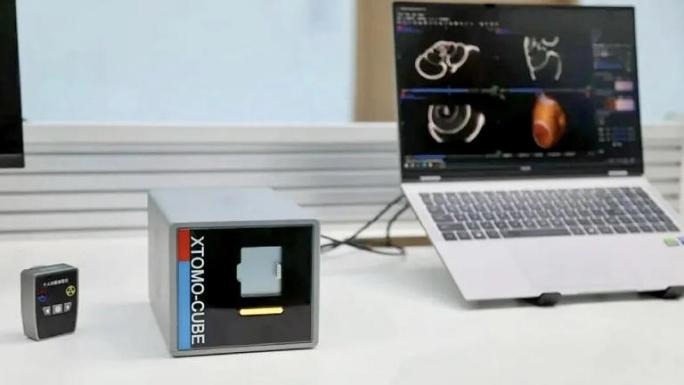
- Scientists at Ray Image Testing Technology in China have developed what they describe as the world’s smallest CT scanner, a lightweight device weighing just 13.2 pounds and using only 200 watts of electricity. The compact scanner could eventually make medical imaging more accessible in places where traditional CT machines are too large, expensive, or difficult to operate.
- Side note – this is not a medical scanner:
The XTOMO-CUBE is a micro-CT scanner designed for small objects and materials, including:
- Fossils and archaeological artifacts
- Biological samples
- Medicine capsules
- Industrial components
- Geological specimens
- Conventional CT scanners typically weigh thousands of pounds and require substantial electrical power and specialized facilities. By reducing the size and power requirements, researchers hope to create a system that can be transported more easily and used in locations such as rural clinics, emergency vehicles, field hospitals, or even remote communities.
- The new scanner uses X-rays and computer processing to create cross-sectional images of the body, similar to a conventional CT machine. Its small size is made possible by advances in miniature X-ray sources, detectors, and imaging electronics.
- The technology is still in development, and the researchers must demonstrate that its images are sufficiently detailed and that the device meets medical safety and regulatory requirements. It may not immediately replace full-size hospital scanners, which provide more powerful imaging capabilities.
- However, the invention represents an important step toward portable medical imaging. If successfully developed for clinical use, small CT scanners could allow doctors to diagnose injuries, strokes, and other medical conditions closer to where patients receive care rather than requiring transportation to a hospital with expensive imaging equipment.
////////////////////////////////////////////////////////////////////////////////////////////////////////////////////////////////////////////
Story: Your Body Has a ‘Second Heart’, And It’s Crucial You Keep It Pumping
Source: ScienceAlert.com Story by Esra Oz
Link: https://www.sciencealert.com/your-body-has-a-second-heart-and-its-crucial-you-keep-it-pumping
- Side note – The article refers to the calf muscles as a “second heart.” This is a common nickname for the calf muscle pump, an important mechanism that helps return blood from the legs to the heart.
- Your calf muscles have an important job that goes far beyond helping you walk. They act like a “second heart” by helping pump blood from your legs back up to your actual heart.
- Every time you walk, climb stairs, run, or raise your heels, your calf muscles contract and squeeze nearby veins. This pushes blood upward against gravity. Small one-way valves inside the veins prevent the blood from flowing backward toward your feet.
- This calf muscle pump helps prevent blood from pooling in the lower legs. When it works poorly, people may experience swollen ankles, aching legs, or heavy-feeling limbs. Poor calf function may also be associated with other health problems.
- Researchers at the Mayo Clinic have found a connection between weak calf muscle pumping and increased mortality risk. However, these studies were observational, meaning they do not prove that weak calf muscles directly cause earlier death. Poor pump function may instead be a sign of inactivity, muscle loss, illness, or general poor health.
- The good news is that keeping the calf pump active is relatively simple. Walking is one of the easiest ways to do it. People who sit at desks for long periods should get up and move around regularly. Even ankle movements or repeated heel raises can activate the calf muscles.
- The article also discusses early research suggesting that exercising a deep calf muscle called the soleus may help regulate blood sugar and fat metabolism.
- Overall, regular movement is important for maintaining circulation and general health, especially as we age.
////////////////////////////////////////////////////////////////////////////////////////////////////////////////////////////////////////////
Story: A New NASA Design Turbocharges Nuclear Spacecraft
Source: IEEE Spectrum Story by Kurt Polzin and Robert Schleicher
Link: https://spectrum.ieee.org/bimodal-nuclear-spacecraft
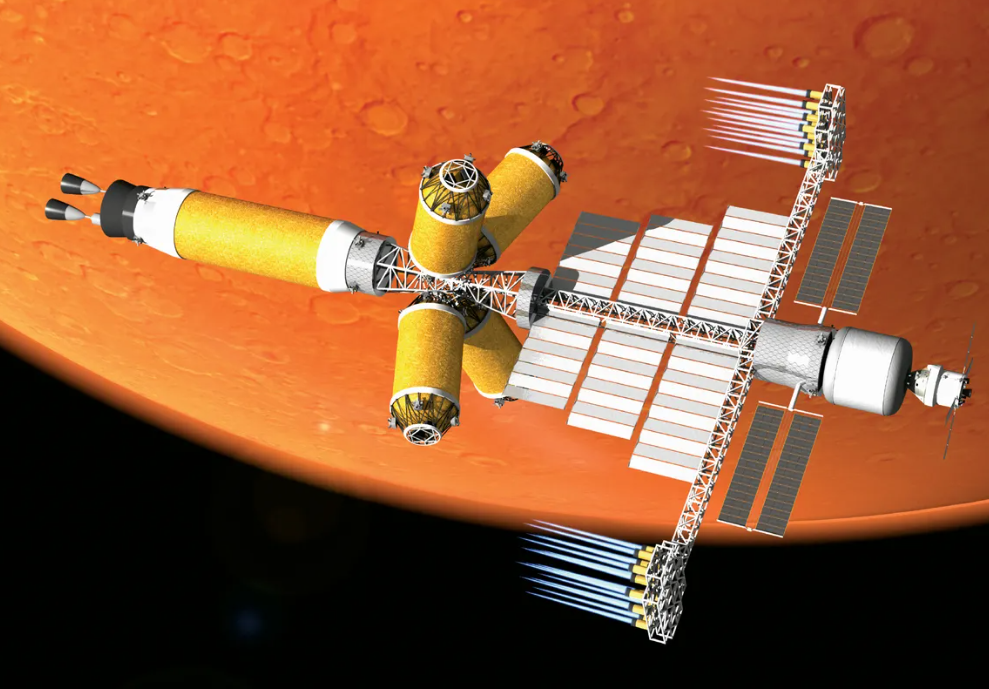
- NASA and industry engineers have proposed a new type of spacecraft engine that could significantly shorten travel times to Mars and other distant destinations.
- The design, called a Synchronal Bimodal Nuclear Rocket (S-BNR), combines two types of nuclear propulsion in one reactor.
- Nuclear thermal propulsion uses a reactor to heat hydrogen to extremely high temperatures and shoot it out of a rocket nozzle. This produces powerful thrust, making it useful for launching away from planets and performing quick maneuvers. Nuclear electric propulsion, meanwhile, generates electricity to power ion or plasma thrusters. These engines are highly efficient but produce much less thrust.
- The S-BNR is designed to use both systems simultaneously. Instead of switching between propulsion modes with complicated valves, the reactor contains two separate fuel zones and fluid loops. One produces high-temperature thrust, while the other continuously generates electricity for propulsion and spacecraft equipment.
- Engineers believe this approach could reduce a crewed Mars mission’s travel time from roughly 620 days to 335 days or less, reducing astronauts’ exposure to radiation and weightlessness.
- However, major challenges remain, including developing durable nuclear fuel materials, managing extreme temperatures, conducting safe ground tests, and addressing the risks of launching nuclear reactors into space.
- The concept is still in the research and development stage, but it could eventually provide faster, more versatile spacecraft for missions throughout the solar system.
////////////////////////////////////////////////////////////////////////////////////////////////////////////////////////////////////////////
Story: Dig Energy Completes its First Commercial Installation of Geothermal Heating and Cooling
Source: Renewal Energy Magazine Story by Beth Anton
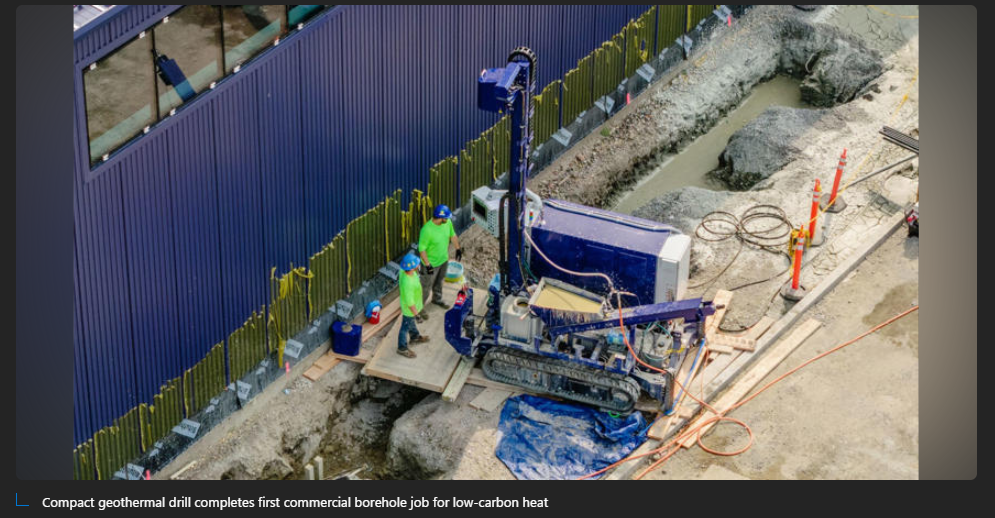
- Side note – The announcement is significant because Dig Energy’s compact drilling technology could make geothermal heating and cooling more practical and affordable for commercial buildings, including in crowded urban areas.
- Massachusetts-based geothermal company Dig Energy has completed its first commercial installation of a geothermal heating and cooling system. The project was built at 100MAG, an artificial intelligence and innovation center in Boston operated by construction company Suffolk.
- Geothermal energy uses the relatively stable temperature underground to heat buildings in winter and cool them in summer. Although the technology has existed for more than 100 years, high drilling and installation costs have limited its widespread use, particularly in cities and commercial developments.
- Dig Energy is attempting to solve this problem with a compact, modular drilling machine designed specifically for geothermal projects. Unlike conventional drilling equipment, its system requires fewer workers, takes up much less space, and causes less disruption to active construction sites.
- Drilling at the Boston location began in early August and was completed in approximately two weeks. The equipment occupied only a few parking spaces at a time, demonstrating that geothermal systems can potentially be installed even on crowded urban properties.
- Suffolk Technologies, Suffolk’s venture capital division, is an investor in Dig Energy. The project allows Suffolk to evaluate the technology’s cost and practicality for future construction projects.
- Dig Energy plans to install additional systems in New England, including at a grocery store, a utility headquarters, and a small campus. The company hopes its drilling technology will make geothermal energy more affordable and easier to deploy in commercial buildings.