


Show Notes 11 September 2026
Text highlighted in blue identifies notes I have inserted.
Before we begin, I would like to share what I experienced in New York City a few weeks after the tragedy of 9/11.
At that time, I worked for Intel and was scheduled to support Microsoft’s Windows XP October 25 launch event to be held in New York City. Microsoft deliberately kept the launch in New York despite the recent attacks, to show support for the city.
Following the event, I took the subway to the Fulton station, and after a short walk arrived at the remains of the twin towers. I will never forget the huge pile of debris still smoldering.
In the months that followed I spent many weeks in New York on another project and experienced seeing people on the street stop and reverently observe the many funeral processions honoring the police and firefighters who perished in service to their city and nation.
On this anniversary of 9/11, please do the same, stop and remember the hundreds of these fallen heroes.
Story 1: World-First Biological Data Center Uses 16 Million Living Human Neurons to Process Data
Source: Technocracy.com Story by Georgina Jedikovska [via Interesting Engineering]
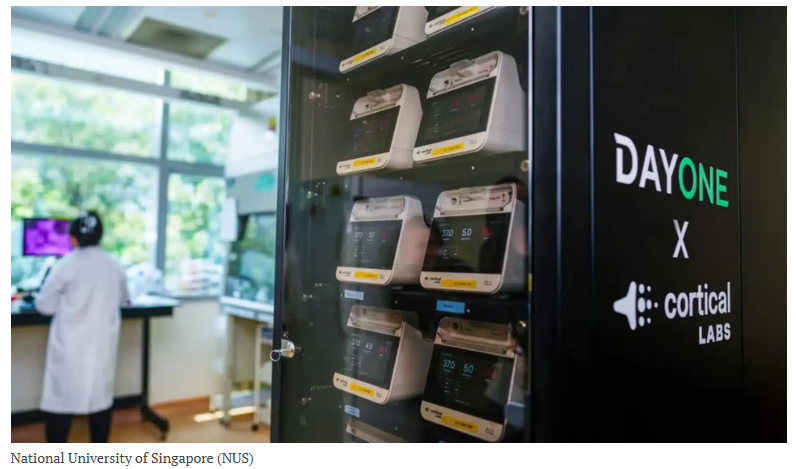
- Researchers at the National University of Singapore have unveiled what they describe as the world’s first biological data center, an experimental computing system that uses living human brain cells alongside electronic technology.
- The project was developed by the University, data-center company DayOne, and Australian biotechnology company Cortical Labs.
- Side note – this is a good example of the trend in research for biological computing (often called “wetware”) which aims to drastically reduce the massive energy consumption required by traditional silicon AI servers.
- The prototype contains 20 CL1 biological computers. Each unit uses about 800,000 laboratory-grown human neurons, giving the system approximately 16 million living neurons in total.
- The neurons are grown from human cells and connected to electronic circuits through electrodes. These electrodes allow computers to send electrical signals to the neurons and measure their responses.
- Unlike conventional computer chips, living neurons can form connections, learn from experience, and adapt to changing information. Researchers hope these abilities could eventually be useful for developing forms of artificial intelligence that can learn more efficiently from smaller amounts of data.
- Energy efficiency is another potential advantage. The 20-unit prototype reportedly uses about 800 to 1,000 watts. However, directly comparing its energy use with modern GPUs is difficult because biological and conventional computers perform different types of operations.
- For now, this remains experimental research, not a replacement for conventional data centers.
- Scientists still need to solve major challenges, including keeping neurons healthy, communicating with them efficiently, and determining how best to program biological networks. Nevertheless, the project demonstrates that living human neurons can be incorporated into a functioning computing system.

Story 2: Scientists built an electrically controlled molecular ‘clamp’ that recovered 89% of the gold from electronic waste, using 100 times fewer separation chemicals while turning old phones into a more practical urban mine
Source: Earth.com Story by Adrian Villellas
Link: https://www.earth.com/science/electrically-controlled-molecular-clamp-gold-waste-recovery/
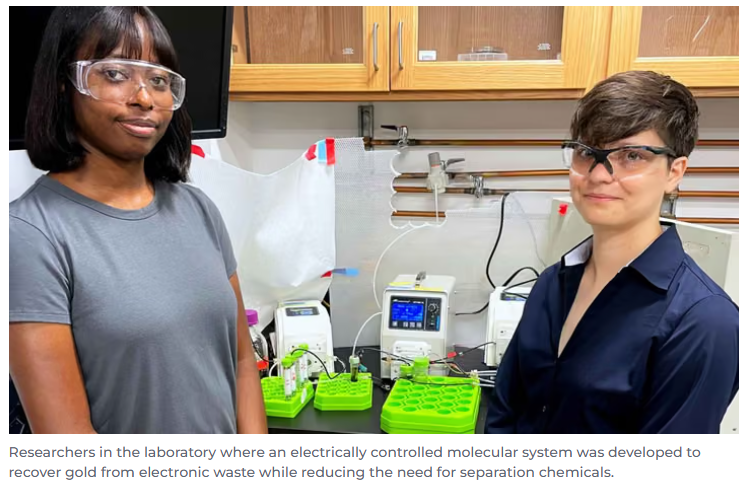
- Scientists at the University of Illinois Urbana-Champaign have developed a new molecule that uses electricity to help recover gold from electronic waste. In laboratory experiments, the system recovered about 89% of the gold from liquids produced by dissolving discarded electronics.
- The new molecule acts like a tiny electrically controlled clamp. It contains a chemical component called ferrocene that changes its electrical state when electricity is applied.
- Side note – Ferrocene is a crystalline, orange organometallic coordination compound where an iron atom is symmetrically bonded between two aromatic cyclopentadienyl ligands. This structure makes it the prototypical member of the metallocene family.
- In one state, the molecule grabs gold-containing compounds and moves them from a water-based liquid into an oil-like liquid. Reversing the electrical signal causes the molecule to release the gold, allowing the process to be repeated.
- The important advantage is that the molecule has a built-in electrical charge, allowing electricity to control the process without requiring some of the additional chemicals normally used to make the molecule capture and release metals.
- The researchers estimate that certain chemical requirements [of their current approach] could be reduced by 10 to 100 times.
- However, the process is not chemical-free. Electronics must first be treated to dissolve their metals into a liquid before the molecular separation can occur.
- The researchers believe the same basic approach could eventually be adapted to recover other valuable metals, including platinum-group metals. It could make electronic waste a more useful source of valuable materials, reducing the need for new mining.
- For now, the technology remains a laboratory demonstration. Researchers still need to determine whether the molecule can survive thousands of cycles, operate economically on a large scale, and reduce the overall environmental impact of metal recycling.

Story 3: Harvard engineers develop smartphone app to aid navigation for people with blindness
Source: News-Medical.net
See University post here: https://seas.harvard.edu/news/smartphone-navigation-app-people-blindness-and-low-vision
See the Harvard YouTube video here: https://www.youtube.com/watch?v=2eaFf7OY2EI&t=10s

- First, the motivation behind this research:
- A survey of 112 blind or visually impaired individuals identified three essential needs:
- Turn-by-turn directions
- Continuous path guidance
- Obstacle avoidance
- Existing tools (white canes, guide dogs, electronic travel aids) each cover only part of this list.
- With this in mind, the Harvard team created Mobilio, a smartphone-based navigation system to help blind and low-vision users navigate more efficiently and safely.
- It uses the phone’s camera, GPS, motion sensors, and LiDAR (when available) to provide real-time guidance and obstacle detection.
- Remember – LiDAR is a remote-sensing technology that measures distance by illuminating a target with laser light and analyzing the reflected signal. It produces highly precise 3D information about surfaces, objects, and environments.
- Side note – An iPhone can have LiDAR because Apple physically builds a true Direct Time-of-Flight LiDAR scanner into the Pro models. Today, no mainstream Android flagship actively ships with a dedicated Direct Time-of-Flight LiDAR scanner, making the feature functionally exclusive to Apple’s Pro lineup.
- Key Performance Findings
- 13% faster outdoor navigation compared with Google Maps.
- 41% fewer indoor obstacle contacts during testing.
- Tested with 14 blind or low-vision participants.
- How It Works
- Users wear a smartphone (iPhone 12 Pro in the study) on their chest.
- Open-ear headphones deliver personalized spatial audio cues for turns and path alignment.
- A machine-learning model [here’s the AI factor] analyzes the camera feed to identify sidewalks, roads, crosswalks, and other walking surfaces.
- Visual + inertial odometry improves positioning accuracy beyond GPS alone.
- Side note – Odometry is a robot’s method for estimating how its position and orientation change over time by integrating motion sensor data such as wheel encoder counts, camera feature motion, IMU readings, or LiDAR scan matching.
- IMU stands for Inertial Measurement Unit. It is a compact sensor package that measures acceleration and angular velocity, and often magnetic heading, using accelerometers, gyroscopes, and sometimes magnetometers.
- Accessibility Potential
- Because Mobilio runs entirely on a smartphone, it could make advanced navigation assistance more affordable and widely accessible than specialized devices.
- Researchers note that broader testing across different environments and weather conditions is still needed.

Story 4: First patient in live AI-assisted sight-saving brain surgery [world-first procedure]
Source: NHS University College London Hospitals
Link: https://www.uclh.nhs.uk/news/first-patient-live-ai-assisted-sight-saving-brain-surgery
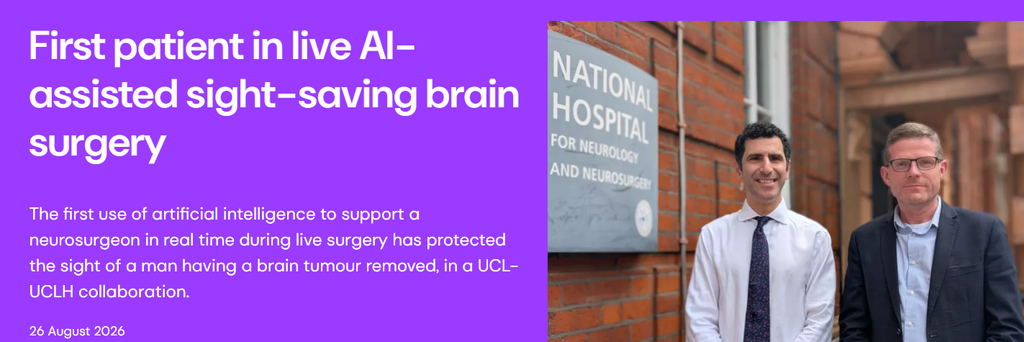
- In a world-first procedure, neurosurgeons at the NHS University College London Hospitals successfully performed a live AI-assisted brain surgery to remove a tumor and save a patient’s eyesight.
- The patient, 48-year-old Rhys Hibbert, had a tumor pressing against his pituitary gland—a delicate region surrounded by vital blood vessels and optic nerves. The tumor caused severe vision loss and balance issues, putting him at risk of permanent blindness without intervention.
- Operating near the pituitary gland carries immense risk, where a single millimeter mistake can cause blindness, stroke, or death. To mitigate these dangers, researchers at University College London developed an advanced AI system trained on hundreds of previous surgical videos.
- Unlike static pre-surgery scans, the AI analyzed live endoscopic video feeds in real time during the operation. It highlighted critical anatomy, nerve pathways, and blood vessels using color-coding, guiding the surgical team on the safest route to extract the growth.
- Human surgeons retained total control throughout the procedure, using the AI purely as a visual navigation assistant. The operation was a complete success.
- Immediately upon waking, Hibbert noticed a dramatic improvement in his vision. Within one week, he was walking independently without a cane or glasses.
- Medical experts hope this groundbreaking technology will set a new safety standard for complex surgeries worldwide.

Honorable Mentions
Story: Noninvasive AI-based system translates brain signals into written text
Source: TechXplore.com Story by Lisa Lock
Link: https://techxplore.com/news/2026-08-noninvasive-ai-based-brain-written.html
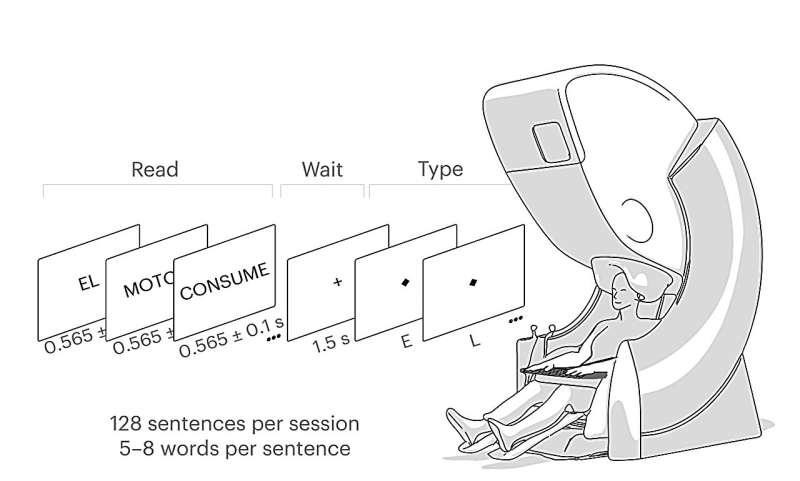
- Researchers from Meta, Université PSL, and the Adolphe de Rothschild Hospital have developed an AI system that can translate brain activity into written text without requiring brain surgery.
- The technology, called Brain2Qwerty, uses artificial intelligence to interpret brain signals recorded with either EEG sensors placed on the scalp or MEG, a helmet-like system that detects tiny magnetic fields produced by brain activity.
- The researchers tested the system on 35 healthy volunteers. Participants memorized sentences and then typed them on a normal keyboard while their brain activity was recorded. The AI learned to recognize patterns in their brain activity and determine which letters they were typing.
- MEG produced much better results than EEG. With MEG, the system made errors on about 29% of characters, compared with about 65% with EEG. For the best-performing participants, the error rate fell to 18%. The system could also decode some sentences that were not included in its training.
- The technology is still experimental and does not yet read a person’s unrestricted thoughts. The participants were specifically trained to type memorized sentences, and the system worked differently from person to person.
- Nevertheless, the researchers believe this approach could eventually provide a safer, non-surgical way for people who cannot speak or move to communicate, potentially allowing them to type messages or control assistive devices using brain activity alone.
////////////////////////////////////////////////////////////////////////////////////////////////////////////////////////////////////////////
Story: JetZero Develops World’s First Blended Wing Jet with 5,000 Nautical Miles Range and 50% Fuel Savings
Source: RobotToday.com Story by Georgina Jedikovska via Interesting Engineering

- Aerospace startup JetZero is advancing aviation technology with its flagship Z4 jet, a clean-sheet Blended Wing Body (BWB) aircraft designed to deliver a range of 5,000 nautical miles while cutting fuel burn and carbon emissions by up to 50% compared to traditional tube-and-wing airframes.
- By merging the wings and fuselage into a single aerodynamic, lifting shape, the design significantly reduces drag and generates lift across the entire airframe.
- Engineered to carry approximately 250 passengers, the middle-of-the-market jet operates on conventional jet fuel and is fully compatible with sustainable aviation fuel blends and future zero-emission propulsion systems like liquid hydrogen.
- Crucially, the Z4 fits into existing airport infrastructure, eliminating the need for expensive modifications to runways, taxiways, or jet bridges.
- The project has attracted major backing, including a $235 million contract from the U.S. Air Force to fast-track a full-scale demonstrator, alongside investments and strategic partnerships from commercial giants like United Airlines and Japan Airlines.
- Beyond environmental efficiency, the BWB airframe offers passenger benefits, such as a wider, quieter cabin with multi-aisle seating and roomier accommodations.
- Demonstrator flight testing is planned for 2027, with JetZero targeting full commercial entry into service by 2030.
////////////////////////////////////////////////////////////////////////////////////////////////////////////////////////////////////////////
Story: Electrocatalytic method could purify wastewater by converting pollutants into recoverable polymers
Source: Phys.org Story by Robert Egan
Link: https://phys.org/news/2026-08-electrocatalytic-method-purify-wastewater-pollutants.html
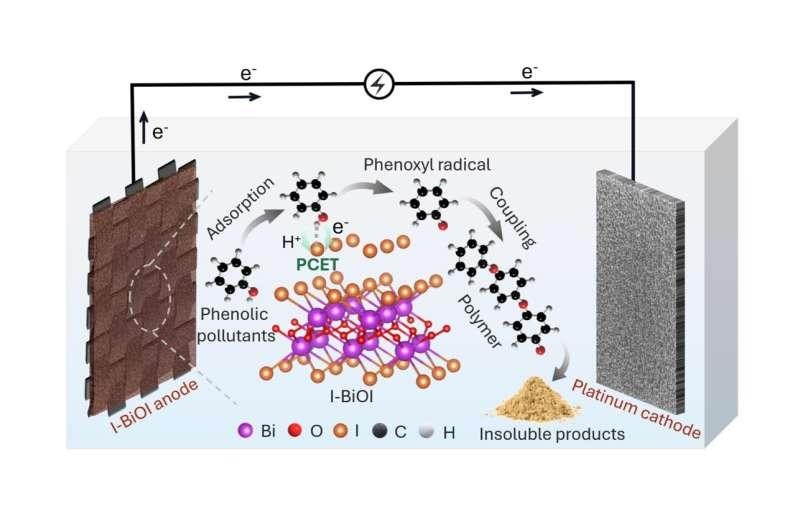
- Scientists at the Hong Kong University of Science and Technology have developed a new method for cleaning wastewater that could also turn some pollutants into useful materials. The technique uses electricity and a specially designed electrode containing iodine and bismuth oxyiodide. Unlike many current wastewater treatments, it does not require adding large amounts of chemical oxidants.
- The researchers focused on phenolic pollutants, which can be difficult to remove from contaminated water. Their electrode selectively attracts these pollutants and uses electrical reactions involving iodine to cause the molecules to join together, or “polymerize.” The pollutants become solid, water-repelling polymers that can then be separated and potentially recovered as valuable materials rather than simply destroyed.
- Tests showed the system achieved about 97.1% selectivity and worked effectively over a relatively broad pH range of 5 to 9. It also required much less energy than conventional treatment methods designed to completely break down organic pollutants. The researchers estimate an operating cost of about 30 cents per kilogram of organic carbon removed.
- Another advantage is reduced environmental risk because the process does not need external oxidizing chemicals, which can create harmful byproducts. Tests using zebrafish embryos and bioluminescent bacteria also indicated that treated water had substantially lower toxicity.
- The researchers say the technology could represent a shift from simply destroying wastewater pollutants to recovering them as useful resources. However, larger-scale testing is still needed to determine whether the process can work economically in real industrial wastewater treatment systems.
- The article is based on a 2026 study published in Nature Communications.
////////////////////////////////////////////////////////////////////////////////////////////////////////////////////////////////////////////
Story: New recyclable yarn is as stretchy as spandex and could help tackle fashion’s plastic waste problem
Source: LiveScience.com Story by Olivia Maule
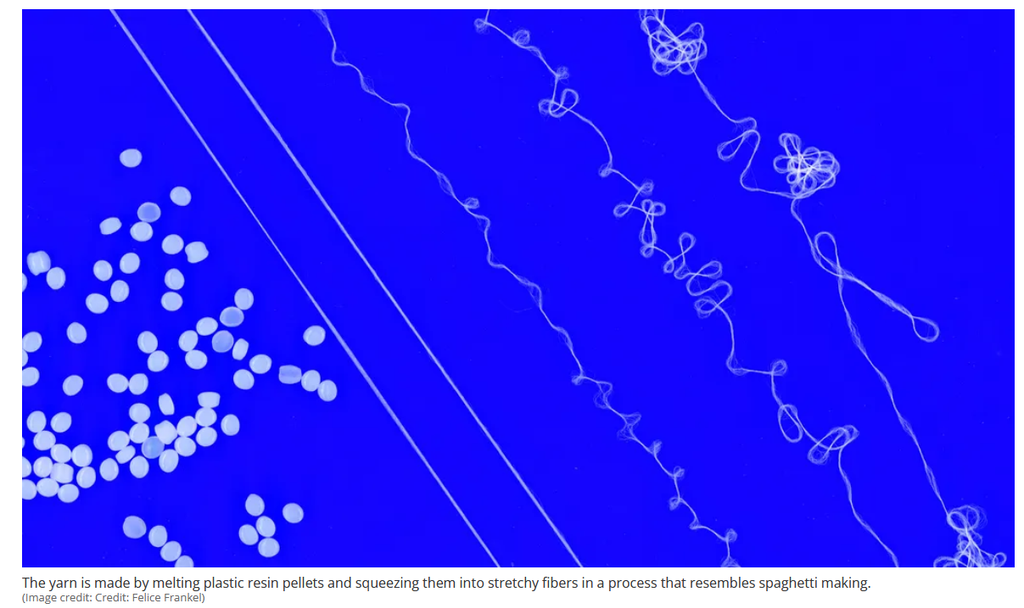
- Researchers at MIT have developed a new type of stretchy yarn that could make clothing much easier to recycle. The material is designed to provide the flexibility of spandex while avoiding one of the major problems with conventional stretchy fabrics: they are usually made by combining different materials that are difficult to separate during recycling.
- The new yarn is made entirely from polyethylene, the same common plastic used in products such as grocery bags and milk containers. Researchers created a special structure with a soft, elastic polyethylene core surrounded by a stronger polyethylene fiber. The fibers are arranged somewhat like a tiny spring, allowing the yarn to stretch and then return to its original shape.
- An important advantage is that the entire yarn consists of the same basic plastic. Unlike clothing made from mixtures of spandex, polyester, or nylon, the material does not require different fibers to be chemically separated before recycling.
- In laboratory experiments, the researchers melted and respun the yarn 10 times. Remarkably, it maintained its useful properties through those recycling cycles. The new yarn also performed at least as well as, and in some tests better than, commercially available spandex-based yarns in terms of strength and elasticity.
- The researchers believe the technology could eventually help create more recyclable clothing, including garments in which buttons, zippers, and other components are also made from compatible materials. However, the yarn is still a research-stage technology and would need further development and large-scale manufacturing before it could significantly reduce fashion’s enormous plastic-waste problem.