


Show Notes 6 February 2026
Story 1: Tiny silicon structures compute with heat, achieving 99% accurate matrix multiplication
Source: Techxplore.com Story by Adam Zewe, MIT
Link: https://techxplore.com/news/2026-01-tiny-silicon-accurate-matrix-multiplication.html#google_vignette
See research paper here: https://journals.aps.org/prapplied/abstract/10.1103/5drp-hrx1
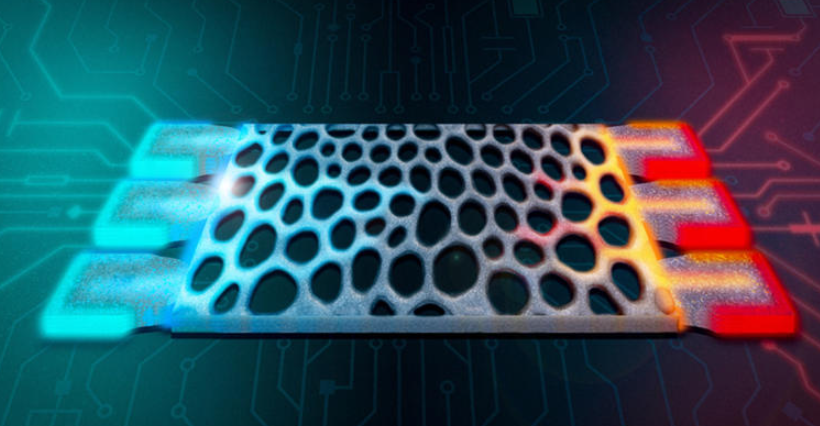
- Summary: MIT researchers have engineered tiny, porous silicon structures that perform analog computations—specifically matrix-vector multiplication—using waste heat rather than electricity.
- By encoding data as temperature differences and leveraging inverse-design, these devices achieve greater than 99% accuracy in simulations, offering a highly efficient method for thermal sensing and signal processing.
- Matrix multiplication is the fundamental mathematical technique machine-learning models utilize to process information and make predictions.
- Side note – Matrix–vector multiplication is the operation where a matrix acts on a vector to produce a new vector. It’s one of the core building blocks of linear algebra.
- These tiny, porous silicon structures could someday enable more energy-efficient computation.
- Here’s how it works:
- In this computing method, input data are encoded as a set of temperatures using the waste heat already present in a device.
- The flow and distribution of heat through a specially designed material forms the basis of the calculation.
- Then the output is represented by the power collected at the other end, which is a thermostat at a fixed temperature.
- Because the chips use heat [instead of electricity], they could potentially:
- Reduce energy consumption in certain types of computation
- Enable new architectures where waste heat is reused for processing
- Improve efficiency in environments where heat is abundant or unavoidable
- While the MIT researchers still have to overcome many challenges to scale up this computing method for modern deep-learning models, the technique could be applied to detect heat sources and measure temperature changes in electronics without consuming extra energy. This would also eliminate the need for multiple temperature sensors that take up space on a chip.

Story 2: Scientists Found an Untapped Energy Source Running Through Our Cells
Source: Popular Mechanics Story by Darren Orf
Link: https://www.popularmechanics.com/science/health/a69927474/flexoelectricity-cells/

- Scientists at the University of Houston and Rutgers University have identified a previously untapped energy source inside human cells.
- These two institutions collaborated on theoretical work showing that tiny ripples in cell membranes could generate electrical energy.
- The discovery centers on flexoelectricity, a phenomenon where certain materials generate electrical charge when bent or deformed.
- Side note on flexoelectricity and how it differs from piezoelectricity:
- Flexoelectricity is the effect where an electric charge is generated when a material is bent, twisted, or otherwise unevenly deformed. It occurs because the mechanical strain is non‑uniform.
- Piezoelectricity results from a uniform compression or stretching – it needs uniform strain.
- Researchers found that cell membranes exhibit flexoelectric behavior, meaning they can produce electrical energy through tiny mechanical movements.
- The researchers suggest that the churning, non-equilibrium environment of membranes surrounding cells could be enough energy to support biological functions such as ion transport.
- Side note – Ion transport refers to the movement of charged atoms or molecules [i.e. both called ions] across a membrane or through a medium. It’s one of the fundamental processes that keeps cells alive and allows everything from nerve impulses to muscle contraction to energy production.
- This insight could open new possibilities in:
- Bioelectricity research
- Soft robotics
- Artificial biological platforms
- Energy harvesting at microscopic scales

Story 3: World’s first neuromorphic supercomputer nears reality with brain-inspired math – Partial differential equations help solve real world problems and are used to simulate weather patterns and model material behavior.
Source: Interesting Engineering Story by Ameya Paleja
Link: https://interestingengineering.com/science/world-first-neuromorphic-supercomputer-us
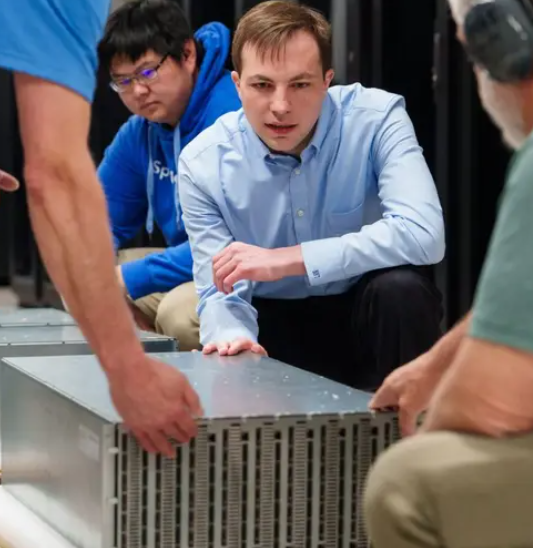
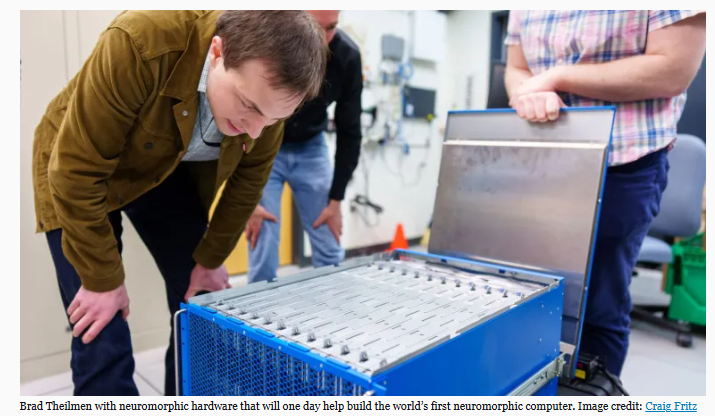
- Researchers at Sandia National Laboratories [headquarters in Albuquerque, New Mexico] have demonstrated a new algorithm that allows neuromorphic hardware—computers modeled after the brain—to solve partial differential equations.
- Side note – A partial differential equation is a rule that describes how something changes in more than one direction at the same time. It involves a function with several variables [such as left-right position, up-down position and time and the partial derivatives of that function]. Think of it as a way to model how things spread, flow, or evolve across space and time.
- These equations are absolutely fundamental in science and engineering. They are foundational in the modern scientific understanding of sound, heat, diffusion, electrostatics, electrodynamics, thermodynamics, fluid dynamics, elasticity, general relativity, and quantum mechanics. From predicting weather patterns to designing aircraft wings, partial differential equations model how physical phenomena behave across space and time.
- Why this major milestone combination of a neuromorphic computer with the ability to solve partial differential equations is important:
- They promise massive energy efficiency, performing complex tasks at a fraction of the power used by traditional supercomputers.
- Until now, neuromorphic systems were thought to be good mainly for pattern recognition, not mathematical modeling.
-
More details on this breakthrough – Neuroscientists at Sandia National Laboratories developed an algorithm based on a well-known cortical network model.
- Side note – A cortical network refers to the interconnected web of neurons within the cerebral cortex—the brain’s outermost layer responsible for higher-order cognitive functions.
- The Sandia National Laboratories team discovered a previously unknown link between this brain-inspired model and partial differential equations.
- This connection enables neuromorphic hardware to run large-scale simulations with dramatically lower energy use.
- Implications for Science, Health, and Security
- Mathematics & Engineering: Could transform simulations in fluid dynamics, structural mechanics, and more.
- Brain Health: Understanding computation in neuromorphic systems may shed light on diseases like Alzheimer’s and Parkinson’s.
- National Security: Agencies like the National Nuclear Security Administration could reduce energy consumption for nuclear-physics simulations.
- Neuromorphic computing is still early-stage, but this work lays the foundation for the world’s first neuromorphic supercomputer.

Story 4: Wireless device ‘speaks’ to the brain with light – Implant could restore lost senses, provide sensory feedback for prosthetic limb
Source: Northwestern University website Story by Amanda Morris
Link: https://news.northwestern.edu/stories/2025/12/wireless-device-speaks-to-the-brain-with-light
See video here: https://www.youtube.com/watch?v=hVIKYOKcKoo
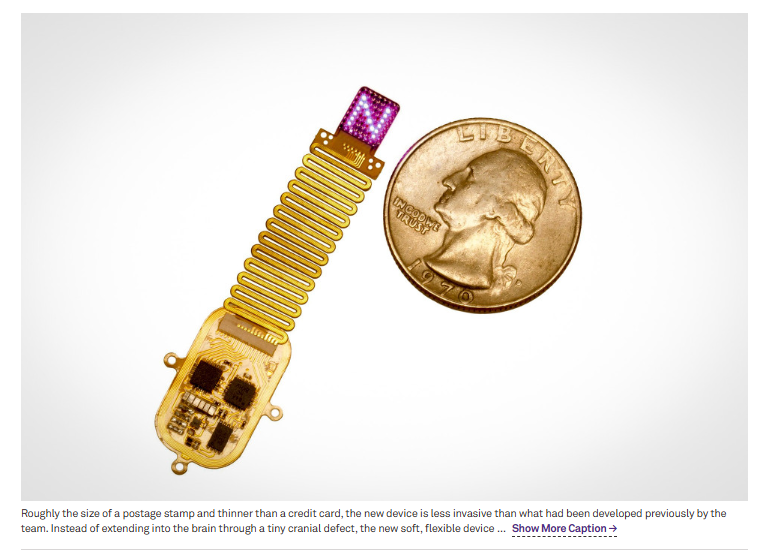
- In a new leap for neurobiology and bioelectronics, Northwestern University scientists have developed a wireless device that uses light to send information directly to the brain — bypassing the body’s natural sensory pathways.
- The soft, flexible device sits under the scalp but on top of the skull, where it delivers precise patterns of light through the bone to activate neurons across the cortex.
- In experiments, the Northwestern University scientists used the device’s tiny, patterned bursts of light to activate specific populations of neurons deep inside the brains of mouse models. (These neurons are genetically modified to respond to light.)
- The mice quickly learned to interpret these patterns as meaningful signals, which they could recognize and use. Even without touch, sight or sound involved, the animals received information to make decisions and successfully completed behavioral tasks.
- Northwestern University’s technology has immense potential for various therapeutic applications, including:
- Providing sensory feedback for prosthetic limbs;
- Delivering artificial stimuli for future vision or hearing prostheses;
- Modulating pain perception without opioids or systemic drugs;
- And enhancing rehabilitation after stroke or injury, controlling robotic limbs with the brain and more.

Honorable Mentions
Story: Teen inventor solves car blind spots with brilliant new tech!
Source: Inside Edition ***6 year old story, but I thought it was amazing***
Link: https://www.youtube.com/watch?v=JHJnUHJIcgQ

- Discover how a 14-year-old inventor, Alaina Gassler, tackled the widespread issue of blind spots caused by car front pillars. In this video, we explore her remarkable invention, ‘BlindSpot,’ which uses an innovative camera and projection system to improve driver visibility and enhance automotive safety. Learn about the engineering and 3D printing behind this transparent pillar solution and how young minds are shaping the future of car technology.
////////////////////////////////////////////////////////////////////////////////////////////////////////////////////////////////////////////
Story: Ingestible Bioprinter Treats GI Tract Injuries from Inside the Body
Source: Inside Precision Medicine
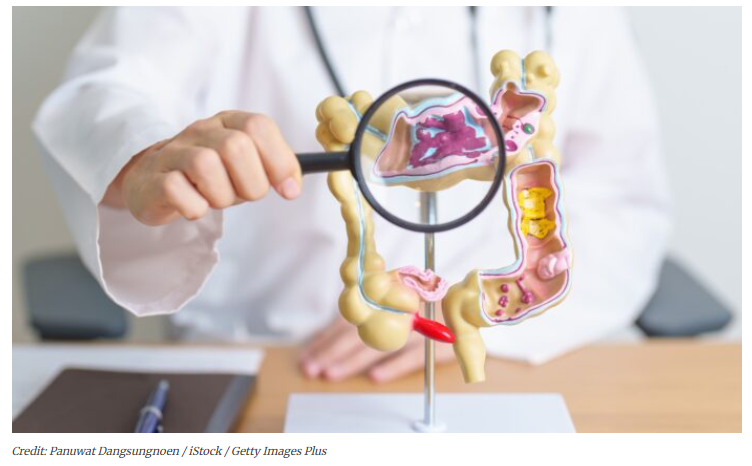
- A team of researchers from École Polytechnique Fédérale de Lausanne (EPFL) has developed an ingestible bioprinter—a swallowable capsule designed to 3D-print living tissue directly onto injuries inside the gastrointestinal (GI) tract. The goal is to treat ulcers, lesions, and other internal wounds from the inside, without surgery.
- The device is capsule-sized and can be swallowed like a pill.
- Once in the GI tract, it unfolds into a small robotic system capable of positioning itself at the injury site.
- It uses bioinks containing living cells to print a protective, regenerative tissue patch directly onto the wound.
- The printed patch is designed to adhere to the intestinal wall, promote healing, and withstand the harsh GI environment.
- The system was tested in animal models, where it successfully printed tissue in vivo.
- Researchers envision future applications for:
- Ulcers
- Crohn’s-related lesions
- Surgical wound reinforcement
- Targeted drug delivery combined with bioprinting
- The technology aims to reduce the need for invasive procedures like endoscopy or surgery.
- This represents a major step toward minimally invasive regenerative medicine, where the body can be repaired internally using robotics and bioprinting—no incisions required.
////////////////////////////////////////////////////////////////////////////////////////////////////////////////////////////////////////////
Story: World’s first cryogen-free superconducting motor promises 99.5% efficiency for aviation
Source: Interesting Engineering Story by Aman Tripathi
Link: https://interestingengineering.com/ces-2026/world-first-cryogen-free-superconducting-motor
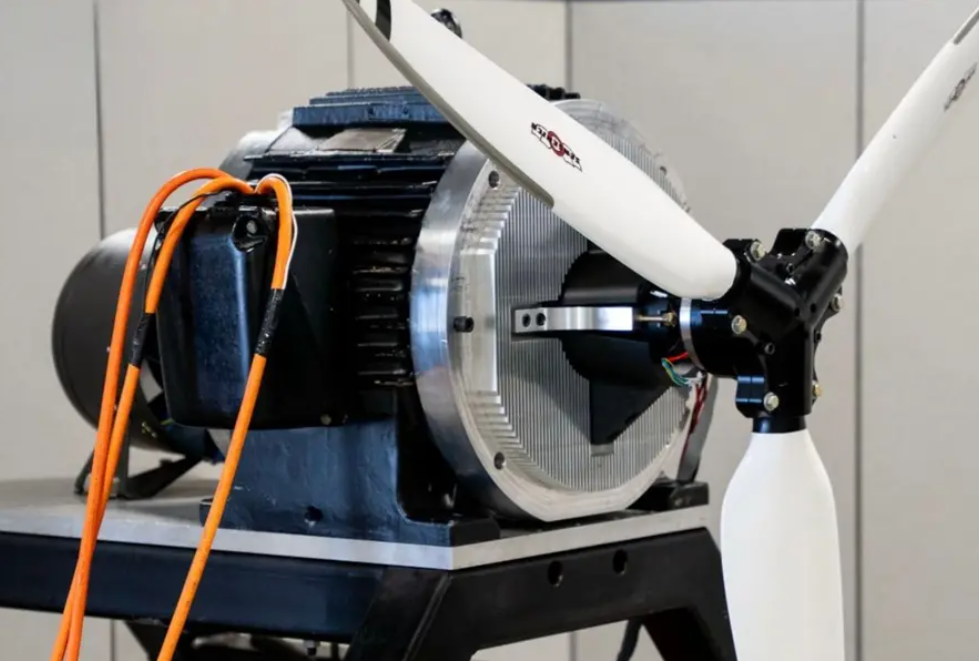
- US startup Hinetics unveiled the world’s first fully integrated, cryogen-free superconducting motor at CES 2026.
- It’s funded by the U.S. Department of Energy’s ARPA-E program and developed for aerospace and AI data center applications.
- The showcased unit is a scaled-down demonstrator, representing three years of development.
- Hinetics is now building toward a 6-megawatt superconducting electric motor.
- The high price of superconducting tape remains the main challenge.
- Costs have fallen by 50% in the last three years, and engineers expect a similar drop in the next three, which would make the technology commercially viable.
- Unlike other superconducting machines that require bulky external cryogenic systems, this motor is fully self-contained.
- It uses an onboard cryocooler with a “cold finger” to maintain low temperatures without liquid cryogens.
- Engineers believe no other fully self-contained superconducting motor exists in the literature.
- The demonstrator is a 1:20 scale model of a 3-megawatt, 1,800-RPM machine currently under construction.
- It’s not tuned for a specific power rating yet but is intended to pave the way for near-term adoption in aviation and high-power computing.
////////////////////////////////////////////////////////////////////////////////////////////////////////////////////////////////////////////
Story: New breakthrough to restore aging joints could help treat osteoarthritis
Source: ScienceAlert.com Story by David Nield
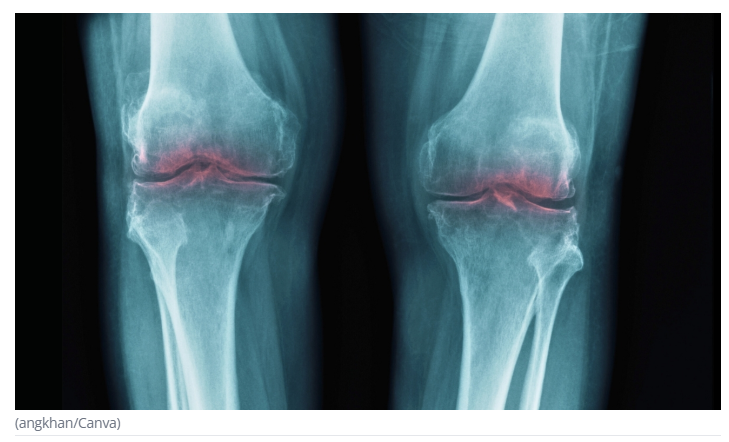
- A study in mice by researchers from Stanford University has traced the loss of cartilage that comes with aging to a single protein, pointing to treatments that may one day restore mobility and ease discomfort in seniors.
- The protein 15-PGDH has previously been extensively linked to aging: it becomes more abundant as we get older and interferes with the molecules that repair tissue and reduce inflammation.
- That led scientists to consider whether 15-PGDH might be involved in osteoarthritis, where stress on joints leads to the breakdown of collagen in cartilage, causing inflammation and pain.
- Related: Arthritis Affects Thousands of Kids, And One Piece of Advice Is Crucial
- In tests on old mice, knee cartilage that had previously worn down thickened following the introduction of a 15-PGDH inhibitor. In similar tests on young, injured mice, the inhibitor offered protection against the usual effects of injury-induced osteoarthritis.
- When the researchers triggered the equivalent of an anterior cruciate ligament injury in mice and subsequently applied the treatment, osteoarthritis didn’t develop, as would normally be expected in these kinds of mouse models.
- Previous attempts at cartilage regeneration included the use of stem cells, a factor that was no longer necessary when 15-PGDH was inhibited. Instead, the chondrocyte cells that make and maintain cartilage were being transformed into a healthier, more useful state.
////////////////////////////////////////////////////////////////////////////////////////////////////////////////////////////////////////////
Story: Quantum tools set to transform life science, researchers say
Source: Phys.org Story by Science X staff
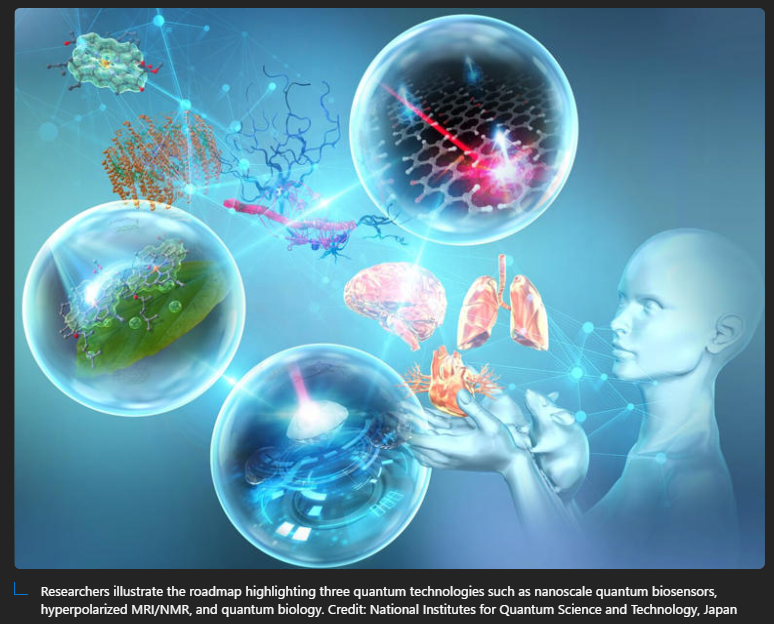
- Researchers at the National Institutes for Quantum Science and Technology (QST) — Japan recently highlighted that emerging quantum tools—especially nanoscale sensors and advanced imaging techniques—could dramatically expand what scientists can measure and observe at the molecular and cellular level.
- These ultra-sensitive sensors may allow scientists to detect biological signals that are currently too faint or too small to measure. Potential applications include studying protein interactions, cellular processes, and disease mechanisms with unprecedented precision.
- Quantum-enhanced MRI techniques could significantly boost imaging sensitivity. This may lead to clearer, faster, and more detailed scans, improving diagnostics and enabling new kinds of medical research.
- Advances in quantum energy transfer could improve the performance of biological imaging tools and possibly open new pathways for studying biochemical reactions.
- The article frames quantum technologies as a transformative frontier for life science research, with the potential to unlock insights that traditional tools cannot reach.