


Show Notes 20 March 2026
Text highlighted in blue identifies notes I have inserted.
Story 1: Extra ‘set of eyes’ for self-driving cars: Roadside radar sensors could reduce blind spots
Source: Rice University website Story by Silvia Cernea Clark
See video here: https://www.youtube.com/watch?v=B1SWRzGPQJQ
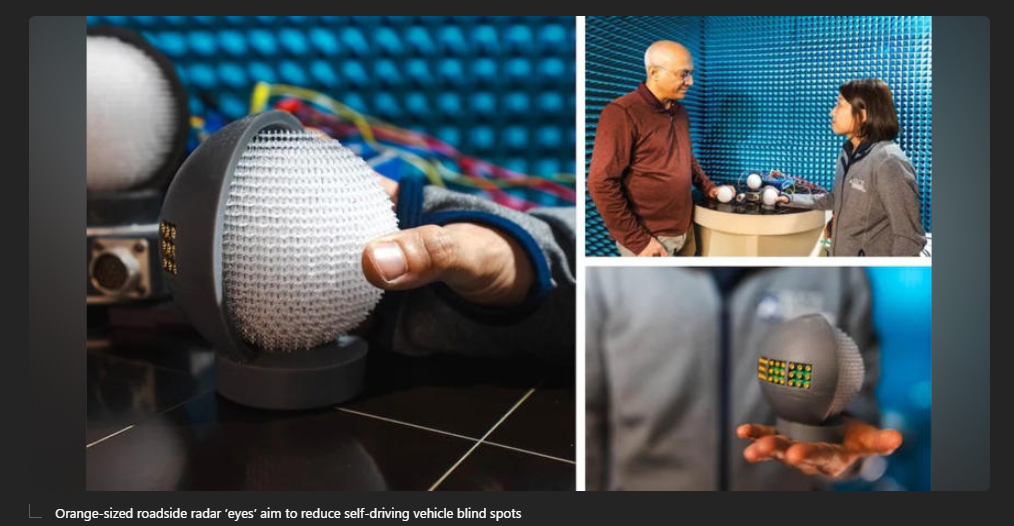
- Researchers at Rice University in Houston, Texas have developed a small roadside radar sensor called EyeDAR to help self-driving cars detect hazards they might otherwise miss.
- The sensor, about the size of an orange, can be installed on streetlights, traffic signals, or intersections to act as an additional “set of eyes” for autonomous vehicles.
- Current vehicle sensors like cameras and lidar struggle in conditions such as fog, rain, darkness, or when objects are hidden behind other vehicles. Radar works better in these conditions but still misses some reflected signals.
- The new EyeDAR device captures radar reflections that normally scatter away from a car’s sensors and sends information about object direction back to the vehicle, helping it detect pedestrians, cyclists, or cars approaching from blind spots.
- Its design mimics the human eye – a special lens focuses on incoming signals and an antenna array detects their direction.
- Side note – Sensing & Data Capabilities
- Traffic tracking: Continuously monitors nearby traffic and tracks moving objects using radar returns.
- Infrastructure‑to‑vehicle communication: Sends real‑time hazard and traffic data directly to autonomous vehicles to supplement onboard perception.
- Extended sensing accuracy: Provides critical information that enhances the vehicle’s own radar/lidar/camera fusion systems.
- Because the internal design elements of the ball-like EyeDAR do much of the processing, the system can determine object directions over 200× faster than traditional radar methods.
- EyeDAR also communicates with vehicles by reflecting radar waves in encoded patterns (similar to Morse code) without sending new signals, making it low-power and inexpensive.
- Researchers say networks of these sensors could improve safety for autonomous vehicles, robots, drones, and other systems.

Next three stories are medical research/tech related
Story 2: Spray-on ‘immune-shield’ coats transplant organs to curb rejection
Source: Medical Xpress via MSN.com
Research paper here: https://www.sciencedirect.com/science/article/abs/pii/S016836592501082X
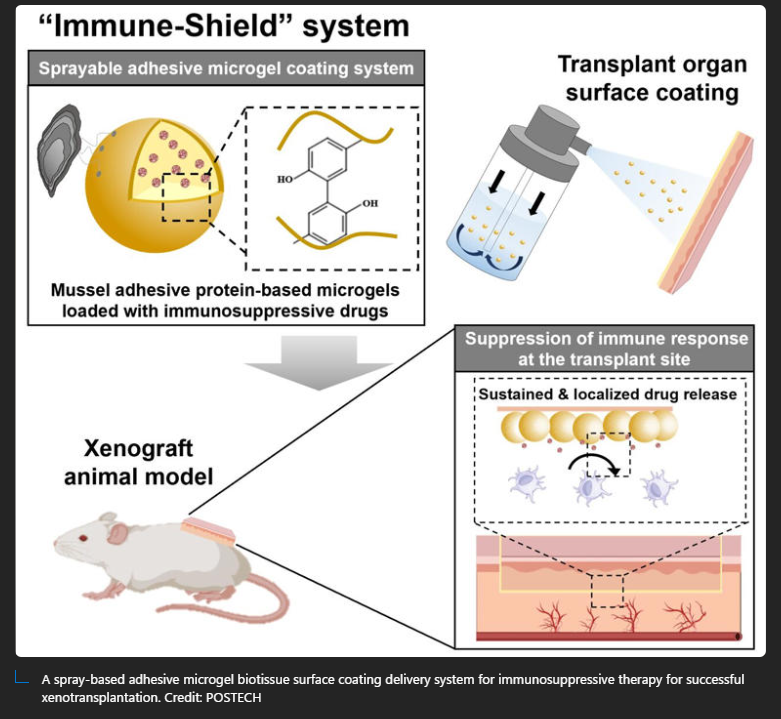
- Researchers at the Pohang University of Science and Technology in Korea have developed a spray-on coating that can be applied directly to donor organs before transplantation.
- The coating acts as an “immune shield,” designed to reduce the recipient’s immune system from attacking the new organ.
- How it works:
- The spray contains microparticles loaded with immune-modulating molecules.
- Once applied, these particles form a thin layer on the organ’s surface.
- The coating helps dampen local immune responses, potentially reducing the need for high-dose systemic immunosuppressant drugs.
- Why this matters:
- Organ rejection remains a major challenge in transplantation.
- Current treatments rely on whole-body immunosuppression, which increases infection risk and long-term complications.
- A localized immune shield could improve transplant success, reduce side effects, and extend organ lifespan.
- Early results:
- Preclinical tests show reduced inflammation and improved organ acceptance.
- The approach is still experimental but represents a promising direction in transplant medicine.

Story 3: A New Type of Immunotherapy Drug for Prostate Cancer Shows Up to 99% Drop in Cancer Biomarkers
Source: ZME Science Story by Tudor Tarita
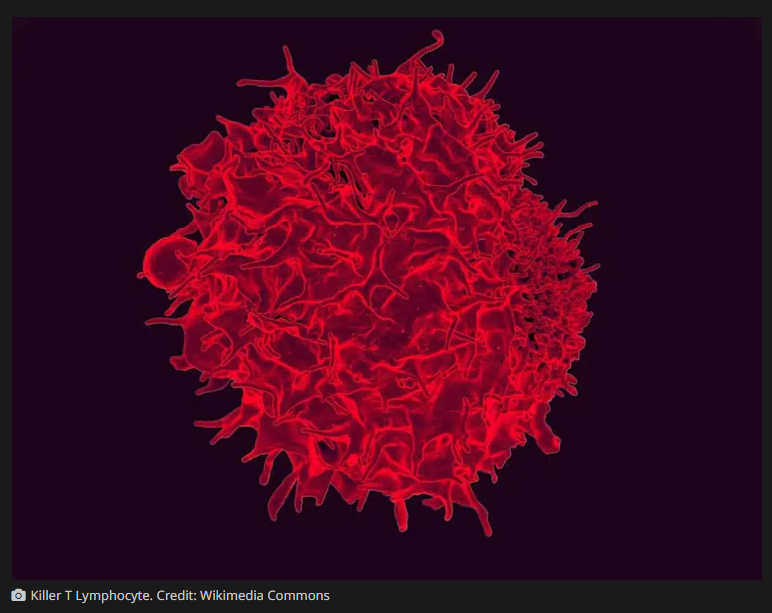
- Side note – Cancer biomarkers are measurable biological signals that reveal the presence, behavior, or treatment response of a cancer. They can be found in blood, tissue, or other body fluids, and they help doctors detect cancer earlier, choose the right therapy, and monitor whether treatment is working.
- Side note – About 12–13% of men will develop prostate cancer in their lifetime. That’s roughly 1 in 8 men, based on large U.S. population studies from the American Cancer Society and CDC.
- Researchers at the Institute of Cancer Research in London and Royal Marsden NHS Foundation Trust, a major cancer hospital in the UK, are testing a new type of immunotherapy drug designed to help the immune system attack prostate cancer.
- The drug acts like a “Trojan horse”, activating immune cells only when they reach the tumor, which helps target cancer while reducing damage to healthy tissue.
- In an early clinical trial with 58 men whose prostate cancer no longer responded to standard treatments, the results were striking:
- Many patients saw major drops in PSA (prostate-specific antigen), a cancer biomarker used to track prostate cancer.
- At the highest dose, about 82% of patients had prostate-specific antigen cancer biomarker levels fall by at least 50%.
- Some experienced 90%+ reductions, and a few saw up to a 99% drop in cancer biomarkers.
- Side note – Why a Reduction in Cancer Biomarkers is a Very Good Sign. A drop in cancer biomarkers usually means one thing: the cancer is shrinking, becoming less active, or responding well to treatment. Biomarkers are like “signals” that cancer gives off. When those signals go down, it often reflects a real biological improvement
- Researchers also observed tumor shrinkage in several patients, and in one case multiple metastatic tumors in the liver disappeared after treatment cycles.
- Why this research is so important
- Prostate cancer has traditionally been hard to treat with immunotherapy, often described as an “immune-cold” cancer.
- This new approach could represent a new class of drugs that successfully activate the immune system.
- Limitations
- The results come from an early-stage trial and are not yet peer-reviewed.
- Larger clinical trials are needed to confirm safety and effectiveness before it could become a standard treatment.

Story 4: Researchers develop beating, 3D‑printed heart model for surgical practice
Source: Washington State University Story by Tina Hilding
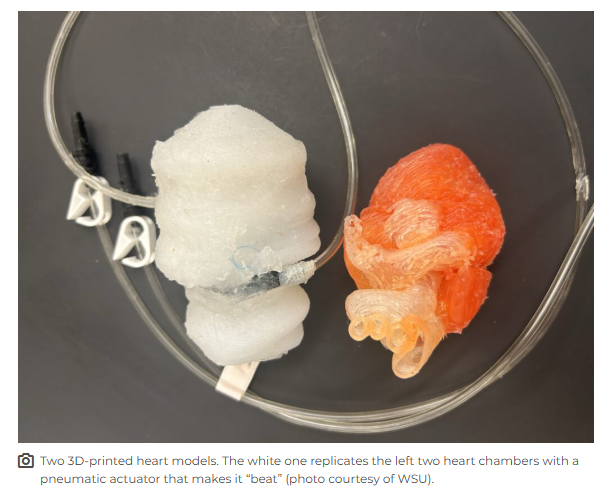
- A research team at Washington State University has developed a realistically beating, fully 3D-printed heart model intended to help surgeons practice complex cardiac procedures before operating on real patients.
- The model is designed to closely mimic:
- The size and shape of a patient’s actual heart
- The mechanical feel of cardiac tissue
- The motion of a beating heart, including contraction and relaxation cycles
- How it works
- The heart is printed using soft, flexible materials that replicate the elasticity of human myocardium.
- Side note – The myocardium is the thick, middle muscular layer of the heart wall. It’s made of specialized heart muscle cells (cardiomyocytes) that contract to pump blood throughout the body.
- An internal pumping system simulates realistic blood flow and pulsation, allowing surgeons to rehearse procedures under lifelike conditions.
- The model can be customized from patient-specific imaging, giving surgeons a chance to practice on a replica of the exact anatomy they’ll encounter.
- Why it matters – This technology aims to:
- Improve surgical precision
- Reduce complications
- Provide a safer training environment for new surgeons
- Allow rehearsal of rare or unusually complex cases
- It’s part of a broader movement toward bio-inspired surgical simulation, where 3D printing, soft robotics, and patient imaging converge to create highly realistic practice models. These innovations could significantly enhance outcomes in cardiac surgery, where millimeters matter.

Honorable Mentions
Story: Breakthrough laser technology enables deeper, more efficient bone surgery
Source: News-medical.net Story from University of Basel
See research paper here: https://www.nature.com/articles/s41598-026-37117-6
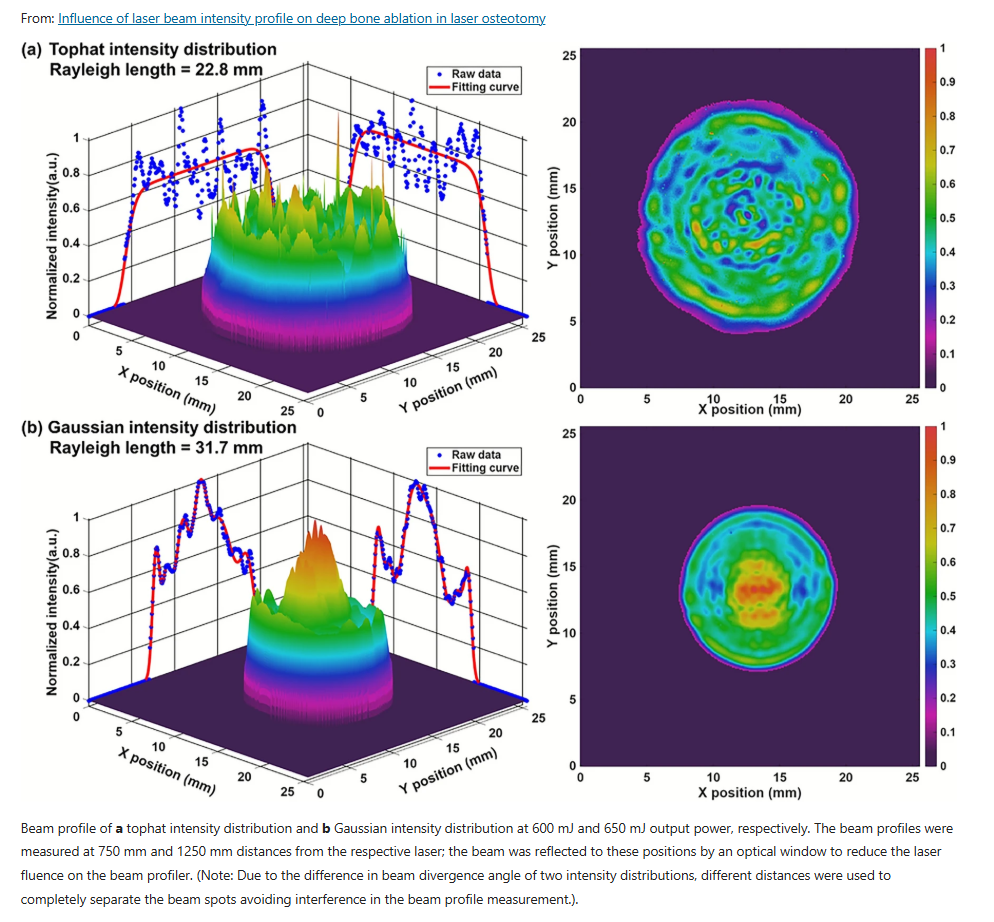
- Researchers at the University of Basel in Switzerland have developed a new laser technique that can cut much deeper into bone than previous surgical lasers.
- Traditional surgical lasers struggle with bone because they cut only about 2–3 cm deep, which is too shallow for procedures such as inserting joint implants.
- The team improved performance by changing the shape of the laser beam’s energy distribution. Instead of a conventional Gaussian profile (strong center, weaker edges), they used a “top-hat” profile that spreads energy more evenly across the beam.
- This new beam shape allows the laser to cut up to about 4.4–4.5 cm deep, nearly doubling previous depth limits and improving cutting efficiency.
- Because lasers cut without mechanical contact, they can reduce microcracks and enable more precise bone shaping, which may help with customized or 3D-printed implants.
- However, the technique is still much slower than mechanical tools like saws or drills, so further improvements are needed before routine surgical use.
- Researchers plan to refine the technology and test how it performs in real surgical environments while protecting surrounding tissue.
////////////////////////////////////////////////////////////////////////////////////////////////////////////////////////////////////////////
Story: Hyundai’s Autonomous Firefighting Robot Handles 1,400+ Degree Temps
Source: TomorrowsWorldToday.com
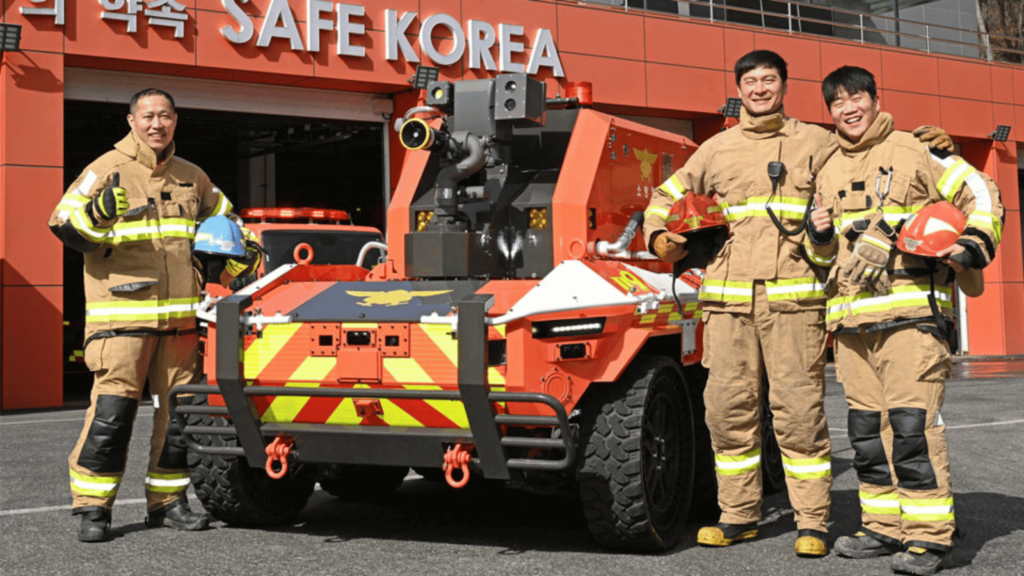
- Hyundai Motor Group has developed an unmanned firefighting robot designed to operate in extremely dangerous fire environments reaching about 1,400°F (≈800°C)—where human firefighters cannot safely go.
- The robot’s main goal is to reduce risk to firefighters by entering hazardous areas first, assessing conditions, and helping extinguish fires before humans move in.
- How It Works – The robot includes several specialized technologies:
- Water-spray cooling system that forms a protective water curtain, allowing it to function in extreme heat.
- AI-powered thermal and infrared cameras that see through smoke and flames to locate hazards and fire sources.
- High-pressure water cannon and hose system for direct fire suppression.
- 6-wheel electric drive (6×6 in-wheel motors) enabling movement through debris and tight spaces.
- Remote or assisted autonomous driving so operators can control it from a safe distance.
- Capabilities
- Can travel up to ~50 km/h (31 mph) and climb steep inclines.
- Operates in dense smoke, toxic gas, and unstable structures.
- Provides real-time video and environmental data to firefighters.
- Hyundai plans to evolve the system into a fully autonomous disaster-response platform that can analyze fires, determine suppression strategies, and operate with minimal human control.
////////////////////////////////////////////////////////////////////////////////////////////////////////////////////////////////////////////
Story: Scientists discovered a way to create 3D-printed wood — and the breakthrough could change how hundreds of products get made
Source: The Cool Down on MSN.com Story by Laurelle Stelle
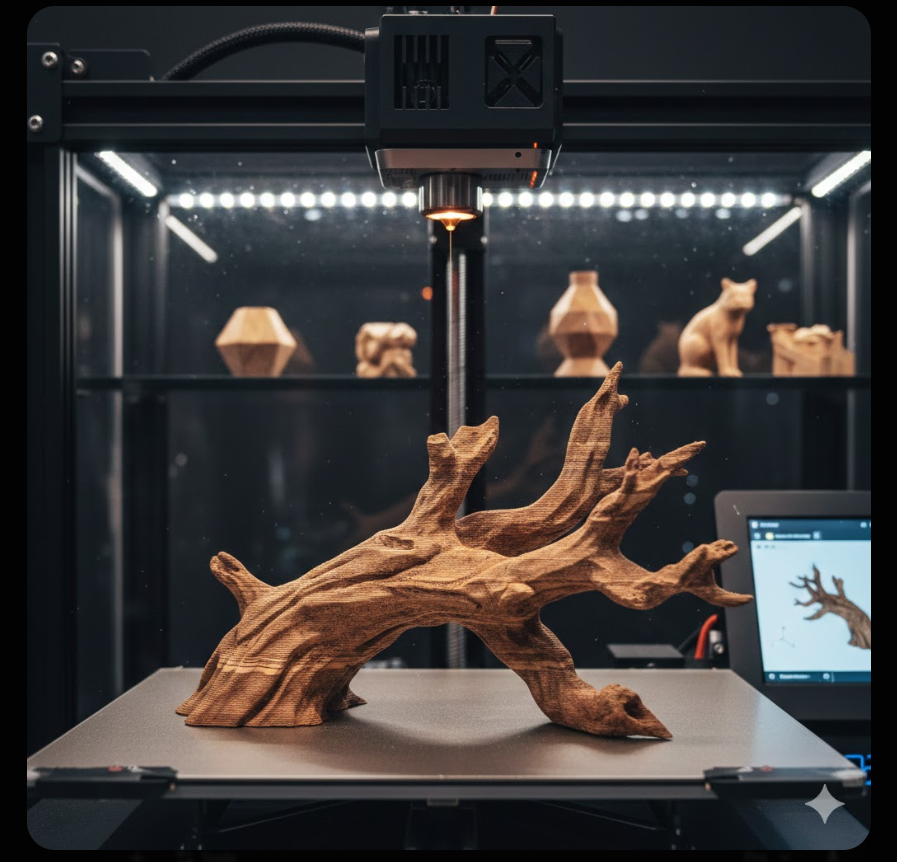
- Researchers have developed a method to create wood-like material using 3D printing.
- The process uses plant-based cells that can be grown and shaped into customizable forms.
- Why this matters
- Traditional wood products require cutting down trees, and forests take decades to regrow.
- This new approach could reduce deforestation and help preserve natural carbon sinks.
-
What makes the breakthrough special
- The printed material can be grown into specific shapes, eliminating waste from cutting or carving.
- It could be used to make hundreds of products, from furniture to consumer goods.
-
Potential impact
- More sustainable manufacturing
- Less reliance on slow-growing natural forests
- New design possibilities because the material can be “grown” into final form rather than machined
////////////////////////////////////////////////////////////////////////////////////////////////////////////////////////////////////////////
Story: New microrobot swarms use whirlpools to lift objects 45,000 times heavier – Research has demonstrated that magnetic microrobot swarms can manipulate objects much larger than themselves by generating powerful fluidic forces.
Source: Interesting Engineering Story by Mrigakshi Dixit
Link: https://interestingengineering.com/science/magnetic-microrobot-swarms-manipulate-objects
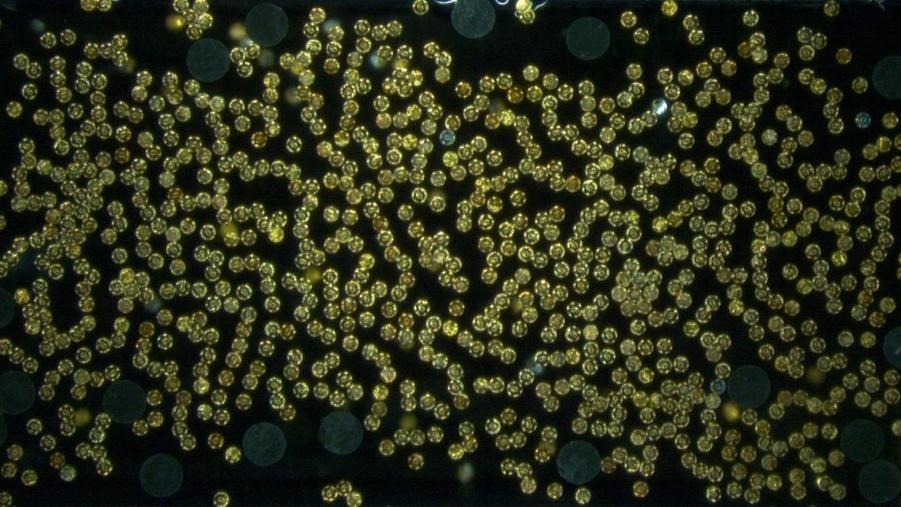
- Researchers have developed swarms of tiny magnetic microrobots that can manipulate objects without physically touching them. Instead, they spin in a magnetic field and create tiny whirlpools in the surrounding fluid, generating forces (called fluidic torque) that move nearby objects. (EurekAlert!)
- Each microrobot is about 300 micrometers wide (roughly a few human hairs). (EurekAlert!)
-
How they work:
- An external magnetic field makes the robots spin.
- Their spinning creates fluid flows around them.
- These flows produce torque that can rotate or move objects remotely.
- Collective power: By working together, the swarm can manipulate objects up to ~45,000 times heavier than a single robot.
-
Demonstrations:
- Rotating small gears and gear systems
- Moving and rotating larger 3D objects
- Assembling structures through coordinated fluid flows.
- Why it matters – Because the robots don’t need direct contact, they can handle delicate or tiny components without damaging them.
-
Possible future uses:
- Microscale manufacturing and assembly
- Biomedical applications, like manipulating materials or samples inside fluids
- Potential future use inside the human body for tasks such as targeted manipulation or medical procedures.
- The research shows how coordinated microrobot swarms can use fluid dynamics to remotely control objects at extremely small scales, opening new possibilities for manufacturing and medical technology.