


Show Notes 13 March 2026
Story 1: 3D Printing Soft Robots – Rotational multi-material printing offers intricate, programmable shapes
Source: Harvard School of Engineering Story by Anne J. Manning
Link: https://seas.harvard.edu/news/3d-printing-soft-robots
See video here: https://www.youtube.com/watch?v=BK9K_mJjlxE
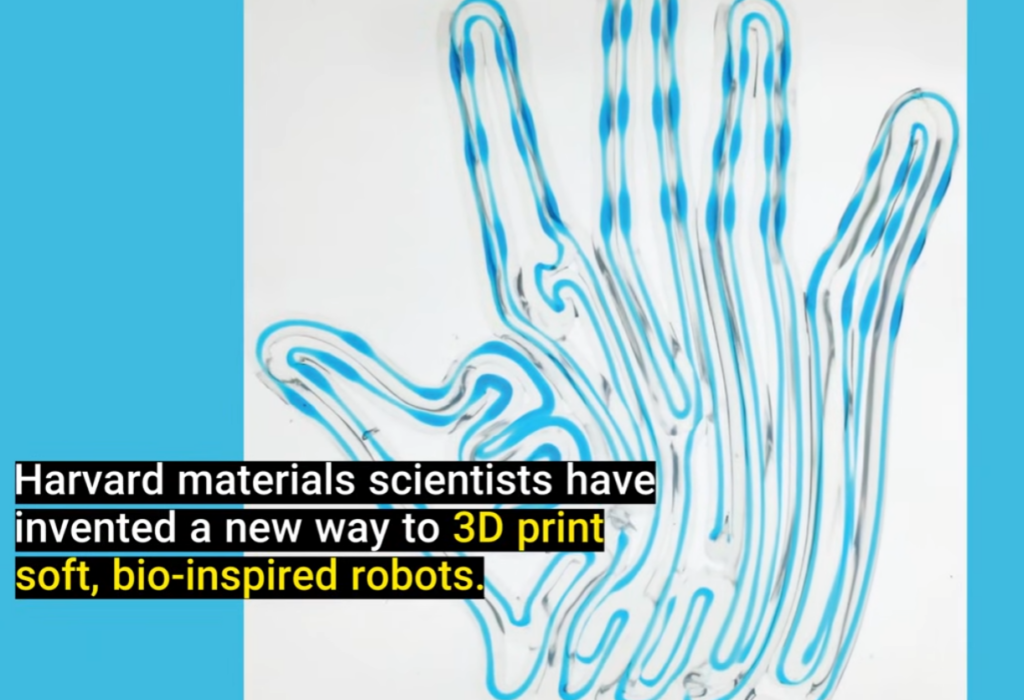
- Harvard’s engineers have developed a new rotational multi-material 3D-printing method that lets soft robots bend, twist, and change shape in precisely programmed ways when inflated.
- The method uses a dual-material rotating nozzle that prints filaments composed of a flexible outer shell, and a removable inner gel that forms internal channels.
- As the nozzle rotates, it lays down materials in controlled orientations, embedding “instructions” for how each segment will deform when air is pumped through it. This replaces traditional soft-robotics fabrication, which relies on slow, multi-step molding and manual assembly.
- Here’s how it enables programmable motion:
- The printed structures contain precisely engineered internal channels that dictate how the robot bends or twists under pressure. By varying the rotation, material mix, and channel geometry, engineers can encode:
- predictable bending
- twisting
- grasping
- flower-like blooming motions
- This allows soft robots to move exactly as designed, with no additional joints or actuators.
- This approach offers several advantages:
- Predictable, repeatable motion—a major challenge in soft robotics.
- Faster prototyping, since no molds or assembly steps are required.
- Greater design freedom, enabling intricate shapes and complex actuators.
- The technique opens the door to:
- soft robotic hands with fine control
- adaptive, shape-changing devices
- bio-inspired actuators for delicate tasks
- customizable robots printed on demand

Story 2: AI robot vehicles learn to team up and extinguish fires in early trial
Source: TechXplore.com Story by Andrew Zinin
Link: https://techxplore.com/news/2026-02-ai-robot-vehicles-team-extinguish.html
See research paper here: https://www.sciencedirect.com/science/article/pii/S0952197626000618?via%3Dihub
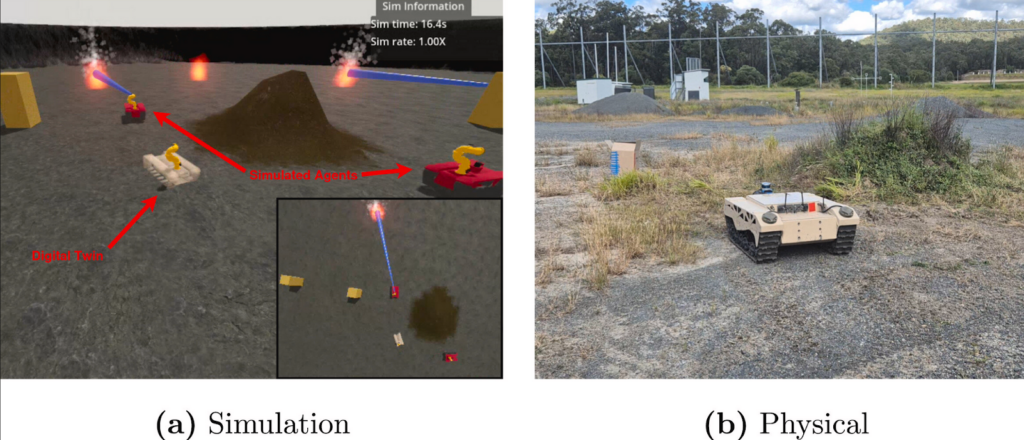
- AI-equipped unmanned ground vehicles have successfully demonstrated that they can work together autonomously to locate and extinguish fires, offering a potential future where human firefighters no longer need to enter dangerous environments.
- A team led by Cyborg Dynamics Engineering [based in Queensland, Australia] and Griffith University [based in South East Queensland, Australia] recently tested a mixed group of real and simulated unmanned ground vehicles in both virtual and hybrid physical environments.
- The robots used multi-agent reinforcement learning (MARL) to learn navigation, obstacle avoidance, and coordinated firefighting.
- Side note – multi-agent reinforcement defined:
- Multiple decision-makers — Each agent has its own policy and learning process.
- Shared environment — Agents influence the state and rewards experienced by others.
- Non‑stationarity — Because all agents are learning at once, the environment keeps changing from each agent’s perspective.
- Collaboration and competition — Agents may need to coordinate (e.g., robots moving boxes) or outsmart each other (e.g., adversarial games).
- Communication — Some multi-agent reinforcement systems allow agents to share information to improve joint performance.
- In the final scenario, the system achieved a 99.67% success rate in navigating obstacles and extinguishing two fires—an unusually high reliability for early-stage robotics.
- How the technology works
- The robots were trained through a three-stage curriculum, starting with simple single-robot navigation, then multi-robot coordination, and finally full firefighting missions involving multiple fires and obstacles.
- Multi-agent reinforcement learning allowed the robots to self-organize, divide tasks, and respond dynamically—such as splitting into sub-teams to handle multiple fire outbreaks.
- This autonomy reduces the cognitive load on human operators, who currently must manually control similar unmanned ground vehicles like remote-controlled vehicles.
- Why this matters for real-world firefighting
- Remote and autonomous unmanned ground vehicles could keep human firefighters out of hazardous zones, especially in industrial sites, mines, or chemical facilities.
- Robots can ingest sensor data and make rapid decisions far faster than a human operator watching a screen.
- Future applications could include underwater vehicles, aerial drones, or hybrid multi-vehicle teams working together on complex missions.

Story 3: New Light Therapy Can Suppress a Key Marker of Hair Loss by 92%
Source: ScienceAlert.com Story by Carly Cassella
Link: https://www.sciencealert.com/new-light-therapy-can-suppress-a-key-marker-of-hair-loss-by-92
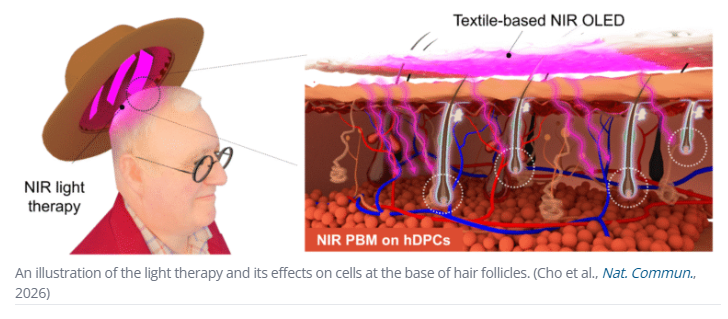

- Scientists at Korea Advanced Institute of Science & Technology (KAIST) are developing a comfortable light therapy hat that they hope will help with hair loss and growth.
- In lab experiments, the invention’s finely tuned system suppressed age-associated changes in human hair cells by nearly 92 percent compared to untreated cells.
- That’s much greater than what occurs under red light therapy, which is used by many current ‘hair loss helmets’.
- This new technology is based on near-infrared wavelengths that are specially tuned to target human dermal papilla cells – critical players in hair regeneration at the base of hair follicles.
- Unlike other phototherapy treatments for hair loss, this new platform doesn’t have to sit on a hard, bulky helmet. It can be put within a flexible cap that fits closer to the scalp and can be worn out in public with greater ease and style.
- Related News: Fully Functional Hair Follicles Have Been Grown in The Lab For The First Time
- Source: ScienceAlert.com Story by David Nield
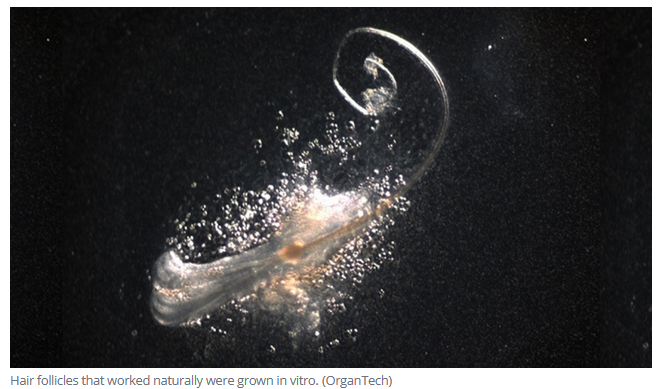
- We’re another step closer to finding a real cure for baldness. For the first time, scientists have created functional hair follicles in the lab that naturally cycle through periods of growth.
- To make it work, a team of researchers from the US and Japan identified a missing essential link: a cell type that supports regeneration and triggers full hair growth and tissue attachment.
- Before we get ahead of ourselves, we should point out that this research was carried out in mice. With human tests still pending, we’re still a long way from translating the findings into a new treatment for hair loss.
- However, the discovery does support new approaches to restore follicle growth where hair is no longer being produced naturally.

Story 4: Mapping Protein Production in Brain Cells Yields New Insights for Brain Disease – UC San Diego and Scripps Research scientists used a novel method to show that some memory neurons produce proteins at higher rates than others.
Source: UC San Diego Today Story by Susanne Clara Bard
See research paper here: https://www.nature.com/articles/s41586-026-10118-1
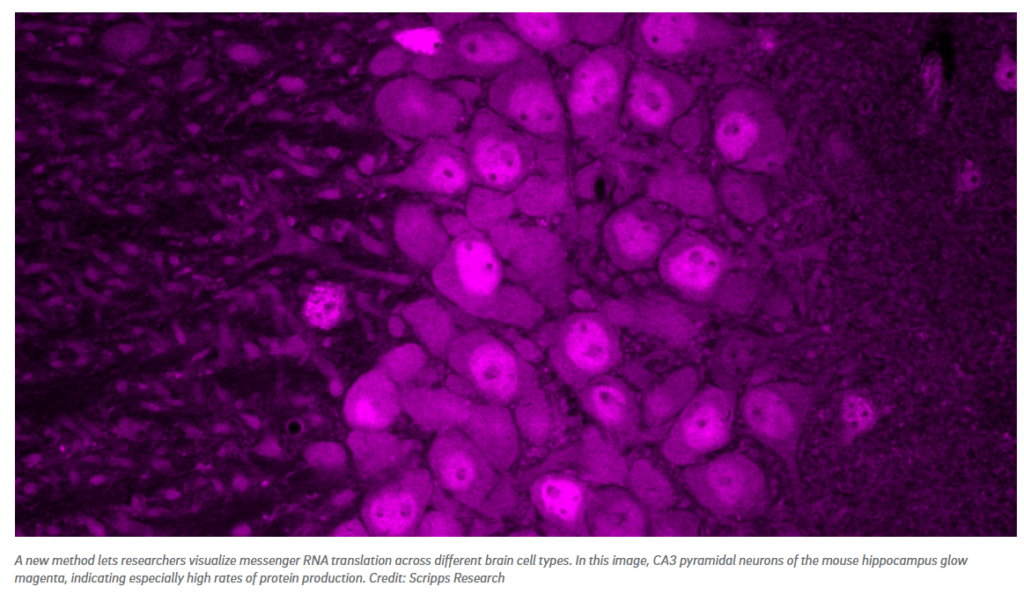
- Scientists from UC San Diego and Scripps Research have developed a groundbreaking new technology called Ribo-STAMP that allows them to map the exact proteins being produced by individual brain cells.
- Side notes – Ribo‑STAMP is a specialized version of STAMP designed to map ribosome-associated translation in single cells. It allows researchers to visualize where and how actively different cells are producing proteins.
- STAMP has several meanings in science, but the most widely recognized scientific expansion is Surveying Targets by APOBEC‑Mediated Profiling
- STAMP is a method that uses an APOBEC enzyme to mark RNA molecules so researchers can identify which RNAs interact with specific RNA‑binding proteins.
- Using this method, they created the first-ever protein production map of nearly 20,000 individual cells in the mouse hippocampus, the brain region responsible for learning and memory.
- Why This Technology Matters
- Historically, scientists have measured messenger Ribonucleic Acid [mRNA] levels to estimate which proteins a cell is making.
- Side note – mRNA, or messenger Ribonucleic Acid, is a single-stranded molecule that carries the genetic instructions needed to make proteins.
- You can think of it as the vital intermediary step in the “Central Dogma” of biology: DNA → mRNA → Protein.
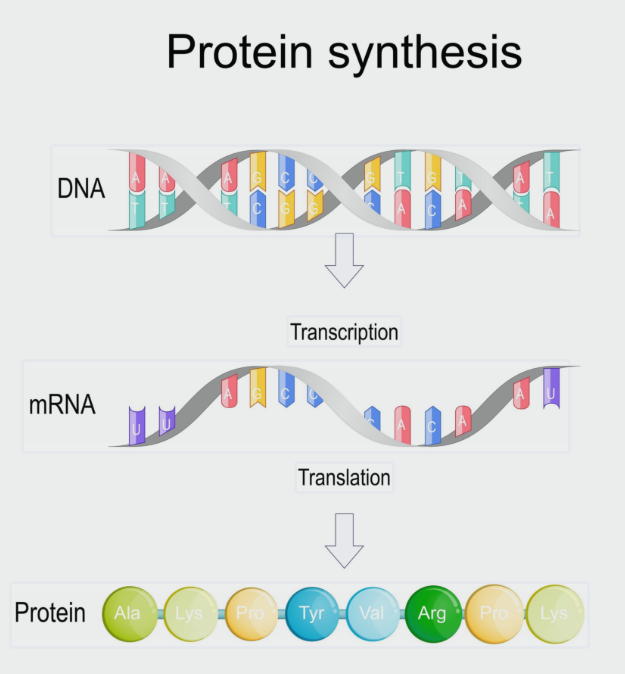
- However, in brain cells—which have long, complex structures— messenger Ribonucleic Acid [mRNA] levels often do not match actual protein production.
- Ribo-STAMP solves this by fusing an editing enzyme directly to ribosomes (the cell’s protein factories), allowing researchers to directly measure active protein translation.
- Implications for Brain Disease
- This detailed map of the brain’s “translatome” (the full set of messenger Ribonucleic Acids actively translated into proteins) offers a new lens for studying brain health.
- The researchers believe this tool will allow the medical field to investigate whether neurological disorders—such as autism spectrum disorder, fragile X syndrome, and tuberous sclerosis complex—are fundamentally caused by microscopic defects in how brain cells translate proteins.

Honorable Mentions
Story: How the Eye Develops Sharp Vision – Lab-Grown Retinas Uncover Sharpness of Vision, Could Treat Vision Loss
Source: Neuroscience News
Link: https://neurosciencenews.com/retinal-cone-conversion-vision-30107/
See research paper here: https://www.pnas.org/doi/10.1073/pnas.2510799123
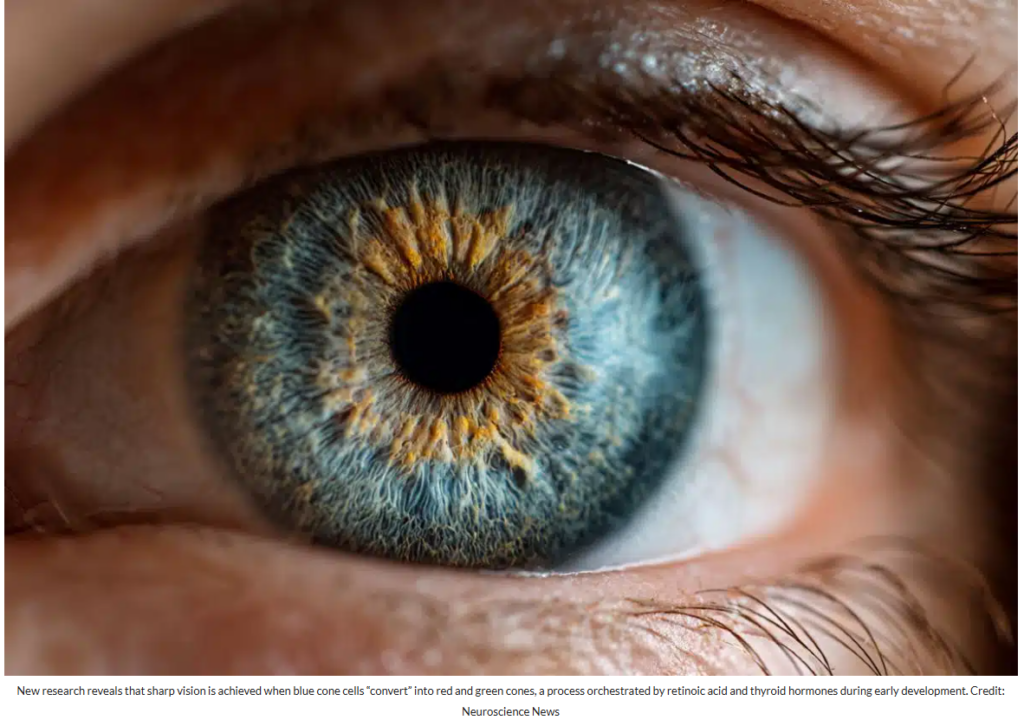
- Researchers at Johns Hopkins University discovered that humans develop high-acuity (sharp) vision during early fetal development through a surprising cellular transformation.
- By studying lab-grown retinal tissue (organoids), they found that the foveola—the tiny center of the retina responsible for daytime sight and 50% of our visual perception—achieves its dense concentration of color-sensing cells through a process of “rewiring” rather than cell movement.
- How the Mechanism Works
- Our eyes rely on cone cells to see different types of light (blue, green, and red). The foveola contains only red and green cones, but researchers found that early in fetal development (around weeks 10–12), a sparse number of blue cones are actually present in this area. By week 14, two distinct hormonal processes orchestrate a transformation:
- Retinoic Acid (Vitamin A derivative): First, retinoic acid is broken down to limit the initial creation of blue cones, setting the foundational pattern for the retina.
- Thyroid Hormones: Next, thyroid hormones signal the existing blue cones in the foveola to permanently convert into red and green cones.
- For decades, the prevailing scientific model suggested that early blue cones simply migrated out of the foveola to other parts of the retina to make room for red and green cones.
- This study proves that cone fate is highly plastic and that they actually convert in place to optimize our vision. If these blue cones were left in the center of the eye, humans would not be able to see nearly as sharply.
- By mapping how these vital light-sensing cells form, scientists hope to eventually recreate the process for therapeutic use. Understanding this mechanism could pave the way for cell-replacement therapies to restore vision in people suffering from incurable age-related disorders like macular degeneration and glaucoma.
////////////////////////////////////////////////////////////////////////////////////////////////////////////////////////////////////////////
Story: Turning waste into power: scientists convert discarded phone batteries and industrial lignin into high-performance sodium battery materials – The approach could help lower manufacturing costs for sodium-ion batteries and increase their commercial viability
Source: Renewable Carbon News
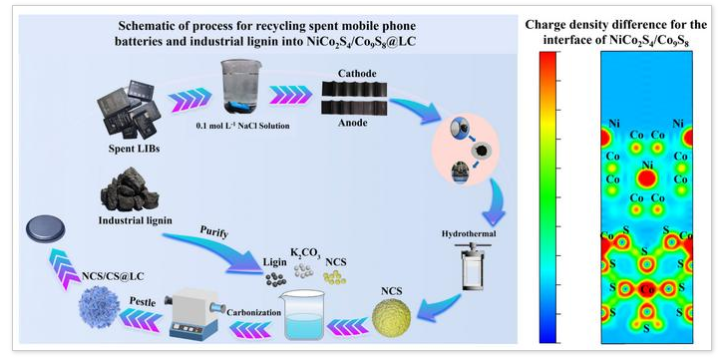
- Researchers have developed a new method to transform two major waste streams, discarded mobile phone batteries and industrial lignin, into a promising material for next-generation sodium-ion batteries. The study demonstrates how waste recycling can simultaneously reduce environmental pollution and support the transition to sustainable energy storage technologies.
- Mobile phone batteries are replaced frequently, creating large quantities of electronic waste that contain valuable metals but also pose environmental risks if improperly discarded. At the same time, lignin, a natural polymer generated in huge volumes by the paper and biofuel industries, is often burned or disposed of despite its chemical potential. Scientists in the new study sought to address both problems by combining these wastes into a functional electrode material.
- Using a hydrothermal synthesis process, the team extracted nickel and cobalt compounds from spent batteries and combined them with carbon derived from lignin. The resulting composite material, composed of nickel cobalt sulfides coated in lignin-derived carbon, showed strong electrochemical performance when tested as an anode in sodium-ion batteries.
- The composite exhibited an initial discharge capacity exceeding 1,000 milliampere hours per gram and maintained strong performance during repeated charging cycles. Even at high current densities, the material retained notable capacity, demonstrating its ability to support rapid charge and discharge processes.
////////////////////////////////////////////////////////////////////////////////////////////////////////////////////////////////////////////
Story: 100V per drop: New perovskite cell converts rain and sunshine to electricity
Source: SolarNow.com
See research paper here: https://www.sciencedirect.com/science/article/pii/S2211285525010377?via%3Dihub
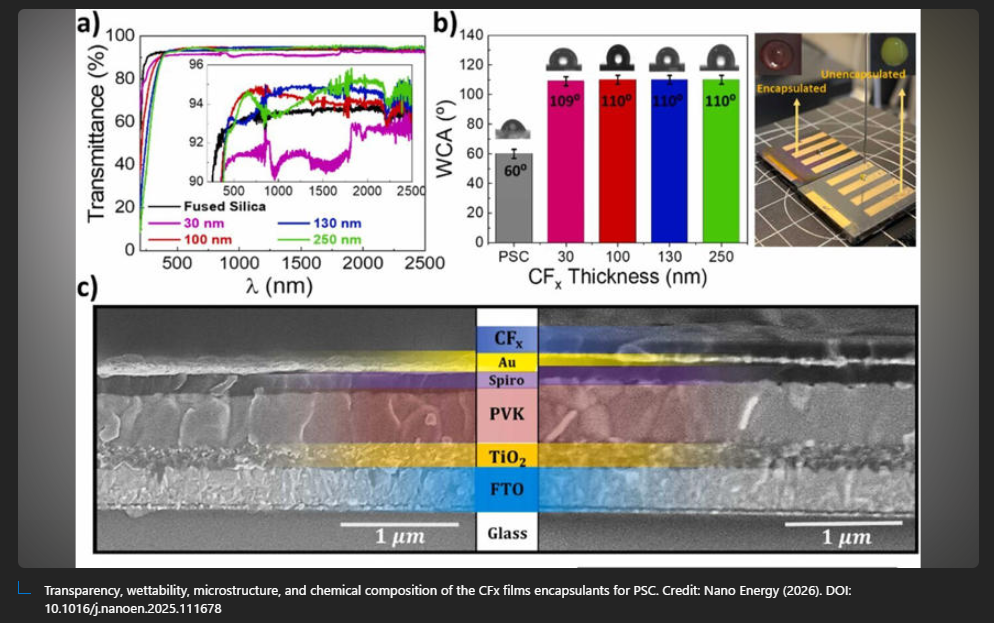
- Researchers at the Institute of Materials Science of Seville (ICMS) have developed a new perovskite-based hybrid energy cell that can generate electricity from both sunlight and falling raindrops, producing up to 100 volts per drop under lab conditions.
- The design integrates solar photovoltaic conversion with triboelectric nanogenerators (TENGs) in a single layered device.
- What the New Cell Actually Does
-
Sunlight → Electricity:
Uses a thin-film perovskite solar layer with high light absorption and low-cost manufacturing potential.
-
Raindrops → Electricity:
Uses a triboelectric layer that becomes charged when raindrops strike it.
Each drop can momentarily generate tens to ~100 volts, though at very low current.
-
Combined Output:
The system automatically switches between or blends the two modes, allowing power generation in sun, clouds, or rain.
- How It Works
- The perovskite layer handles photovoltaic conversion.
- A transparent polymer top layer (often PTFE or similar) handles triboelectric charge generation.
- Electrodes and a charge-management circuit combine the outputs without interference.
- The design avoids the usual problem where raindrops reduce solar efficiency by blocking light.
-
Why This Matters
- All-weather power: Solar panels normally drop to near-zero output in rain; this design keeps producing energy.
- Low manufacturing cost: Perovskites and polymer triboelectric layers are inexpensive and printable.
- High voltage spikes: While the current is tiny, the voltage per raindrop is unusually high, showing strong potential for future scaling.
- Potential for self-powered sensors: Especially useful in remote or rainy regions.
-
Possible Applications
- Building-integrated solar where rain is common
- Outdoor sensors and IoT devices
- Wearables and portable chargers
- Future hybrid solar roofs that never fully “turn off”
////////////////////////////////////////////////////////////////////////////////////////////////////////////////////////////////////////////
Story: Revolutionary Method allows 3D printing with metal harder than steel
Source: Slashgear.com Story by Tom Clark
Link: https://www.slashgear.com/2103590/3d-printer-hardest-tungsten-metal/
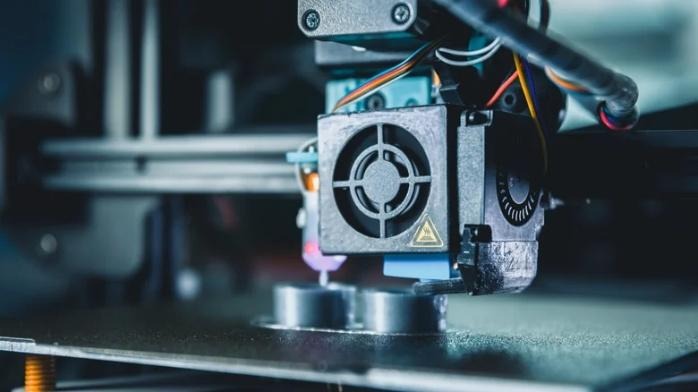
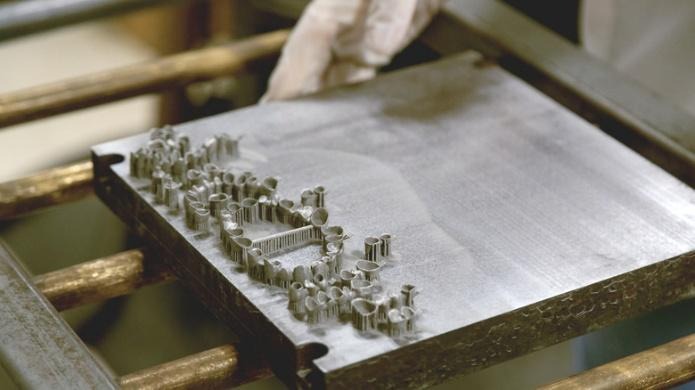
- The Breakthrough: Engineers at Hiroshima University in Japan have developed a method to 3D print tungsten carbide–cobalt (WC–Co) cemented carbide, a metal that is significantly harder than traditional steel.
- Unprecedented Hardness: The resulting 3D-printed metal scores above 1,400 on the Vickers hardness (HV) scale. For context, common strong steels like martensitic stainless steel and tool steel max out at 800 HV and 1,000 HV, respectively.
- How It Works: Instead of completely melting the elements down, the researchers achieved this high level of hardness and structural integrity by only softening the elements during the additive manufacturing (3D printing) process.
- Benefits: This new printing process is cheaper, more efficient, and creates less waste than traditional manufacturing methods for this alloy.
- Future Applications: The superior hardness and toughness of the 3D-printed WC-Co make it ideal for demanding tasks, such as repairing cracks in existing construction and reinforcing structures.