


Show Notes 23 October 2026
Text highlighted in blue identifies notes I have inserted.
Story 1: Electro-hydraulic platform converts rail-track vibrations into usable electricity – The platform harvests energy continuously from track vibration, structural flex, and constant dynamic loading as trains move at full speed.
Source: Interesting Engineering Story by Mrigakshi Dixit
Link: https://interestingengineering.com/innovation/rail-track-vibrations-into-electricity
See the company’s very interesting website here: https://www.regentracks.com/
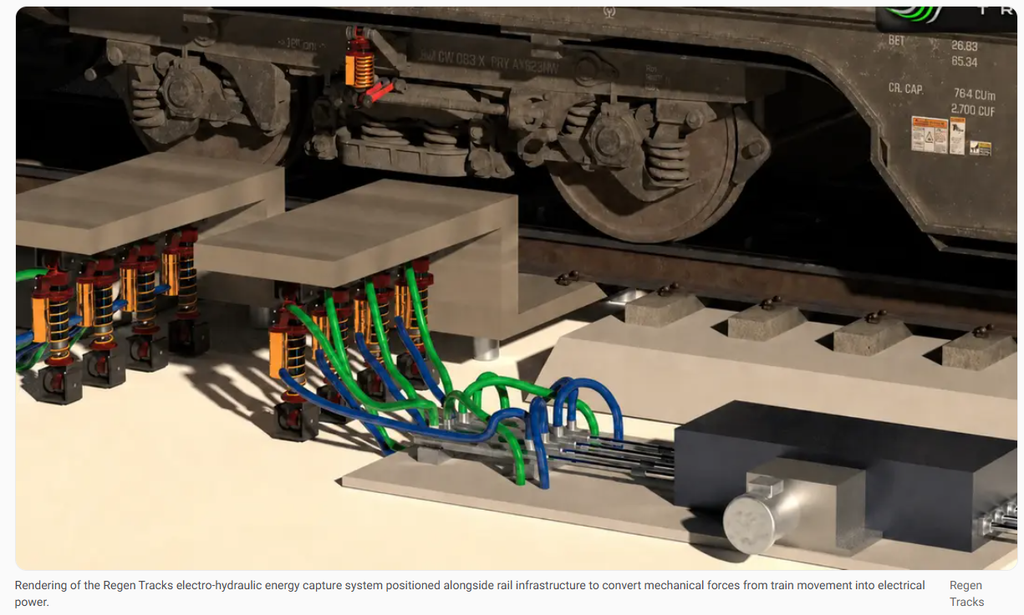
- A U.S. company called Regen Tracks has developed a system designed to capture some of the mechanical energy produced when trains pass over railroad tracks and convert it into electricity.
- The technology focuses on the enormous forces created by heavy freight trains. As each train wheel moves along the rails, its weight causes the track and rail bed to flex, vibrate, and compress slightly.
- Regen Tracks’ electro-hydraulic system captures these repeated movements using hydraulic equipment. The mechanical energy is then converted into usable electrical power.
- Unlike regenerative braking systems, which produce electricity only when trains slow down, this technology could generate energy continuously while trains are traveling at normal speeds.
- The company envisions installing these energy harvesters along rail lines, particularly near industrial areas, logistics centers, and potential data centers.
- Electricity could be used locally to power railroad equipment, monitoring systems, industrial facilities, or possibly contribute to the electrical grid.
- Regen Tracks has built a working prototype, but the technology is still undergoing engineering testing and development.
- Significant challenges remain, including the cost of installing equipment along thousands of miles of railroad and connecting remote rail lines to electrical users.
- The idea is promising, but it remains uncertain how much electricity the systems can generate economically on a large scale.

Story 2: Scientists Are Making Concrete with Human Poop – And It Gets 42% Stronger
Source: ScienceAlert.com Story by Michelle Starr
Link: https://www.sciencealert.com/scientists-are-making-concrete-with-human-poop-and-it-gets-42-stronger
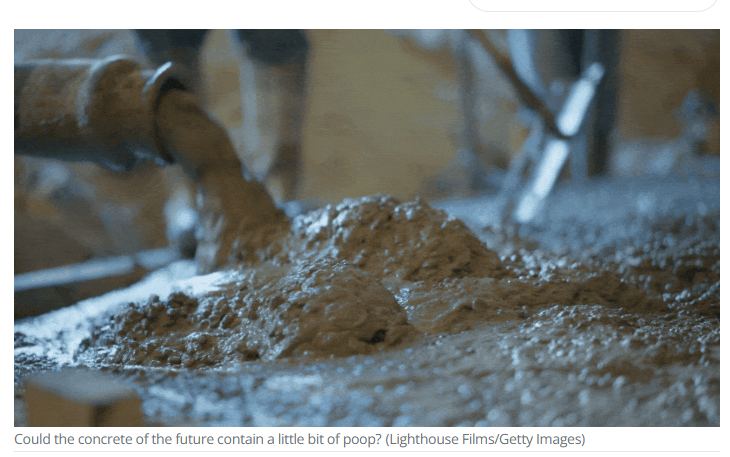
- Concrete production is a major source of carbon emissions, largely because cement requires heating and processing limestone, which releases significant amounts of CO₂.
- Researchers at the Manipal University Jaipur (India) tested a cement substitute made from biochar produced from treated human waste.
- The study found that incorporating this fecal-sludge biochar into concrete resulted in significant improvements in concrete properties. The headline reports the concrete became 42% stronger.
- Biochar is a carbon-rich material created by heating organic matter in a low-oxygen environment. It has attracted attention as a more sustainable material because it can be produced from various forms of organic waste.
- Using human waste offers a dual environmental benefit:
- It provides a productive use for a large waste stream.
- It may reduce the amount of conventional cement needed, lowering the carbon footprint of concrete production.
- The article notes that concrete formulations are delicate, and many proposed cement substitutes weaken the material. The significance of this research is that the waste-derived additive appears to improve strength rather than compromise it.
Story 3: New Metal Foam Could Make Car Crashes Safer – This is the same technology used to stop 50-caliber rounds and turn armor-piercing bullets to dust.
Source: Industrial Equipment News Story by David Mantey
Link: https://www.ien.com/safety/video/22973779/new-metal-foam-could-make-car-crashes-safer
See video here: https://www.youtube.com/watch?v=yWgNdURSsAc
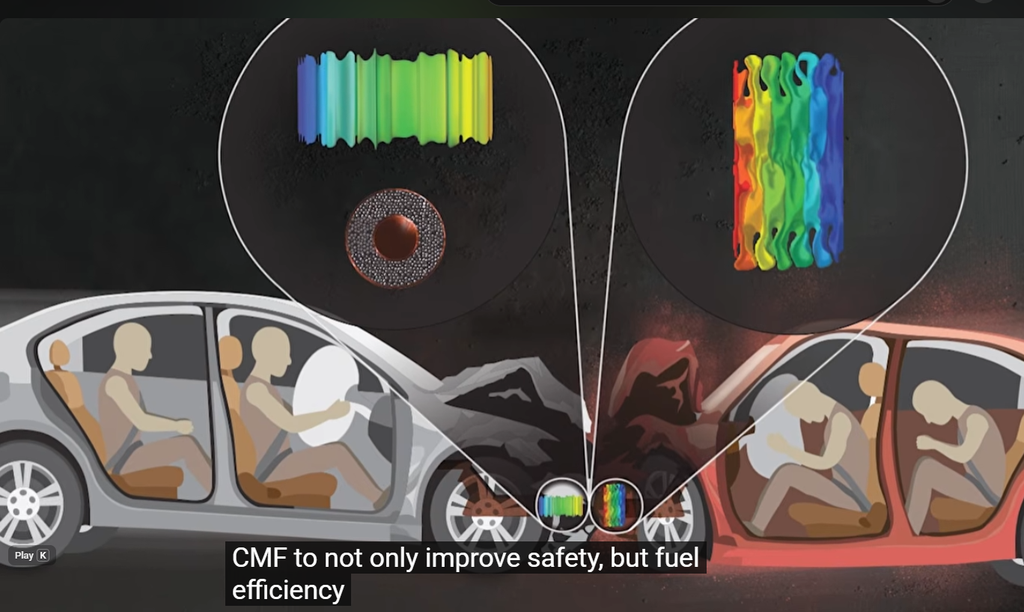
- Researchers at North Carolina State University are studying a lightweight material called composite metal foam (CMF) that could make cars safer in serious crashes.
- CMF is made from hollow metal spheres embedded in a solid metal material. Although it is lightweight, it is remarkably strong and can absorb large amounts of energy from impacts. The technology has previously been tested for military armor, including protection against powerful .50-caliber bullets.
- In the new study, researchers used computer simulations to investigate what would happen if composite metal foam were used in a car’s front crash rails. These rails are designed to absorb energy during a collision and slow the vehicle down gradually, reducing the forces transferred to passengers.
- The results were promising. Compared with conventional aluminum crash rails of the same weight and length, composite metal foam designs reduced maximum deceleration by about 38% in a simulated 55-mph crash.
- The researchers also calculated approximately 45% reductions in overall crash severity and the likelihood of serious head injuries.
- Compared with traditional rectangular steel rails, the improvements were even greater in the simulations.
- The material could also be useful in electric vehicles because it resists heat and fire, potentially helping protect batteries during accidents.
- The researchers emphasize that more testing is needed before composite metal foam can be used in production vehicles. Their next step is to work with automobile manufacturers to test the material in real-world vehicle designs.

Story 4: AI virtual cell uses protein dynamics to predict personalized breast cancer treatments
Source: MedicalXpress.com Story by Robert Egan
Link: https://medicalxpress.com/news/2026-09-ai-virtual-cell-protein-dynamics.html
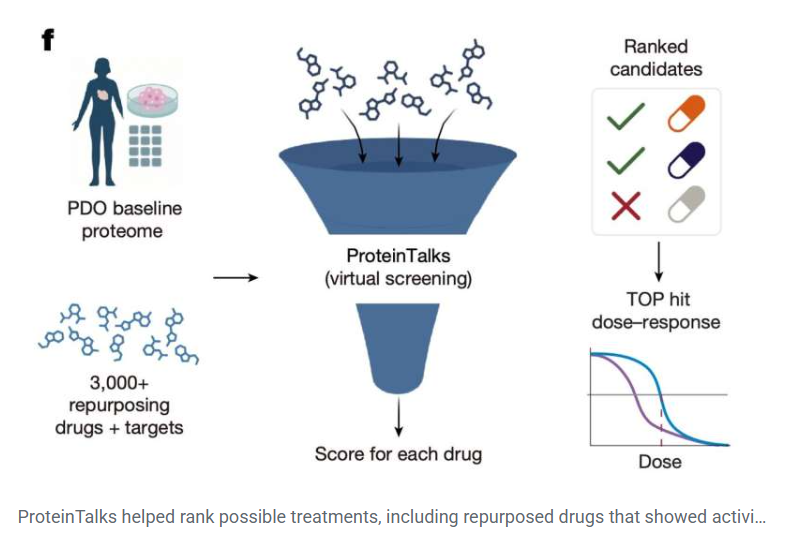
- Scientists [at three institutions in China, see below] have developed a new artificial intelligence system called ProteinTalks that could help predict which cancer drugs are most likely to work for individual patients.
- Westlake University — Hangzhou, Zhejiang Province, China
- Westlake Center for Intelligent Proteomics — Westlake Laboratory of Life Sciences and Biomedicine, Hangzhou, China
- Affiliated Hangzhou First People’s Hospital — Hangzhou, China
- The system acts somewhat like a “virtual cell.” Instead of examining cancer cells at just one point in time, it tracks how thousands of proteins inside the cells change after treatment. These changes can reveal whether a drug is working or whether the cancer is developing resistance.
- Researchers tested 18 breast cancer cell lines with 63 FDA-approved cancer drugs and 59 combinations of two drugs. They collected more than 38 million protein measurements over periods ranging from before treatment to 6, 24, and 48 hours afterward.
- ProteinTalks performed better than several existing AI systems at predicting how cancer cells would respond to drugs. It also successfully predicted responses to 81 drugs it had not previously encountered.
- The researchers identified four promising drug combinations for triple-negative breast cancer, an aggressive form of breast cancer that is difficult to treat. They also identified proteins associated with drug resistance, including one called AKR1C3.
- Finally, the system analyzed tumor samples from 501 patients and helped identify groups with different treatment responses and survival outcomes.
- The researchers say this technology could eventually help doctors select more effective, personalized cancer treatments while reducing the need for expensive trial-and-error testing.

Honorable Mentions
Story: AI translates ancient cuneiform tablets – It should help us preserve these priceless texts for the future
Source: ZME Science Story by Alexandru Micu
Link: https://www.zmescience.com/science/ai-reads-translates-cuneiform-052352/
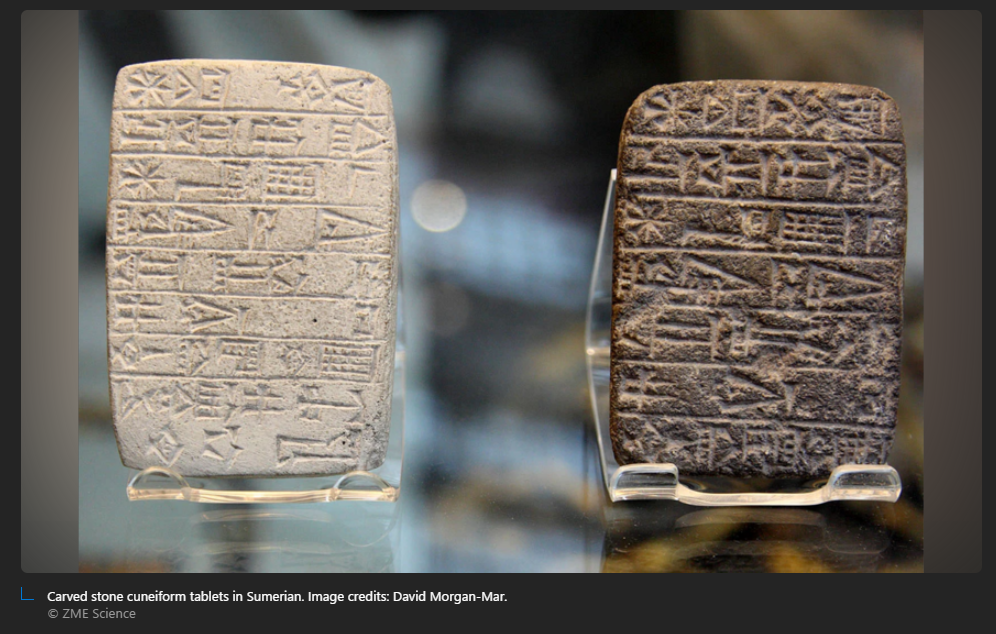
- The article, AI translates 5,000-year-old cuneiform tablets into English, explains how researchers are using AI to help translate ancient Mesopotamian texts written in cuneiform.
- Cuneiform is one of humanity’s oldest writing systems, originating more than 5,000 years ago. It was used to write several languages, including Akkadian and Sumerian, and survives on hundreds of thousands of clay tablets.
- Researchers developed a neural-network translation system that can translate Akkadian cuneiform into English. One version works from scholarly transliterations, while another works directly from digital cuneiform characters.
- The transliteration-based model performed best, achieving a BLEU score of about 37, which the article describes as good enough to produce useful first-pass translations of ancient texts.
- The AI is not perfect. Like modern AI systems, it can “hallucinate” or miss important details. The article gives an example where the system incorrectly dropped a negation, reversing the meaning of a sentence.
- Even with limitations, the AI can save scholars significant time by producing preliminary translations and helping students and researchers work through large collections of texts.
- Developments since the original 2023 research
- The article notes that AI capabilities have expanded beyond translation:
- AI is now being used to recognize signs, reconstruct damaged passages, organize collections, and match fragmented tablets.
- In 2025, researchers used AI-assisted tools to help reconstruct a previously unknown Babylonian hymn to Marduk and Babylon from multiple fragments.
- New datasets and research challenges are supporting work on Sumerian texts as well as Akkadian.
- A 2026 project called TabletCraft introduced a bidirectional model that can translate both Akkadian-to-English and English-to-Akkadian cuneiform.
- Bottom line – The article concludes that AI is becoming a valuable tool for archaeology and ancient-language research. While it still requires substantial human oversight, it can help scholars process vast collections of ancient writings, discover connections between fragments, and bring previously unread texts to light more quickly.
////////////////////////////////////////////////////////////////////////////////////////////////////////////////////////////////////////////
Story: Experimental One-Dose Treatment Cuts ‘Bad’ Cholesterol by 52% in First Human Trial
Source: ScienceAlert.com Story by David Nield
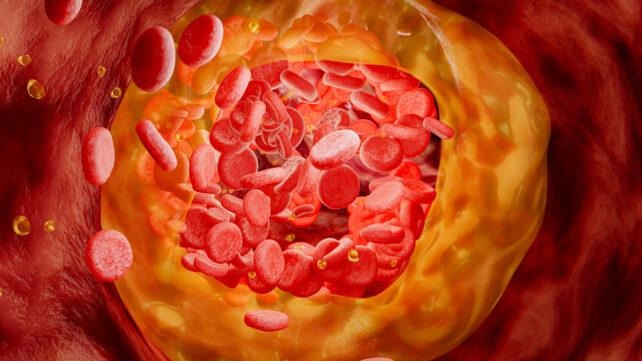
- Scientists at the Cleveland Clinic in Ohio, United States, have reported promising early results from a new experimental gene-editing treatment that could dramatically lower “bad” cholesterol with just one dose.
- The treatment, called CTX310, uses CRISPR gene-editing technology to permanently alter a gene in liver cells. Researchers targeted the ANGPTL3 gene, which helps regulate cholesterol and triglycerides in the bloodstream. Some people naturally have versions of this gene that produce lower cholesterol levels and appear to have reduced cardiovascular risk.
- In the first human trial, 15 people with serious cholesterol or triglyceride disorders received a single intravenous infusion containing nanoparticles carrying CRISPR instructions. These patients had conditions that had not responded adequately to conventional treatments.
- Among the four participants who received the highest dose, LDL (“bad”) cholesterol fell by an average of 52.5 percent. Triglyceride levels dropped by nearly 48 percent, while the targeted ANGPTL3 protein decreased by almost 79 percent.
- The results remained evident 12 months later. One participant died during the study, although researchers concluded the death was unrelated to the treatment.
- The findings are encouraging, but the trial was very small, and much more research is needed to determine long-term safety and effectiveness. A larger Phase 1b trial is now underway.
- If successful, CTX310 could eventually offer an alternative to daily cholesterol medications or regular injections. (ScienceAlert)
- Significance: This research demonstrates the potential of a one-time CRISPR gene-editing treatment to produce long-lasting reductions in cholesterol, although it remains experimental and years away from possible widespread medical use.
////////////////////////////////////////////////////////////////////////////////////////////////////////////////////////////////////////////
Story: Engineered microbe speeds CO2 capture, recovers critical metals
Source: Cornell University Story by Chris Dawson
See research paper here: https://www.nature.com/articles/s41598-026-63817-0
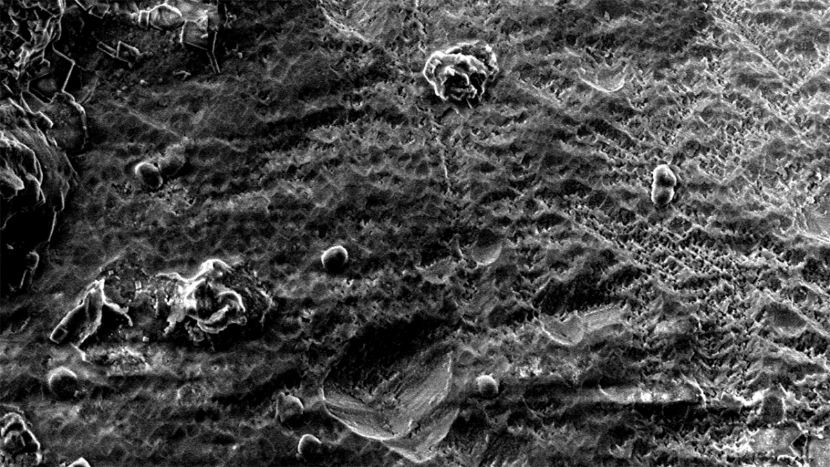
Microscopic view of the olivine surface, showing pits and channels where the
rock has been dissolved, demonstrating how the bacteria help break down the mineral.
- Scientists at Cornell University have engineered a bacterium that could help address two environmental challenges at once: removing carbon dioxide from the atmosphere and recovering valuable metals needed for electric vehicle batteries.
- The researchers modified a bacterium called Gluconobacter oxydans to produce acids that rapidly break down ultramafic rocks such as olivine. These rocks naturally absorb carbon dioxide as they weather, but the natural process can take a very long time.
- In laboratory experiments, the engineered bacteria significantly accelerated the breakdown of the minerals. Over 15 days, the microbes extracted up to 75% of the magnesium from olivine samples while also releasing nickel and cobalt—two important metals used in battery manufacturing.
- An unexpected discovery was that the process produced magnesium oxalate, a carbon-containing mineral. Researchers say magnesium oxalate could potentially store twice as much carbon per magnesium atom as magnesite, a more commonly studied carbon-storage mineral.
- The team believes the technology could eventually be useful for processing mine waste, particularly ultramafic mine tailings that have already been crushed into small particles. This could allow companies to recover leftover metals while permanently storing carbon.
- However, the work is still at the laboratory stage. More research is needed to determine whether the process can be made affordable, scalable, and stable over long periods.
////////////////////////////////////////////////////////////////////////////////////////////////////////////////////////////////////////////
Story: New, 50-ton Volvo EC500 Electric excavator never needs charging
Source: Electrek.com Story by Jo Borras
Link: https://electrek.co/2026/09/10/new-50-ton-volvo-ec500-electric-excavator-never-needs-charging/
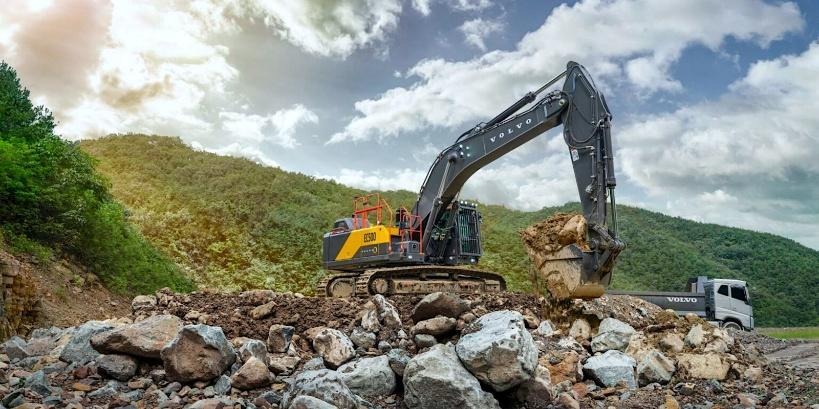
- Volvo Construction Equipment is testing a new 50-ton electric excavator called the EC500 Electric, designed to perform the same demanding work as a traditional diesel-powered excavator while producing zero direct emissions.
- The machine is currently undergoing real-world testing in Norway, where it is being used for quarrying, road construction, and tunneling. Unlike smaller electric excavators, the EC500 is large enough for heavy-duty construction projects.
- One of its most interesting features is its ability to operate continuously without needing to stop for battery charging. The excavator has an onboard high-voltage battery that can provide approximately two to three hours of continuous operation. However, it also includes a 35-meter cable reel that allows the machine to connect directly to the electrical grid. When plugged in, it can theoretically work around the clock, eliminating the need for charging breaks.
- Volvo has designed an intelligent battery-electric system capable of adapting to different electrical grid conditions. This is intended to make the machine more practical on construction sites where electrical power may fluctuate or be limited.
- The EC500 Electric is not yet in full production. Volvo plans to use feedback from early customers and operators to refine the machine before an expected production launch in spring 2027.
- The project represents a significant step toward replacing diesel-powered heavy construction equipment with cleaner electric alternatives.