

Show Notes 15 August 2025
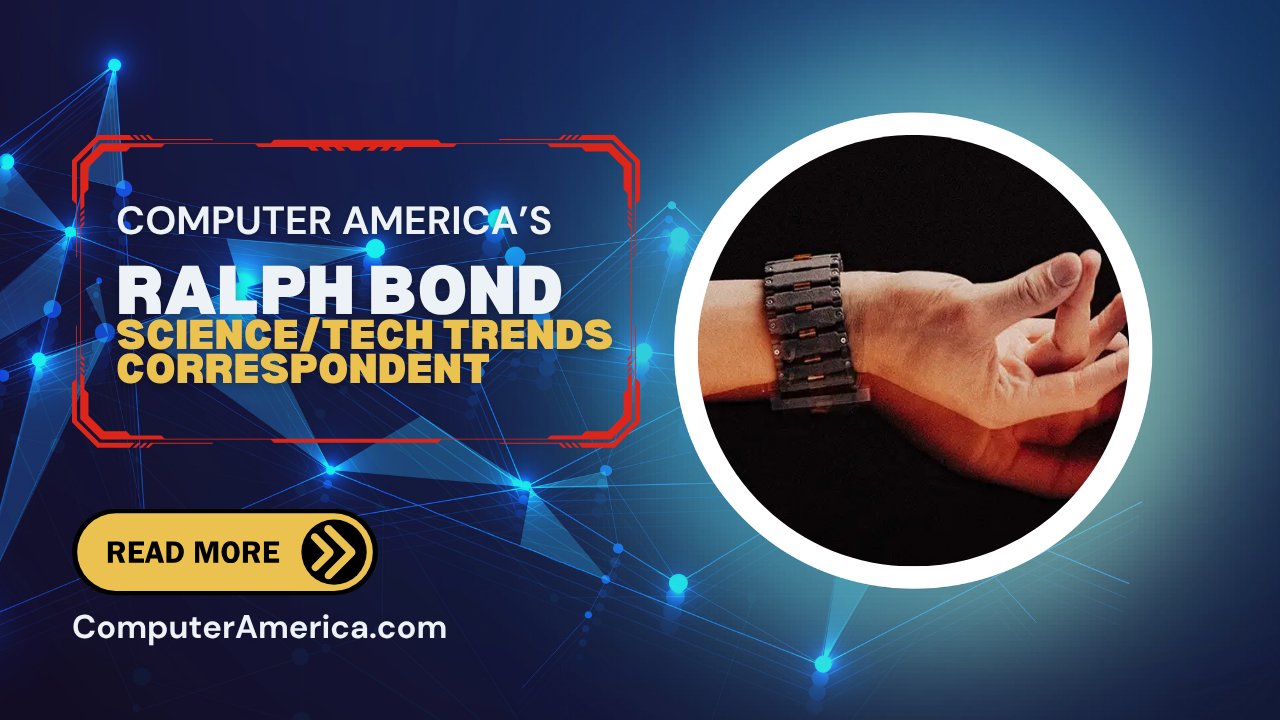
Story 1: Meta researchers are developing a gesture-controlled wristband that can interact with a computer
Source: TechCrunch.com Story by Lauren Forristal
Find the research paper here: https://www.nature.com/articles/s41586-025-09255-w


- Meta [Reality Labs] researchers are developing a wristband that lets people control a computer using hand gestures. This includes moving a cursor, opening apps, and sending messages by writing in the air as if using a pencil.
- Meta’s wristband employs a technique called surface electromyography (sEMG), which detects electrical signals generated by muscle activity to interpret user movements. These signals can sense a person’s intended actions, even before they do them.
-
Side note – all about Surface Electromyography signals – they are electrical signals generated by your muscles when they contract—and they can be detected right through your skin.
- Here’s a breakdown of what they are and how they work:
- Muscle Activation: When your brain sends a signal to move a muscle, motor neurons fire and muscle fibers depolarize, creating tiny electrical currents.
- Action Potentials: These currents are called action potentials, and they travel along muscle fibers during contraction.
- Surface Detection: sEMG uses electrodes placed on the skin to pick up these signals without needing needles or invasive procedures.
- How sEMG Signals Are Captured
- Electrodes on Skin: Small sensors are placed over the muscle group of interest.
- Signal Processing: The voltage differences between electrodes are amplified and filtered to remove noise.
- Real-Time Feedback: The processed signals can be visualized or used to control devices, offering insights into muscle performance.
- Applications of sEMG
- Rehabilitation & Physical Therapy: Helps patients retrain muscles after injury using biofeedback.
- Sports Science: Analyzes muscle activation patterns to optimize training and prevent injury.
- Clinical Diagnostics: Assesses muscle disorders, nerve damage, and motor control issues.
- Human-Computer Interaction: Powers gesture-controlled devices like Meta’s new wristband, which interprets muscle signals to control computers—even before you move.
- Why It’s Useful
- Non-Invasive: No needles, no surgery—just sensors on the skin.
- Versatile: Works for diagnostics, therapy, research, and even futuristic tech.
- Predictive Power: Can detect intended movements milliseconds before they happen.
- Here’s a breakdown of what they are and how they work:
- The goal of this wristband is to provide less invasive tools to interact with computers for people with motor disabilities.
- The company is collaborating with Carnegie Mellon to test the wristband with people who have spinal cord injuries, enabling them to use computers even if they are unable to fully use their arms or hands.
- The wristband is a simpler alternative to other projects, such as Elon Musk’s Neuralink, which aims to implant brain chips in individuals with severe paralysis.
- Other non-invasive approaches include headsets that utilize electroencephalogram (EEG) signals; however, these have limitations due to the weak signals they produce.
- Meanwhile, Meta’s wristband could be used immediately without surgical intervention, and its use of surface electromyography signals means it operates at a higher frequency than electroencephalography.

Story 2: First standard production tire with over 70% bio-based and recycled materials
Source: Pirelli News Release

- Tire maker Pirelli has launched the first standard production tire for the global market made with over 70% bio-based and recycled materials, including Forest Stewardship Council-certified natural rubber. This certification attests to the responsible management of the natural rubber supply chain, from plantation to factory.
- Developed in a specific version for Jaguar Land Rover, the new tire is called Pirelli P Zero and will initially be available on selected 22-inch wheel options for Range Rover.
- MATERIALS INNOVATION
- Bio-based and recycled materials include:
- Recycled steel, partially sourced from the melting of scrap metal instead of virgin raw materials, while maintaining the mechanical properties of virgin steel.
- Rice husk-derived silica, obtained from rice processing waste, used in tread compounds to ensure high performance in wet conditions.
- Circular carbon black, produced through pyrolysis oil obtained from end-of-life tires.
- Side note – Pyrolysis oil—also called bio-oil or pyrolytic oil—is a dark, viscous liquid produced by heating organic materials (like biomass or plastics) in the absence of oxygen. This process, known as pyrolysis, breaks down complex molecules into simpler ones without combustion.
- Bio-circular polymers, manufactured from monomers derived from used cooking oil or pyrolysis oil, replacing fossil-based polymers.
- Side note – A monomer is a small molecule that can chemically bond with other identical or different monomers to form a polymer, which is a large, chain-like molecule
- Bio-resins, plant-based plasticizers that help optimize the balance between dry and wet performance.
- Side note – Plasticizers are chemical additives used to make materials — especially plastics — more flexible, softer, and easier to process.
Story 3: Who-Fi: An AI-Powered Wi-Fi Technology That Can Identify and Track Individuals Without Cameras
Source: Gadgets360.com Story by Akash Dutta
Sub-head from the TechXplore.com article: WhoFi: New surveillance technology can track people by how they disrupt Wi-Fi signals
See also: https://interestingengineering.com/innovation/wifi-fingerprint-ai-tracking-without-device
See research paper here: https://arxiv.org/abs/2507.12869

- Who-Fi is a cutting-edge technology [developed by researchers from La Sapienza University of Rome] that leverages artificial intelligence to identify and track individuals without needing any visual input.
- It is experimental technology which remains to be thoroughly tested in the real world, but the researchers claim it can be used to turn any ordinary Wi-Fi signal into a biometric scanner that can not only track the movement and active position of an individual but also identify their unique biometric signature.
- Understanding the Who-Fi Technology
- According to the team’s research paper, regular 2.4GHz Wi-Fi signals can be used to identify and track individuals and play an important role in both identity authentication and surveillance. The technology also raises fresh concerns about digital privacy and security.
- Breaking the technology down, the Who-Fi system uses a combination of a Wi-Fi signal and a transformer-based neural network (also known as a large language model). A transformer-based neural network is a type of deep learning architecture designed to handle sequential data—like language, audio, or time series—with remarkable efficiency and flexibility.
- This large language model analyzes and understands something known as “channel state information”. It monitors the changes in Wi-Fi signal strength and phase as they bounce around a room and reflect off an individual’s body. This can be understood as the signals transmitted by radar and sonar systems.
- So, whenever a human is near a Wi-Fi signal, the distortion in the signal’s natural path creates a unique pattern. This pattern is said to be as accurate as other biometric signatures of humans, such as fingerprints, facial patterns, and the structure of the retina. The Who-Fi system can recognize this signature and attribute it to individuals.
- Once it has been trained on these signatures, the system can not only track the individual’s movement but also identify them even when they re-enter the network zone after a prolonged period.
- It can also capture body movement data and recognize sign language.
- The main advantage of the system is that it functions without any visual or auditory sensors, such as cameras and microphones.
Story 4: Scientists create first mini lungs with built-in blood vessels, unlocking new insights for pulmonary vascular disease
Source: MedicalXpress.com Story by Linda Wang
Link: https://medicalxpress.com/news/2025-07-scientists-mini-lungs-built-blood.html
See research paper here: https://www.cell.com/cell/abstract/S0092-8674(25)00628-2

- UCLA researchers, in collaboration with Cincinnati Children’s Hospital, have created the first stem-cell-based miniature lungs with fully integrated blood vessel networks, marking a significant leap in biomedical research.
- Key Highlights:
- Integrated Vascularization: Previous lung organoid models lacked blood vessels. This new method allows lung tissue and blood vessels to co-develop from the same stem cell material, improving realism and functionality.
- Unexpected Discovery: Initial attempts to grow vascular and lung cells separately revealed both were forming together—leading researchers to adopt a more natural development approach.
-
Enhanced Model Benefits:
- Greater cell diversity and structure
- Better cell survival
- Closer resemblance to early-stage human lung development
- Disease Modeling & Applications include:
- Enabled modeling of both vascular and epithelial defects — something prior organoids couldn’t replicate.
- Epithelial defects refer to damage or loss in the thin layer of cells—called epithelial tissue—that lines and protects surfaces throughout the body.
- Potential for studying various pulmonary vascular diseases and drug testing without animal models
- Next Steps:
- Introduce mechanical stretching and air exposure to simulate breathing and mature lung architecture
- Scale production for drug development and broader research
Honorable Mentions
Story: Scientists develop game-changing method to make use of walnut and pistachio shells [to make biomass fuel]
Source: The Cool Down via MSN Story by Kristen Lawrence

- Scientists from the University of Nottingham and CSIRO Australia have developed an innovative model that evaluates how walnut and pistachio shells—along with other agricultural residues—can serve as low-carbon biomass fuel.
- Here are the key points:
- The Breakthrough
- Researchers created a tool that predicts energy efficiency by analyzing milling and combustion performance.
- It helps energy producers estimate burnout efficiency—how thoroughly carbon is burned—thus improving fuel choices for power plants.
- Biomass Candidates Studied
- Included: pistachio shells, walnut shells, rice husks, palm kernel shells, and white wood pellets.
- All are forms of biomass, a renewable energy source derived from organic matter.
- U.K. Energy Context
- Biomass is the second-largest source of clean energy in the U.K., used extensively in pulverized fuel combustion.
- However, wood products dominate the biomass sector—often imported from North America—which can strain supply chains.
- Environmental Benefits
- Transitioning from wood pellets to agricultural waste could:
- Reduce deforestation and air pollution
- Limit carbon emissions, as wood releases CO₂ faster than trees can regrow
- This method offers a sustainable alternative with both environmental and logistical advantages—described as “a significant step forward.”
////////////////////////////////////////////////////////////////////////////////////////////////////////////////////////////////////////////
Story: World’s most advanced haptic gloves bring real-time touch into virtual reality
Source: Timesofinnovation.com

- Developed by: USC Viterbi School of Engineering
- Purpose: To reintroduce tactile sensations—like handshakes and squeezes—into virtual communication
-
How it works:
- Users wear gloves and armbands embedded with vibration motors
- These simulate touch using vibration and pressure feedback
- Each user is represented by a full-body avatar with real-time motion mirroring
- Real-Time Interaction Features
- Supports up to 16 participants in a shared virtual space
- Enables lifelike gestures and object exchanges (e.g. passing a cup)
- Designed to enrich emotional and social aspects of digital interaction
////////////////////////////////////////////////////////////////////////////////////////////////////////////////////////////////////////////
Story: US firm to build 3,275°F brick battery to decarbonize steel and cement plants
Source: InterestingEngineering.com Story by Sujita Sinha
Link: https://interestingengineering.com/energy/mass-produce-heat-storing-electric-bricks

- A Boston-based startup, Electrified Thermal Solutions (a spinout from MIT), has developed the Joule Hive Thermal Battery, which uses electrically conductive firebricks (E-bricks) to store heat.
- These E-bricks can reach 3,275°F (1,800°C)—sufficient for high-temperature industrial processes like steel, cement, and glass production.
-
Decarbonizing Heavy Industry
- The system runs on renewable electricity, offering an alternative to fossil-fuel combustion in industries where electrification has been challenging.
-
Manufacturing Partnership
- Electrified Thermal signed a deal with HarbisonWalker International (HWI), a veteran U.S. manufacturer of high-temp materials (part of Calderys).
- E-bricks will be produced using HWI’s existing supply chains, allowing for rapid and scalable deployment without needing new infrastructure.
-
Strategic Impact
- The tech aims to decarbonize some of the world’s most emissions-intensive sectors, while leveraging mature manufacturing capabilities for efficiency and speed.
////////////////////////////////////////////////////////////////////////////////////////////////////////////////////////////////////////////
Story: Smarter flow simulation model for analyzing blood flow in brain aneurysms improves efficiency and accuracy
Source: MedicalXpress.com Story by Andrew Zinin
Link: https://medicalxpress.com/news/2025-07-smarter-simulation-blood-brain-aneurysms.html

- Researchers from Science Tokyo have developed a more efficient and accurate method to simulate blood flow in brain aneurysms using a new computational technique. Here’s the key takeaways:
-
What They Did – Integrated three technologies:
- 4D flow MRI for capturing real-time blood flow
- Computational Fluid Dynamics (CFD) for detailed fluid motion simulation
- Data Assimilation (DA) to merge observed and simulated data
- Focused only on the aneurysm region, reducing computational load significantly
-
Why It Matters
- Previous models required high computational power and broad vessel analysis
- This new method offers faster and more realistic simulations tailored to individual patients
- It improves risk assessment and treatment planning in clinical settings
The model was validated using actual patient data and outperformed conventional approaches
Clinical Significance
Brain aneurysms can rupture and lead to stroke or death
Understanding blood flow patterns helps predict rupture risk