


Show Notes 21 November 2025
Story 1: Scientists create world’s first microwave-powered computer chip — it’s much faster and consumes less power than conventional CPUs
Source: LiveScience.com Story by Peter Ray Allison
See research paper here: https://www.nature.com/articles/s41928-025-01422-1.epdf
See posting at Cornell Chronicle: https://news.cornell.edu/stories/2025/08/researchers-build-first-microwave-brain-chip
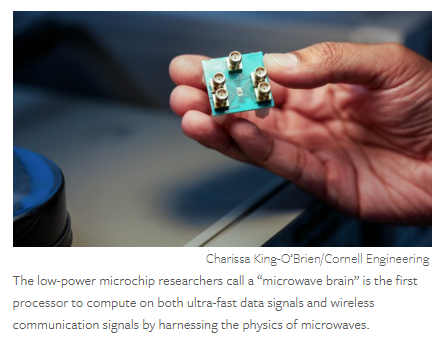
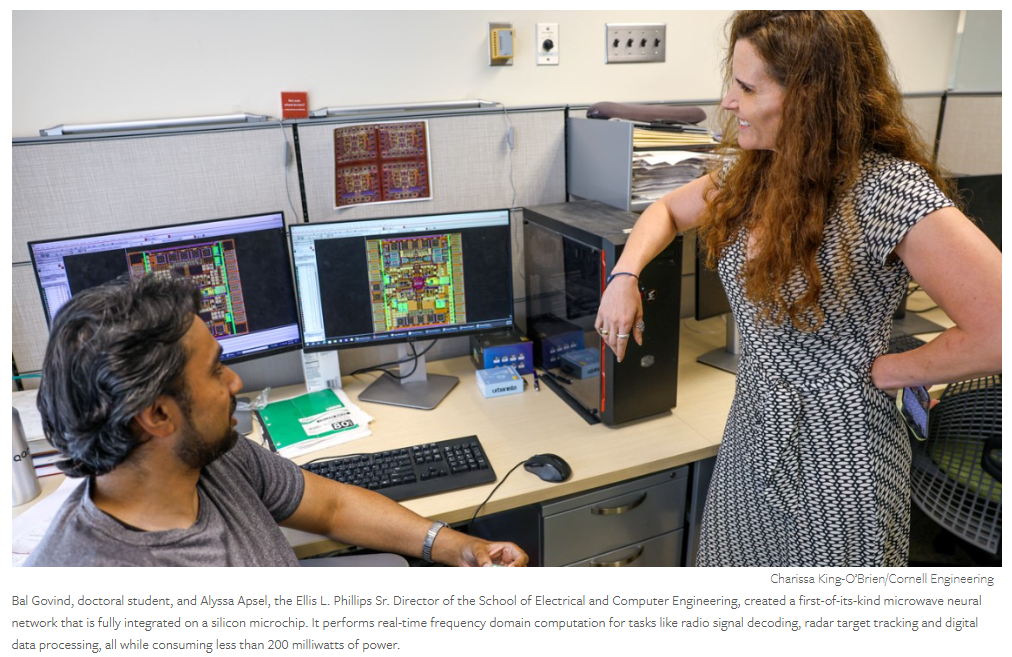
- Scientists at Cornell University have developed an entirely new kind of microchip that uses microwaves instead of conventional digital circuitry to perform operations.
- The new processor chip is the world’s first AI-based microwave neural network processor that uses microwave physics to perform neural network computations.
- High-bandwidth applications, such as radar imaging, demand high-speed processing. Microwave neural network chips, for example, can process radar signals in real time, enabling precise tracking of moving objects such as aircraft, vehicles, or drones.
- Microwaves that operate in the analog spectrum can meet the processing needs of these applications, which is why scientists have pursued this new approach to computing. Instead of executing instructions sequentially (like a digital processor), it performs parallel, real-time frequency-domain computations.
- Neural networks, which underpin the microwave chip, are collections of machine learning algorithms that are inspired by the structure of the human brain.
- By operating in the microwave analog range and applying a probabilistic approach, the chip can process data streams on the order of tens of gigahertz.

Story 2: Green alternative for light-emitting materials in displays uses plant waste and amino acids
Source: TechXplore.com Story by Dave Rogers
Link: https://techxplore.com/news/2025-11-green-alternative-emitting-materials-displays.html
See research paper here: https://www.sciencedirect.com/science/article/abs/pii/S2451929425003729
- Photoluminescent materials are essential for modern technologies, such as displays, diagnostics, solar cells, and optoelectronic devices and sensors.
- Traditional photoluminescent solid-state materials (used in TVs, smartphones, sensors, biomedical imaging, etc.) often rely on toxic metals, non-renewable resources, and wasteful multi-step processes.
- Yale University scientists have devised a way to create a green alternative to these traditional light-emitting materials.
- A team from the university’s Center for Green Chemistry and Green Engineering, with Nottingham Trent University and The University of Hong Kong, developed a process that combines lignin (a plant-based by-product of the wood/paper industry) with histidine (a simple amino acid).
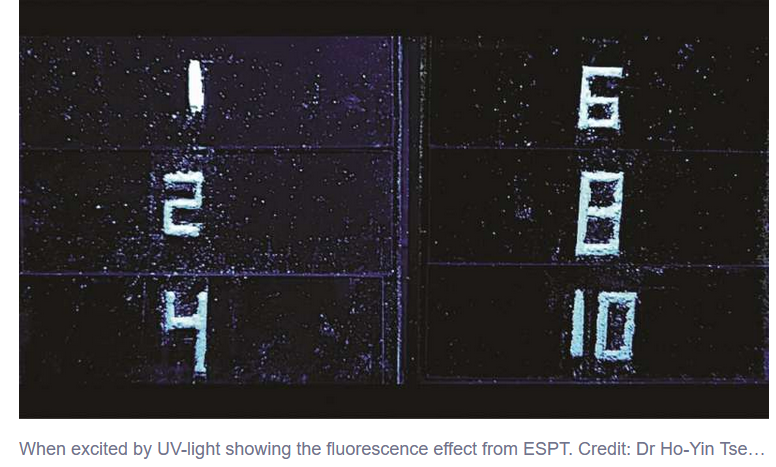
- The result produced solid-state materials that fluoresce under UV light, with tunable properties, using only green solvents (water and acetone).
- How it works:
- Phenolic groups in lignin absorb UV light and become energized.
- Side note – Phenolic groups are chemical structures where a hydroxyl group (–OH) is directly bonded to an aromatic ring, most commonly a benzene ring. This arrangement gives phenolic compounds unique chemical and biological properties compared to ordinary alcohols.
- They transfer protons to histidine via a process called Excited State Proton Transfer (ESPT).
- Side note – Excited State Proton Transfer (ESPT) is a photophysical process where a proton moves within or between molecules after the molecule absorbs light and enters an excited electronic state. This transfer often leads to unique fluorescence properties, such as large Stokes shifts or dual emission.
- As lignin relaxes, it emits visible light at room temperature.
- Some materials even glow briefly after UV light is switched off.
- Summary – This research demonstrates sustainable chemistry by using abundant plant waste streams.
- Avoids reliance on toxic metals.
- Simplifies synthesis while reducing hazardous chemical waste.
- Computational modeling confirmed how lignin-histidine interactions enable efficient light emission without metals.

Story 3: Scientists Created a Bulletproof Material 3 Times Stronger Than Kevlar—It’s Already Breaking Records
Source: Popular Mechanics Story by Darren Orf
See research paper here: https://www.cell.com/matter/abstract/S2590-2385(25)00539-9
- Since its invention in the 1960s, Kevlar has saved thousands of lives, especially police officers, due to its lightweight yet strong properties.
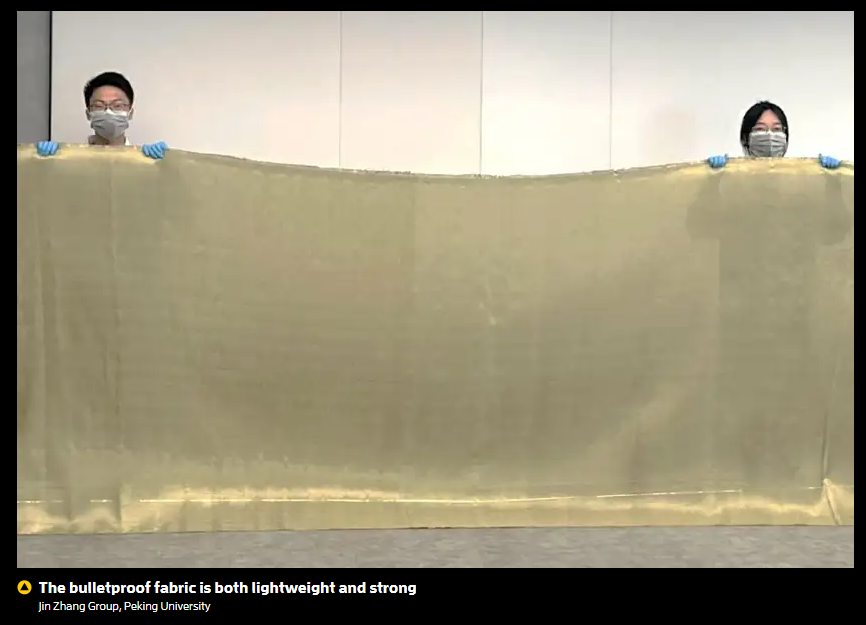
- Scientists at the University of Peking have developed a new material that is three times stronger than Kevlar and only 1.8 millimeters thick.
- Side note – [my insert] To appreciate this achievement, consider this: Today’s standard police Kevlar vest is typically 6–12 mm thick (about one quarter to one half inch thick) and weighs approximately five to seven pounds.
- Using the new stronger and thinner material you could make an officer’s vest weighing only two to three pounds.
- The material combines carbon nanotubes (CNTs) with aramid polymers (the same type used in Kevlar).
- Aligning carbon nanotubes with aramid polymers prevents slippage under extreme impact, giving the fabric ultra-high dynamic strength and toughness.
- Potential uses include bulletproof armor, vehicles, and aircraft.

Story 4: Injectable antenna could safely power deep-tissue medical implants – The technology would allow battery-free, minimally invasive, scalable bioelectronic implants such as pacemakers, neuromodulators, and body process monitors.
Source: MIT Media Lab Story by Michaela Jarvis
Link: https://news.mit.edu/2025/injectable-antenna-could-safely-power-deep-tissue-medical-implants-1029
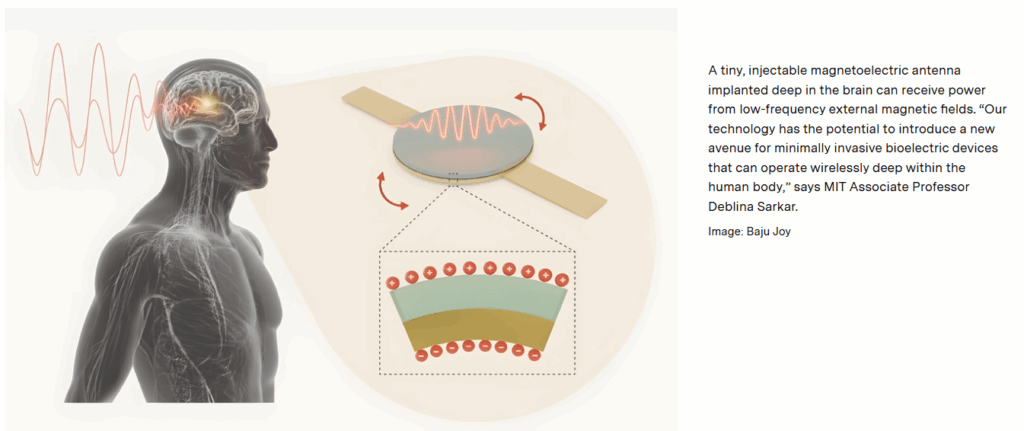
- Researchers from the MIT Media Lab have developed an antenna — about the size of a fine grain of sand — that can be injected into the body to wirelessly power deep-tissue medical implants, such as pacemakers in cardiac patients and neuromodulators in people suffering from epilepsy or Parkinson’s disease.
- Deep-tissue implants are currently powered either with a several-centimeters-long battery that is surgically implanted in the body, requiring periodic replacement, or with a surgically placed magnetic coil, also of a centimeter-scale size, that can harvest power wirelessly.
- The coil method functions only at high frequencies, which can cause tissue heating, limiting how much power can be safely delivered to the implant when miniaturized to sub-millimeter sizes.
- The MIT 200-micrometer antenna operates at low frequencies (109 kHz) thanks to a novel technology in which a magnetostrictive film, which deforms when a magnetic field is applied, is laminated with a piezoelectric film, which converts deformation to electric charge.
- When an alternating magnetic field is applied, magnetic domains within the magnetostrictive film contort it in the same way that a piece of fabric interwoven with pieces of metal would contort if subjected to a strong magnet.
- The mechanical strain in the magnetostrictive layer causes the piezoelectric layer to generate electric charges across electrodes placed above and below.
- Because the antenna is fabricated with the same technology as a microchip, it can be easily integrated with already-existing microelectronics.
- Manufacture of the antennas could be easily scaled up, the MIT researchers say, and multiple antennas and implants could be injected to treat large areas of the body.

Honorable Mentions
Story: Tabletop particle accelerator could transform medicine and materials science
Source: Phys.org Story by Carsten P. Welsch
Link: https://phys.org/news/2025-11-tabletop-particle-medicine-materials-science.html
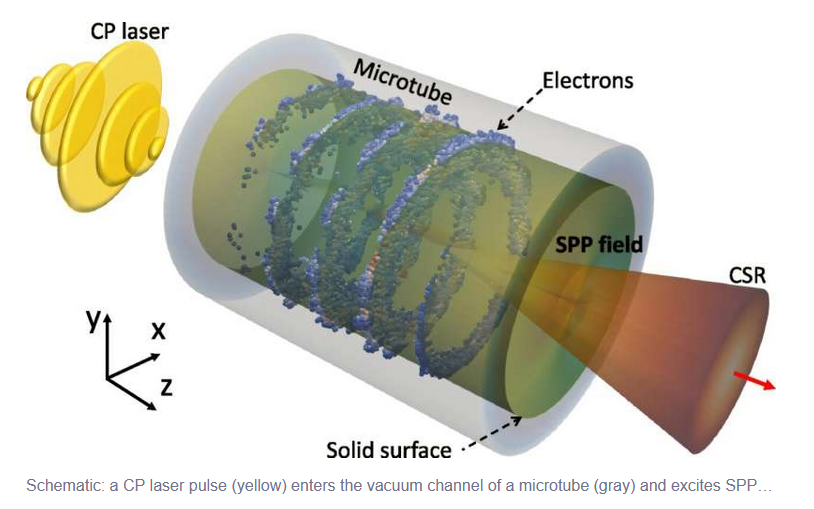
- Researchers at the University of Liverpool have demonstrated that intense X-rays could be generated using a device small enough to fit on a tabletop, rather than requiring massive synchrotron facilities the size of stadiums.
-
Technology Behind It
- Uses carbon nanotubes combined with laser light to produce brilliant X-rays on a microchip.
- A schematic shows how a circularly polarized laser pulse excites surface plasmons in a microtube, accelerating electrons into spiral motion that emits coherent radiation.
-
Comparison to Existing Systems
- Current synchrotron light sources are huge and expensive (e.g., the Large Hadron Collider is 17 miles long).
- The new design could be only a few micrometers wide—smaller than a human hair—yet still produce high-energy, coherent X-rays.
-
Potential Applications
- Medicine: Imaging tissues, studying drug molecules.
- Materials science: Investigating atomic structures and properties.
- Other disciplines: Any field that benefits from compact, powerful X-ray sources.
-
Stage of Development
- Still at the concept stage, but published in Physical Review Letters.
- Seen as a transformative step toward ultra-compact accelerators that could democratize access to advanced X-ray technology.
////////////////////////////////////////////////////////////////////////////////////////////////////////////////////////////////////////////
Story: Need a New 3D Material? Build It With DNA
Source: Columbia University Engineering Story by Ellen Neff
Link: https://www.engineering.columbia.edu/about/news/need-new-3d-material-build-it-dna
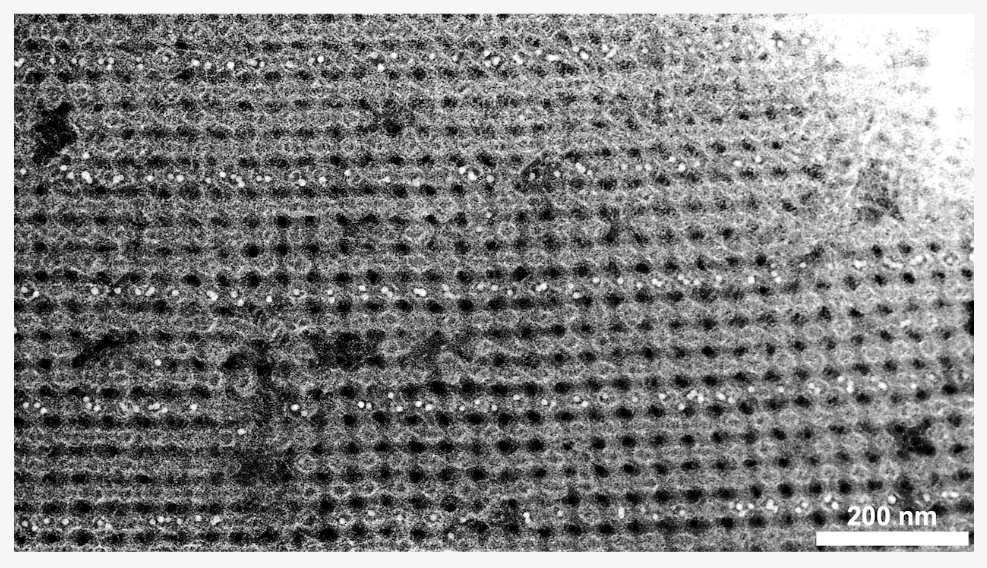
- Columbia researchers have developed a revolutionary method to build complex 3D nanomaterials using DNA self-assembly, enabling faster, scalable, and eco-friendly fabrication for applications in optics, electronics, and biomedicine.
- Led by Professor Oleg Gang, the Columbia Engineering team uses DNA strands as programmable blocks to self-assemble nanoscale 3D structures.
- These DNA “voxels” (octahedral units with connectors) act like jigsaw puzzle pieces, forming intricate lattices when combined.
- Instead of designing from scratch, the team starts with the desired final structure and works backward to determine the minimal DNA components needed.
- This approach is powered by their algorithm MOSES (Mapping Of Structurally Encoded aSsembly), akin to nano-scale CAD software.
- The team showcased five types of 3D structures, including:
- Crystal-like lattices
- Solar panel mimics
- Helical swirls
- Light-reflective materials for optical computing
- These were verified using x-ray scattering and electron microscopy, confirming precise alignment with design goals.
- Assembly occurs in water, making the process environmentally friendly.
- Unlike traditional lithography or 3D printing, this method allows parallel fabrication, dramatically reducing time and cost.
- The platform supports integration of various nano-cargo (e.g., gold particles for optics, bio-derived materials).
- Post-assembly, structures can be mineralized (converted to silica-based forms) for durability.
- Gang envisions applications in neuromorphic computing, biomolecular scaffolds, and next-gen 3D printing at the nanoscale.
Let me know if you’d like a visual breakdown or examples of how this could impact consumer tech or medical devices!
////////////////////////////////////////////////////////////////////////////////////////////////////////////////////////////////////////////
Story: Spider-Like Robot Combines 3D Printing and Construction for Earth and Lunar Applications
Source: 3Dprinting.com
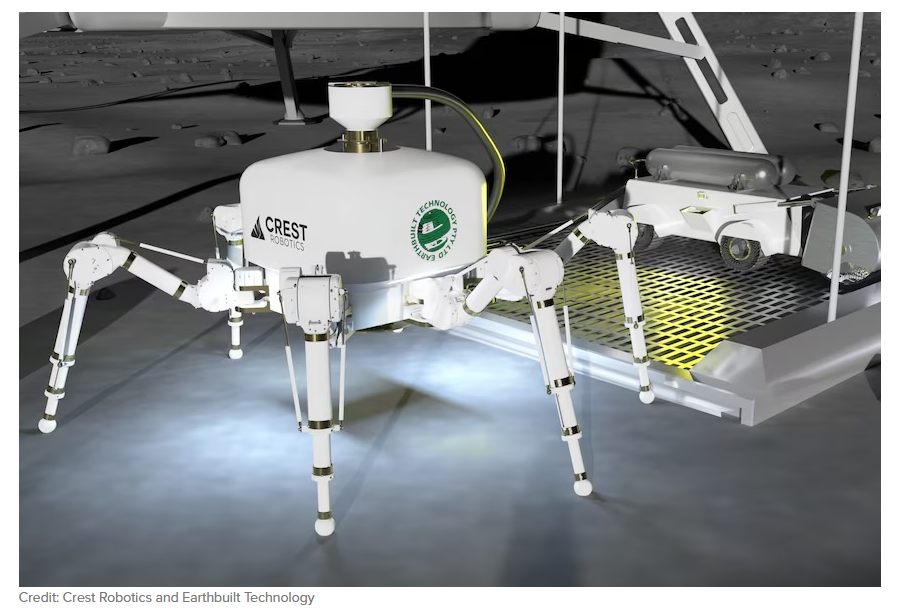
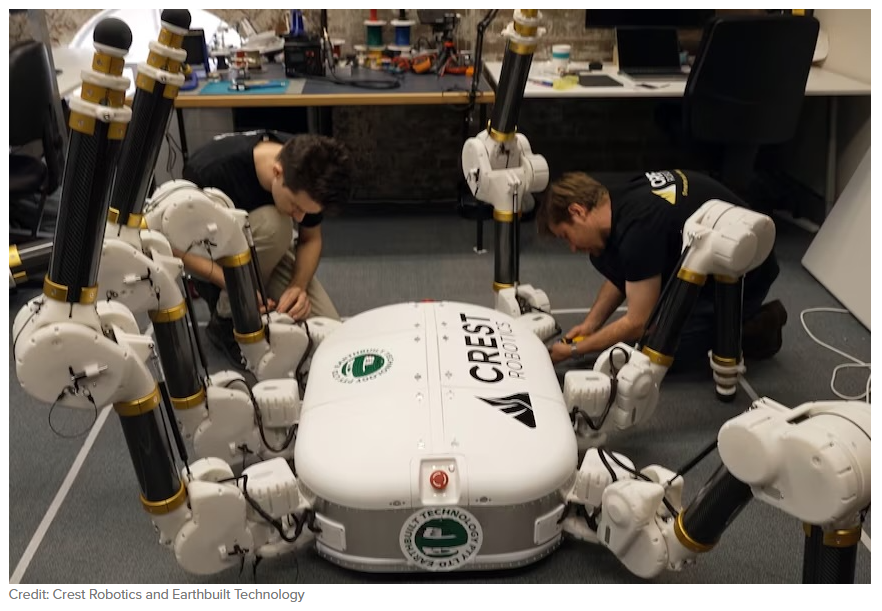
- Summary: A new spider-like robot named Charlotte, developed by Crest Robotics and Earthbuilt Technology, combines robotics with 3D printing to construct walls and building structures directly from raw materials. It is designed for both Earth-based and lunar applications, aiming to streamline construction by reducing carbon-intensive steps in traditional building methods.
- Robot Name & Developers: The semi-autonomous robot is called Charlotte, created by Crest Robotics and Earthbuilt Technology.
- Purpose: Charlotte integrates robotics and 3D printing to build structures onsite, straddling walls and depositing material without the need for heavy machinery.
- Applications:
- On Earth: It could simplify housing construction by reducing multiple steps in conventional building.
- On the Moon: The technology is envisioned for lunar base construction, using local raw materials to minimize supply needs.
- The robot was showcased at the 76th International Astronautical Congress (IAC) in Sydney in October 2025.
- Crest Robotics’ director Clyde Webster described Charlotte as the “smallest possible thing” capable of 3D printing a home, emphasizing efficiency and adaptability.
- Environmental Impact: By eliminating carbon-heavy processes in traditional construction, Charlotte could contribute to sustainable building practices.
- Development Stage: The robot remains in the research and development phase, not yet commercially available.
////////////////////////////////////////////////////////////////////////////////////////////////////////////////////////////////////////////
Story: Robots you can wear like clothes: Automatic weaving of ‘fabric muscle’ brings commercialization closer
Source: TechXplore.com Story by Robert Egan
Link: https://techxplore.com/news/2025-10-robots-automatic-fabric-muscle-commercialization.html
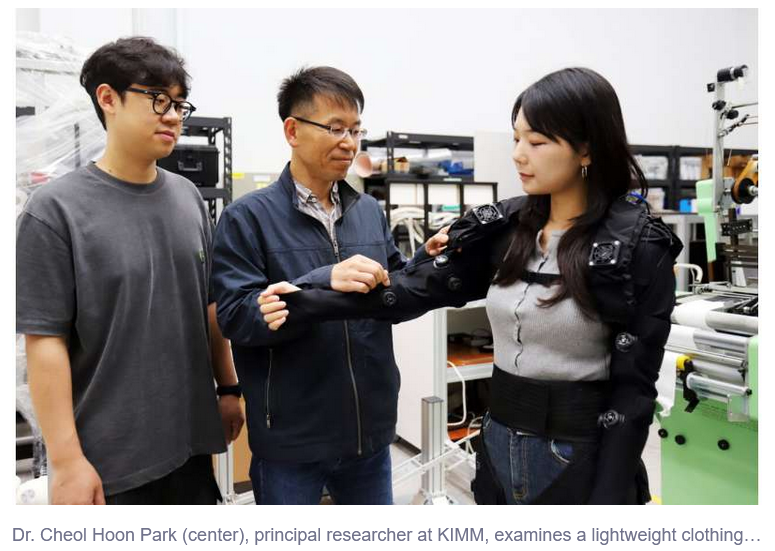
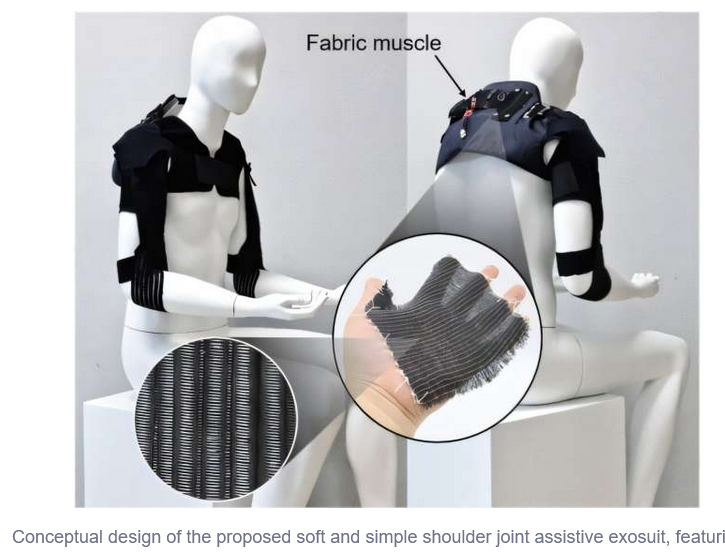
- Summary: Researchers at Korea’s Institute of Machinery and Materials (KIMM) have developed an automated weaving system that mass-produces ultra-thin “fabric muscle” using shape memory alloy (SMA) coil yarn. This breakthrough enables lightweight, clothing-type wearable robots that can assist multiple joints, improve patient mobility, and reduce worker strain, bringing commercialization much closer.
-
Key Innovations
-
Fabric muscle production:
- Uses SMA wire only 25 μm thick (¼ the diameter of human hair).
- Automatically woven into coil-shaped yarn for continuous, large-scale production.
- A 10 g fabric muscle can lift 10–15 kg, making it a powerful actuator.
-
Fabric muscle production:
-
Design improvements:
- Replaced metallic core with natural fiber for better elongation.
- Redesigned weaving machine for stable, continuous output.
- Overcomes previous limitations of low flexibility and difficult weaving.
-
Wearable Robot Applications
-
Multi-joint exosuits:
- Lightweight (<2 kg) clothing-type robot assists elbow, shoulder, and waist.
- Reduces muscle effort by 40% during repetitive tasks.
-
Shoulder-assist robot:
- Ultra-lightweight (840 g).
- Designed for patients with muscular weakness (e.g., Duchenne muscular dystrophy).
- Clinical trials at Seoul National University Hospital showed 57% improvement in shoulder movement range.
-
Multi-joint exosuits:
-
Impact & Commercialization
- Healthcare: Enhances rehabilitation, independence, and quality of life for patients.
- Industry: Reduces physical strain in logistics and construction.
- Caregiving: Lessens caregiver burden while boosting patient self-esteem.
- Global competitiveness: Positions KIMM to lead the wearable robotics market.
- In short: This innovation transforms wearable robotics from bulky, motor-driven systems into lightweight, fabric-based exosuits, paving the way for everyday use in healthcare and industry.