

Show Notes 5 June 2026
Text highlighted in blue identifies notes I have inserted.
Story 1: Researchers built a switch 1,000 times faster than today’s AI chips, and it barely generates any heat – University of Tokyo’s antiferromagnetic spintronic switch operates at picosecond speeds
Source: TechSpot.com Story by Kishalaya Kundu
Link: https://www.techspot.com/news/112430-researchers-built-switch-1000-times-faster-than-today.html
See the University’s press release: https://www.s.u-tokyo.ac.jp/en/press/11143/?utm_source=chatgpt.com
See the research paper here: https://www.science.org/doi/10.1126/science.adt3136?utm_source=chatgpt.com
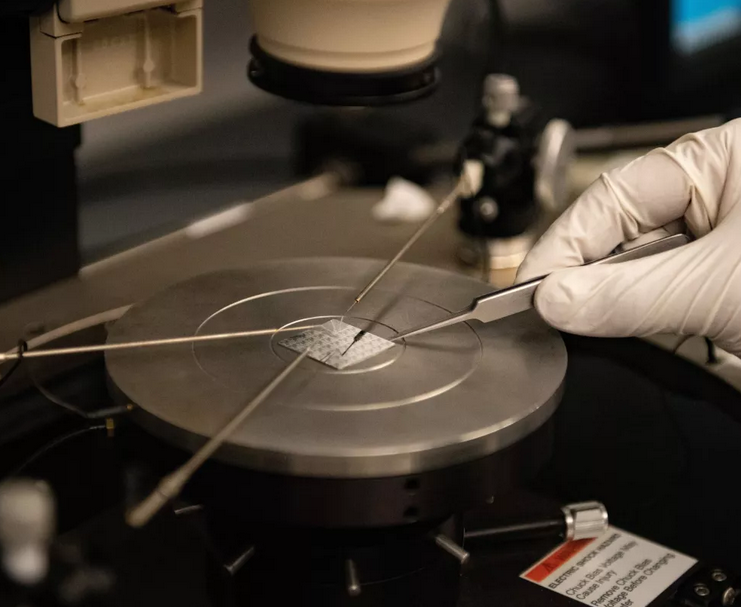
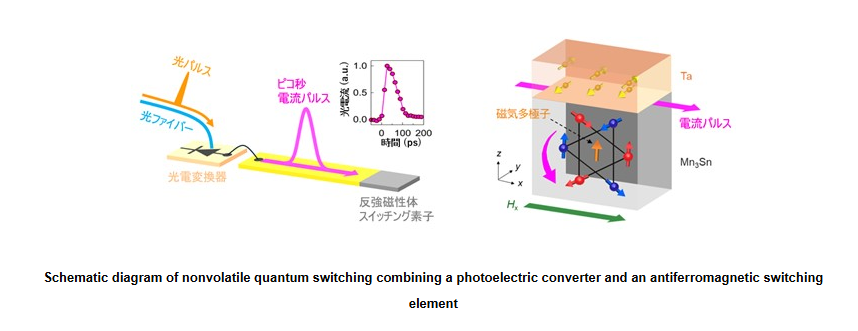
- Researchers at the University of Tokyo have created a new type of electronic switch that could dramatically improve future computers and AI hardware. According to the article, the switch operates up to 1,000 times faster than the switching technology used in today’s AI chips while producing very little heat.
Side note – AI chips still use binary switches – Modern AI chips (such as GPUs) are built from CMOS transistors, which are binary devices. A transistor is either:
- ON → representing a 1
- OFF → representing a 0
So, at the lowest level, all AI computation is still binary.
Even when AI models use floating-point numbers, matrix multiplications, or quantized 8-bit/4-bit values, those operations are implemented using billions of binary transistor switches.
But AI chips use binary switching in a very different architecture
Where CPUs use binary logic to run general-purpose instructions, AI accelerators use binary switching to perform such things as:
- Massively parallel multiply–accumulate (MAC) operations
- Matrix math units (tensor cores, systolic arrays)
- Specialized dataflow architectures that minimize memory movement
The binary switches are the same, but the organization is optimized for linear algebra, not branching logic [e.g. “if-then-else” is the most fundamental and classic example of branching logic in both computer science and everyday decision-making].
- The breakthrough uses a special magnetic material made from manganese and tin called an “antiferromagnet.” Unlike traditional silicon-based chips that rely only on electric charge, this technology belongs to a field called spintronics, which also uses the magnetic “spin” of electrons to process information.
- Side note – Spintronics is the study and use of the electron’s intrinsic spin—along with its charge—to store, process, and transmit information. In contrast to traditional electronics, which rely only on electron charge, spintronics exploits spin-up vs. spin-down states as an additional degree of freedom, enabling potentially faster, more efficient, and lower-power devices.
- In testing, the researchers sent an electrical pulse lasting only 40 picoseconds through the material to switch its magnetic state between binary positions. A picosecond is one trillionth of a second, making this process incredibly fast. The switching created far less heat and used much less energy than current computing methods.
- Reducing heat is important because modern processors consume huge amounts of power, especially in AI systems and data centers. Excess heat also limits how fast chips can run. The researchers believe this new design could help create faster, more energy-efficient smartphones, computers, and AI hardware in the future.
- However, the article notes that making one part of a computer 1,000 times faster does not automatically make the entire computer 1,000 times faster, since overall performance depends on many hardware and software components working together.

Story 2: Solar [panels] on canals reduces water evaporation by 70% and algae growth by 85%
Source: PV Magazine Story by Pilar Sanchez Molina
Here is the project’s official website: https://www.tid.org/current-projects/project-nexus/
See a truly great video here: https://www.youtube.com/watch?v=U1yAxRxRpuc
See also https://www.universityofcalifornia.edu/news/solar-panel-covered-canals-have-their-day-sun-california – post from last year, but good background. Related video here: https://www.youtube.com/watch?v=EtJzOtOpYdo

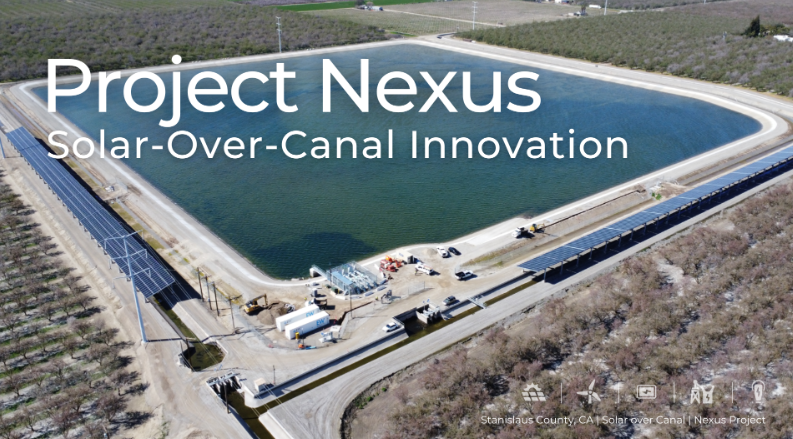
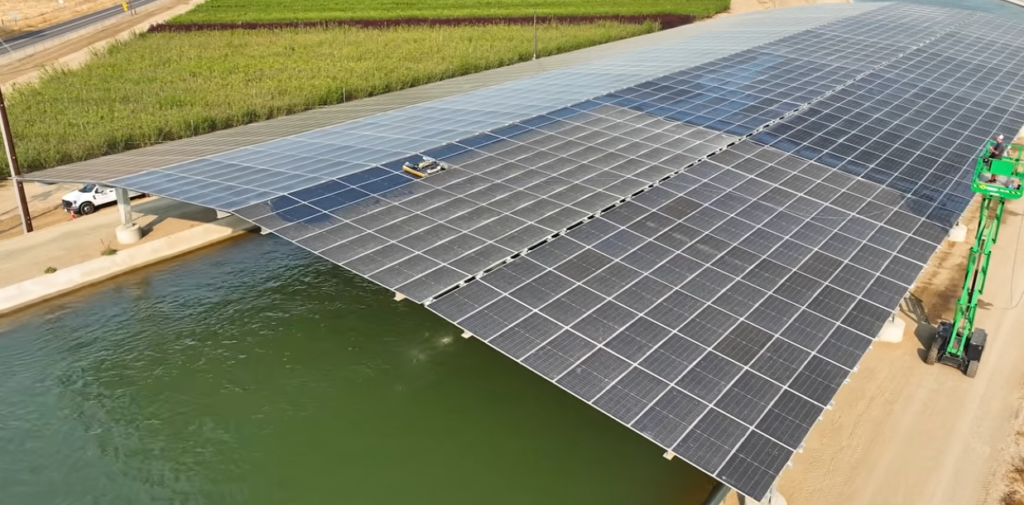
- The 1.6 MW Project Nexus pilot in California has demonstrated the significant dual benefits of installing solar panels over irrigation canals.
- Side note – California has more than 4,000 miles of irrigation canals.
- Conducted through a public-private partnership on canals operated by the Turlock Irrigation District, the project successfully tested the operational and technical feasibility of this innovative setup over a full irrigation season.
- Side note – Turlock is in California’s Central Valley, specifically in Stanislaus County, about 15 miles southeast of Modesto. It sits roughly halfway between Sacramento and Fresno.
- The results show a massive environmental and operational success:
- Shading from the solar panels reduced water evaporation beneath the arrays by 50% to 70%.
- Furthermore, by drastically blocking direct sunlight, the panels cut aquatic weed and algae growth by 85%.
- This massive drop in algae helps solve a major logistical issue, significantly lowering water treatment costs, pump cleaning, and overall canal maintenance.
- Beyond saving water and reducing upkeep, the project benefits solar efficiency. Thanks to the natural cooling effect provided by the water flowing underneath, the solar panels produced between 2.5% and 5% more electricity compared to standard, ground-mounted systems.
- The project also served as a valuable testbed for different design configurations, including wide-span structures, narrower channel setups, and iron-flow battery storage.
- Side note – An iron-flow battery is a type of large-scale, stationary energy storage system designed to store electricity for hours or even days. Unlike the lithium-ion batteries in your phone or electric vehicle, which store energy in solid cells, flow batteries store energy in liquid electrolytes contained in large external tanks. They are emerging as a frontrunner for grid-scale renewable energy storage because they are incredibly safe, long-lasting, and built from cheap, abundant materials.
- The scalability of this design holds immense potential for water-stressed, agricultural regions.
- A University of California study estimates that covering the state’s canals could save up to 63 billion gallons of water annually.
- This saved volume is enough to supply the residential water needs of over two million people or irrigate 50,000 acres of farmland, all while generating 13 gigawatts of clean energy each year.

Story 3: Can plants hear? Latest research offers new insights
Source: Phys.org Story by Gaby Clark and Andrew Zinin
Link: https://phys.org/news/2026-05-latest-insights.html
See research paper here: https://www.nature.com/articles/s41598-026-44444-1

- This article explores new research suggesting that plants may be able to detect sound vibrations in ways that resemble “hearing.”
- Scientists at Massachusetts Institute of Technology studied rice seeds and found that the sound of heavy rain increased seed germination by more than 30%.
- The researchers recorded the sound made by raindrops hitting shallow water, similar to rice paddies. They discovered that stronger rain vibrations encouraged rice seeds to sprout faster, while lighter rain had little effect.
- The study suggests that plants may sense these vibrations through tiny starch-filled structures inside their cells called statoliths. These structures normally help plants detect gravity, but researchers believe they may also react to sound waves by moving and triggering chemical signals.
- Side note, more on statoliths – Statoliths (derived from the Greek words for “stationary stone”) are specialized, microscopic structures used by various living organisms to sense gravity and balance. Think of them as nature’s internal levels.
- They exist in both the animal and plant kingdoms, though they function slightly differently in each.
- Plants don’t have nervous systems, but they still need to know which way to grow. Their version of statoliths consists of dense, starch-filled organelles called amyloplasts.
- These are primarily located in specialized cells within the root caps and the stems.
- The article also explains that this is not the first evidence of plants responding to sound.
- Earlier studies showed that some flowers react to the buzzing of insects, certain plants produce defensive chemicals when they “hear” caterpillars chewing nearby, and some crops grow better when exposed to certain types of music or vibrations.
- Scientists are still debating whether this should truly be called “hearing,” since plants do not have ears, brains, or nervous systems like animals.
- However, plants clearly respond to environmental vibrations in sophisticated ways. Researchers say these discoveries are changing how we think about plants, showing they may be far more sensitive and complex than previously believed.
Story 4: AI Tool in Radiotherapy Advances Global Fight to Eradicate Cervical Cancer
Source: Bioengineering.com
Link: https://bioengineer.org/ai-tool-in-radiotherapy-advances-global-fight-to-eradicate-cervical-cancer/
See also: https://archery.mrcctu.ucl.ac.uk/
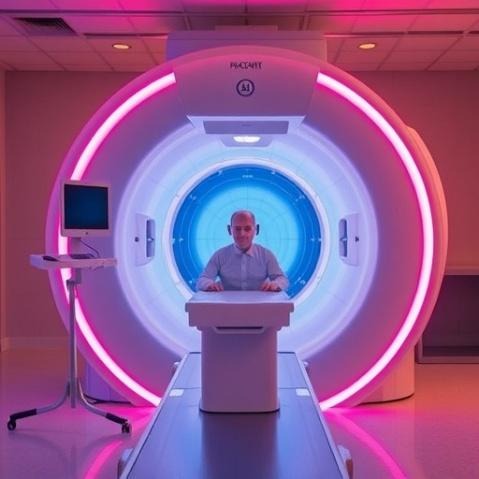
- A groundbreaking international clinical trial called ARCHERY has shown that an artificial intelligence tool can successfully automate and accelerate life-saving radiotherapy planning for cancer patients.
- Led by researchers at University College London and the London School of Hygiene & Tropical Medicine, the study evaluated a software called the Radiotherapy Planning Assistant, which was developed by the University of Texas MD Anderson Cancer Center.
- Traditionally, planning radiotherapy is a complex, resource-intensive process. Oncologists must manually map tumors and calculate precise radiation doses using CT scans—a task that normally takes days or even weeks.
- Side note – A CT scan—which stands for Computed Tomography scan (and is sometimes called a CAT scan)—is a medical imaging procedure that uses a combination of X-rays and computer processing to create detailed, cross-sectional images of the inside of your body.
- The new AI technology utilizes advanced machine learning algorithms to autonomously identify target structures and determine optimal radiation configurations, drastically shortening this workflow to just over an hour.
- The ARCHERY trial evaluated over 1,000 patients across India, South Africa, Jordan, and Malaysia.
- The results were highly encouraging: the AI-generated radiotherapy plans met international best-practice standards in over 95% of cervical cancer cases and 85% of prostate cancer cases, making them fully viable for routine clinical use.
- This breakthrough has profound global health implications, particularly for low- and middle-income nations where 94% of cervical cancer deaths occur.
- Due to severe shortages of specialized healthcare professionals, only 10% to 40% of patients in these regions currently have access to radiotherapy.
- By bridging this medical workforce gap and optimizing hospital resources, this validated AI tool offers a scalable solution to democratize high-quality cancer care and advance global efforts to eradicate cervical cancer.

Honorable Mentions
Story: Toyota Research Institute, Cornell partner on AI projects
Source: Cornell Chronicle
Link: https://news.cornell.edu/stories/2026/05/toyota-research-institute-cornell-partner-ai-projects
See research paper here:
- Cornell University has teamed up with the Toyota Research Institute (TRI) as part of the new “University Research Program 3.0.” This initiative spans 31 universities and aims to advance artificial intelligence (AI) and robotics.
- Rather than being passive sponsors, TRI co-investigators are actively collaborating with university faculty and students to bridge foundational academic research with real-world applications.
- Cornell is spearheading two primary, peer-led research projects under this partnership:
- Mitigating Robot Failures: Led by Sibley School of Mechanical and Aerospace Engineering professors Hadas Kress-Gazit and Guy Hoffman, this project explores how robots powered by Large Behavior Models (LBMs) can better collaborate with humans when tasks go wrong. The research focuses on detecting failures in human-robot teamwork, effectively visualizing those errors to the human user, and repairing the interaction in real-time.
- Responsible Conversational AI: Led by Angelina Wang, an assistant professor of information science at Cornell Tech, this project evaluates the risks and benefits of personalized AI chatbots. Because conversational AI is increasingly integrating into daily life, education, and work, Wang’s team is examining how personalization affects user trust and experience. The ultimate goal is to develop evaluation methods that ensure chatbots behave responsibly.
- By combining Cornell’s academic depth with TRI’s insight into practical industry challenges, the partnership aims to understand the societal impacts of AI while creating meaningful, everyday technological solutions.
////////////////////////////////////////////////////////////////////////////////////////////////////////////////////////////////////////////
Story: Star Catcher Raises $65 Million to Build First Power Grid in Space
Source: PowerMag.com
Link: https://www.powermag.com/star-catcher-raises-65-million-to-build-first-power-grid-in-space/
See also: https://www.star-catcher.com/
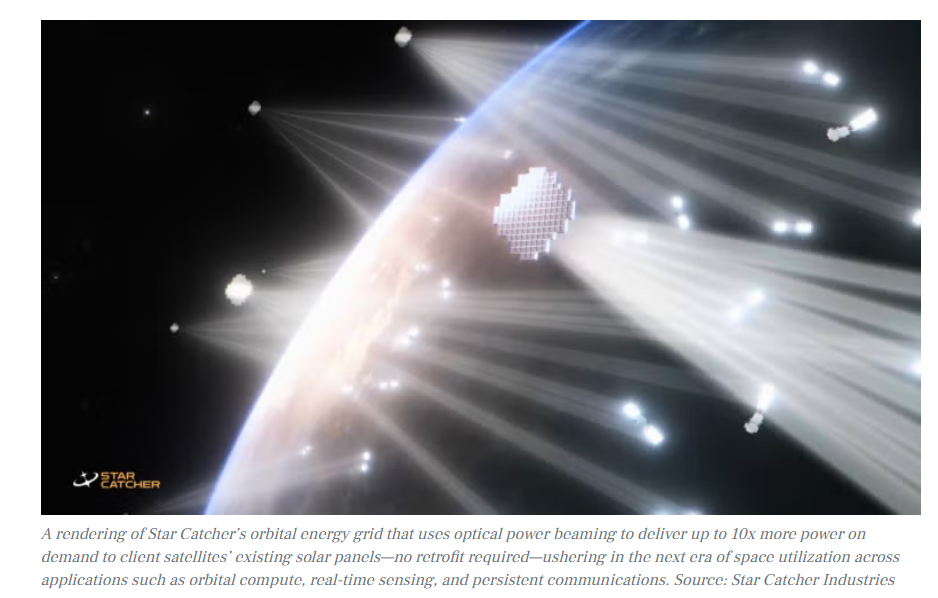
- Florida-based space startup Star Catcher Industries has raised $65 million in an oversubscribed Series A funding round led by B Capital, alongside Shield Capital and Cerberus Ventures. This investment bumps the company’s total funding to $88 million.
- The capital will be used to build the world’s first off-Earth power grid, a crucial infrastructure layer designed to eliminate energy bottlenecks in the rapidly growing space economy.
- Currently, satellites face severe power constraints—often operating on energy equivalent to a household microwave—which limits their capabilities in communication, sensing, and data transmission.
- Star Catcher plans to deploy a network of “power node” satellites that collect solar energy from the sun and use lasers to beam concentrated electricity on demand directly to other spacecraft.
- A key advantage of this technology is that client satellites require no structural retrofits; they can capture the beamed laser energy using their existing solar panels.
- This system will allow spacecraft to generate up to ten times more power, sustain full functionality while orbiting through Earth’s shadow, and maneuver more dynamically. The technology serves both commercial space operators and U.S. national security interests.
- Star Catcher has already validated its system architecture and set a world record for terrestrial optical power beaming during a demonstration at an athletic stadium.
- The company is now preparing for its first-ever orbital test mission later this year, which will attempt to beam power to a free-flying satellite. This launch will kick off a series of planned space missions to scale the grid.
////////////////////////////////////////////////////////////////////////////////////////////////////////////////////////////////////////////
Story: New fireproof battery can build its own firewall the moment overheating starts
Source: Newsbreak.com Story by Rick Kazmer
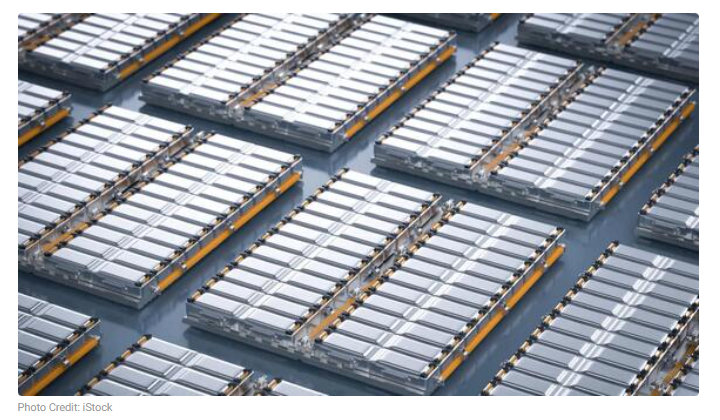
- Researchers in China have developed a new type of sodium-ion battery designed to prevent dangerous battery fires before they can start. The key innovation is a special nonflammable liquid electrolyte that automatically transforms into a solid barrier when the battery overheats. This acts like an internal “firewall” that blocks heat and stops the chain reaction known as thermal runaway — the process responsible for many lithium-ion battery fires and explosions.
- Thermal runaway happens when a battery becomes too hot and its chemical reactions begin accelerating uncontrollably. Temperatures can rise extremely fast, causing smoke, fire, toxic gas release, or explosions. Traditional batteries rely on cooling systems, sensors, and protective casings to reduce this risk. The new design instead uses the battery’s own chemistry as a built-in safety mechanism.
- When the new battery reaches about 150°C (302°F), the electrolyte rapidly hardens into a solid material. This physically separates internal battery components and prevents heat from spreading further. In tests, the battery survived nail penetration and heating up to 300°C (572°F) without catching fire or exploding.
- The battery still delivers competitive performance, with an energy density of about 211 Wh/kg and operation in temperatures ranging from -40°C to 60°C. Sodium-ion batteries are generally safer and cheaper than lithium-ion batteries because sodium is abundant and less chemically reactive. Researchers believe this technology could improve safety in electric vehicles, large energy storage systems, smartphones, and other battery-powered devices.
////////////////////////////////////////////////////////////////////////////////////////////////////////////////////////////////////////////
Story: Europe unveils reusable spaceplane targeting cargo and crew missions by 2030s
Source: Interesting Engineering Story by Aditya Jadhav
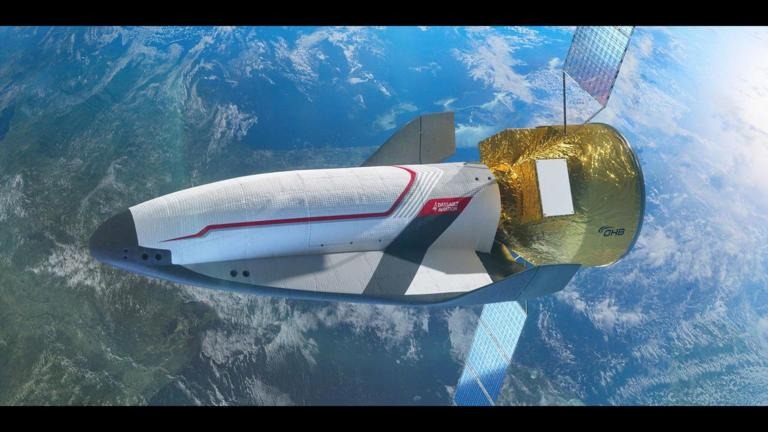
- Europe has unveiled VORTEX-S, a reusable orbital transport and exploration spaceplane developed by Dassault Aviation and OHB, in partnership with other European aerospace firms . The project is aimed at the European Space Agency (ESA) and is designed to secure European sovereignty in space mobility as the International Space Station (ISS) approaches retirement in 2030.
-
Purpose and Capabilities – VORTEX-S is a dual-use platform capable of:
- Round-trip transport to low Earth orbit (LEO) space stations
- Autonomous orbital free-flyer missions for in-orbit servicing, payload hosting, and scientific operations
- Cargo and crew transport in later variants (VORTEX-C and VORTEX-H)
- Its aerodynamic design allows controlled atmospheric reentry (less than 2G) and horizontal runway landing, reducing turnaround times and operational costs compared to capsule-based systems.
-
Development Roadmap
- The program is structured in four phases:
- VORTEX-D – 4 m demonstrator (2028 target), validating aerodynamics, hypersonic tech, and systems.
- VORTEX-S – 2:3-scale “Smart Free Flyer” for cargo and crew missions.
- VORTEX-C – Full-scale heavy cargo variant.
- VORTEX-H – Human-rated crew version.
- The program is structured in four phases:
- The demonstrator will be supported by the French Defense Procurement Agency (DGA) and the Centre national d’études spatiales (CNES), with an initial €30 million commitment.
- Strategic Context – The VORTEX-S bid positions Europe against a market dominated by U.S. private firms and China’s state-funded programs It aligns with ESA’s ALADDIN (Autonomous LEO Accelerated Demo Docking to ISS Node) initiative, which seeks reusable cargo return services
- In summary: VORTEX-S is a key step toward Europe’s reusable space mobility, offering flexible, cost-effective access to LEO for cargo, crew, and autonomous missions, with first flights expected in the late 2020s and operational service in the mid-2030s