


Show Notes 8 May 2026
Text highlighted in blue identifies notes I have inserted.
Story 1: This ‘gas battery’ turns CO₂ and NOₓ [nitrogen oxides] pollution into electricity while cleaning the air
Source: TechXplore.com Story from Sungkyunkwan University
Link: https://techxplore.com/news/2026-04-gas-battery-pollution-electricity-air.html
See research paper here: https://pubs.rsc.org/en/content/articlelanding/2026/ee/d5ee06789h
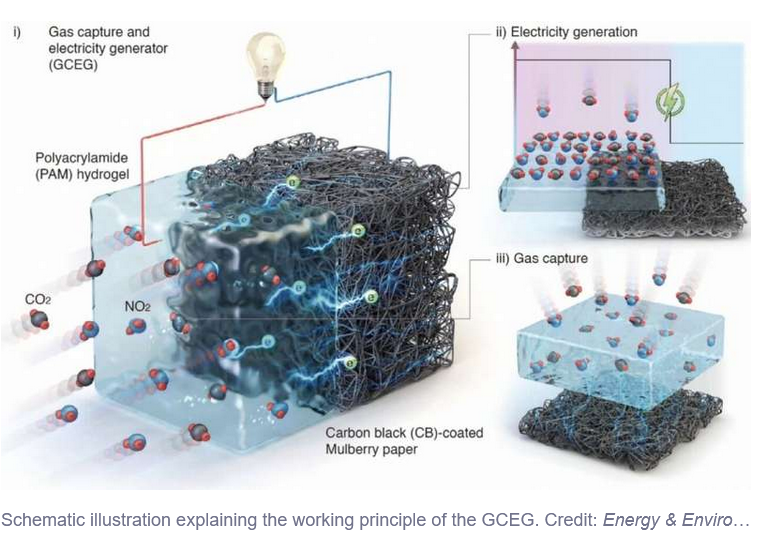
- A revolutionary new “gas battery” technology developed by a team of researchers from Sungkyunkwan University (SKKU) in South Korea has emerged that offers a dual-benefit solution for environmental protection and energy production.
- This innovative system is designed to simultaneously clean the atmosphere and generate electricity by capturing harmful greenhouse gases and pollutants.
- How it Works
- Traditional batteries store energy using solid or liquid chemicals. In contrast, this “gas battery” utilizes common air pollutants—specifically carbon dioxide (CO₂) and nitrogen oxides (NOₓ)—as active components for its chemical reactions.
- As these gases pass through the system, a specialized electrochemical process converts them into less harmful substances.
- During this conversion, the chemical energy stored in the pollutant molecules is released as usable electrical power. Essentially, the device acts like a filter that pays for itself by contributing electricity back to the grid.
- Key Benefits
- Air Purification: It directly removes nitrogen oxides NOₓ (a major component of smog) and CO₂ from industrial exhaust or ambient air.
- Sustainable Energy: It provides a way to generate power without burning new fossil fuels, using “waste” gases as the fuel source.
- Efficiency: The system is designed to operate at room temperature, making it more energy-efficient and scalable for urban environments or factory smokestacks.
- By turning harmful emissions into a resource rather than a waste product, this technology represents a significant step toward a circular economy where pollution is repurposed to meet the world’s growing energy demands.

Story 2: Humanoid robot takes first steps on construction site
Source: Construction Management Story by Mark Glover
Link: https://constructionmanagement.co.uk/humanoid-robot-takes-first-steps-on-construction-site/
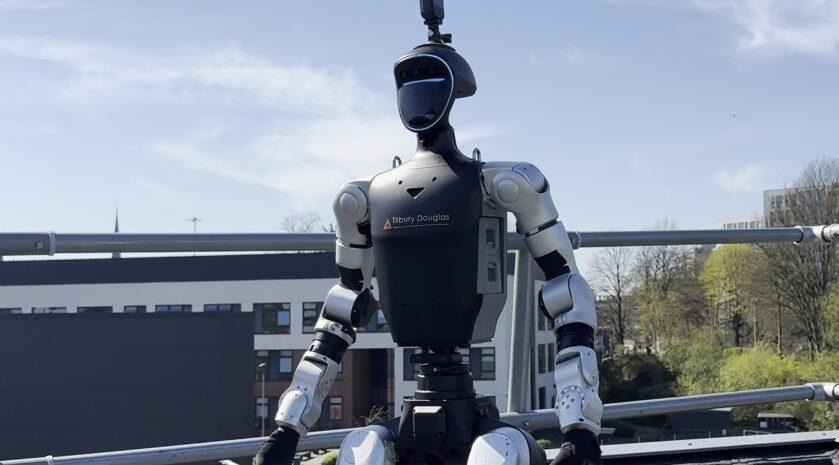
- Construction firm Tilbury Douglas is the first major UK builder to use a humanoid robot—named Douglas—on an active job site.
- Douglas does not perform physical labor; instead, it handles data collection and administrative tasks.
- What the robot does:
- Navigates [and maps] the site autonomously using LiDAR and 360° cameras.
- Captures daily 360° imagery from the exact same coordinates.
- Feeds data into health and safety workflows.
- Performs laser scanning to create detailed “point cloud” models that can detect defects humans may miss.
- Efficiency and workforce impact – Automating these tasks saves the site team roughly 40 hours of administrative work per month.
- Frees human workers to focus on technical construction tasks rather than paperwork.
- Supports the industry during a period of significant skills shortages.
- Technology background
- Douglas is developed by Unitree, a major player in the humanoid robotics market.
- The robot has already completed a 10-week trial demonstrating its value.
- Broader significance – Tilbury Douglas sees this as a key step in its digital transformation.
- The trial shows how emerging robotics can improve operational performance, safety monitoring, and workforce efficiency.

Story 3: AI-controlled morphing wings take flight as DLR tests aircraft that reshape themselves mid-air
Source: Aerospace Global News Story by Jay Menon
Link: https://aerospaceglobalnews.com/news/dlr-ai-controlled-morphing-wings-aircraft/
Be sure to check out the video embedded in thearticle – amazing stuff!


- The German Aerospace Center (DLR) has successfully flight-tested a groundbreaking “shapeshifting” aircraft wing that uses artificial intelligence to optimize its performance in real-time.
- This project, known as morphAIR, aims to replace traditional mechanical flaps and ailerons with a seamless, flexible wing structure.
- At the heart of this innovation is the Hyperelastic Trailing Edge Morphing (HyTEM) system.
- Unlike conventional wings that use hinged flaps—which create aerodynamic gaps and turbulence, the Hyperelastic Trailing Edge Morphing wing deforms smoothly. It utilizes ten small actuators distributed along the wingspan to adjust the wing’s profile continuously.
- This seamless design significantly reduces profile drag and allows for precise control over lift.
- The Brain: Adaptive AI – Because managing multiple distributed actuators is complex, the DLR developed an AI-assisted flight control system. This adaptive algorithm “senses” the airflow and compares actual flight behavior against its trained models.
- Self-Learning: If the system detects deviations caused by gusts or turbulence, it updates its internal model in real-time.
- Fault Tolerance: The AI is trained to handle emergencies. If a section of the wing is damaged or an actuator fails, the algorithm automatically redistributes control to the remaining functional parts to maintain stability.
- Why It Matters – Tested on the PROTEUS uncrewed aircraft, this technology promises to make future aviation more efficient, quieter, and safer. By eliminating gaps and optimizing shape for every stage of flight, aircraft can significantly reduce fuel consumption and emissions, marking a major step toward sustainable aviation. Additional scalability tests are planned for 2026.

Story 4: Scientists invent artificial neurons that ‘talk’ to real brain cells, paving way to better brain implants
Source: LiveScience.com Story by Marianne Guenot
See research paper here: https://www.nature.com/articles/s41565-026-02149-6.epdf
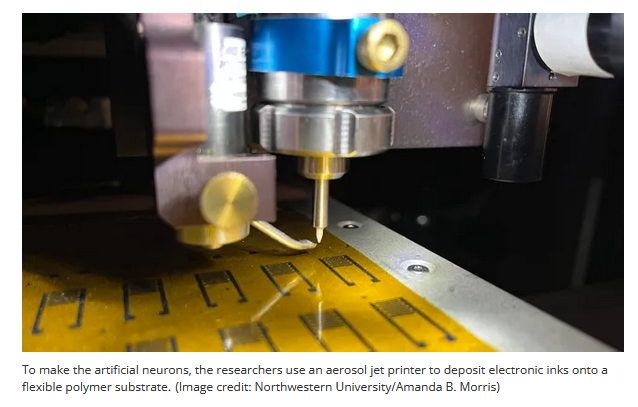
- Northwestern University engineers have achieved a breakthrough in bioelectronics by creating “printed” artificial neurons that can communicate directly with living brain cells. This innovation marks a significant step toward seamless brain-machine interfaces.
- The Core Innovation
- Historically, artificial neurons have been too rigid, too power-hungry, or produced signals too simplistic for biological cells to recognize. The Northwestern team overcame this by using electronic inks made from graphene and molybdenum disulfide.
- Unlike traditional silicon transistors that act as simple on/off switches, these printed neurons are dynamic. By leveraging “imperfections” in the material’s polymer, the researchers created a device that generates complex electrical patterns—including single spikes and continuous bursts—that perfectly mimic the “language” of the human nervous system.
- Key Breakthroughs
- Biological Compatibility: In lab tests, the artificial neurons were connected to slices of a mouse cerebellum. The living brain cells responded to the artificial electrical spikes as if they were coming from another biological neuron.
- Low-Cost & Flexible: These neurons are produced using aerosol jet printing, a process that is inexpensive, generates little waste, and allows the electronics to be printed on soft, flexible surfaces that match the texture of brain tissue.
- Energy Efficiency: The human brain is exponentially more efficient than modern AI hardware. By mimicking the brain’s structure, this technology could lead to computers that process massive datasets without the immense power and cooling requirements of current data centers.
- MEDICAL Future Impact – This “plug-and-play” compatibility with the nervous system opens the door to advanced neuroprosthetics.
- Future applications could include higher-fidelity cochlear implants, visual prosthetics that restore sight, and brain implants that allow paralyzed individuals to control robotic limbs with the same precision as natural movement.

Honorable Mentions
Story: The next big thing in sustainable construction: Iron-fortified wood?
Source: Anthropocene Magazine

- Researchers from Florida Atlantic University, the University of Miami, and Oak Ridge National Laboratory used ferrihydrite, a naturally occurring iron oxide mineral, to strengthen the cell walls of red oak and other ring-porous hardwoods like cherry and walnut
- Process: Ferric nitrate and potassium hydroxide were mixed to form ferrihydrite, which was then drawn into the wood’s cell walls via a vacuum-based method
- Scale: The iron was introduced at the nanoscale, acting like microscopic scaffolding to fill weak points in the wood’s porous structure
- Effect: Stiffness increased by 260% and hardness by 127%, with only a minimal weight gain
- Environmental impact: Cement production emits about 2.3 billion metric tons of CO₂ annually, and steel production emits roughly 2.6 billion metric tons
- Wood’s potential: Wood is renewable, biodegradable, and has a much lower carbon footprint than steel or concrete, but its natural strength limits have historically restricted it to smaller structures
- Performance: The iron-infused wood maintains flexibility while gaining the stiffness and durability needed for load-bearing applications such as multi-story buildings, bridges, and even furniture
- Applications
- Buildings: Potential to replace steel in high-rise mass timber structures, reducing reliance on fossil-fuel-intensive materials
- Infrastructure: Bridges, flooring, and other load-bearing elements.
- Furniture & interiors: Stronger, lighter, and more sustainable wood products.
- Advantages Over Traditional Materials
- Lower carbon footprint than steel and concrete.
- Renewable resource with abundant global supply (181.5 billion tons produced annually)
- Cost-effective chemical process using safe, naturally occurring minerals
- Lightweight yet strong, making it easier to transport and handle.
- Challenges & Next Steps
- Scalability: Moving from lab-scale oak samples to large-scale, consistent production.
- Cost analysis: Comparing lifecycle costs with steel and concrete.
- Regulatory approval: Meeting building codes for structural use.
- Long-term durability testing in varied climates.
- If scaled successfully, iron-fortified wood could be a major step toward net-zero construction, offering a renewable, high-strength alternative that aligns with climate goals while expanding the role of wood in modern infrastructure.
////////////////////////////////////////////////////////////////////////////////////////////////////////////////////////////////////////////
Story: Scientists Discover an Amazing New Use for Your Leftover Coffee Grounds [insulation material made from waste coffee grounds]
Source: ScienceAlert.com Story by Michael Irving
Link: https://www.sciencealert.com/scientists-discover-an-amazing-new-use-for-your-leftover-coffee-grounds

- Coffee grounds can be turned into effective building insulation – Researchers at Jeonbuk National University (South Korea) developed an insulation material made from waste coffee grounds.
Its thermal performance matches common commercial insulation products.
- The material is far more sustainable
- Made from renewable waste, not fossil-fuel-derived materials
- Biodegradable at end of life – Helps reduce the environmental impact of both insulation production and coffee-ground disposal
- Coffee waste is a massive global problem
- The world consumes ~2.25 billion cups of coffee per day
- Most grounds are landfilled or incinerated, contributing to pollution
- Coffee grounds are becoming a versatile upcycling resource
- Other recent research has explored using spent grounds for:
- Strengthening concrete and paving materials
- Removing herbicides from the environment
- Extracting new drug compounds
- Other recent research has explored using spent grounds for:
- The new study tested thermal performance directly – The team placed their coffee-based material under a solar cell to measure heat transfer, confirming its insulating capability.
////////////////////////////////////////////////////////////////////////////////////////////////////////////////////////////////////////////
Story: Implantable ‘living pharmacy’ produces multiple drugs inside the body – New system generates oxygen, sustaining drug-producing cells for weeks
Source: Northwestern University Story by Amanda Morris
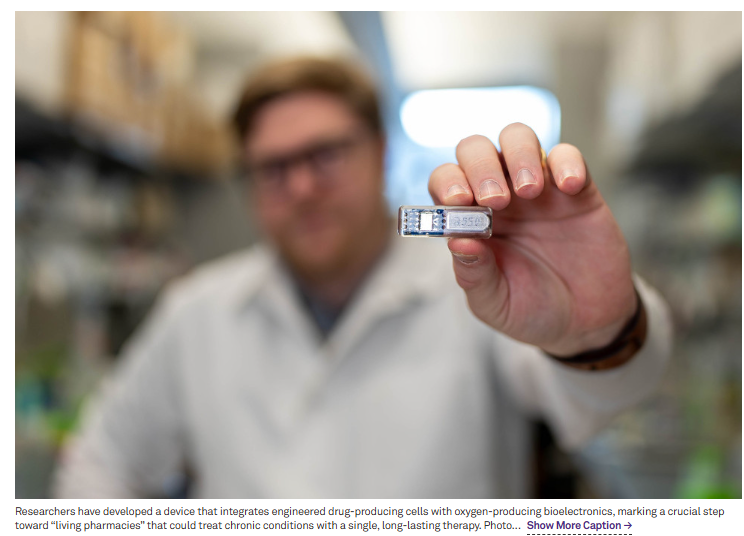
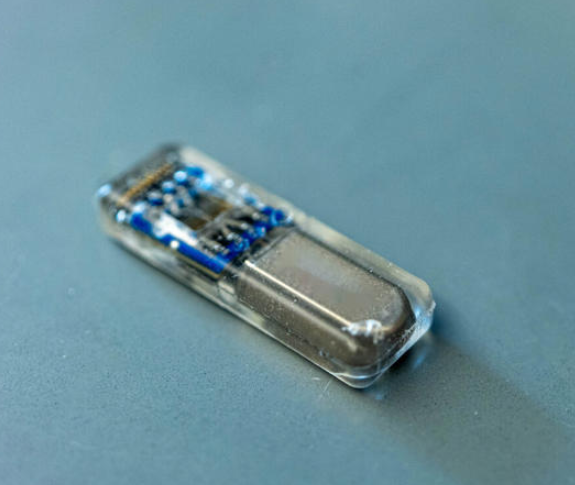
- A multi-institutional team of scientists, co-led by Northwestern University, has taken a crucial step toward implantable “living pharmacies” — tiny devices containing engineered cells that continuously produce medicines inside the body.
- In a new study, the team engineered cells to simultaneously produce three different biologics — an anti-HIV antibody, a GLP-1-like peptide used to treat type 2 diabetes and leptin, a hormone that regulates appetite and metabolism. When implanted under the skin of a small animal model, the device kept drug-producing cells alive and stably delivered all three therapies at once.
- Called HOBIT (short for hybrid oxygenation bioelectronics system for implanted therapy), the new system integrates the engineered cells with oxygen-producing bioelectronics. Roughly the size of a folded stick of gum, the design shields cells from the body’s immune system while also providing cells with oxygen and nutrients to keep them alive and producing biologic drugs for several weeks.
- With more work, living pharmacies hold the potential to treat chronic conditions with a single, long-lasting therapy — bypassing the need for patients to carry, inject or remember to take medications.
////////////////////////////////////////////////////////////////////////////////////////////////////////////////////////////////////////////
Story: Sound Waves Could Be Used to Remotely Reprogram Material Stiffness, Study Shows
Source: UC San Diego Website Story by Liezel Labios
See video here: https://www.youtube.com/watch?v=SAIvkSN_N1c
- Researchers at the University of California San Diego, in collaboration with the University of Michigan and CNRS, have discovered a groundbreaking way to remotely change a material’s stiffness using sound waves.
- Described as an “acoustic tractor beam,” this method allows scientists to reprogram how a material feels—switching it from soft to stiff—without any physical contact.
- The secret lies in “mechanical kinks,” which are localized structural boundaries within a material. In most materials, these kinks are stuck in place by energy barriers. However, the team designed a special “topological metamaterial” where moving these kinks requires no energy. This unique structure allows sound waves to transfer momentum to the kink, nudging it predictably across the material.
- In their experiments, the researchers used a model made of rotating disks and springs. By sending specific frequencies of sound, they could pull the kink toward the sound source. A short pulse might move the kink just a few inches, while a continuous vibration could flip the stiffness profile of the entire structure.
- While currently a “toy model,” this technology has significant future potential. It could lead to the development of:
- Adaptive Protective Gear: Helmets or armor that harden only upon impact.
- Soft Robotics: Robots with muscles that change flexibility on demand.
- Medical Implants: Devices that adjust their stiffness to better integrate with human tissue.
- This discovery marks the first time sound has been used to reliably and remotely control a material’s internal mechanical state.