


Show Notes 5 December 2025
Story 1: Startup develops incredible tech to pull water from unexpected source: ‘This is just the beginning of what’s possible’
Source: The Cool Down on MSN Story by Elija McKee
See also: https://www.wegrowwater.com/project/los-banos-california-usa
Video here: https://www.youtube.com/watch?v=1UwhwyhV2s0
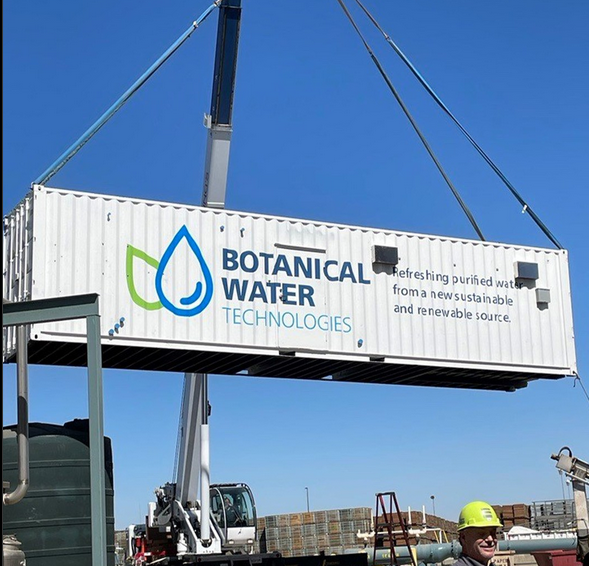
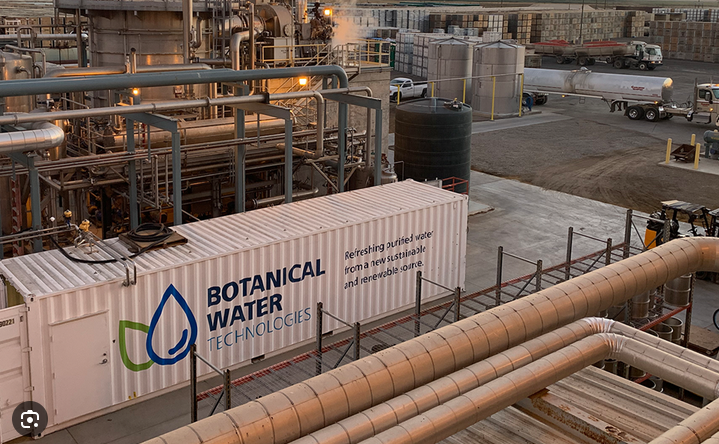
- Could the water inside crops help save resources during droughts?
- It may sound like wishful thinking, but not to agricultural start-up Botanical Water Technologies. The company has partnered with Ingomar Packing Company, a California-based industrial tomato processor, to help the state’s San Joaquin Valley survive drought conditions.
- Most fruits and vegetables are made up of high percentages of water. That includes tomatoes, which are 95% H2O. Yet when they are turned into paste or diced up for canning, a significant amount of that water is lost.
- That’s where Botanical Water Technologies saw an opportunity and developed what it calls Water Harvest Units. This technology can collect excess steam and wastewater during crop processing, which can then be purified and safely added back to the water supply.
- Side note – Botanical Water Technologies’ harvesting units are designed as containerized, modular systems that can be integrated directly into food processing plants. They are essentially self-contained units housed in shipping container–style enclosures, which makes them portable and relatively easy to “drop in” alongside existing industrial infrastructure.
- Purification Process: The harvested water is filtered and purified using Botanical Water Technologies’ proprietary system. The process removes sugars, fibers, and impurities, leaving pure, plant-sourced water.
- This recapture system creates “the world’s first plant-sourced pure water,” according to the company’s website.
- Botanical Water Technologies’ Water Harvesting Units can produce up to 100,000 gallons of potable water per day during harvest season.
- Amazing results – Ingomar Packing Company in California partnered with Botanical Water Technologies to harvest 1 billion liters of drinking water in 90 days from tomatoes, helping drought-stricken regions.

Story 2: PowerLattice attracts investment from ex-Intel CEO Pat Gelsinger for its power-saving chiplet
Source: TechCrunch.com Story by Marina Temkin
See also: https://www.powerlatticeinc.com/
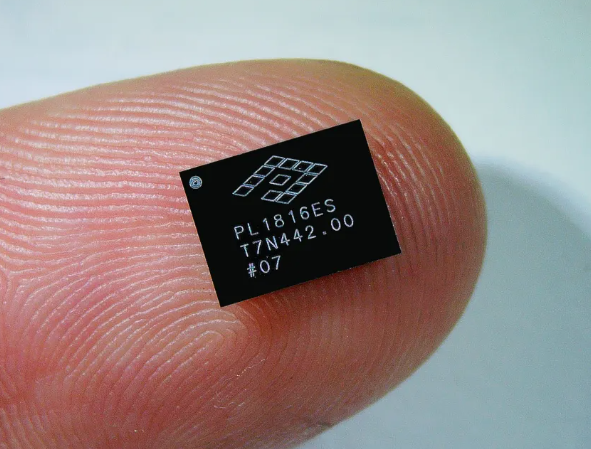
- As AI workloads grow, data centers are hitting limits on compute, cooling, and electricity. Energy efficiency has become a top priority for chipmakers.
- PowerLattice, a semiconductor startup founded in 2023 by engineers from Qualcomm, NUVIA, and Intel, has secured a $25 million Series A round led by Playground Global and Celesta Capital, bringing total funding to $31 million.
- The company claims its new power-delivery chiplet can reduce computer chip energy consumption by over 50%, a breakthrough aimed at tackling the massive power demands of AI data centers.
- How the Chiplet works:
- In most chips today, the power supply sits inches away from the processor, often on the motherboard. Electricity travels through long paths, losing efficiency and generating heat.
- PowerLattice’s chiplet places the power delivery system hundreds of micrometers away from the CPU/GPU cores — essentially right next to them.
- Remember – A micrometer (µm) is a unit of length equal to one millionth of a meter
- The results:
- Cuts down resistance and energy loss.
- Reduces conversion inefficiencies.
- Enables faster, more stable voltage regulation.
- Achieves over 50% reduction in power consumption compared to conventional designs.
- Side note – more details on how it works:
On-Package Power Delivery -Traditional systems regulate voltage several inches away from the processor die, causing resistive losses across the PCB. PowerLattice instead places its power delivery chiplet just micrometers from the GPU or AI accelerator die.
Miniaturized Magnetic Inductors – The chiplet integrates proprietary on-die magnetic inductors that shrink the size of power regulation components while maintaining efficiency.
Vertical Packaging – A stacked, vertical design unifies inductors, control circuits, and a programmable software layer into one compact silicon die. This reduces conduction losses and heat dissipation.
Programmable Control Layer – The chiplet includes a software-programmable control system that adapts to different SoC power topologies, making it highly configurable and scalable.
- With GPUs now consuming up to 2 kilowatts each, PowerLattice’s technology could help prevent data centers from tripling U.S. electricity consumption by 2028.

Story 3: Space-based US solar firm breaks world record for beaming wireless electricity
Source: Interesting Engineering Story by Chris Young
Link: https://interestingengineering.com/space/space-firm-breaks-record-for-wireless-electricity
See also: See also: https://www.star-catcer.com/
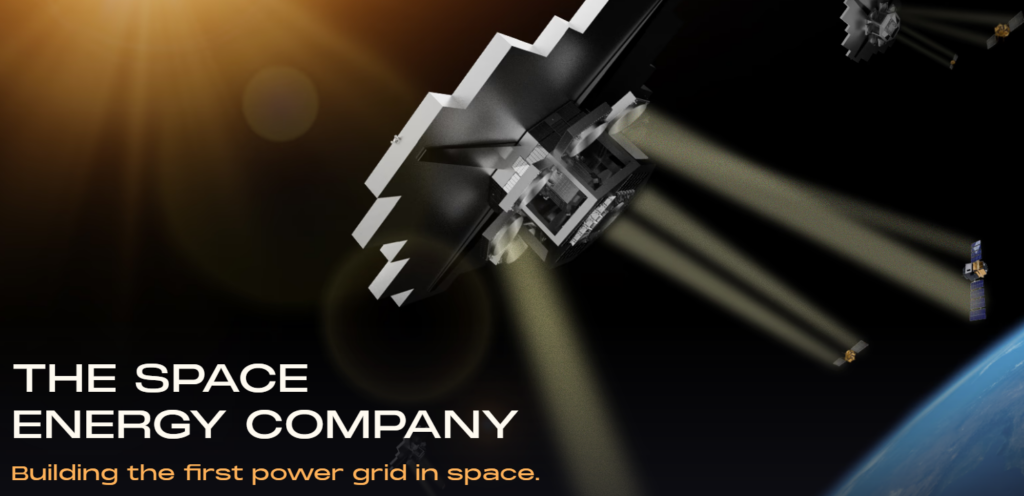
- U.S.-based Star Catcher Industries has set a new world record with a test at NASA’s Kennedy Space Center by beaming 1.1 kW of wireless electricity, surpassing DARPA’s June 2025 record of 800 W.
- Reality check – the technology outlined in this article is not literally beaming electricity. What’s happening is the conversion of solar energy into a concentrated beam of light (an optical laser), which is then transmitted wirelessly to solar panels that reconvert the light back into usable electrical power.
- Reminder – Back on our July 11 Show we talked about “DARPA smashes wireless power record, beaming energy more than 5 miles away — and uses it to make popcorn”
- The idea behind Star Catcher’s system goes back to 1968, when Peter Glaser proposed an idea involving placing solar arrays in orbit and beaming energy to Earth via microwaves or lasers.
- Obvious advantages include:
- Continuous 24/7 power (no weather or night interruptions).
- Satellites can be positioned to always face the Sun.
- How it works:
- Star Catcher’s Technology uses off-the-shelf solar panels and an optical multi-spectrum laser instead of microwaves. The system transmits concentrated light beams to solar arrays, enabling them to generate energy.
- Side note – An optical multi‑spectrum laser is a laser system capable of producing or combining light across multiple wavelengths (spectral bands), rather than being limited to a single narrow wavelength.
- Star Catcher’s Network collects sunlight in orbit, refines it into optimized wavelengths, and transmits it wirelessly.
- Initial applications include:
- “Supercharging” satellites in orbit.
- Powering orbital data centers and manufacturing satellites.
- Long-term goal: beaming power down to Earth.
- Next step with be an orbital demonstration planned for 2026.
- Star Catcher’s breakthrough marks a major step toward practical space-based solar power, with potential to revolutionize satellite operations and eventually deliver limitless clean energy to Earth.

Story 4: Artificial cartilage mimics natural flexibility with adjustable structure
Source: Phys.org Story by Robert Egan
Link: https://phys.org/news/2025-11-artificial-cartilage-mimics-natural-flexibility.html
See research paper here: https://pubs.acs.org/doi/full/10.1021/acsbiomaterials.5c01183
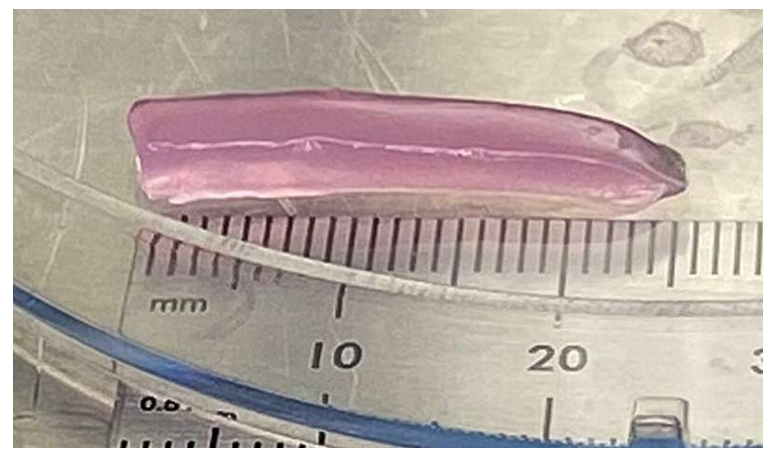
- Washington State University researchers, in collaboration with Cornell University, have developed a new method to grow artificial cartilage that mimics the natural tri-layered structure of human cartilage.
- Natural cartilage structure:
- Thin (2–4 mm) and composed of three layers:
- Bottom layer: stiff, vertical fibers attached to bone.
- Middle layer: absorbs impact.
- Top layer: smooth, lubricating, and flexible.
- The challenge of cartilage repair:
- Cartilage lacks blood vessels, so it cannot heal itself.
- Current treatments include pain relievers or costly joint replacement surgeries (≈$140 billion annually in the U.S.).
- Lab-grown cartilage has been too soft, limiting its use to small repairs.
- In their proof-of-concept work, the Washington State University researchers developed a bioreactor that uses stem cells from bone marrow to grow cartilage with properties that vary with position.
- The researchers used surface shear, which is a physical force, to encourage the stem cells to grow in certain ways.
- As fluid moves through the tapered bioreactor, the amount of surface shear changes, which encourages the cells to produce cartilage that is more flexible at one location and stiffer at another.
- Side note – A bioreactor is a controlled vessel or system that provides an optimal environment for biological processes, such as growing cells, tissues, or microorganisms, or carrying out biochemical reactions.
- Future applications – Beyond cartilage, the approach could be adapted for ligaments, cardiopulmonary tissue, renal [kidney], liver, or neuronal tissue engineering.
- Summary: This breakthrough combines biomechanical forces and genetic feedback to grow cartilage that closely resembles natural joint tissue, potentially reducing reliance on invasive surgeries and opening doors for broader tissue engineering applications.

Honorable Mentions
Story: Russian airline introduces a humanoid robot cabin crew on flights
Source: Aerospace Global News Story by Marisa Garcia
Link: https://aerospaceglobalnews.com/news/pobeda-airlines-robot-flight-attendant/
See video here: https://www.youtube.com/watch?v=ppgn9wKGeGc

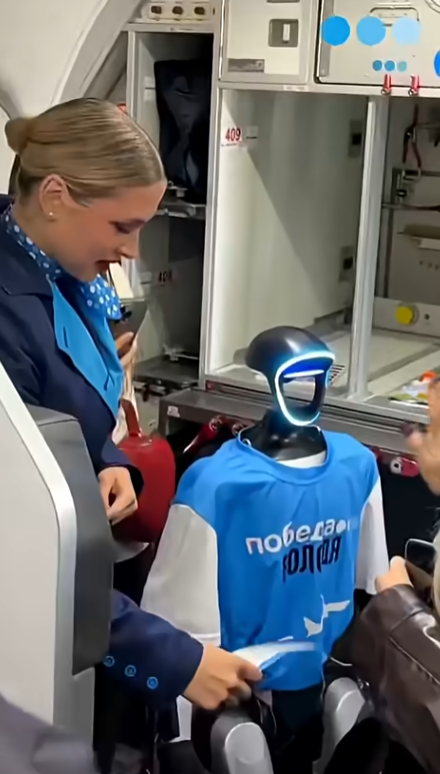
- Pobeda Airlines, Russia’s low-cost carrier, recently tested a humanoid robot named Volodya as a cabin crew assistant on a Ulyanovsk–Moscow flight. The robot delivered the pre-flight safety briefing and greeted passengers, but human attendants still handled all safety-critical and service tasks. The trial was more of a promotional showcase than a practical replacement for crew.
-
Key Highlights
- Robot debut: Volodya, dressed in an airline t-shirt, performed scripted movements, announcements, and passenger greetings.
- Human crew role: Flight attendants remained fully responsible for cabin safety, passenger management, and food/beverage service.
- Purpose: The demonstration was intended to highlight Pobeda’s tech-forward image rather than reduce staff.
- Comparison: Qatar Airways previously introduced Sama, an AI-powered digital human “flight attendant,” but she exists only online as a virtual influencer.
- Challenges:
- Aviation regulations mandate minimum human crew numbers.
- Narrow aisles, turbulence, and emergency scenarios make autonomous robots impractical for real safety duties.
- Certification pathways for robotic devices in cabins are not yet defined.
- Future possibilities: While humanoid robots remain experimental, automation could expand in areas like smart galley carts, trash compaction, and AI-enhanced monitoring.
- Volodya’s flight was a symbolic step toward robotics in aviation, showing that robots can be integrated in limited, promotional roles. However, regulatory, technical, and safety barriers mean human flight attendants remain indispensable for the foreseeable future.
////////////////////////////////////////////////////////////////////////////////////////////////////////////////////////////////////////////
Story: A New Generation? Could Rolls-Royce’s Hydrogen Engine Concept Redefine Jet Power?
Source: Simple Flying Story by Paul Hartley
Link: https://simpleflying.com/rolls-royce-hydrogen-engine-concept-redefine-jet-power/
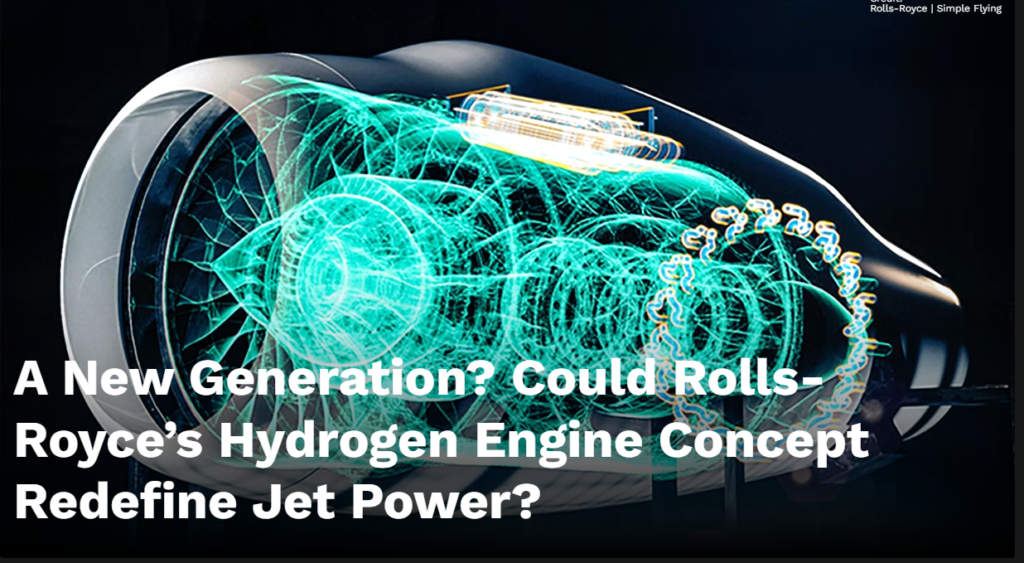
- Rolls-Royce’s hydrogen engine concept shows real promise for zero-carbon aviation, but faces major hurdles in infrastructure, aircraft design, and scalability.
- Key Points from the Article
- Decarbonization pressure: Aviation must cut emissions by 2050. Sustainable Aviation Fuel (SAF) is a short-term option, but hydrogen offers true zero-carbon potential at the point of use.
- Hydrogen’s advantages:
- Produces only water vapor when burned, eliminating CO₂.
- Cuts nitrogen oxides (NOx) by up to 90% and removes particulate matter.
- Could reduce aviation’s climate impact by 30–50%, potentially up to 75–90% with fuel cell tech.
- Has nearly 3× the energy per kilogram compared to kerosene.
- Groundbreaking tests:
- In 2022, Rolls-Royce and easyJet ran a converted AE 2100-A engine on 100% green hydrogen, marking the first modern aero engine hydrogen test.
- Later tests with a Pearl 700 engine proved hydrogen could deliver maximum takeoff thrust, solving flame-control challenges.
- Infrastructure challenges:
- Airports lack hydrogen production, storage, and refueling systems.
- Green hydrogen is costly and energy-intensive to produce.
- Safety standards and certification processes could take a decade or more.
- Aircraft design hurdles:
- Hydrogen tanks must be cryogenic (-253°C), bulky, and heavily insulated.
- Lower energy density by volume means reduced passenger capacity or range.
- Risks include material embrittlement and leakage.
- Hydrogen combustion still produces NOx and more contrails, raising climate concerns.
- Future outlook:
- Hydrogen likely to debut in regional aircraft (30–40 seats) by the mid-2030s.
- SAFs remain essential for long-haul fleets in the near term.
- Rolls-Royce’s work shifts the conversation from if hydrogen can power aviation to how it can be integrated.
////////////////////////////////////////////////////////////////////////////////////////////////////////////////////////////////////////////
Story: Scientists Just Unveiled a Lunar Robot So Smart It Might Replace Astronauts
Source: Dailygalaxy.com Story by Lydia Amazouz
Link: https://dailygalaxy.com/2025/11/scientists-just-unveiled-a-lunar-robot/
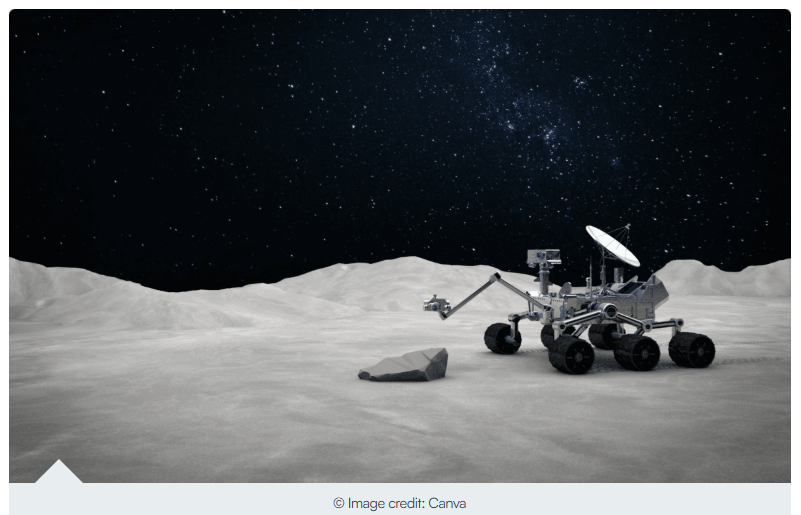
- Japanese researchers at Tohoku University, working with NASA and JAXA, have unveiled a lightweight lunar robot equipped with a spiral digging arm that could revolutionize Moon mining. The prototype is highly energy-efficient, avoids the pitfalls of low gravity, and may pave the way for autonomous lunar industry by mid-century.
-
Innovation:
- The robot uses a spiral bucket drum to scoop lunar regolith continuously without spilling.
- This design solves the challenge of excavation in low gravity, where heavy machinery would lose traction.
-
Performance:
- Built from PLA and carbon fiber, the prototype can haul 20+ liters of material at once.
- Tests showed excavation rates of 800 kg per hour with minimal energy use (just 0.022 Wh per kg).
- When paired with the Dragon rover chassis, it matched NASA’s benchmark RASSOR robot in mission simulations.
-
Efficiency & Scalability:
- The modular design allows excavation and transport roles to be split among multiple robots.
- Future upgrades will include better sensors, environmental resilience, and adaptive controls for extreme lunar conditions.
-
Strategic Context:
- Part of JAXA’s Moonshot Program, which envisions semi-autonomous lunar support robots by 2050.
- The robot could enable in-situ resource utilization (ISRU)—mining lunar soil for water, metals, and rocket fuel.
- This technology is seen as a cornerstone for sustainable lunar bases and off-world industry.
- Implications:
- Machines like this could replace or supplement astronauts in heavy-duty tasks.
- They mark a step toward true lunar industry, reducing reliance on Earth resupply and enabling long-term human presence.
- In short, this lunar robot represents a major leap in space mining technology, combining clever engineering with efficiency to make Moon industry more practical than ever.
////////////////////////////////////////////////////////////////////////////////////////////////////////////////////////////////////////////
Story: The 19 best Christmas gifts for science lovers (and nerds)
Source: NewScientist.com
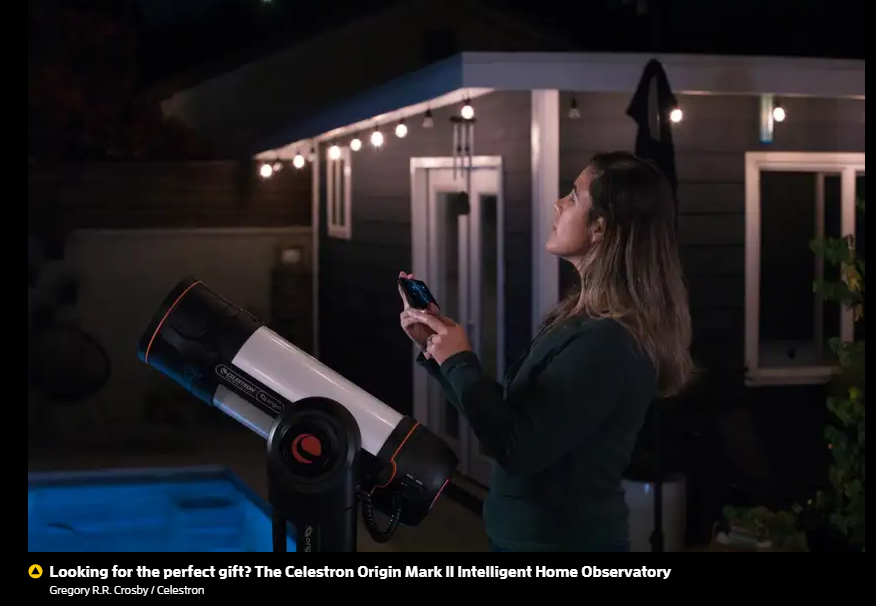
- The New Scientist article is a holiday gift guide featuring 19 creative, science-inspired presents ranging from high-tech gadgets to quirky collectibles, all curated for science lovers and self-proclaimed nerds.
- Key Highlights from the Gift Guide
- Astronomy & Space Exploration
- The Celestron Origin Mark II Intelligent Home Observatory lets enthusiasts explore the night sky with advanced imaging technology.
- Other space-themed items include star maps and cosmic-inspired decorations.
- Hands-On Science Tools
- Microscopes and geology kits (like geodes) encourage interactive exploration.
- DIY science kits provide fun experiments for curious minds.
- Books & Learning
- Carefully chosen science books covering topics from physics to biology make thoughtful gifts for readers.
- Puzzle books and brain teasers add an intellectual twist to holiday downtime.
- Quirky Collectibles & Decor
- Items like molecule-shaped jewelry, science-themed mugs, and geeky ornaments bring science flair into everyday life.
- Fossils and natural specimens appeal to collectors with a love of Earth’s history.
- Tech & Gadgets
- Smart devices and innovative tools designed to blend science with modern living.
- Gadgets that highlight cutting-edge technology, appealing to both hobbyists and professionals.