


Show Notes 16 January 2026
Story 1: Very Low Earth Orbit Satellites Could be the Next Frontier in Satellite Technology
Source: ExtremeTech.com Story by Jon Martindale
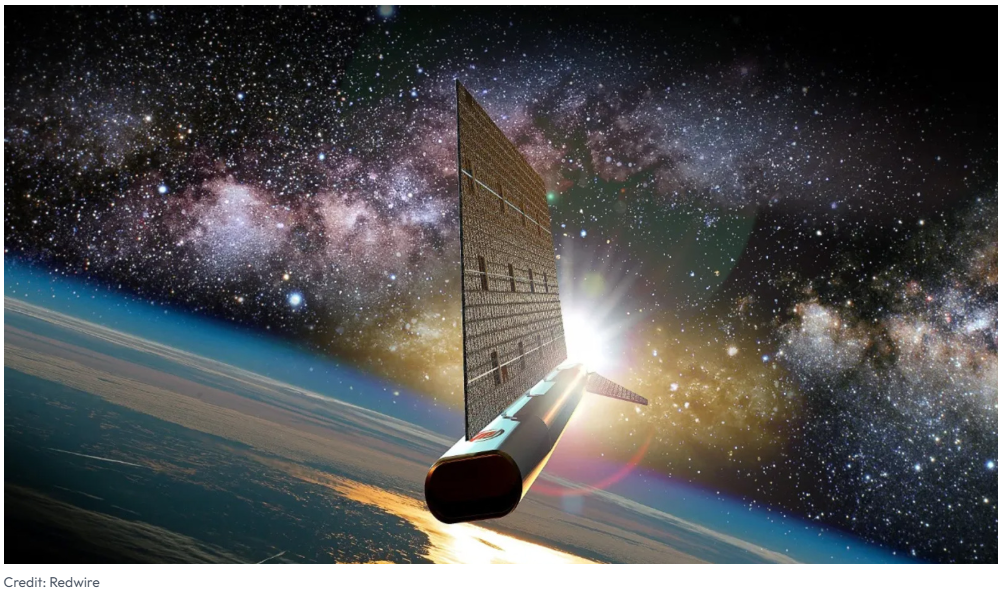
- Very-low-Earth orbit refers to satellites flying at altitudes roughly 150–300 km [that’s about 93 to186 miles], far below traditional low-Earth orbit [about 400–1,000 km altitude – about 248 to 621 miles].
- Operating this close to Earth offers major advantages but also serious engineering challenges.
- Pros – Why Very-low-Earth orbit is of great interest:
- Extremely low latency: Signals travel shorter distances, making communication nearly as fast as fiber.
- Higher-resolution imaging: Being closer to Earth means sharper pictures with smaller, cheaper sensors.
- Lower launch costs: Less altitude = less energy required to put a satellite in orbit.
- Less space debris risk: Atmospheric drag naturally deorbits satellites quickly.
- Cons – Why Very-low-Earth orbit is hard to achieve and maintain:
- Atmospheric drag is intense: Satellites slow down and fall unless they constantly counteract drag.
- Requires new propulsion tech: Electric propulsion, air-breathing engines, or aerodynamic shaping.
- Side note – Air-breathing engines are a family of propulsion systems that use oxygen from the surrounding atmosphere—rather than carrying oxidizer onboard—to burn fuel and produce thrust. This makes them fundamentally different from rocket engines, which must carry both fuel and oxidizer.
- Materials must withstand atomic oxygen: The upper atmosphere is chemically harsh.
- Side note: Atomic oxygen refers to single oxygen atoms (O) rather than the familiar O₂ molecules we breathe. Because a lone oxygen atom is missing two electrons needed for stability, it’s extremely reactive and doesn’t last long at lower altitudes.
- Shorter satellite lifetimes: Even with propulsion, staying aloft is harder than in Low Earth Orbit.
- Why Companies Are Interested – they offer potential for:
- Ultra-fast broadband constellations
- High-precision Earth observation
- Military reconnaissance with near-real-time refresh
- Cheaper, disposable satellites that don’t clutter orbit
- A growing number of aerospace companies and research groups are exploring very low earth orbit satellites as the “next frontier” after Low Earth Orbit mega-constellations like Starlink. The field is still early, but propulsion breakthroughs and lighter satellite designs are making it increasingly viable.
- Side note – companies and research institutes include:
- China’s VLEO Programs – China is building a national VLEO constellation for communications and sensing.
- DARPA – Running Project Otter, exploring VLEO capabilities for defense missions.
- Redwire Space – Developing dedicated VLEO spacecraft platforms, including the Phantom system.
- Orion Space Solutions (Arcfield subsidiary) – Actively positioning VLEO as a transformative orbit for sensing and defense applications.
- EOI Space – Building the Stingray constellation, designed to operate around ~200 km — extremely low even for VLEO.
- Kreios Space – Developing air-breathing electric propulsion (ABEP) to counter atmospheric drag in VLEO.
- Albedo – A U.S. startup aiming for 10 cm-class imaging by flying satellites in VLEO altitudes.
- Thales Alenia Space & QinetiQ – Studying Skimsat concepts under ESA contracts for VLEO operations.
- Skeyeon – Developing the Near Earth Orbiter, designed specifically for VLEO altitudes.

Story 2: NASA, Boeing Test How to Improve Performance of Longer, Narrower Aircraft Wings
Source: NASA Story by Mark Knopp
Link: https://www.nasa.gov/aeronautics/nasa-boeing-test-aircraft-wings/
See video here: https://www.youtube.com/watch?v=TJNJfrkge9o
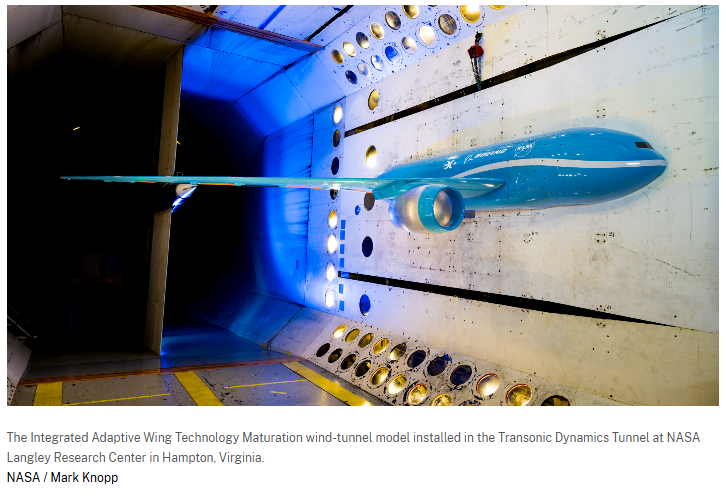

- NASA and Boeing are collaborating on a new generation of longer, thinner, more flexible aircraft wings designed to improve fuel efficiency and provide smoother flights.
- These “high-aspect-ratio wings” reduce drag but introduce new engineering challenges because they can bend more easily and are vulnerable to gust loads, maneuver loads, and a dangerous vibration phenomenon called flutter.
- To address this, NASA and Boeing built a large-scale, 13-foot wing model with 10 independently controlled surfaces along the trailing edge.
- They tested it in NASA Langley’s Transonic Dynamics Tunnel in Hampton, Virgina, one of the few facilities capable of handling such large, flexible models.
-
What the tests focused on:
- Reducing the impact of wind gusts
- Managing wing loads during turns and maneuvers
- Suppressing flutter, which can cause catastrophic wing failure
-
What they found
- The new control systems significantly reduced wing vibration during gust simulations.
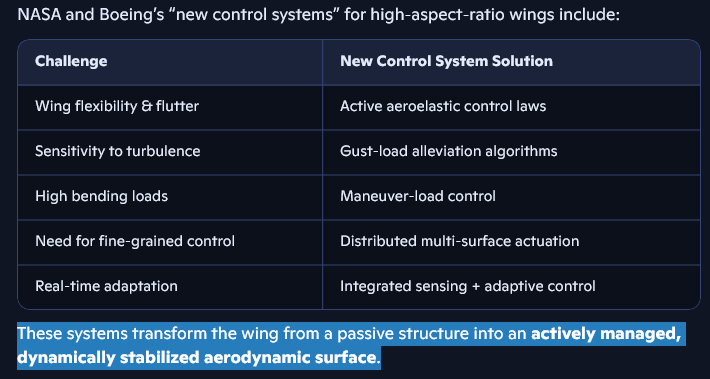
- The control system NASA and Boeing are developing for high‑aspect‑ratio wings is fully computer‑based, using embedded sensors, real‑time processors, and multiple small mechanical actuators inside the wing to continuously adjust its shape and response during flight.
- The new control systems significantly reduced wing vibration during gust simulations.
- These systems transform the wing from a passive structure into an actively managed, dynamically stabilized aerodynamic surface.
- Data from 2024 baseline tests helped refine NASA’s computational models.
- The 2025 tests showed major performance improvements using the expanded control surfaces.
-
Why it matters
- These results will help guide the design of future commercial aircraft, enabling:
- Better fuel efficiency
- Improved passenger comfort
- Safer operation of flexible, high-efficiency wings
- NASA and Boeing will now analyze the full dataset and share insights with the aviation industry to inform next-generation airliner designs.

Story 3: These Laser Beams Could Power Military Drones 5,000 Feet in the Air
Source: Gizmodo.com Story by Gayoung Lee
Link: https://gizmodo.com/these-laser-beams-could-power-military-drones-5000-feet-in-the-air-2000702020
See video here: https://www.youtube.com/watch?v=TJNJfrkge9o
- When drones run low on battery, they’ll either fly back or just drop out of the air. But a new technology might just allow the drones to recharge while in the air.
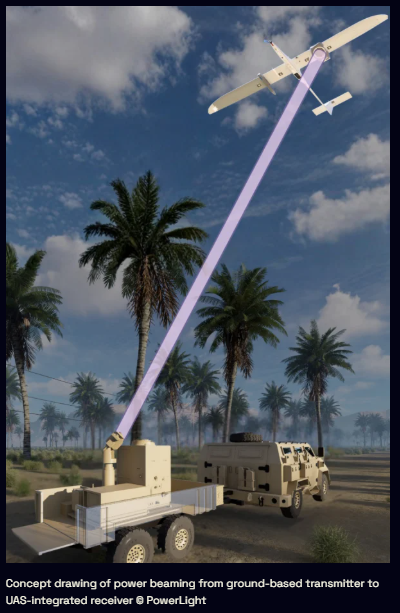
- In a recent press release, Washington-based startup PowerLight Technologies announced it had completed preliminary testing for its end-to-end laser power beaming system for Unmanned Aerial Systems.
- The project, funded by the U.S. Department of Defense, combines a high-power transmitter with a lightweight receiver to charge drones remotely.
- Installed onboard the aircraft is a receiver weighing roughly 6 pounds (2.7 kilograms) that uses laser power converters to detect lasers and convert them into electricity. An additional control module helps establish communications with a ground station.
- Side note: A laser beam becomes electricity through specialized photovoltaic (PV) cells designed to absorb laser light, very similar in spirit to how solar panels absorb sunlight — but tuned for a single, precise wavelength.
- In the most recent tests, the system successfully transmitted lasers to aircraft flying up to 5,000 feet (1,524 meters), the company said.
- The components form a “wireless power line” that optically tracks the aircraft and transmits kilowatts of energy to the battery onboard, according to PowerLight.

Story 4: Robots Smaller Than Salt Grains Can Now Think for Themselves
Source: ScienceBlog.com
Link: https://scienceblog.com/robots-smaller-than-salt-grains-can-now-think-for-themselves/
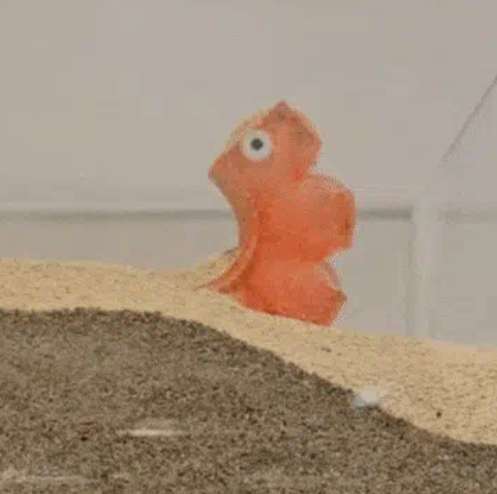
- Researchers at the University of Pennsylvania and the University of Michigan have created the world’s smallest fully programmable, autonomous robots — each smaller than a grain of salt and capable of sensing, decision-making, and self-propelled movement.
- Potential applications are medical related:
- Monitoring individual cells
- Performing microscopic assembly
- Environmental sensing
- Medical diagnostics (future versions)
- What these microrobots are:
- Size: ~200 × 300 × 50 micrometers [remember a micrometer is one millionth of a meter]
- Components: Onboard computer, sensors, solar power, and propulsion system
- Scale: Comparable to single-celled organisms
- Lifespan: Can operate for months under LED light
- How They Move
- At microscopic scales, normal mechanics fail — water behaves like syrup, and motors are useless.
- Side note – their current locomotion system is designed specifically for liquid environments
- The Penn team solved this challenge by using electrokinetic propulsion:
- Robots generate tiny electric fields
- These push ions in the surrounding fluid
- The ions drag water with them
- Result: Robots “swim” at one body length per second
- No moving parts → extremely durable
- How They Think
- The Michigan team designed an ultra-low-power computer that runs on just 75 nanowatts from tiny solar cells.
- To fit computation into such a small space:
- They built radically compressed instruction sets
- Programs can perform complex tasks with single commands
- Robots have a few hundred bits of memory
- They can sense temperature with 0.33°C resolution
- They respond by changing movement — even “dancing” to transmit data
- Programming & Coordination
- Robots can be programmed using light pulses
- Each robot can have a unique address
- Multiple robots can operate together with different roles
-
Why This Matters – This breakthrough solves a decades-old challenge: making true autonomous robots below 1 mm.
- Researchers estimate that mass production could bring the cost down to about one cent per robot, opening the door to widespread real-world use.

Honorable Mentions
Story: New 3D chips could make electronics faster and more energy-efficient
Source: MIT News Story by Adam Zewe
Link: https://news.mit.edu/2025/new-3d-chips-could-make-electronics-faster-and-more-energy-efficient-0618
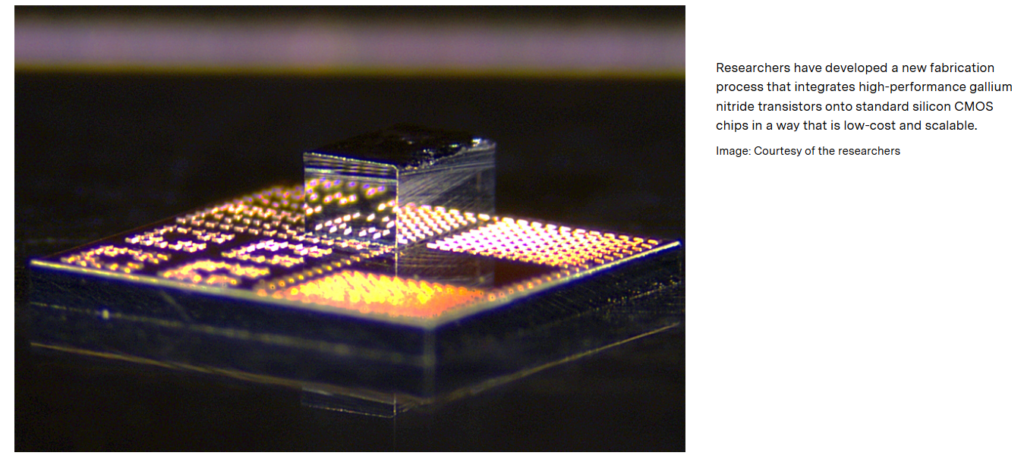
- Shrinking chip nodes is getting harder and more expensive, so engineers are exploring new ways to increase transistor density.
- MIT researchers developed a technique to add an extra layer of microscopic switches (transistors) on top of an already-finished chip.
- This approach is similar in spirit to chip stacking, but instead of stacking whole dies, it adds a new functional layer directly where power and signal lines normally sit.
- The method could allow more transistors per chip without needing smaller process nodes, potentially extending Moore’s Law in a new direction.
////////////////////////////////////////////////////////////////////////////////////////////////////////////////////////////////////////////
Story: Robot achieves 0.053 mm micro-precision in the world’s first robotic cataract surgery
Source: Interesting Engineering Story by Neetika Walter
Link: https://interestingengineering.com/health/ucla-robotic-cataract-surgery-breakthrough
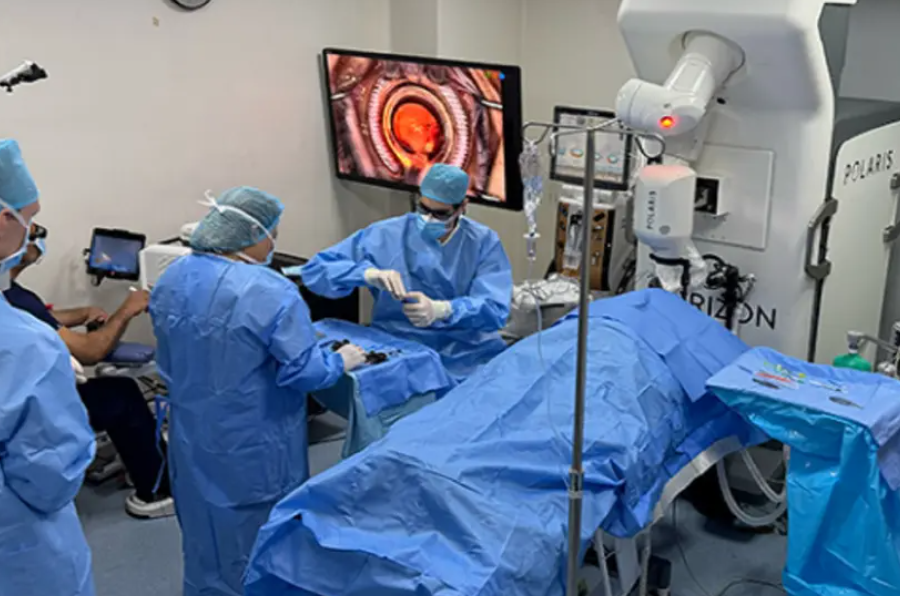
- A UCLA-developed robotic system has successfully performed the world’s first human robotic cataract surgeries, marking a major leap in precision eye care.
- Horizon Surgical Systems, a UCLA spin-off, completed a 10-patient first-in-human study with no adverse events.
- The system, called Polaris, enables surgeons to operate from a cockpit using:
- Real-time augmented overlays
- Tactile controls
- A 3D multimodal imaging display
- Why It Matters
- Cataracts affect 94 million people globally and are the leading cause of blindness.
- Cataract surgery requires extreme precision — structures are measured in microns.
- The robot achieved 0.053 mm tool-tip accuracy, a level difficult for humans to maintain consistently.
- How the Robot Works
- Robotic arms near the patient’s head perform:
- Corneal incisions
- Lens removal
- Implantation of a clear artificial lens
- Surgeons remain in control but gain enhanced stability and precision.
- Robotic arms near the patient’s head perform:
- The system is the result of 10+ years of collaboration between:
- UCLA Samueli School of Engineering
- UCLA Stein Eye Institute
- Horizon plans further refinement, additional clinical trials, and regulatory steps toward broader adoption of robotic ophthalmic surgery.
////////////////////////////////////////////////////////////////////////////////////////////////////////////////////////////////////////////
Story: This Soft Robot Is 100% Edible, Including the Battery – It’s designed to feed medication to wild boars, but you can eat it too
Source: IEEE Spectrum Story by Evan Ackerman
Link: https://spectrum.ieee.org/soft-edible-robot
- Researchers at EPFL in Switzerland have created the world’s first fully edible soft robot, complete with an ingestible battery, valve, and actuator.
- Designed for delivering medication or nutrition to animals like wild boars, the robot is biodegradable, safe to eat, and even tastes like candy.
- Key Innovations
- Edible Battery: Made of gelatin and wax, powered by citric acid and baking soda. It generates CO₂ gas and sodium citrate (a common food additive) as byproducts.
- Soft Actuator: Gelatin tubing channels the CO₂ into chambers that bend and wiggle when pressurized.
- Ingestible Valve: Operates via snap-buckling, allowing cyclic bending at about four cycles per minute until the battery runs out.
- Purpose & Applications
- Wildlife Medicine Delivery: The robot can be infused with vaccines (e.g., swine flu) and deployed to elusive animals like wild boars, which are attracted to moving, edible objects.
- Human Consumption: While not designed as candy, the robot is safe to eat. Actuators taste sweet (glycerol, gummy-like), and the battery is crunchy and sour (citric acid). Researchers even experimented with grenadine flavoring.
- Environmental Impact: Fully biodegradable, cheap to produce, and scalable for large swarms of robots in the wild.
- Broader Significance
- Part of the EU-funded RoboFood project, which explores edible robotics for sustainability.
- Opens possibilities for eco-friendly robotic systems, including future edible elastic power sources for jumping robots.
- Highlights a shift toward biodegradable, affordable robotics that can safely interact with ecosystems.
- Bottom Line: This edible robot is more than a quirky invention—it’s a pioneering step in sustainable robotics, offering a practical way to deliver medicine to animals while being safe, biodegradable, and even tasty.
////////////////////////////////////////////////////////////////////////////////////////////////////////////////////////////////////////////
Story: Research shows how coffee waste could be used to clean contaminated water
Source: TechXplore.com Story by Lisa Lock
Link: https://techxplore.com/news/2025-12-coffee-contaminated.html
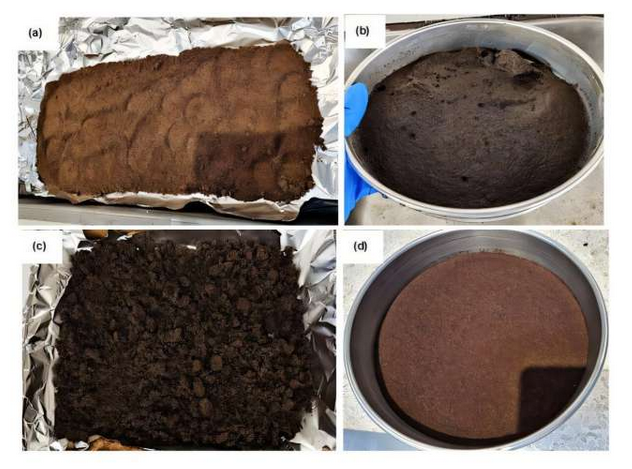
- Researchers at Loughborough University have published two studies showing that spent coffee grounds—a massive global waste product—can be transformed into low-cost, eco-friendly materials that remove heavy metals from contaminated water.
- Key Findings
- Coffee waste → biochar:
By heating used coffee grounds, researchers created a highly porous biochar capable of removing up to 98% of lead from water.
- Raw coffee waste works too:
Even unprocessed coffee grounds can remove copper and zinc from water at low concentrations.
- Coffee + rice husk blend:
A mixture of coffee waste and rice husk performs slightly better for higher metal concentrations.
- Efficiency:
Across experiments, researchers achieved over 96% removal of heavy metals depending on contact time, adsorbent type, and metal concentration.
- Why It Matters
- Coffee is consumed globally at enormous scale, generating huge amounts of waste.
- SCGs are porous, plant-based, and abundant, making them ideal for circular-economy solutions.
- This approach offers a cheap, scalable, environmentally friendly method for water purification, especially in regions lacking advanced treatment systems.